 Garden


Affiliate Disclosure
Some links on this page are affiliate links. As an Amazon Associate, we earn from qualifying purchases — at no extra cost to you. We do not buy, test, or physically handle the products we cover; our rankings come from aggregated owner reviews, ratings and expert consensus. Commissions never change our verdicts. How we rank · full disclosure.
Window sensors are the cheapest genuinely useful thing in home security, and most people buy the wrong kind. There are two entirely different products sold under the same name. One detects a window being opened. The other detects glass being broken. Neither sees what the other sees, and a house fitted only with magnetic contacts has no protection at all against a pane being put through — which is exactly how a large fixed window or a patio slider gets defeated.
The second decision is whether the sensor should make a noise or send a message. A standalone alarm shrieks at the window and does nothing else. A system sensor tells your phone, and a monitoring center if you pay for one. Both are legitimate; they solve different problems. Here are the six the ownership record supports, and how to work out which windows deserve one.
Top Picks at a Glance

Contact, vibration, and what each one misses
| Magnetic contact | Vibration / glass break | |
|---|---|---|
| Detects | The window being opened | The pane being struck or broken |
| Misses | A broken pane entirely | A window quietly slid open |
| Mounts on | Sash and frame, in a pair | The glass itself, single unit |
| Best on | Anything that opens | Fixed panes, patio doors, basement lights |
| False alarm cause | Marginal magnet gap, flexing sash | Doors slamming, heavy traffic, thunder |
| Typical battery | 1–3 years | About 1 year |
The sensible arrangement in most houses is contacts on everything that opens, plus vibration sensors on the two or three big panes that would be broken rather than opened. Together those cost less than a single camera and cover both entry methods.
Our #1 Pick: Ring Alarm Contact Sensor 6-Pack
These carry the highest owner rating in the category and they earn it, but the reason to choose them is structural rather than a matter of quality. A standalone alarm is a noise. A system sensor is information: your phone tells you a specific window opened at a specific time, whether you are upstairs or on holiday, and if you subscribe to monitoring a center responds when you do not.
Practically, the six-pack is also how you should buy sensors. One window covered is a token gesture; an intruder simply uses the next one. Covering an entire ground floor changes the arithmetic, and buying in a pack is what makes that affordable. The sensors run on Z-Wave rather than Wi-Fi, which is why the batteries last for years rather than months, and they extend the mesh for each other as you add more.
The requirement is a Ring Alarm base station — these are not standalone units and will do nothing on their own, which is the most common negative review. And Ring carries history worth knowing: in May 2023 the Federal Trade Commission announced a settlement requiring the company to pay $5.8 million and to implement a comprehensive privacy and security program, over allegations that employees and contractors had accessed customers' private videos and that inadequate security allowed attackers to take over customer cameras through credential stuffing. Ring has since made two-factor authentication mandatory and added end-to-end encryption as an option for cameras. FTC press release on the Ring settlement. Contact sensors report open and closed states rather than video, so the exposure is far smaller than with a camera — but if that history matters to you, standalone alarms or a local-first hub avoid it entirely.
Check price on Amazon → (paid link)
The Ranked Field
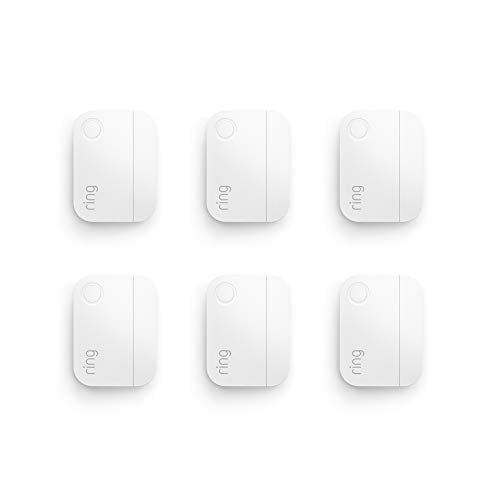
Best for anyone running a Ring Alarm who wants sensors that notify a phone rather than only shriek
- Z-Wave sensors that report to a Ring Alarm base station
- Approximately three years of battery life per sensor
- Six sensors in one pack, the cheapest way to cover a floor
- Triggers app alerts, sirens and professional monitoring if subscribed
Why buy it: the highest owner rating in this category by a clear margin, and the only kind of sensor that tells you something happened when you are not in the house — which is the entire point of a window sensor.
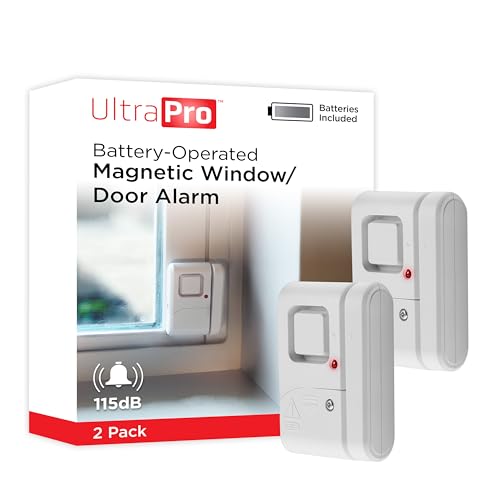
Best for a renter, a vacation rental, a dorm or anyone who wants noise without an account
- Self-contained: no hub, no app, no network, no subscription
- Selectable alarm or gentle chime mode
- Adhesive mounting, no tools or drilling
- One of the largest ownership records of any security accessory sold online
Why buy it: the simplest security product that exists and one of the most useful — an intruder hearing a piercing alarm from the window they just opened generally does not continue, and it works in a rental where nothing else can be installed.

Best for covering every ground-floor window in a house in one purchase
- Six alarms, enough for a typical ground floor
- Alarm and chime modes on each unit
- Runs on button cells with long standby life
- No hub required
Why buy it: the sensible way to buy these — one window covered is a token gesture, and coverage of every accessible opening is what actually changes an intruder’s calculation.

Best for sliders, casements and any frame where a bulky magnet pair will not sit flush
- Very slim body that fits tight sliding tracks
- 120-decibel siren, loud enough to be heard through a closed house
- Detects vibration as well as opening
- Adhesive mount with no drilling
Why buy it: sliding windows and doors defeat ordinary magnetic pairs because the frames rarely leave a clean gap; the slim body and the vibration sensing between them solve both problems.

Best for large fixed panes and patio doors that would be broken rather than opened
- Detects the vibration of glass being struck or broken
- Sticks directly to the pane rather than the frame
- Six units per pack for wide coverage
- Roughly a year of battery life per unit
Why buy it: covers the failure that magnetic sensors cannot see at all — a pane broken rather than a sash opened, which is exactly how a large fixed window gets defeated.

Best for a large or noisy house where a small alarm would not be heard from another floor
- 125-decibel siren with adjustable volume
- Alarm, chime and off modes on each unit
- Five sensors per pack
- Adhesive mounting
Why buy it: volume control is the feature that stops these being disabled — a 125-decibel siren on a child’s bedroom window is unbearable, and being able to set it to chime is what keeps it in use.
Quick Comparison
| Product | Best for | Rating | Price | Buy |
|---|---|---|---|---|
| Ring Alarm Contact Sensor 6-Pack (2nd Gen), Monitor 6 Doors or Windows | Best for a Monitored System | — | Check (paid link) | |
| UltraPro Personal Security Window and Door Alarm, 2 Pack, Wireless Chime | Best Standalone | — | Check (paid link) | |
| UltraPro Personal Security Window and Door Alarm, 6 Pack, DIY Burglar Alert | Best Multipack | — | Check (paid link) | |
| EVA LOGIK Ultra-Thin Window Alarm, 120dB, Sound and Vibration Sensors | Best for Sliding Windows and Doors | — | Check (paid link) | |
| Window Glass Break Alarm with Vibration Sensor, 6 Pack, Up to 1 Year Battery | Best for Glass Panes | — | Check (paid link) | |
| Sanjie Door Window Alarm Sensors, 5 Pack, 125dB with Volume Control | Loudest | — | Check (paid link) |
Which windows actually need a sensor
Not all of them, and covering every window in a house is how people end up with a system they disarm permanently. Household burglary in the United States is overwhelmingly opportunistic entry through a door or an accessible ground-floor opening rather than a technical defeat of a lock — the Bureau of Justice Statistics household burglary report remains the standard reference on how entry happens. Cover the reachable openings and you have covered the realistic risk.
- Back and side ground-floor windows. Out of sight from the street, which is why they are chosen. Highest priority.
- Sliding patio doors. Large glass, an easy lever point, and often a poor factory latch. Worth both a contact and a vibration sensor.
- Basement windows and window wells. Frequently overlooked, hidden from view, and often the weakest frames in the house.
- Front ground-floor windows. Lower priority because they are overlooked by the street, but still accessible.
- Any upper window above a flat roof, porch canopy, garage or fence. Check what is climbable rather than assuming a second floor is safe.
- Skip upper windows with no access, permanently sealed windows and anything a ladder would be required to reach.
There is a second use case worth naming because it is a large share of this market: these alarms are widely bought not for burglars but for child and dementia safety, on doors and windows a person should not go through unnoticed. In chime mode they announce an opening rather than shrieking. If a door gives direct access to a swimming pool, an alarm on that door is a recognized safety layer, and pool safety guidance from the Consumer Product Safety Commission has long recommended one — treat it as a supplement to a fence and a self-closing gate rather than a replacement for them.
Installing them so they stay installed
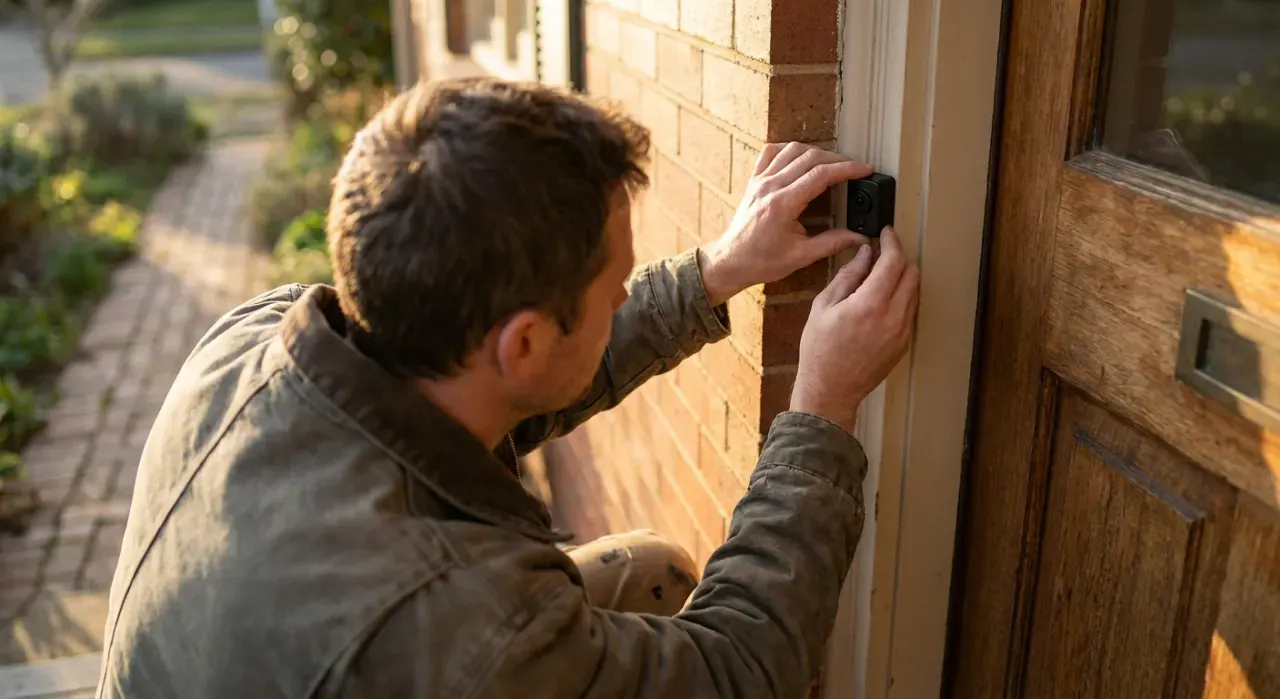
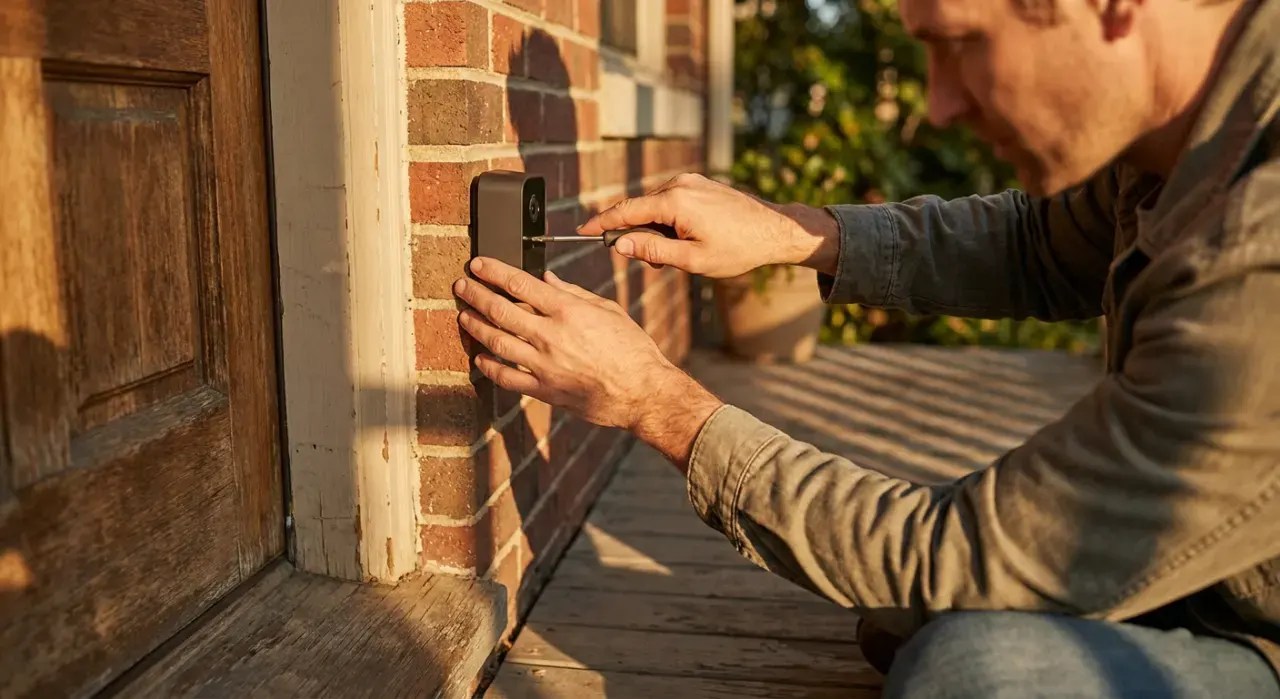
- Clean the surface with rubbing alcohol and let it dry. Dust, silicone polish and vinyl release agents defeat the adhesive more often than the adhesive is at fault.
- Let the pad cure for 24 hours before arming or slamming anything. Most adhesives reach full strength slowly.
- Keep the magnet gap under about half an inch when the window is closed, and check it with the window pulled and pushed — an old sash that moves an eighth of an inch in the wind will trip a marginal pair.
- Mount on the opening edge, not the hinge side, so the halves separate immediately rather than after the window is already open.
- Use a spacer where the sash and frame are not flush. A stack of adhesive pads or a small plastic shim brings the halves into line, and this is the fix for most awkward window types.
- Test each sensor after fitting and again seasonally, because a window that swells in humidity can change the gap.
The full step-by-step is in how to install a door and window sensor.
How We Rank
We never buy, install or physically handle these sensors. Rankings come from aggregated owner ratings across the most-owned window and door sensors, weighted toward reviews written after a year in place — where adhesive failure, battery life and false alarms actually show up — and cross-checked against published specifications. Four things carry the weight: whether the sensor detects the event you need detected, which is why contact and vibration are ranked separately; whether it stays mounted; battery life, since a sensor nobody maintains is a sensor that is off; and whether it tells you anything or only makes noise. Prices were checked at the time of writing. Full method: how we rank.
What Owners Actually Complain About
Adhesive letting go. The dominant complaint, and largely a surface preparation problem. Alcohol, then patience. On textured vinyl, a dab of clear silicone or a screw fixing is more reliable than any tape.
Magnet gap too tight a tolerance. On old wooden sashes and warped frames, contacts sit further apart than the sensor tolerates and trip in wind. Spacers fix it.
Alarms so loud they get disabled. A 125-decibel siren inside a bedroom is genuinely painful, and households turn them off rather than live with them. Volume control or chime mode is what keeps them in service.
Button cells nobody replaces. Standalone alarms use small cells and give little warning. Note the fitting date on the back with a marker and change them yearly.
Expecting a system sensor to work alone. A steady stream of reviews from buyers who ordered contact sensors for a system they do not own. Check what base station a sensor requires.
The Verdict
If you have a DIY security system, buy the Ring Alarm Contact Sensor 6-Pack and cover the whole ground floor at once — the information a monitored sensor gives you is worth far more than a noise at an empty house.
If you have no system, the UltraPro alarms are the right answer and cost almost nothing: two for a rental, six for a house. Add the EVA LOGIK slim units to sliding windows and patio doors where a bulky magnet pair will not fit, and put vibration sensors on the two or three large fixed panes that would be broken rather than opened. That combination costs less than one camera and covers the way people actually get in. Check price on Amazon → (paid link)
More from this hub: Smart Home & Security · How to install a door and window sensor · Best DIY security systems · Best driveway alarms · Do cameras deter burglars? · How we rank