 Garden
Affiliate Disclosure
Some links on this page are affiliate links. As an Amazon Associate, we earn from qualifying purchases — at no extra cost to you. We do not buy, test, or physically handle the products we cover; our rankings come from aggregated owner reviews, ratings and expert consensus. Commissions never change our verdicts. How we rank · full disclosure.
The model you choose matters less than whether you bolt it to the floor. That is the least exciting sentence on this page and it is the most useful one. The typical residential safe loss is not a picked lock or a drilled dial — it is the whole safe leaving the house. A 60 lb box with a keypad is a two-handed carry, and once it is in a vehicle the attacker has hours, a grinder and no reason to hurry.
Everything else in this category follows from that. Weight helps a little; anchors help enormously; concealment helps more than either. A cheap safe bolted through a concrete slab in a place nobody thinks to look outperforms an expensive one sitting on the carpet of a master bedroom closet, which is the first place any burglar goes.
Top Picks at a Glance
The Two Ratings, and Why They Are Not the Same
Safes are sold on two separate promises that buyers routinely merge into one. They come from different standards, different tests and often different products.
| Claim | Standard | What it actually means | What it does not mean |
|---|---|---|---|
| Fire resistant, 1 hr at 1700°F | UL 72, Class 350 | Interior stays under 350°F for the rated period — paper survives | Hard drives, SSDs and flash media survive. They need Class 125. |
| RSC / Residential Security Container | UL 1037 | Resists a few minutes of attack by one person with hand tools | Anything like a vault, or a TL-15 / TL-30 burglary rating |
| Water resistant | Manufacturer or lab-verified | Sometimes a stated submersion depth and time; often just a gasket | That documents survive a fire department hose stream unbagged |
| "5200°F fireproof" | None | A fabric or foil melting point, quoted as a performance figure | Any tested fire rating whatsoever |
The relevant documents are public: UL 72, Tests for Fire Resistance of Record Protection Equipment and UL 1037, Antitheft Alarms and Devices. Neither is a marketing document, and the difference between a safe that names one and a safe that names a temperature is the difference between a specification and a sentence.
Anchoring: The Only Upgrade That Changes the Outcome
Nearly every home safe arrives with pre-drilled holes in the base and a small bag of hardware, and a large share of owners never use them. Fix that on day one.
- On a concrete slab — wedge or sleeve anchors, 3/8 in or 1/2 in, drilled with a hammer drill and set at least 2 to 2.5 in into sound concrete. Four anchors, one per corner.
- On a wood subfloor — 3/8 in lag bolts long enough to bite at least 1.5 in into a joist, not just the subfloor plywood. Find the joists first; a lag into 3/4 in ply pulls out with a pry bar.
- In a closet with a wall behind it — anchor the back as well as the base where the safe has rear holes. Two planes of resistance is disproportionately harder to defeat than one.
- Never anchor through a heated floor, and locate radiant tubing or slab post-tension cables before drilling. If you cannot confirm what is in the slab, put the safe on a different floor.
Step-by-step figures, bit sizes and the mistakes that strip an anchor are in our guide to bolting down a safe, and the general anchor selection logic is covered in anchoring into studs and concrete.
Our #1 Pick: Amazon Basics 1.8 Cu Ft Steel Security Safe
This is the most-owned home safe in the country, and that matters for the same reason it matters with any mass-market product: the failure modes are documented by a vast body of long-term owners rather than a handful of reviews. What that record shows is a safe that does the mundane things reliably — the keypad works, the door shuts square, the shelf holds, and the anchor holes line up with the hardware in the box.
It carries no independent fire rating and no burglary classification, and we would rather say that plainly than dress it up. What it is: 1.8 cubic feet of locked steel, heavy enough to be a nuisance, cheap enough that you can afford to anchor it properly and still be under budget. For the great majority of households — documents, spare cash, a couple of small valuables, a firearm stored per state requirements — that is the correct product.
The complaints that repeat are worth planning around. The override key is the single point of failure: owners who left it inside the safe or in the same room have locked themselves out when a battery died, and the keypad batteries are behind the door on many units. Keep the override key offsite or in a different room, note the battery change date inside the door, and the most common bad outcome in this category never happens to you.
Check price on Amazon → (paid link)
The Ranked Field

Best for the household that wants locked, anchored, boring steel at a sensible price
- 1.8 cu ft interior with a removable shelf
- Electronic keypad plus two override keys
- Pre-drilled base holes and anchor hardware included
- Carpeted floor and shelf to stop items sliding
Why buy it: the most-owned home safe in America, and the reason to buy it is unglamorous — anchor holes, a working keypad, and enough weight that nobody carries it out under one arm.
Best for documents you cannot replace, in a house you worry about burning
- One-hour fire rating at 1700°F, independently verified
- Rated for water submersion, not just splash resistance
- UL 72 Class 350 — a paper rating, not a media rating
- Four bolt-down holes
Why buy it: the only kind of fire claim worth paying for: one that names a standard and a laboratory instead of printing a temperature on the carton.
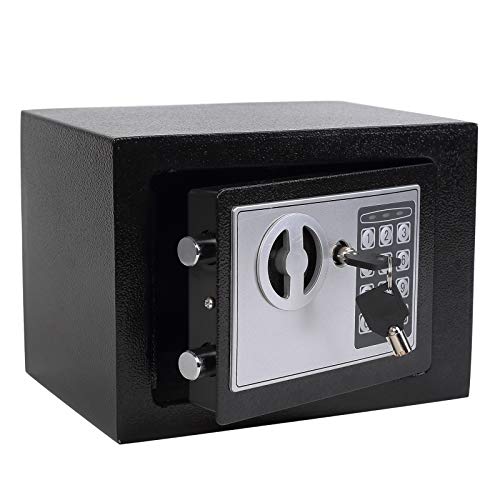
Best for a locked box for a nightstand, a closet shelf or a rental
- 0.23 cu ft — passports, cash, a handgun, a hard drive
- Digital keypad with two override keys
- Mounting holes in the base and the back
- About 9 in interior height
Why buy it: the honest floor of the category: it defeats a curious houseguest and a smash-and-grab teenager, and it is not pretending to do anything more.
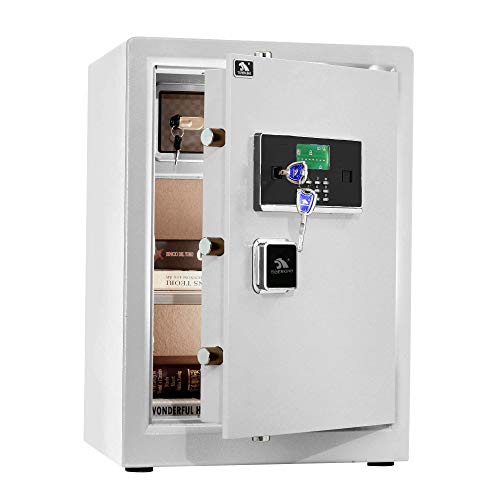
Best for consolidating a household — laptops, binders, camera gear, cash box
- 3.7 cu ft interior with adjustable shelving
- 66 lb steel body with anchor holes
- Digital keypad plus override keys
- Interior carpet lining
Why buy it: volume is the thing people underbuy first — a 3.7 cu ft cabinet stops the annual ritual of deciding what has to come out of the small safe.

Best for a safe that gets opened daily rather than twice a year
- Fingerprint reader plus keypad plus key — three ways in
- 1.2 cu ft with a removable shelf
- About 20 lb, so anchoring is essential
- Sub-second fingerprint recognition
Why buy it: biometrics matter for the safe you actually use every day, because a code you have to type in the dark is the reason people stop locking things up.
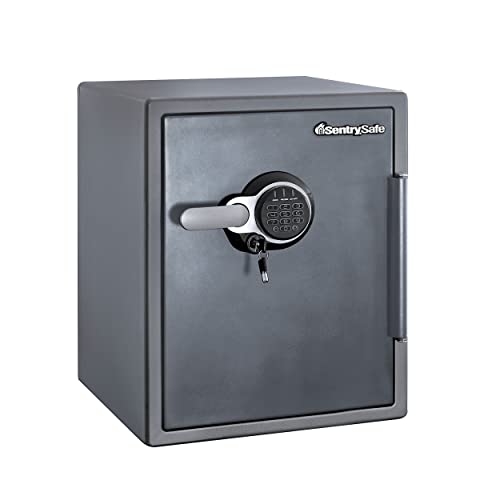
Best for anchoring into a closet floor and forgetting about it
- Verified fire and water ratings
- Interior light — genuinely useful in a dark closet
- Digital keypad with override key
- Pre-drilled anchor holes with hardware
Why buy it: the small features are what get used: a light inside a safe in a closet is the difference between finding a document and emptying the shelf onto the floor.
Quick Comparison
| Product | Best for | Rating | Price | Buy |
|---|---|---|---|---|
| Amazon Basics Steel Home Security Safe Box with Electronic Keypad Lock, 1.8 Cu Ft | Best Overall | — | Check (paid link) | |
| SentrySafe SFW123 Fireproof and Waterproof Safe, 1.23 Cu Ft, Digital Keypad | Best Fire Protection | — | Check (paid link) | |
| Yuanshikj Small Steel Security Safe Box with Keypad and Key, 0.23 Cu Ft | Best Budget | — | Check (paid link) | |
| TIGERKING 3.7 Cu Ft Large Home Safe with Key and Digital Keypad, 66 lb Steel Body | Best Large | — | Check (paid link) | |
| TIGERKING Biometric Small Home Safe with Key and Digital Keypad, 1.2 Cu Ft | Best Biometric | — | Check (paid link) | |
| SentrySafe Fireproof and Waterproof Steel Home Safe with Digital Keypad and Interior Light | Best Bolt-Down Pick | — | Check (paid link) |
How Much Safe Do You Actually Need?
Buyers underbuy volume and overbuy features, consistently. Fire insulation eats interior space, so a stated cubic-foot figure describes the outside far better than the inside.
| Interior volume | Realistically holds | Typical weight | Anchoring |
|---|---|---|---|
| 0.2–0.3 cu ft | Passports, cash, a handgun, two drives | 10–25 lb | Mandatory — this is a carry-away target |
| 0.8–1.3 cu ft | A folder of documents, jewelry, a laptop | 40–70 lb | Mandatory |
| 1.8–2.1 cu ft | Hanging folders, a laptop, several boxes | 70–120 lb | Strongly recommended |
| 3.5–4 cu ft | Binders, camera bodies, a small cash box, tools | 120–200 lb | Recommended; two-person placement |
The Field, Reviewed
1. Amazon Basics 1.8 Cu Ft — Best Overall
Covered above. Owners praise: value, keypad reliability, the included anchor hardware and the removable shelf. Owners gripe about: no independent fire or burglary rating, dents and paint chips in shipping, and battery access behind the door that makes the override key critical. Check price (paid link).
2. SentrySafe SFW123 — Best Fire Protection
The pick when the contents are documents rather than valuables. A verified one-hour rating at 1700°F plus a submersion rating is a real specification, and the water half matters more than buyers expect — see the note below on hose streams.
Owners praise: the verified rating, the door seal and the hanging-folder capacity. Owners gripe about: keypad failures over long ownership, weight, and an interior noticeably smaller than the exterior implies. Check price (paid link).
3. Yuanshikj Small Steel Safe — Best Budget
An enormous owner base for a simple product, and useful precisely because it is honest about what it is: a keypad-locked steel box with mounting holes. Bolt it to a shelf or a closet floor and it does a real job for about the price of a takeout dinner for four.
Owners praise: the price, straightforward programming, and mounting holes in both the base and the back. Owners gripe about: thin body steel, a latch that can be pried by someone determined, and the fact that unanchored it is a grab-and-go item. Check price (paid link).
4. TIGERKING 3.7 Cu Ft — Best Large
The value pick if you have decided to consolidate. Nearly four cubic feet, 66 lb of steel body, adjustable shelving and anchor holes. Treat the fire language on the listing as a manufacturer statement rather than a listed classification.
Owners praise: capacity, keypad reliability, shelf adjustability and the perceived build for the price. Owners gripe about: unverifiable fire claims, shipping damage on a heavy item, and a door that needs the hinges checked after transit. Check price (paid link).
5. TIGERKING Biometric 1.2 Cu Ft — Best Biometric
Worth the premium only if the safe is opened frequently. A fingerprint reader removes the friction that makes people stop locking things up, and this unit keeps a keypad and a key as backups, which is the right architecture — biometrics as the fast path, not the only path.
Owners praise: fast, reliable fingerprint reads and three independent ways in. Owners gripe about: the reader struggles with dry or cold fingers, it is light enough at roughly 20 lb that anchoring is not optional, and the fingerprint database must be re-enrolled after a full battery loss on some units. Check price (paid link).
6. SentrySafe with Interior Light — Best Bolt-Down Pick
A verified fire and water rating in a body designed to be anchored and left in a closet, with the small practical touch that makes closet installation work: a light inside. Small feature, outsized effect on whether the safe stays usable.
Owners praise: verified ratings, the interior light, and pre-drilled holes with hardware supplied. Owners gripe about: the weight, keypad batteries, and shelf spacing that wastes height. Check price (paid link).
The Water Problem Nobody Plans For
Fires are extinguished with water, and a great deal of it. Sprinklers run until somebody closes a valve; a hose stream delivers hundreds of gallons into a single room. Safes are routinely recovered from house fires structurally intact and full of documents that have swollen, run and fused together. A fire rating with no water rating is half a product.
Two cheap habits fix most of it. Buy a unit with a stated water rating where you can, and put the contents inside a sealed pouch inside the safe regardless — our fireproof document bag picks cover that layer. FEMA's US Fire Administration keeps current residential fire statistics if you want the underlying numbers, and Ready.gov's financial preparedness guidance has a sensible list of which documents belong in a safe in the first place.
What Owners Actually Complain About
Keypads, batteries and override keys. The dominant long-term complaint at every price. The pattern is identical every time: battery dies, keypad is dead, override key is inside the safe or lost. Store it elsewhere.
Shipping damage. Heavy steel boxes handled by parcel networks arrive dented more often than not at the budget end. Inspect immediately.
Interior smaller than the specification suggests. Universal in fire-rated models, because insulation is most of the wall thickness. Measure your tallest item first.
Mildew and rust inside. Fire insulation holds moisture chemically — that is how it works — and a sealed safe in a damp basement will grow mold on paper. One desiccant pack a year prevents it.
Never anchored. The most consequential complaint is the one owners make about themselves after a burglary. The hardware was in the box.
How We Rank
We do not buy, attack or burn these safes. Rankings come from aggregated owner ratings across the most-owned home safes on the US market, weighted toward long-ownership reviews where lock and hinge failures show up, and cross-checked against published specifications and the text of UL 72 and UL 1037. Four things carry the weight: whether ratings are independently listed or merely claimed; anchor provision, because it is the decisive security feature; lock longevity, since electronics are the documented failure point; and usable interior volume rather than exterior size. Prices were checked at the time of writing. Full method: how we rank.
The Verdict
Buy the Amazon Basics 1.8 cu ft for general household use and spend the savings on decent anchors. Buy the SentrySafe SFW123 if the contents are documents you cannot replace and you want a rating with a laboratory behind it. Buy the TIGERKING 3.7 cu ft if you have already outgrown a small safe once. Then bolt it down, keep the override key somewhere else, and put anything digital in a second location entirely — because no safe in this price range is protecting a hard drive from a fire. Check price on Amazon → (paid link)
More from this hub: storage & organization · best fireproof safe · best wall safe · how to bolt down a safe · where to hide a safe · how we rank.