 Garden
Affiliate Disclosure
Some links on this page are affiliate links. As an Amazon Associate, we earn from qualifying purchases — at no extra cost to you. We do not buy, test, or physically handle the products we cover; our rankings come from aggregated owner reviews, ratings and expert consensus. Commissions never change our verdicts. How we rank · full disclosure.
The best small space storage ideas all do one of three things: go vertical, use furniture that stores, or claim hidden space. Take shelving up the walls and over doors, choose a storage ottoman or a bed with drawers so furniture pulls double duty, and use the dead space under beds and inside closets. Store rarely used items high, keep daily items at eye level, and edit hard first, because the most powerful small-space strategy is simply owning less. In a small home, every surface and cavity should earn its keep.
We do not physically stage the spaces we cover; our guidance is built from professional-organizer consensus, manufacturer specifications, and owner-review feedback, in line with how we rank. Below are the ideas that consistently deliver, grouped by strategy.
First, own less
Before adding a single storage product, cut what you store. In a small space, decluttering is the highest-return move because you are working with so little room to begin with, and storage bought to hold things you do not use just shrinks the space further. Run your belongings through a one-year use rule and let go of what fails it; the full method is in how to declutter your home. Everything below works far better once you have edited.
Go vertical: small-space storage on walls
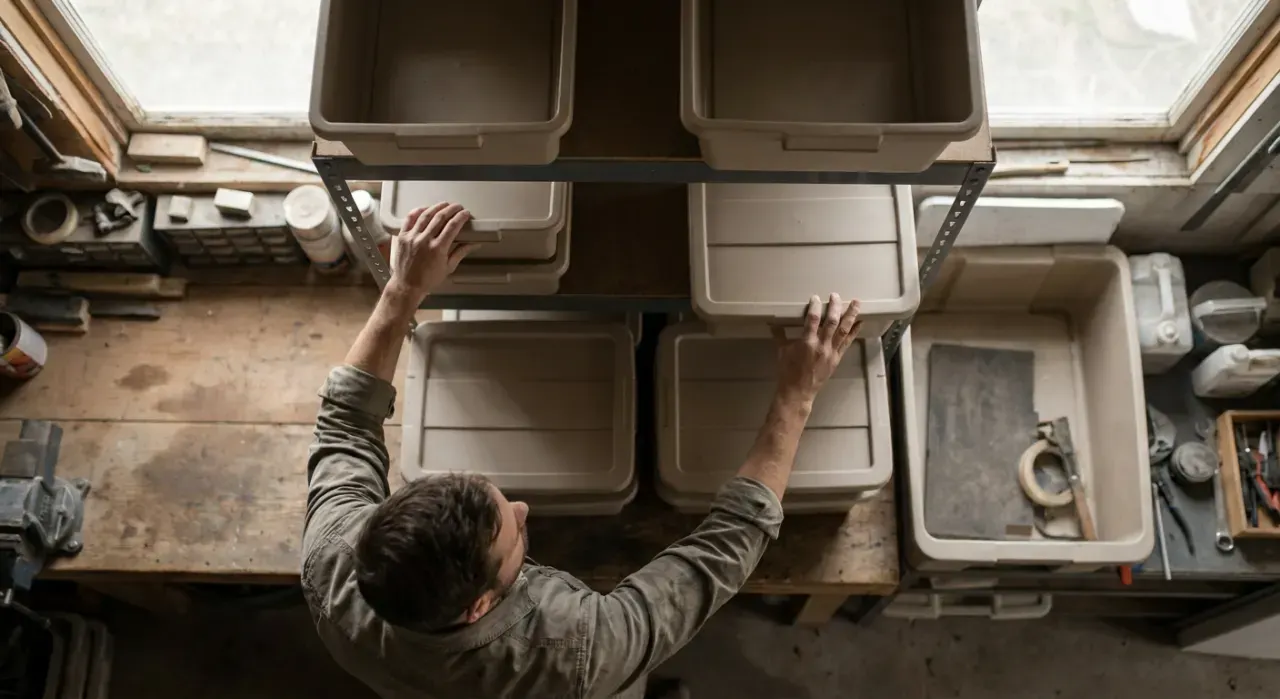
Small rooms are short on floor but rarely short on wall. Building upward is the core small-space move because it adds capacity without touching your limited footprint, and it draws the eye up so the room reads as taller.
- Tall, narrow shelving uses height instead of floor. Take bookcases nearly to the ceiling and store rare items on top.
- Floating shelves add storage on otherwise empty wall without a footprint; see how to install floating shelves.
- Over-door racks and hooks turn the back of every door into storage for shoes, pantry goods, or bathroom supplies.
- Wall hooks and pegboard hang the items that would otherwise clutter counters and floors.
Keep the floor as clear as possible; visible floor is what makes a small room feel open.
Choose furniture that adds storage
In a small space, every piece of furniture should do at least two jobs, and ideally one is storage. Multi-functional pieces are the difference between a cramped room and a comfortable one.
| Piece | Second job | Best for |
|---|---|---|
| Storage ottoman | Seating and a footrest | Blankets, remotes, toys |
| Bed with drawers | Replaces a dresser | Clothing, bedding |
| Lift-top coffee table | Work or dining surface | Hidden living-room storage |
| Bench with cubbies | Entry seating | Shoes, bags |
| Fold-down desk | Disappears when closed | Work-from-home nook |
To build a couple of these yourself, see how to build a storage ottoman and how to build a mudroom bench.
Claim the space under the bed
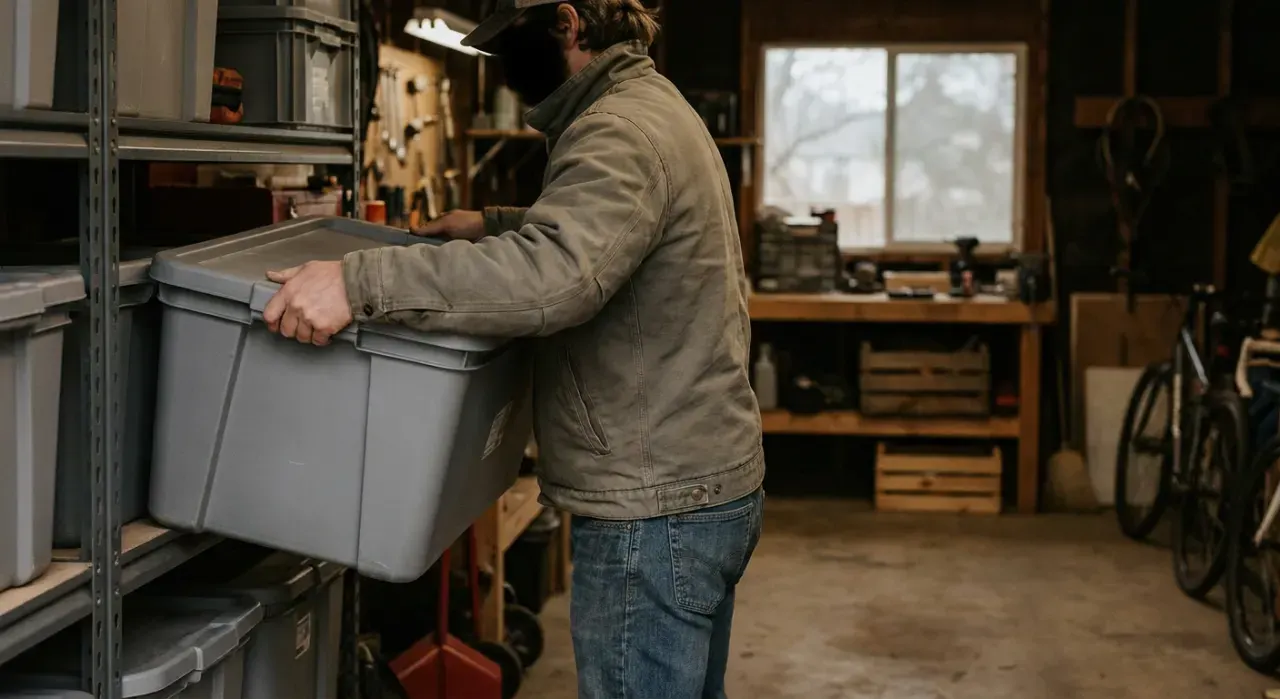
The area under a bed is one of the largest storage zones in a small home and it usually sits empty. A little setup turns it into a hidden dresser.
- Add bed risers to gain several inches of clearance.
- Use flat, wheeled bins so you can access the space without crawling.
- Store off-season clothing, extra bedding, and shoes here in lidded bins to keep dust off.
- Compress bulky items like winter coats and comforters in vacuum bags.
Our picks are in best under-bed storage and best under-bed storage for clothes.
Use hidden and awkward spaces
Small homes are full of overlooked cavities. Once you start seeing them, storage appears in places you walked past for years.
- Inside cabinet doors with adhesive racks for lids, foil, and cleaning supplies.
- Under the stairs, which can become drawers or a closet; see how to build under-stair storage.
- The gap beside the fridge or washer for a slim rolling cart.
- Corners with corner shelving that uses otherwise dead angles.
- Above door frames and windows, a high shelf for books or rarely used items.
Renter-friendly, no-drill storage options
If you cannot make holes, you can still add serious storage using tension, freestanding, and over-door solutions. None of these leave a mark.
| Solution | Where it works | Holds |
|---|---|---|
| Tension rods | Under sinks, in closets, windows | Hanging baskets, spray bottles, curtains |
| Over-door racks | Any standard door | Shoes, pantry, bathroom items |
| Freestanding cube units | Anywhere | Books, bins, display |
| Adhesive hooks and strips | Walls, tile, cabinet sides | Light items, keys, utensils |
| Rolling carts | Kitchen, bathroom, workspace | Movable overflow storage |
You can transform a rental without a single hole. For laying out a tight closet, see small closet layout and how to organize a small closet.
Small-space kitchen tricks
Kitchens concentrate the most stuff into the least space, so they reward small-space thinking most. A few targeted moves add real capacity.
- Add a shelf riser inside cabinets to double the usable height.
- Use a magnetic knife strip and hanging rail to free counter and drawer space.
- Nest and stack with matching containers and pot organizers.
- Hang a pegboard for pots and utensils on a bare wall.
More is in small kitchen storage ideas. Browse the full storage and organization hub, and see how we form our picks in how we rank without any hands-on testing.