 Garden


Affiliate Disclosure
Some links on this page are affiliate links. As an Amazon Associate, we earn from qualifying purchases — at no extra cost to you. We do not buy, test, or physically handle the products we cover; our rankings come from aggregated owner reviews, ratings and expert consensus. Commissions never change our verdicts. How we rank · full disclosure.
A true HEPA filter captures 99.97 percent of particles at 0.3 microns — but only the air that actually goes through it. In a vacuum with an unsealed housing, air carrying fine dust escapes through the seams and joints and never meets the filter at all, which is why an unsealed machine with a HEPA filter can return more dust to the room than a sealed machine without one. The three things that matter, in order, are a sealed airpath, true HEPA rather than HEPA-type, and bagged disposal so emptying does not undo the cleaning. The filter grade alone is the least important of the three.
We never buy, test or physically handle the machines we rank; recommendations come from aggregated owner reviews, star ratings, review volume and expert consensus, as described in how we rank. The category sits at the vacuums and floor care hub. This page is general information about equipment, not medical advice.
What HEPA means, and what it does not
The HEPA standard as applied in the US requires 99.97 percent capture of particles at 0.3 microns. That size is not arbitrary: it is the most penetrating particle size, the point where filtration is hardest, so a filter that performs there performs better at both larger and smaller sizes. Common household allergens sit in a useful range relative to that figure.
| Particle | Typical size | Captured by true HEPA |
|---|---|---|
| Dust mite allergen | 10 – 40 microns | Yes, comfortably |
| Pollen | 10 – 100 microns | Yes, comfortably |
| Cat and dog dander | 2.5 – 10 microns | Yes |
| Mold spores | 3 – 40 microns | Yes |
| Fine household dust | 0.5 – 5 microns | Yes |
| Cooking and combustion smoke | 0.01 – 1 micron | Partly — below the tested size |
Note what is missing: gases and odors are not particles and pass straight through a HEPA filter. That is what activated carbon layers are for, and it is why some allergy-focused machines include one.
Watch the labeling. HEPA-type, HEPA-like, 99 percent efficient and similar phrasing are marketing terms that are not tested against the standard, and their real-world performance varies widely. A filter that captures 99 percent rather than 99.97 percent lets through more than thirty times as many particles.
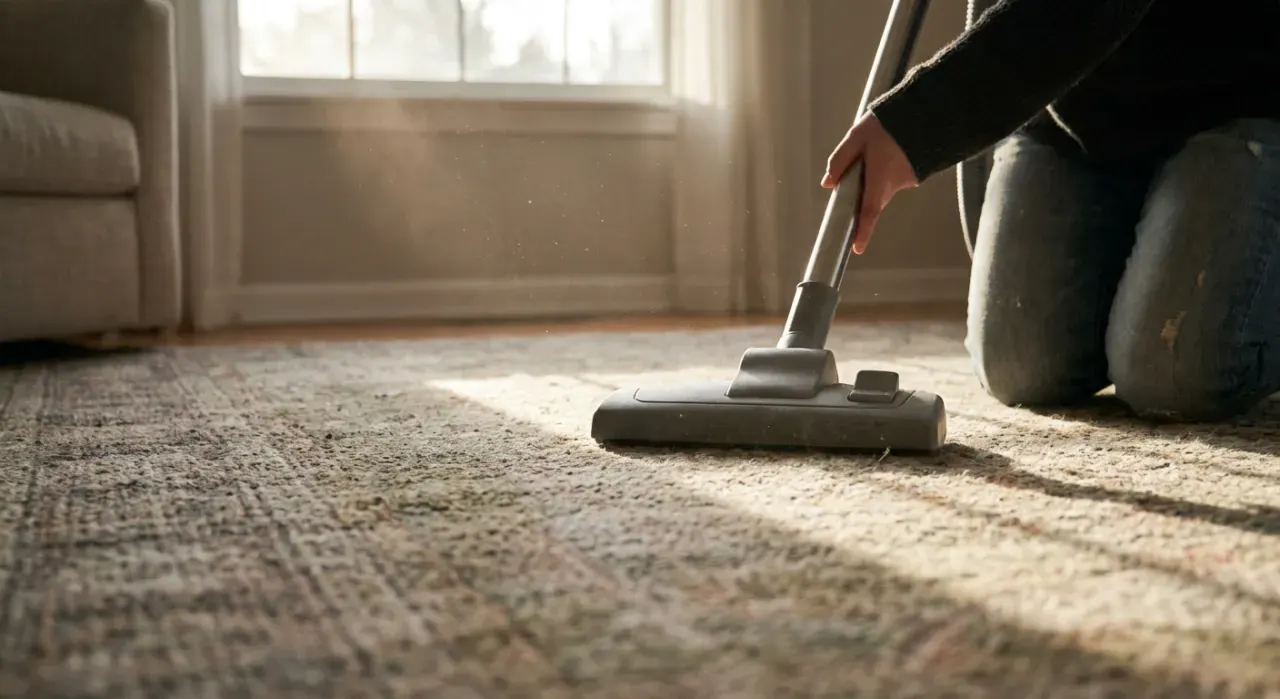
The sealed system is the part that matters
Think of the vacuum as a pressurized box. The motor creates negative pressure to pull air in and positive pressure to push it out, and air will leave through whatever path offers least resistance. A HEPA filter offers a lot of resistance. A gap around a bin lid, a poorly fitted hose collar, or a seam in the housing offers almost none.
So in an unsealed machine, a meaningful share of the airflow bypasses the filter entirely and exits carrying exactly the fine particles you were trying to remove. Manufacturers who have engineered against this advertise it, using phrases like sealed system, complete seal, or whole-machine filtration. The absence of such a claim on a machine that advertises a HEPA filter is informative.
Two things to check before buying:
- Does the manufacturer claim a sealed or complete-seal system, in those words, rather than just listing a filter?
- How many filtration stages are there? Better machines use a pre-motor foam or felt filter to protect the motor and a post-motor HEPA to catch what remains. A single filter doing both jobs clogs faster and performs less consistently.
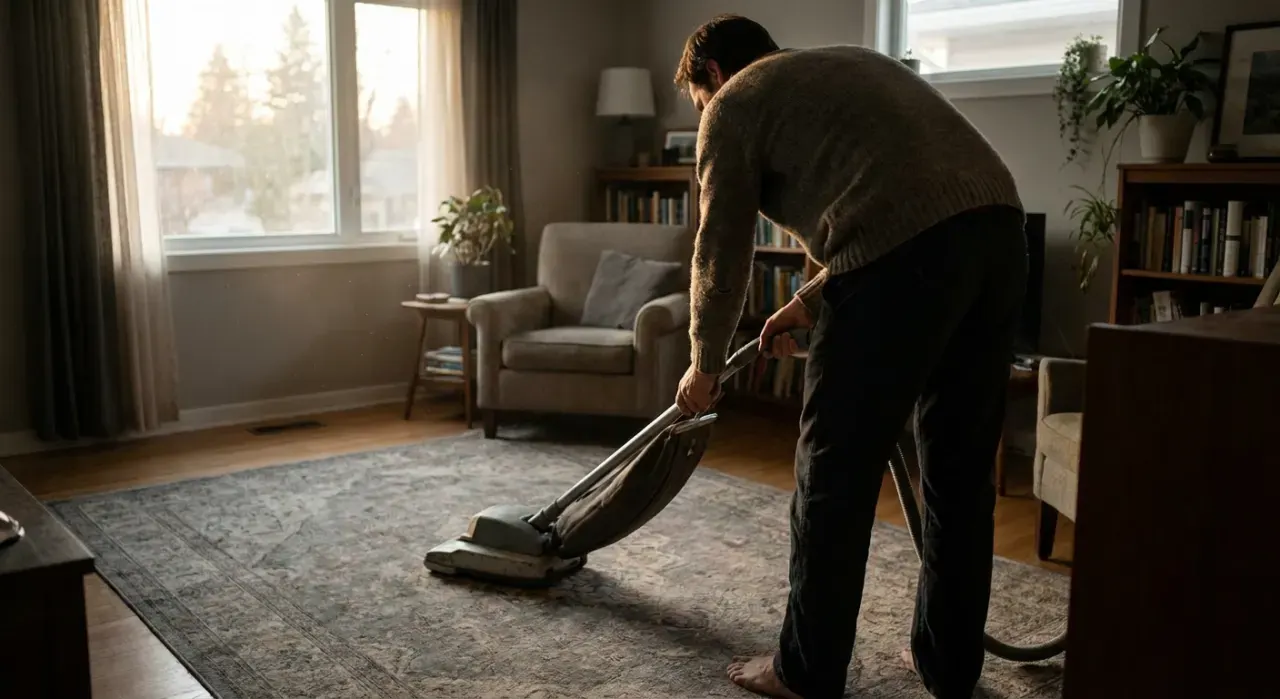
Disposal is where most exposure happens
Here is the part that undoes a lot of otherwise good equipment. A bagless bin holds the concentrated fine dust you just collected. Emptying it releases a visible plume, indoors, at roughly face height, into a room you have just cleaned. Owners of bagless machines describe this consistently, and it is the single most common reason allergy sufferers move to bagged vacuums.
A self-sealing bag lifts out and goes into the trash with almost nothing escaping. The cost is roughly $20 to $60 a year in bags and the mild annoyance of running out. If someone in the household is meaningfully affected by dust, that is a small price for removing the largest single exposure event in the cleaning routine. The broader comparison is in bagged vs bagless vacuum.
If you stay bagless, three habits reduce the exposure without eliminating it: empty outdoors, wear a mask while doing it, and empty before the bin is full rather than after, since an overfilled bin also chokes airflow and reduces pickup.
Two machines that show the difference

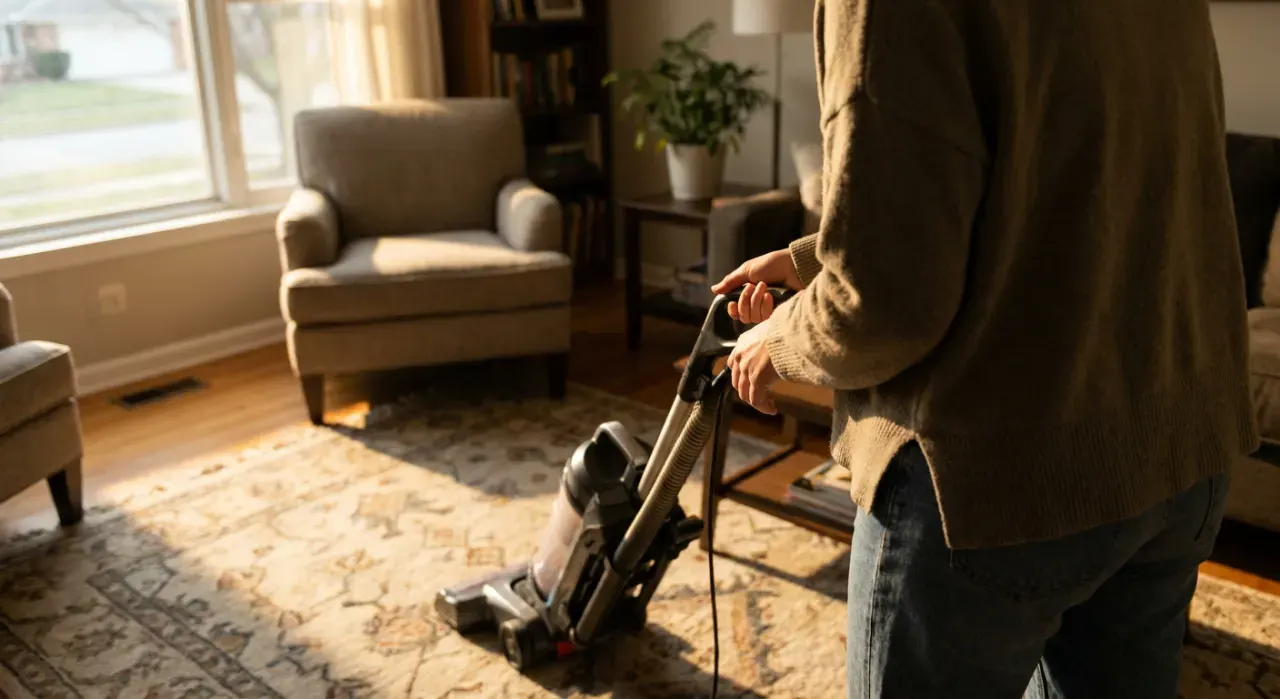
Best for a sealed system without premium money
- Anti-Allergen Complete Seal with a HEPA filter
- Self-cleaning brushroll — no hair wrap
- Lift-Away pod detaches for stairs and upholstery
- LED headlights on the floor head
Why buy it: the seal is the part that matters, and this is the least expensive place most households find one.
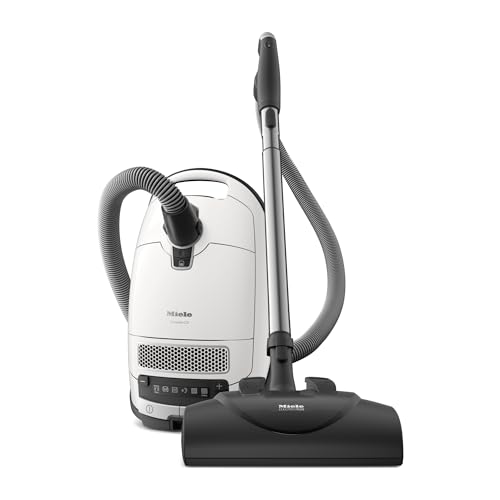
Best for households where emptying a bin is not acceptable
- Sealed system with HEPA AirClean filter and active charcoal
- Self-sealing bag — no dust cloud on disposal
- Electro powerhead plus a turbo brush for upholstery
- Very quiet, glides rather than being pushed
Why buy it: bagged and fully sealed, so what you collect never comes back out — the design allergy sufferers consistently rate highest.
These represent the two credible approaches: a sealed bagless upright at a mainstream price, and a sealed bagged canister where disposal exposure is removed entirely. The wider field is at best vacuum cleaner and, for pet households specifically, best vacuum for pet hair.
Filter care, which is where performance is lost
A HEPA filter works by trapping particles, which means it fills up. As it does, airflow drops, suction falls, and the motor works harder for less result. Neglected filters are the most common cause of a machine that owners describe as having lost suction.
| Filter type | Service interval | Notes |
|---|---|---|
| Pre-motor foam or felt | Rinse every 1 – 3 months | Must be bone dry before refitting — 24 hours |
| Non-washable HEPA | Replace every 6 – 12 months | Sooner with pets; never wash it |
| Washable HEPA | Rinse every 3 – 6 months | Only if the manual says washable; replace every 2 – 3 years |
| Activated carbon layer | Replace every 6 – 12 months | Handles odor, not particles |
| Bag | Change at two-thirds full | Airflow drops long before it looks full |
Two rules people break. Never wash a filter that is not labeled washable — water destroys the pleated media and the filter looks fine while no longer filtering. And never refit a damp filter, which restricts airflow, breeds odor, and is a common cause of the smell covered in how to make a vacuum smell better. Practical detail is in can you wash a vacuum HEPA filter and how often to replace a HEPA filter.
What matters more than the vacuum
Vacuuming is one part of reducing household allergens, and equipment alone will not carry the whole job. The measures that public health and allergy organizations most commonly emphasize are unglamorous:
- Wash bedding weekly in hot water, which addresses dust mites where exposure hours are highest.
- Use allergen-proof mattress and pillow covers. Frequently cited as the single highest-value change for dust mite allergy.
- Keep indoor humidity between 30 and 50 percent. Dust mites and mold both require higher humidity to thrive.
- Vacuum slowly, in two directions. One slow pass removes more than three fast ones, because the brushroll needs time to work grit up out of the pile.
- Consider hard flooring in bedrooms. Carpet is a reservoir; a washable rug on hard floor is far easier to keep clean.
- Vacuum more often in the rooms that matter rather than everywhere equally — see how often to vacuum.
If symptoms are significant, an allergist can identify what you are actually reacting to, which changes what is worth doing. Equipment choices are much easier once you know whether the problem is dust mites, pet dander or pollen.
More from this hub: Vacuums & Floor Care · vacuum maintenance schedule · Dyson vs Shark · how often to deep clean carpets · how we rank.