 Garden
Affiliate Disclosure
Some links on this page are affiliate links. As an Amazon Associate, we earn from qualifying purchases — at no extra cost to you. We do not buy, test, or physically handle the products we cover; our rankings come from aggregated owner reviews, ratings and expert consensus. Commissions never change our verdicts. How we rank · full disclosure.
The short answer: the best fertilizer for tomatoes is not one product but a two-stage approach that follows the plant. Early in the season use a balanced fertilizer (around 10-10-10) to build leaves and roots, then, once flowers appear, switch to a lower-nitrogen, higher-phosphorus-and-potassium formula — something like 3-4-6, 4-6-8 or a labeled tomato feed near 5-10-10 — to drive flowering and fruit. Feeding high nitrogen all season is the classic error that grows a jungle of leaves and few tomatoes. Consistent watering and calcium matter as much as the NPK.
Choosing a tomato fertilizer is really about understanding what the three numbers on the bag mean and when your plant needs each one. Get that, and any of a dozen products will work. For the ranked, owner-reviewed field of specific products, see our roundups of best organic fertilizer for tomatoes and best vegetable garden fertilizer. We do not test products ourselves; our picks come from aggregated owner reviews and expert consensus, explained in how we rank.
What the NPK numbers actually mean for tomatoes
Every fertilizer label carries three numbers — the NPK ratio — showing the percentage by weight of nitrogen (N), phosphorus (P) and potassium (K). Each does a specific job in a tomato plant:
| Nutrient | What it does | Too much causes |
|---|---|---|
| Nitrogen (N) | Green leaf and stem growth | Lush foliage, few flowers, delayed fruit |
| Phosphorus (P) | Root development, flowering, fruit set | Rarely overdosed; can lock out micronutrients |
| Potassium (K) | Fruit quality, sugars, disease resistance | Can interfere with magnesium and calcium uptake |
The takeaway: nitrogen is for the young, growing plant, while phosphorus and potassium are for the flowering, fruiting plant. A fertilizer where the middle and last numbers are equal to or higher than the first (like 4-6-8) is a fruiting formula. A fertilizer where the first number is highest (like 24-8-16) is a leaf formula — great for a spring lawn, wrong for a tomato in July.
Match the fertilizer to the growth stage
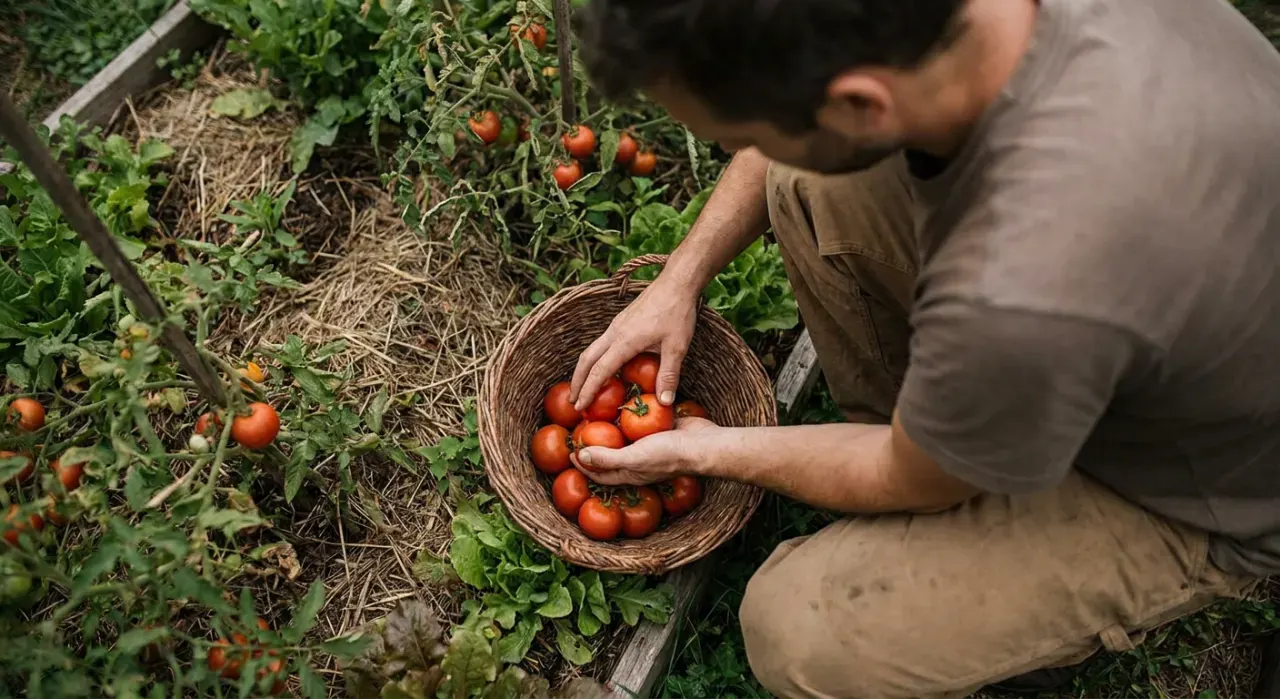
Tomatoes move through three feeding stages in a season, and the best fertilizer changes with each.
- Transplant to first flowers (weeks 1 to 4): a balanced feed such as 10-10-10, or compost plus a starter fertilizer, builds the root system and green frame the plant needs. Moderate nitrogen is fine here.
- Flowering and fruit set (weeks 5 to 8): switch to a lower-nitrogen, higher P and K formula (3-4-6, 4-6-8, or a tomato-labeled 5-10-10). This is the pivot point most gardeners miss. Cutting nitrogen now pushes the plant from making leaves to making tomatoes.
- Heavy fruiting (weeks 9 to harvest): keep feeding the fruiting formula every three to four weeks to sustain a long harvest. Potassium supports fruit size and flavor through the peak.
Test your soil before you guess
The most useful thing you can do before buying anything is a soil test. Many US soils already hold plenty of phosphorus, and piling on more does nothing but risk locking out iron and zinc. A basic test from your state's Cooperative Extension Service, usually 15 to 25 dollars, tells you your pH and existing nutrient levels so you feed what is actually missing. Tomatoes want a pH of about 6.2 to 6.8; below that, nutrients including calcium become less available no matter how much you add. If you only ever do one test, do it before your first tomato season in a new bed.
Organic vs synthetic: which to choose
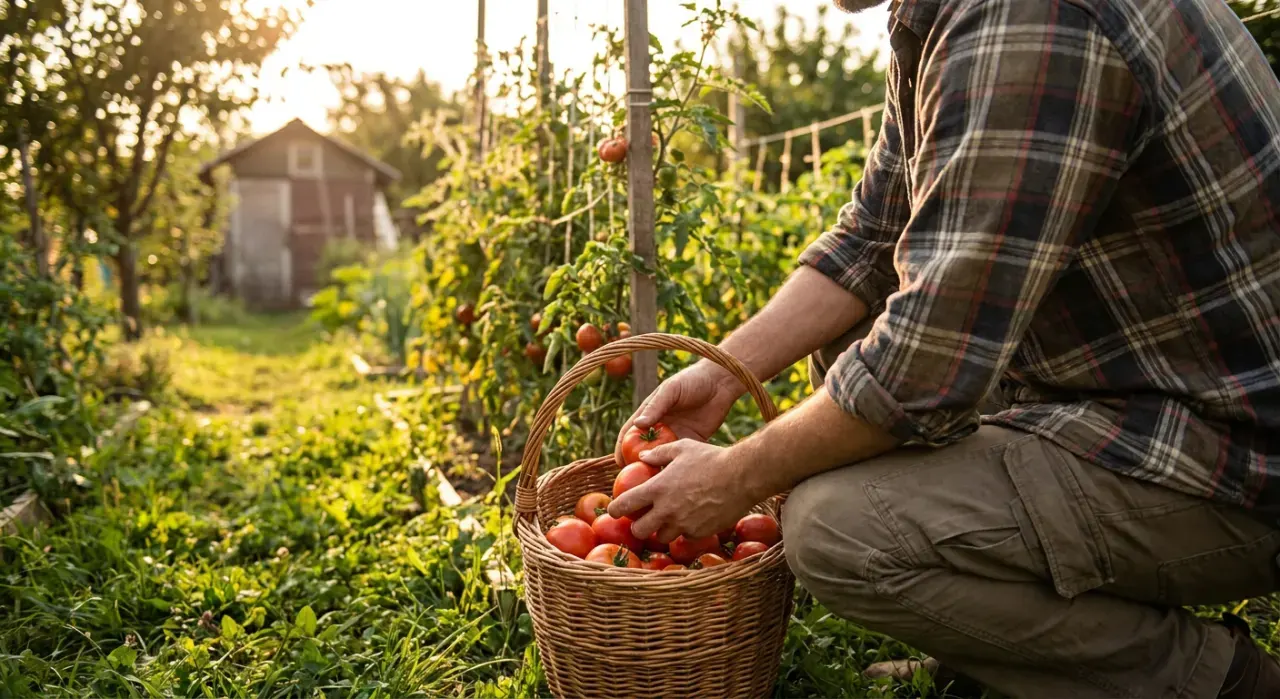
Both grow excellent tomatoes. The right choice depends on your setup and how much you care about long-term soil health.
| Type | Examples | Best for |
|---|---|---|
| Slow organic granular | Blends of bone meal, blood meal, kelp; tomato-tone style products | In-ground beds; feed-the-soil gardeners; hard to overdose |
| Liquid organic | Fish emulsion, seaweed extract | Fast boost during fruiting; foliar or root drench |
| Synthetic granular | 10-10-10, tomato 5-10-10 | Precise, inexpensive, quick response |
| Water-soluble synthetic | Bloom-booster style powders | Containers, where nutrients wash out fast |
A practical middle path that suits most home gardens: build the bed with compost and a slow-release organic granular at planting, then supplement with a dilute liquid feed every one to two weeks once the plant is loaded with fruit. See the ranked organic options in best organic fertilizer for tomatoes.
Feeding tomatoes in containers
Container tomatoes are a different problem. Every time you water, nutrients drain out the bottom, so potting mix is exhausted far faster than garden soil. Feed container tomatoes more often and more gently: a dilute liquid fertilizer every one to two weeks, or a slow-release granular mixed in at planting and refreshed at midseason. Use a large container — at least 5 gallons, ideally 10 or more for an indeterminate variety — because a bigger soil volume holds nutrients and moisture more evenly. The same logic applies to other potted crops; see how to grow cucumbers in pots for the container-feeding pattern in another plant.
Calcium, blossom end rot and the watering link
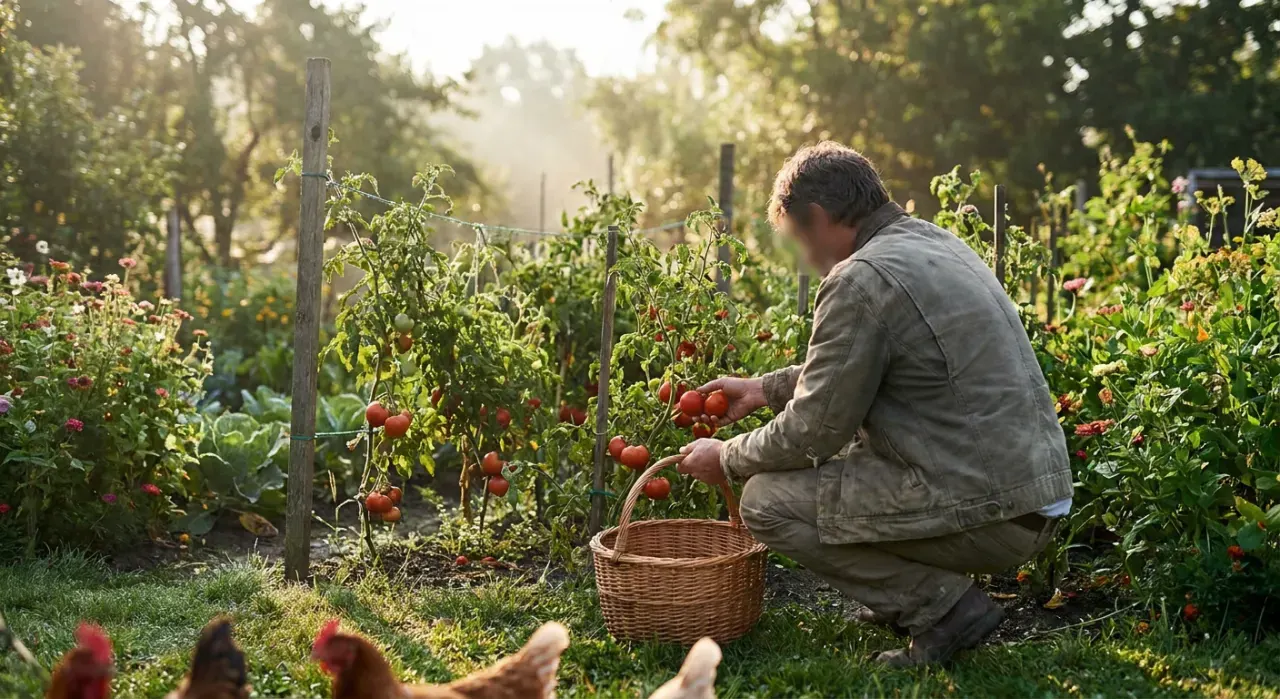
The most common tomato disorder, blossom end rot, looks like a fertilizer problem but is mostly a watering problem. The sunken black patch on the base of the fruit appears when calcium fails to reach the growing tip — and that usually happens because inconsistent watering interrupts the plant's uptake, not because the soil lacks calcium. Loading on more fertilizer, especially nitrogen, can make it worse. The reliable fixes are to mulch, water deeply and consistently, and keep the pH in range so existing calcium stays available. A calcium-containing tomato fertilizer helps only where a soil test shows a real deficiency. We cover the full diagnosis in what causes blossom end rot on tomatoes.
Fertilizer mistakes that cost you tomatoes
- Staying on high nitrogen all season. The number-one error. It grows a beautiful, fruitless plant.
- Feeding without watering. Concentrated fertilizer on dry roots burns them. Water before and after every feed.
- Over-fertilizing. More is not better; excess salts damage roots and can worsen blossom end rot. Follow the label rate, and err low with synthetics.
- Relying on Epsom salt or coffee grounds. Neither feeds a fruiting tomato meaningfully.
- Ignoring pH. Even perfect NPK fails if the soil is too acidic for the plant to absorb it.
Fertilizer is one lever among several. Consistent water, correct spacing and steady care do just as much for a harvest — see how to care for tomatoes and how often to water tomatoes. Everything else is at the seeds and vegetable growing hub.