 Garden
Affiliate Disclosure
Some links on this page are affiliate links. As an Amazon Associate, we earn from qualifying purchases — at no extra cost to you. We do not buy, test, or physically handle the products we cover; our rankings come from aggregated owner reviews, ratings and expert consensus. Commissions never change our verdicts. How we rank · full disclosure.
The short answer: the most reliable companion plants for tomatoes are basil, French marigolds, nasturtium, borage, garlic and chives, and low-growing herbs like parsley and cilantro. They earn their spot by repelling or distracting pests, drawing in pollinators and predatory insects, or filling ground without competing for water and nitrogen. The plants to keep well away are brassicas, potatoes, corn, fennel and dill once it flowers. Below is the full pairing chart, spacing that actually works, and the reasoning behind each pick.
Companion planting for tomatoes works best as a system, not a single magic pairing. We build these guides from horticultural research, extension-service trials and the aggregated experience owners report, described in how we rank. For the deeper species-by-species layout see our companion planting chart, and for the ranked field of pairings gardeners rate highest, best companion plants for tomatoes.
The tomato companion chart at a glance
| Companion | What it does | Spacing from tomato |
|---|---|---|
| Basil | Distracts thrips and whiteflies; attracts pollinators | 18 to 24 in down the row |
| French marigold | Suppresses root-knot nematodes in soil | 18 to 24 in, or as a border |
| Nasturtium | Trap crop for aphids and flea beetles | 18 to 24 in, edge of bed |
| Borage | Draws bees and predatory wasps; deters hornworm | 24 in, one per few plants |
| Garlic and chives | Scent deters aphids, spider mites and some beetles | 12 to 18 in, along the row |
| Parsley, cilantro | Umbel flowers feed hoverflies and lacewings | 12 to 18 in, low ground fill |
| Lettuce, spinach | Living mulch; uses ground before tomatoes fill in | 12 in, harvested by midsummer |
| Carrots | Loosen soil; harvested young before crowding | 12 in, early season only |
None of these turns a struggling tomato into a champion on its own. What they do is stack small advantages — fewer pests, more pollinators, less bare soil for weeds — across the whole bed.
Basil: the classic pairing, and what it really does
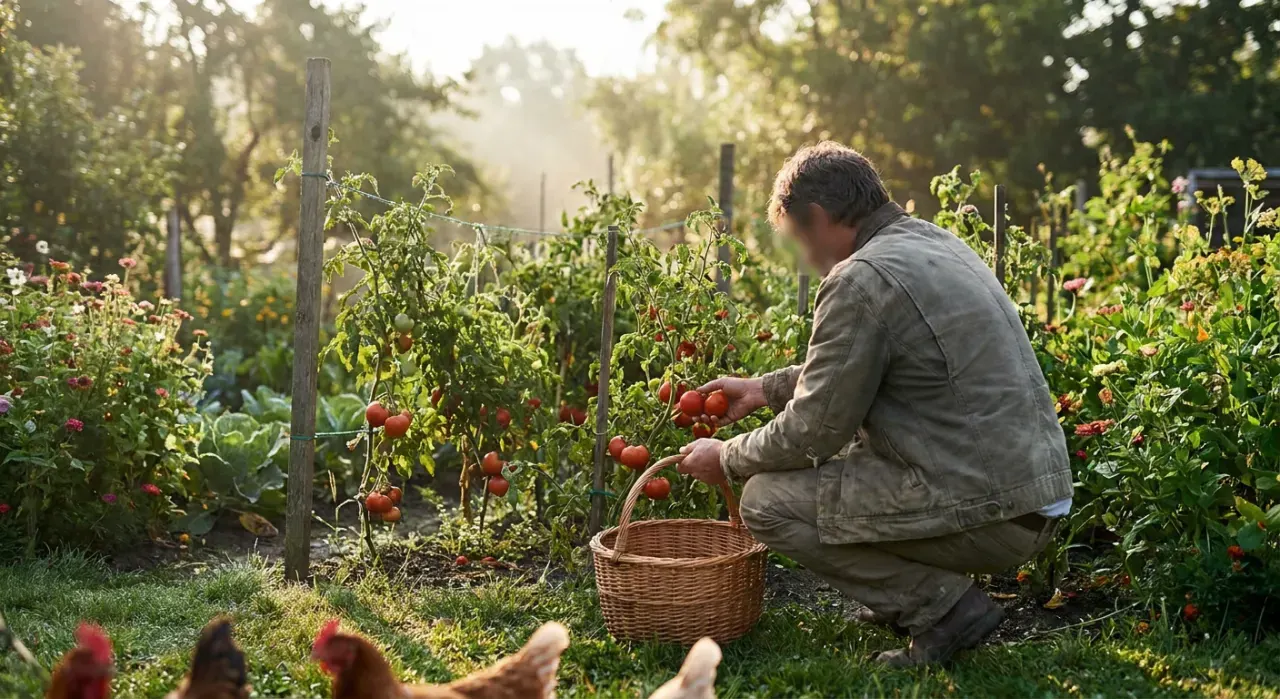
Basil tops nearly every tomato companion list, and the pairing holds up because both plants want the same conditions: full sun, warm soil above 60°F, steady moisture, and rich feeding. That shared preference is half the value — you can water and feed them together without compromise.
The pest angle is real but modest. Basil's volatile oils interfere with the host-finding of thrips and whiteflies, and its flowers pull in hoverflies whose larvae eat aphids. The popular claim that basil improves tomato flavor has no solid evidence behind it; grow basil because you want basil and because it distracts pests, not because it will sweeten the fruit. Space one plant every 18 to 24 inches, pinch it regularly to keep it bushy, and see our guide on how to prune basil to keep it productive all season.
Pest-repelling companion plants for tomatoes
Three plants do measurable pest work when used correctly:
- French marigold (Tagetes patula) — the roots exude alpha-terthienyl, which suppresses root-knot nematodes. This works best as a dense planting the season before tomatoes, used almost as a cover crop, rather than a handful of border plants. Avoid confusing it with African marigolds, which are less effective for this.
- Nasturtium — a genuine trap crop. Aphids and flea beetles prefer it to your tomatoes, so it concentrates the pests where you can hose or remove them. Plant it at the bed edge, not tucked among the tomatoes, so the pests it attracts stay at the margins.
- Garlic, chives and onions — the allium scent masks the tomato and deters aphids and spider mites. Interplant cloves or chive clumps every 12 to 18 inches along the row. These are also low-competition, which matters in a crowded bed.
Companions that bring in pollinators and predators
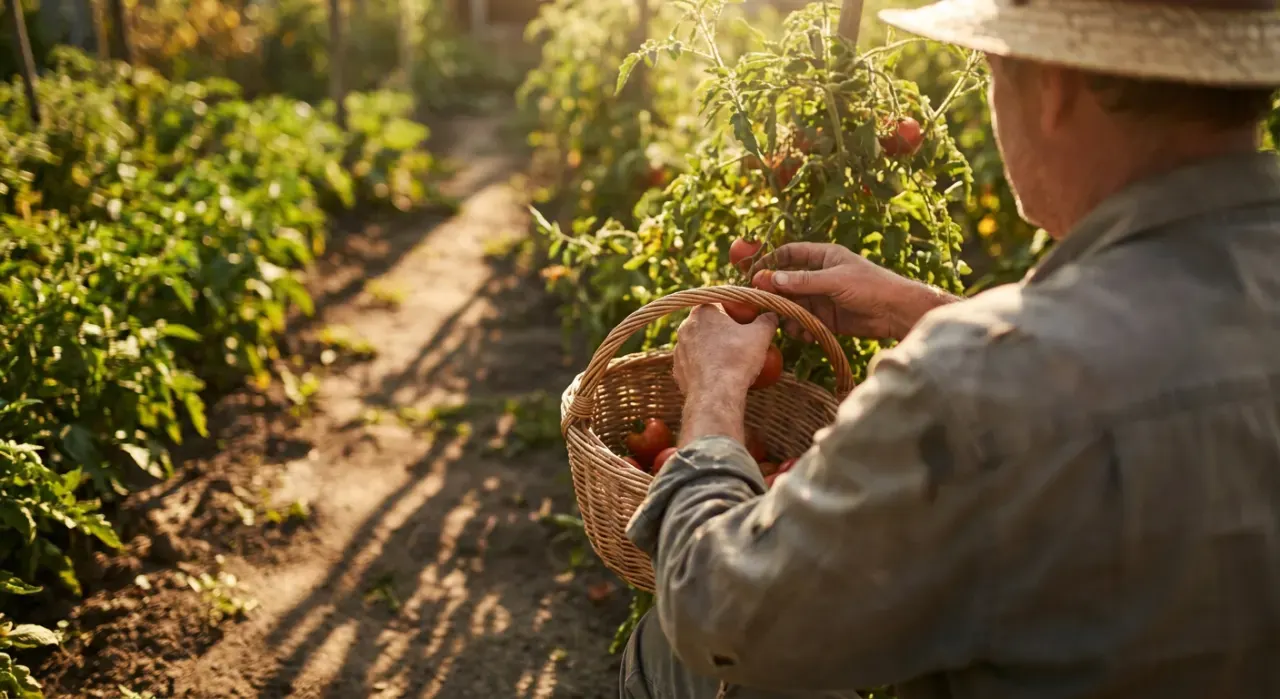
Tomatoes are self-pollinating, but fruit set improves when bees vibrate the flowers (buzz pollination), and a bed full of beneficial insects keeps pest outbreaks small before they start. The best draws are:
- Borage — a bee magnet that also attracts the predatory wasps that parasitize tomato hornworms. One plant serves several tomatoes; give it 24 inches because it gets large.
- Umbel herbs — parsley, cilantro and dill (before it flowers near tomatoes; see the avoid list) produce tiny flowers that feed hoverflies, lacewings and parasitic wasps. Let a few plants bolt on purpose.
- Sweet alyssum and calendula — low, long-flowering, and excellent at holding a resident population of aphid predators.
Ground-filling crops that use space before tomatoes take over
Young tomato transplants leave a lot of open soil that weeds are happy to claim. Fast, shallow-rooted crops fill that gap and are harvested before the tomato canopy closes in:
- Lettuce and spinach — cool-season greens that mature in the 30 to 50 days before your tomatoes need the room, and appreciate the light shade the growing tomato provides as the weather warms. See how to grow lettuce for timing.
- Radishes — ready in 25 to 30 days, they mark rows and break surface crust.
- Bush beans — fix nitrogen and stay clear of the tomato's root zone. Skip pole beans, which will compete for the same trellis space and light.
What to keep away from tomatoes
| Keep away | Why |
|---|---|
| Potatoes | Share early and late blight plus Colorado potato beetle; an outbreak jumps between them |
| Brassicas (cabbage, broccoli, kale) | Heavy feeders that compete hard and prefer cooler conditions |
| Corn | Attracts corn earworm, the same pest as tomato fruitworm |
| Fennel | Releases growth-suppressing compounds; poor neighbor to almost everything |
| Dill (mature) | Young dill is fine and helpful; once it flowers it can stunt tomatoes |
| Walnut trees | Roots release juglone, which is toxic to tomatoes |
The potato caution is the one to take seriously. Because both are nightshades, keeping them apart is also good crop-rotation practice — never follow tomatoes with potatoes in the same bed, and give the whole nightshade family a three-year rotation to starve out soilborne disease.
Companion-planting claims worth taking with a grain of salt
Companion planting collects a lot of folklore, and separating the evidence-backed from the wishful matters if you are planning a real bed. A few of the most repeated claims:
- "Basil makes tomatoes taste better." Charming, but there is no solid evidence for a flavor transfer through the soil or air. Grow basil for the pest distraction and the harvest, not sweeter fruit.
- "Marigolds repel all pests." Only French marigolds, and mainly for soil nematodes when grown densely. They will not stop a hornworm or an aphid flush on their own.
- "Carrots love tomatoes." The pairing works logistically because carrots finish before tomatoes crowd them, but the old claim of mutual benefit is more tradition than data.
- "Any allium protects tomatoes." The scent of garlic, chives and onions genuinely deters some soft-bodied pests, but it is a mild, supporting effect, not a shield.
The honest takeaway: companion planting works as a diversity strategy — more plant variety means more habitat for beneficial insects, more confusion for pests, and less bare ground — rather than as a set of magic one-to-one pairings. Build the bed for diversity and airflow, and treat any single "protective" plant as one small tool among many.
Timing your companions with the tomato season
Companions only help if they are in the ground at the right moment relative to the tomato:
| When | What to plant | Purpose |
|---|---|---|
| At tomato transplant | Lettuce, spinach, radish, cilantro | Use the open ground before the canopy closes |
| At transplant | Basil, marigold, garlic, chives | Establish alongside the tomato from day one |
| 1 to 2 weeks after | Nasturtium, borage, alyssum | Pollinator and trap crops as flowering nears |
| Season before | Dense French marigold planting | Suppress soil nematodes for next year |
Cool-season ground fillers go in at the same time as the tomato but are harvested out by midsummer, right as the tomato needs the room and light. Warm-loving companions like basil and nasturtium should wait until the soil and nights are warm, the same conditions the tomato itself wants.
A simple tomato companion planting layout
- Space tomatoes first at 18 to 24 inches for staked plants, wider for sprawling indeterminates. Everything else fills the gaps around them.
- Alternate basil and a marigold between tomatoes down the row, roughly one companion per tomato.
- Edge the bed with nasturtium and sweet alyssum so trap crops and pollinator plants ring the outside.
- Tuck garlic or chives at the base of every second or third tomato.
- Sow lettuce, spinach or radish in the open center ground at transplant time and harvest it out as the canopy closes.
- Add one borage per three or four tomatoes for pollinators and hornworm control.
Feed the whole bed as a unit; tomatoes are hungry, so match the plan with a balanced program from our vegetable garden fertilizer picks or, for a fruit-focused blend, the best organic tomato fertilizers. If leaves start curling as plants mature, our guide on tomato leaf curl covers the usual causes, and for the classic fruit disorder see blossom end rot. Everything else lives at the seeds and vegetable growing hub.