 Garden
Affiliate Disclosure
Some links on this page are affiliate links. As an Amazon Associate, we earn from qualifying purchases — at no extra cost to you. We do not buy, test, or physically handle the products we cover; our rankings come from aggregated owner reviews, ratings and expert consensus. Commissions never change our verdicts. How we rank · full disclosure.
The short answer: water established garden tomatoes deeply two to three times a week, aiming for about 1 to 1.5 in of water per week (more in heat), rather than a little every day. The goal is soil that stays evenly moist 6 to 8 in down, never bone-dry and never waterlogged. Container tomatoes are the exception: their limited soil dries fast, so in summer they often need water once or even twice a day. Water in the morning, at the base of the plant, and mulch to hold moisture steady.
How often is really a question of soil, weather and where the plant grows, so the number changes through the season. What stays constant is the principle: tomatoes reward consistent, deep moisture and punish the wet-dry swings that cause cracking and blossom end rot. We do not test the tools we rank; our picks come from aggregated owner reviews and expert consensus, explained in how we rank.
How much water tomatoes actually need
The working target for tomatoes is roughly 1 to 1.5 in of water per week, including rainfall, spread across two or three deep sessions. In peak summer heat or dry wind, that can climb to 2 in or more. What matters is depth: a deep soak wets the soil 6 to 8 in down, where the bulk of a tomato's feeding roots live, and encourages them to grow deep and drought-tough. Frequent shallow watering keeps only the surface wet and trains roots to stay shallow, leaving the plant fragile the moment you skip a day.
An easy way to measure output is to set an empty tuna can under your sprinkler or in the bed and time how long it takes to collect 1 in. Or push a finger or a wooden dowel into the soil after watering to confirm it is moist several inches down, not just glistening on top.
A watering schedule by situation
| Situation | Frequency | Notes |
|---|---|---|
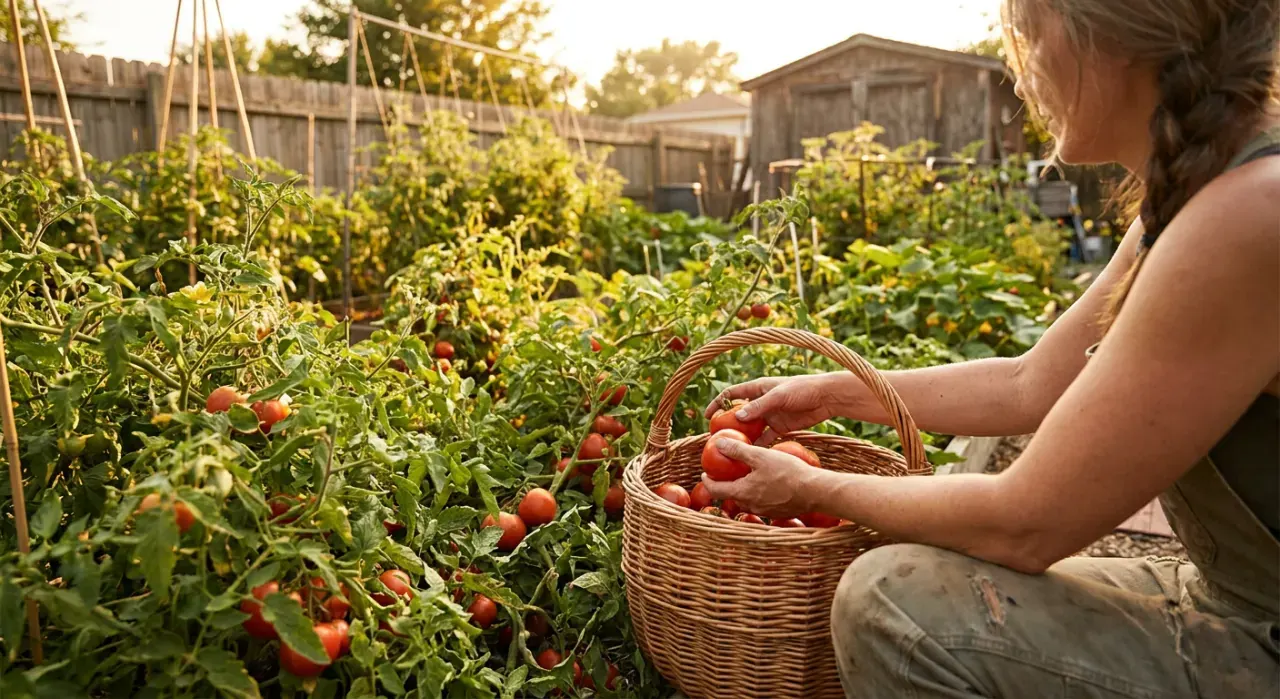
| In-ground, mild weather | 2 to 3 times a week, deep | Adjust down after rain |
| In-ground, hot and dry | Every other day, deep | Mulch is essential |
| Raised bed | 3 times a week, deep | Drains faster than ground soil |
| Container, 5 to 10 gal, mild | Once a day | Check by weight and finger test |
| Container, hot weather | 1 to 2 times a day | Water until it runs from the drainage holes |
| Newly transplanted | Daily for the first week | Keep the shallow root ball moist until roots spread |
Treat these as starting points, not rules. A cool, cloudy week needs far less than a heat wave, and clay soil holds water longer than sandy soil. Always let the soil, not the calendar, make the final call.
Check the soil before you water
The single best habit is to test the soil before every watering rather than watering on autopilot. Push a finger 2 in into the soil near the base of the plant. If it comes out dry, water. If it is still damp, wait. This one check prevents the most common mistake in tomato care — overwatering — which drowns roots and mimics the wilting of a thirsty plant. In containers, lifting the pot to feel its weight, or using a cheap moisture meter, works well. The soil-first approach automatically adapts your schedule to the weather.
Watering tomatoes in containers
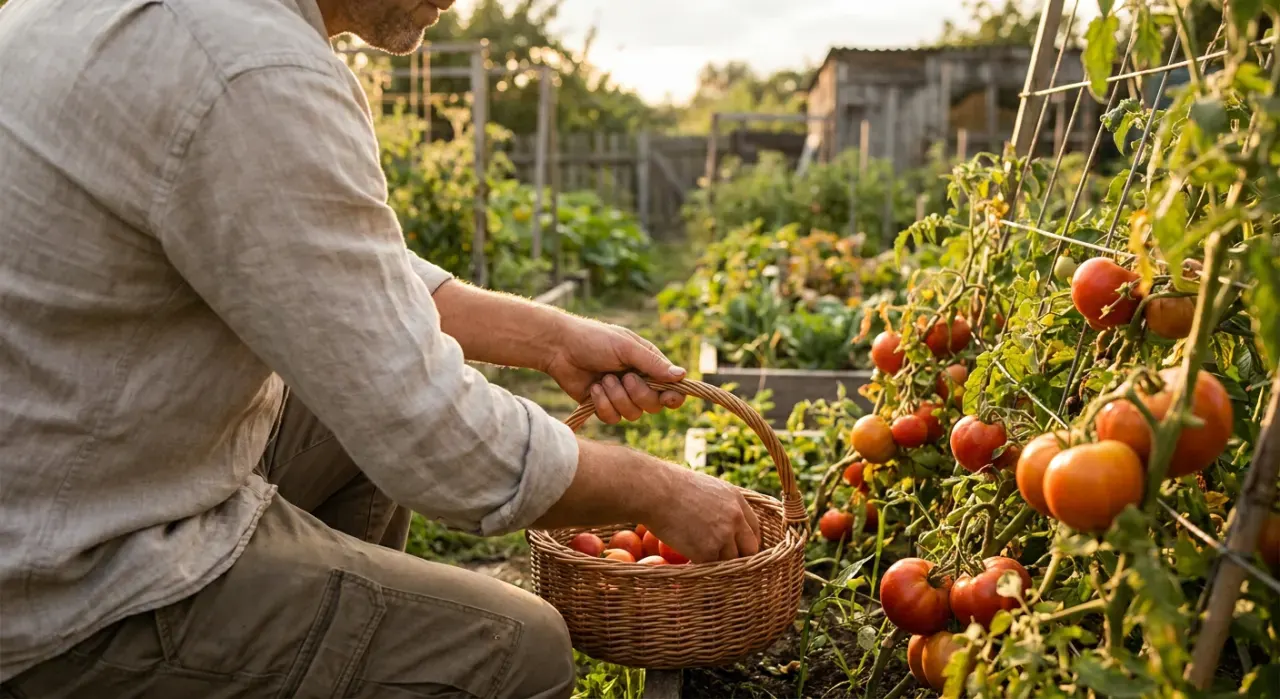
Container tomatoes are the thirstiest by far. A pot holds only a few gallons of soil that heats up on all sides and drains quickly, so in midsummer a potted tomato can empty its reservoir in a single hot day. Water until it flows freely from the drainage holes, which ensures the whole root ball is wetted, and expect to do it daily — sometimes morning and evening in a heat wave. Use the largest container you can (10 gallons or more for indeterminate varieties), add mulch on top of the potting mix, and consider a self-watering planter or drip line if you travel. The same watering discipline applies to other potted crops; see how to grow cucumbers in pots.
Mulch: the secret to consistent moisture
Mulching does more for tomato watering than almost anything else. A 2 to 3 in layer of straw, shredded leaves, or grass clippings over the root zone slows evaporation, moderates soil temperature, and — critically — buffers the wet-dry swings that trigger fruit cracking and blossom end rot. Mulched tomatoes can go noticeably longer between waterings and stay far more even in their moisture. Keep the mulch pulled back an inch from the stem itself to avoid rot. For a broader look at mulch materials, see best mulch for a vegetable garden.
Watering technique that prevents disease
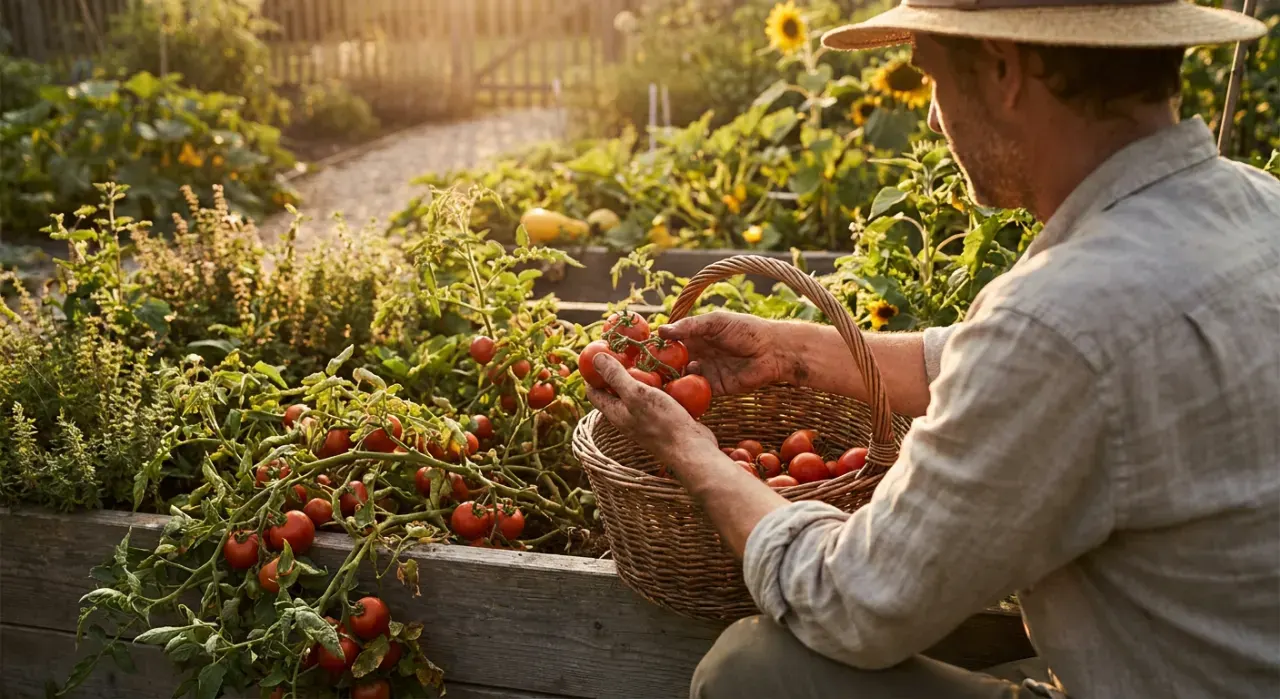
- Water at the base, not the leaves. Wet foliage invites early blight and septoria. A watering wand, soaker hose or drip line delivers water to the roots and keeps leaves dry.
- Water in the morning. The plant fills up before the heat, and any stray splashes dry quickly.
- Go slow and deep. A gentle, long soak sinks in; a fast blast runs off. Let the water penetrate rather than pool.
- Avoid evening overhead watering. Damp leaves overnight are the ideal setup for fungal disease.
Signs you are watering wrong
| Sign | Likely cause | Fix |
|---|---|---|
| Wilting in wet soil | Overwatering, roots suffocating | Let soil dry to 2 in down; improve drainage |
| Wilting in dry soil | Underwatering | Deep-soak; increase frequency |
| Yellow lower leaves | Often overwatering; can be nitrogen | Check soil moisture first before feeding |
| Cracked or split fruit | Heavy watering after a dry spell | Water consistently; mulch heavily |
| Sunken black spot on fruit base | Blossom end rot from uneven watering | Even, consistent moisture; mulch |
| Afternoon wilt that recovers by evening | Normal heat stress | No action needed if soil is moist |
Watering tools that make consistency easier
The hardest part of tomato watering is not the how but the consistency, and a few simple tools remove the guesswork.
- Soaker hose or drip line. The single best upgrade. It delivers water slowly at the base, keeps foliage dry, and applies water evenly along a row. Put it on an inexpensive timer and erratic watering becomes automatic consistency.
- Mulch. Not a tool exactly, but it does more than any gadget to buffer moisture swings — covered earlier and worth repeating.
- Moisture meter or a wooden dowel. A cheap probe, or simply a dry stick pushed into the soil, tells you what is happening several inches down where roots live, rather than at the deceptive surface.
- Rain gauge. Lets you subtract rainfall from the weekly target instead of overwatering after a storm.
- Self-watering containers. For potted tomatoes, a built-in reservoir smooths out the daily swings that plague small pots and makes a weekend away survivable.
None of these are essential — a watering can and attention work fine — but for anyone who travels, forgets, or grows more than a few plants, a drip line on a timer plus mulch is close to foolproof and pays for itself in fewer cracked and rot-affected fruit.
Watering is one part of a bigger picture. For the full routine, see how to care for tomatoes, and to get feeding right alongside watering, best fertilizer for tomatoes. Everything else is at the seeds and vegetable growing hub.