 Garden
Affiliate Disclosure
Some links on this page are affiliate links. As an Amazon Associate, we earn from qualifying purchases — at no extra cost to you. We do not buy, test, or physically handle the products we cover; our rankings come from aggregated owner reviews, ratings and expert consensus. Commissions never change our verdicts. How we rank · full disclosure.
To grow kale: plant this hardy cool-season green in early spring (2 to 4 weeks before last frost) and again in mid-to-late summer for a fall crop, spacing plants 12 to 18 inches apart in full sun to part shade with rich, moist soil. Keep it consistently watered, protect it from cabbage worms with row cover, and harvest the outer leaves from the bottom up once they reach the size of your hand, leaving the center to keep producing. Kale tolerates hard frost and turns sweeter after it, making fall and winter its best season.
Kale is one of the easiest, most productive and most cold-hardy vegetables you can grow, and it forgives beginners more than almost anything else in the garden. Its two quirks worth knowing: it dislikes summer heat and it tastes far better after frost. We do not grow trial plots ourselves; this reflects horticultural consensus and aggregated grower reviews, as described in how we rank.
Choosing a variety
Kale types differ in leaf texture, cold-hardiness and looks. Any of these grows the same way.
| Variety | Leaf | Notes |
|---|---|---|
| Curly (Winterbor, Vates) | Ruffled, sturdy | The classic; very cold-hardy; holds texture when cooked |
| Lacinato (dinosaur, Tuscan) | Dark, bumpy, strap-like | Sweeter, tender; favorite for raw salads and Italian cooking |
| Red Russian | Flat, toothed, purple-veined | Tender and mild; among the most cold-tolerant; fast |
| Redbor | Curly, deep red-purple | Ornamental and edible; striking in the fall garden |
Red Russian and Lacinato are the mildest and best for eating raw; curly types are the toughest and most winter-hardy. All are heavy in vitamins A, C and K and grow on the same schedule.
When to plant
Kale is a cool-season crop with two windows. For a spring crop, sow or transplant 2 to 4 weeks before your last frost — young kale takes light frost easily. For the better fall crop, sow in mid-to-late summer, about 8 to 10 weeks before your first fall frost, so plants mature into the cool weather that sweetens them. Skip midsummer in hot regions, where kale bolts and turns bitter. You can start seeds indoors 4 to 6 weeks ahead (see how to start seeds indoors) or direct-sow, since kale germinates readily in cool soil. Region-by-region detail is in when to plant kale.
Planting and spacing
Kale wants full sun in cool weather (part shade helps in summer heat) and rich, well-drained soil with plenty of compost worked in; a soil pH of 6.0 to 7.5 is ideal. Space plants 12 to 18 inches apart in rows 18 to 24 inches apart — crowded kale competes for light and airflow and grows small, mildew-prone leaves. If direct-sowing, sow a quarter to half an inch deep and thin to final spacing once seedlings have a few true leaves. Transplants can go slightly deeper, up to the first set of leaves, for a sturdier plant.
Watering and feeding
Kale is a leafy green, so steady moisture and nitrogen drive tender, fast growth. Give it about 1 to 1.5 inches of water a week, keeping the soil consistently moist — drought stress makes leaves tough and bitter and encourages bolting. Mulch to hold moisture and keep weeds down. As a moderate-to-heavy feeder, kale benefits from a nitrogen-forward feed every 3 to 4 weeks or a rich compost-amended bed; pale, slow leaves signal it wants feeding. General fertilizer options are in best vegetable garden fertilizer, and mulch choices in best mulch for a vegetable garden.
Beating the pests
Kale is a brassica, so it draws the usual cabbage-family pests. The two to watch:
- Cabbage worms. The green caterpillars of the white cabbage moth chew ragged holes and leave dark droppings. Best control is a floating row cover of insect mesh from planting, which stops the moths laying eggs; otherwise hand-pick or spray Bt, which targets only caterpillars.
- Aphids. Clusters on new growth and leaf undersides. Blast them off with water or use insecticidal soap; encourage ladybugs.
- Flea beetles and cabbage loopers also appear; row cover handles them too.
Rotate kale and other brassicas to a new spot each year to break pest and disease cycles, and check leaf undersides regularly.
Harvesting for months of leaves
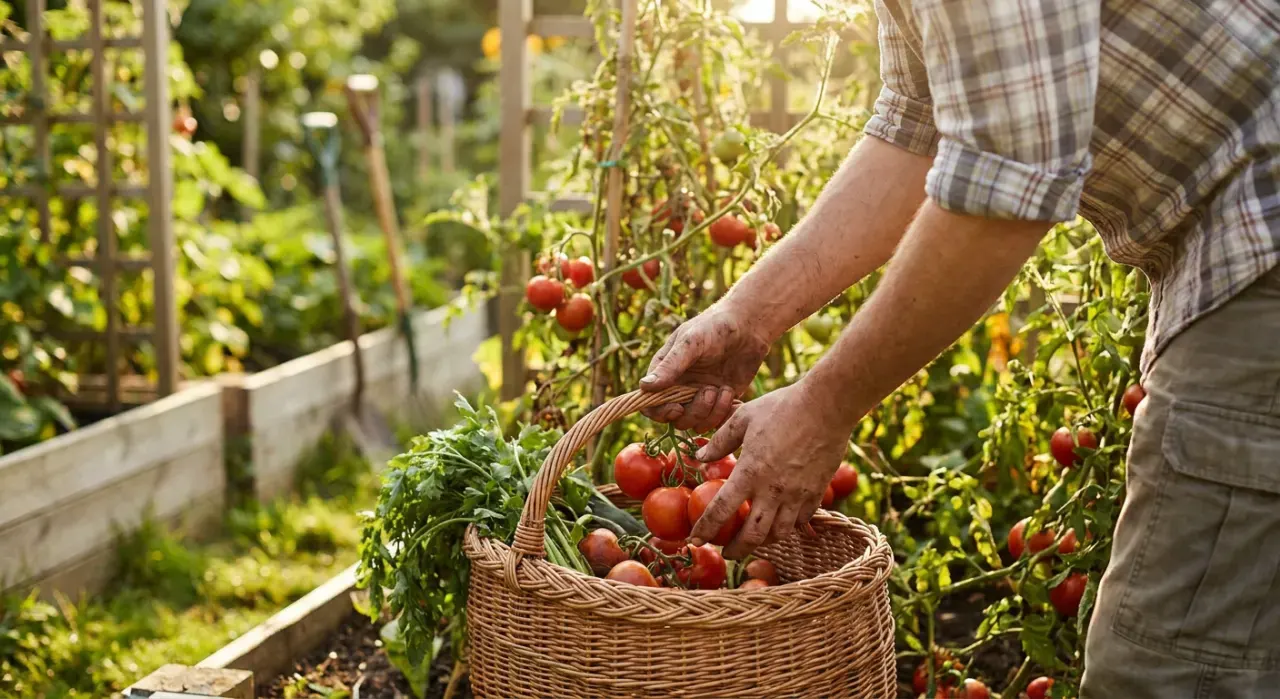
Kale is a cut-and-come-again crop, which is the secret to its productivity. Begin harvesting when the outer leaves reach the size of your hand, roughly 55 to 75 days from sowing. Snap or cut the oldest, lowest leaves off at the stem, working from the bottom up, and always leave the central growing tip and the top rosette of young leaves intact — that keeps the plant producing new growth for months. Never strip a plant bare. Harvest in the morning for the crispest leaves, and after fall frosts for the sweetest. A well-tended plant, especially an overwintered one in a mild zone, produces for a remarkably long time.
Growing kale in containers
Kale is one of the best leafy greens for containers, and a pot on a patio has the added benefit of being easy to move into shade during a summer heat wave or under cover ahead of a hard freeze. Use a container at least 12 inches deep and wide per plant, or a larger trough for several, filled with a quality potting mix enriched with compost rather than heavy garden soil. Because containers hold fewer nutrients and dry out faster than beds, container kale needs more attention: water whenever the top inch of mix is dry, often daily in summer heat, and feed every 2 to 3 weeks with a diluted nitrogen-forward liquid fertilizer to keep the leaves coming, since a fast-growing leafy crop in a pot exhausts its nutrients quickly. Choose compact or dwarf varieties like Dwarf Blue Curled for the tidiest container plants, though any kale will grow in a large enough pot. Harvest the same way as in the ground — outer leaves from the bottom up, leaving the center to regrow — and one or two well-fed container plants will keep a household in kale through the cool season. Move pots to a sheltered spot and mulch the surface to push the harvest deeper into winter.
Overwintering and season end
Kale is among the most cold-hardy vegetables, shrugging off temperatures well below freezing and often surviving into or through winter under a layer of mulch or row cover in zone 7 and warmer. In cold zones it may winter-kill, but a heavily mulched plant frequently pulls through and offers early spring leaves before it bolts to flower. Once it bolts, the leaves turn bitter — that is the signal to pull it and, if you like, let one plant flower to feed early pollinators or save seed. For more cool-season leafy crops, see how to grow lettuce, and start anywhere from the seeds and vegetable growing hub.