 Garden

Affiliate Disclosure
Some links on this page are affiliate links. As an Amazon Associate, we earn from qualifying purchases — at no extra cost to you. We do not buy, test, or physically handle the products we cover; our rankings come from aggregated owner reviews, ratings and expert consensus. Commissions never change our verdicts. How we rank · full disclosure.
What to plant in June depends on your zone: cold-region gardeners in zones 3 to 5 finally set out their full summer garden of tomatoes, beans, corn, and squash, temperate zones 6 to 7 succession-sow beans and corn and start fall brassicas late in the month, and warm zones 8 to 11 grow heat-lovers like okra, southern peas, and sweet potatoes while planning the fall garden. June is high summer for planting — the last frost is behind the whole country, and the focus is warmth, succession, and getting a jump on fall in the hottest regions. Here is the crop-by-crop plan for each climate band.
We do not test or physically handle the plants and products we cover; our guidance draws on horticultural extension research and the aggregated experience in thousands of owner reviews, as explained in how we rank.
June is the one month with no frost risk anywhere in the lower 48, and the longest days of the year fall within it. That combination makes June the high point of warm-season planting for the far north, where the short summer means everything goes in now and short-season varieties are essential. For temperate zones the main summer garden is already planted, so June becomes a month of succession sowing to keep the harvest coming, and of quietly starting the long-season fall crops — Brussels sprouts, storage cabbage, leeks — that need most of the remaining season to size up. In the warm and frost-free South, June heat is intense enough that the emphasis falls squarely on heat-tolerant crops, while gardeners begin planning the fall garden that will be their most productive season. Because frost is off the table, the deciding factors this month are how much summer you have left and how much heat your region throws at tender plants. Watering and mulching newly set crops through the building heat becomes as important as the planting itself. Below, each climate band gets its own crop-by-crop plan.
June planting at a glance by zone
Find your band, then read the matching section. June is the one month with no frost risk anywhere in the lower 48, so the deciding factors are how much summer you have left and how much heat your region throws at tender crops.
| USDA zone | June focus | Key action |
|---|---|---|
| 3 to 5 (cold) | Main warm-season planting | Set out tomatoes; sow beans, corn, squash |
| 6 to 7 (temperate) | Succession and early fall prep | Succession-sow; start fall brassicas late month |
| 8 to 9 (warm) | Heat crops and fall planning | Grow okra, southern peas; plan fall garden |
| 10 to 11 (frost-free) | Heat-hardy survival | Okra, sweet potato; rest beds under cover crops |
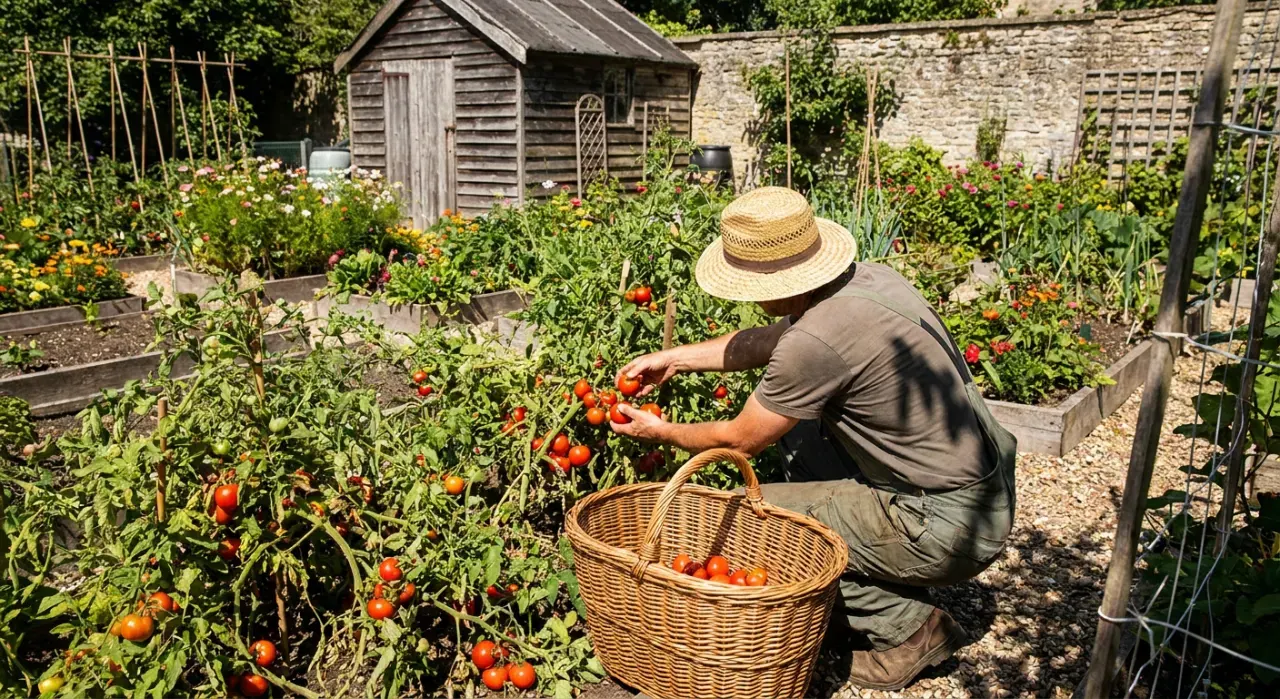
Cold regions (zones 3-5): the main summer planting
In the far north, June is the primary warm-season planting month — the danger of frost is past, and the soil is finally warm. Choose short-season varieties so everything ripens before the short summer ends.
| Crop | Method | Days to maturity |
|---|---|---|
| Tomatoes (short-season) | Transplant | 55 to 70 |
| Bush and pole beans | Direct, 1 in. deep | 50 to 65 |
| Cucumbers and summer squash | Direct, 1 in. deep | 50 to 65 |
| Sweet corn (early types) | Direct, 1 in. deep | 60 to 75 |
| Zucchini and pumpkins | Direct or transplant | 50 to 100 |
The long daylight of a northern June drives fast growth, so direct-sown crops catch up quickly. Prioritize varieties with the shortest days to maturity, and get everything in during the first half of the month to leave room for ripening before fall frost. Mulch to keep the soil evenly moist as summer heat arrives.
Temperate regions (zones 6-7): succession and fall groundwork
The main summer garden is planted, so June in zones 6 and 7 is about keeping the harvest coming and quietly starting fall. Two jobs run in parallel.
- Succession-sow bush beans, cucumbers, summer squash, and sweet corn every two to three weeks for a staggered harvest into fall.
- Direct-sow heat crops — okra, southern peas, and melons go in for the hottest part of summer.
- Start long-season fall crops indoors or in a nursery bed late June — Brussels sprouts, storage cabbage, broccoli, and leeks for July transplanting.
- Replant freed beds — as spring peas and lettuce finish, fill the space with beans or a fall crop.
Starting Brussels sprouts and other long-season brassicas now is essential; they need most of the remaining season to size up before fall.
Warm regions (zones 8-9): heat crops and fall planning
June heat in the warm South means leaning hard on heat-tolerant crops and looking ahead to the fall garden, which will be the region's most productive season.
| Crop | Method | Notes |
|---|---|---|
| Okra | Direct, 1 in. deep | Thrives in peak heat |
| Southern (cowpea) peas | Direct, 1 in. deep | Reliable summer legume |
| Sweet potatoes | Plant slips | Still time for a fall harvest |
| Eggplant and hot peppers | Transplant | Handle heat better than tomatoes |
| Malabar spinach | Direct or transplant | Heat-loving vining green |
Water deeply and mulch heavily to protect roots from soaring soil temperatures. Now is also the time to order fall seed and map the fall garden, which begins in mid to late summer. In the hottest zones, some gardeners rest tired beds under a cover crop through the worst of the heat.
Frost-free regions (zones 10-11): resting through the heat
In south Florida, deep south Texas, coastal southern California, and Hawaii, June is deep in the tropical summer, often hot and wet. Only the most heat- and humidity-hardy crops keep going: okra, southern peas, sweet potatoes, boniato, malabar spinach, and yard-long beans. Many gardeners deliberately fallow their beds now, sowing a cover crop such as cowpeas or sunn hemp to protect and enrich the soil until the fall growing season resumes. Where planting continues, deep mulch and afternoon shade help the toughest crops through the worst heat and humidity, and consistent watering keeps shallow-rooted vegetables from collapsing on the hottest days. Fighting the peak of tropical summer rarely rewards the effort here, so June is better spent building soil and finalizing the fall plan than battling conditions that stack the odds against tender crops.
The count-back method for planning fall crops
June is when fall planning starts to matter, especially for long-season crops. The method is the mirror image of spring timing: instead of counting forward from the last frost, count backward from your first fall frost.
- Find your average first fall frost date.
- Take the crop's days to maturity from the seed packet.
- Add about 14 days as a buffer for slower autumn growth.
- Count back from the frost date to get the latest safe sowing date.
Long-season fall crops — Brussels sprouts, storage cabbage, leeks — often work out to a June or early-July sowing, which is why they belong on the June list even though harvest is months away.
Common June planting mistakes
| Mistake | Result | Fix |
|---|---|---|
| Planting long-season varieties in the far north | Crops caught by fall frost | Choose short-season types in June in cold zones |
| Starting tomatoes in warm-zone heat | Poor fruit set above the mid-90s°F | Wait and plant a fall tomato crop instead |
| Letting soil dry out | Blossom drop and stressed plants | Mulch and water deeply and consistently |
| Forgetting long-season fall crops | No Brussels sprouts or storage cabbage | Start them from seed in late June |
Watering and mulching newly planted crops through the heat
June planting happens as the weather turns genuinely hot, which changes the rules for getting crops established. A seed or transplant that goes into warm, fast-drying soil needs more attentive moisture management than one planted in cool spring ground, and the choices you make now set up the whole summer.
- Water deeply, not often — a thorough soak that wets the soil 6 to 8 inches down, once or twice a week, drives roots deeper and builds drought resilience. Frequent shallow sprinkling keeps roots at the surface where they cook and dry out.
- Water at the base, in the morning — delivering water to the soil rather than the leaves, early in the day, reduces evaporation and the leaf-wetness that spreads fungal disease.
- Mulch once the soil is warm — a 2 to 3 inch layer of straw, shredded leaves, or grass clippings around plants conserves moisture, suppresses weeds, and keeps soil temperatures from spiking. Applied to warm June soil, it works with the season rather than against it.
- Keep new seedbeds constantly moist — direct-sown beans, cucumbers, and squash need the surface kept damp until they emerge, which in June heat can mean daily watering.
Consistent moisture also prevents specific June disorders. Blossom-end rot on tomatoes and peppers, and bitter cucumbers, both trace back to erratic watering that interrupts the plant's calcium and water uptake during a heat spell. Tomatoes that swing between bone-dry and soaked also split their fruit. A layer of mulch and a steady watering rhythm smooth out these swings. For choosing a mulch that suits a vegetable bed, see best mulch for a vegetable garden. The goal through June is simple: get everything you plant established and rooted deeply before the peak heat of midsummer arrives.
Related: look back at what to plant in May, ahead to what to plant in July, review the full summer planting guide, or read how we rank.