 Garden

Affiliate Disclosure
Some links on this page are affiliate links. As an Amazon Associate, we earn from qualifying purchases — at no extra cost to you. We do not buy, test, or physically handle the products we cover; our rankings come from aggregated owner reviews, ratings and expert consensus. Commissions never change our verdicts. How we rank · full disclosure.
What to plant in May depends on your zone: cold and temperate gardeners in zones 3 to 7 set out tomatoes, peppers, beans, corn, cucumbers, and squash once the last frost passes, while warm zones 8 to 11 shift to heat-tolerant crops like okra, southern peas, and sweet potatoes as intense summer approaches. May is the peak warm-season planting month across the northern half of the country — the frost lifts and the whole summer garden goes in. Here is the crop-by-crop plan for each climate band.
We do not test or physically handle the plants and products we cover; our guidance draws on horticultural extension research and the aggregated experience in thousands of owner reviews, as explained in how we rank.
May is the month the warm-season garden goes in across the northern half of the country. For temperate and cold zones the last frost passes during May, and with it the green light for the tender crops that define summer eating — tomatoes, peppers, beans, corn, cucumbers, squash, and melons. Soil has warmed into the 60s°F, days are long, and everything planted now grows fast. The defining tension of May is timing against that last frost: plant a week too early and a late cold night can undo the whole effort, yet wait too long in a short-summer region and slow crops run out of season. In the warm and frost-free South the calculus flips entirely. There, May heat is already building toward levels that stop tomato fruit set and bolt tender greens, so the planting emphasis shifts to genuine heat-lovers like okra, southern peas, and sweet potatoes that thrive when other crops wilt. Reading your own climate — racing frost in the north, racing heat in the south — is the key to a strong May planting. Below, each climate band gets its own crop-by-crop plan.
May planting at a glance by zone
Find your band, then read the matching section. In May, warm-season crops are the story everywhere frost has passed; in the hottest regions, the challenge flips from frost to heat tolerance.
| USDA zone | Typical last frost | May action |
|---|---|---|
| 3 to 5 (cold) | Mid-May to early June | Transplant tomatoes/peppers after frost; sow beans, squash |
| 6 to 7 (temperate) | Mid-April to early May | Set out the full warm-season garden early May |
| 8 to 9 (warm) | Late February to March | Shift to okra, southern peas, sweet potatoes |
| 10 to 11 (frost-free) | None | Plant only the most heat-hardy crops |
Cold regions (zones 3-5): the summer garden goes in
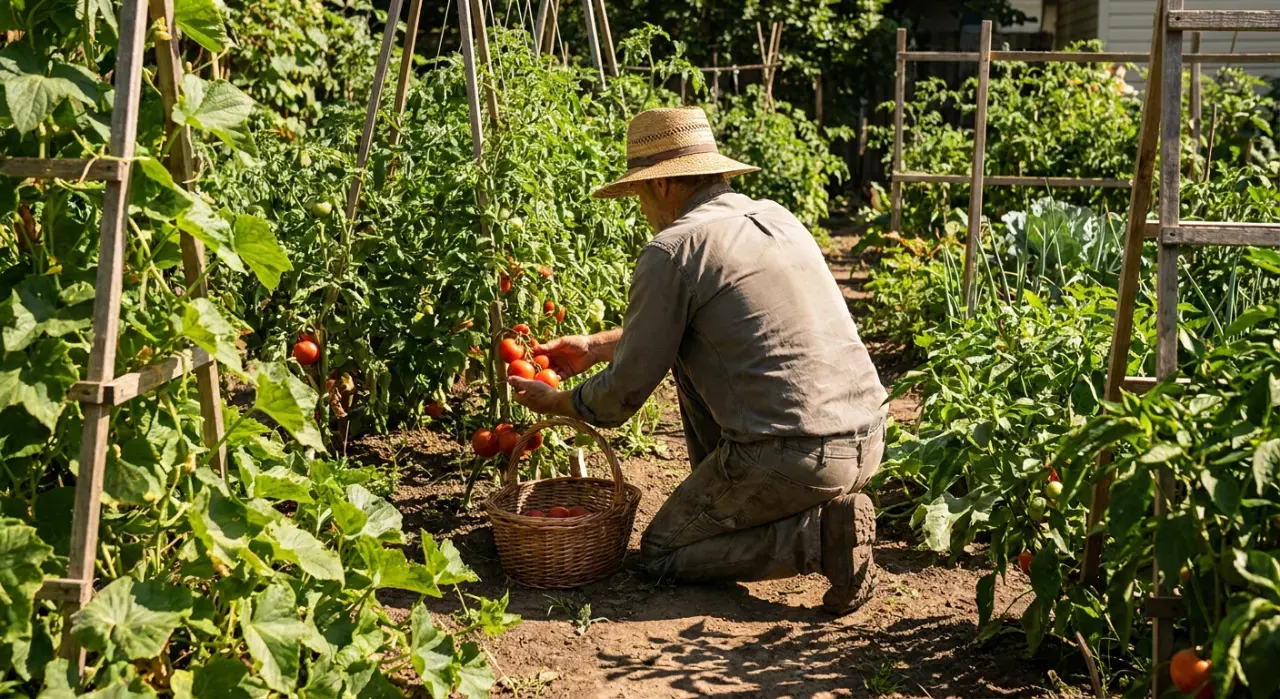
For the north, May is the moment the whole warm-season garden becomes possible. The last frost falls mid-to-late May, so tender transplants go out after it and fast warm-season seeds go directly into warming soil.
| Crop | Method | Days to maturity |
|---|---|---|
| Tomatoes and peppers | Transplant after last frost | 60 to 85 from transplant |
| Bush and pole beans | Direct, 1 in. deep | 50 to 65 |
| Cucumbers and summer squash | Direct, 1 in. deep | 50 to 65 |
| Sweet corn | Direct, 1 to 1½ in. deep | 60 to 90 |
| Winter squash and pumpkins | Direct or transplant | 80 to 110 |
Because the northern summer is short, use transplants for the long-season crops (tomatoes, peppers, winter squash) and direct-sow the fast ones. Set tomato transplants deep, burying part of the stem so it roots along its length for a stronger plant. Have row cover ready in case of a late-May cold snap. Early in the month, a last direct sowing of carrots, beets, and lettuce is still worthwhile.
Temperate regions (zones 6-7): full warm-season planting
With frost past, the first two weeks of May are the prime window for the summer garden in zones 6 and 7. Everything heat-loving can go in.
- Tomatoes, peppers, eggplant — transplant hardened-off starts early May; these are the backbone of the summer garden.
- Beans, cucumbers, squash, melons — direct-sow into warm soil for fast germination.
- Sweet corn — sow in blocks of at least four short rows for good pollination.
- Basil and warm herbs — set out once nights stay mild; cold nights check their growth.
Keep a succession of beans and corn going through the month for a staggered harvest. The cool-season crops sown in spring are maturing now, so as beds free up, replant them with warm-season successions.

Warm regions (zones 8-9): planting for the heat
In the warm South, May heat is building fast and the planting emphasis shifts to crops that thrive in it. Tomatoes and peppers planted earlier are producing; new plantings now favor genuine heat-lovers.
| Crop | Method | Notes |
|---|---|---|
| Okra | Direct, 1 in. deep | Loves heat; sow in 65°F+ soil |
| Southern (cowpea) peas | Direct, 1 in. deep | Black-eyed, crowder, field peas |
| Sweet potatoes | Plant slips | Long, hot season crop |
| Malabar and New Zealand spinach | Direct or transplant | Heat-tolerant greens |
| Yard-long beans and lima beans | Direct, 1 in. deep | Handle heat better than snap beans |
These crops carry the garden through the hot months when standard tomatoes and tender greens struggle. Mulch heavily to conserve moisture and keep soil temperatures from spiking, and water deeply and consistently as the heat rises.
Frost-free regions (zones 10-11): the heat-hardy shortlist
In south Florida, deep south Texas, coastal southern California, and Hawaii, May brings punishing heat and, in some areas, the start of the rainy season. The productive planting window is largely over, and only the toughest crops go in: okra, southern peas, sweet potatoes, malabar spinach, yard-long beans, and boniato. Many gardeners in these regions rest beds under a cover crop such as cowpeas or sunn hemp through the worst of summer and gear up again for the fall and winter growing season. A cover crop over the hot months suppresses weeds, adds organic matter, and interrupts the pest and disease cycles that build up in continuous cropping. Trying to force tender vegetables through peak tropical summer usually ends in disappointment, so May here is best spent finishing the last heat-hardy plantings and improving soil for the productive season that returns in fall.
Setting transplants and sowing for a strong start
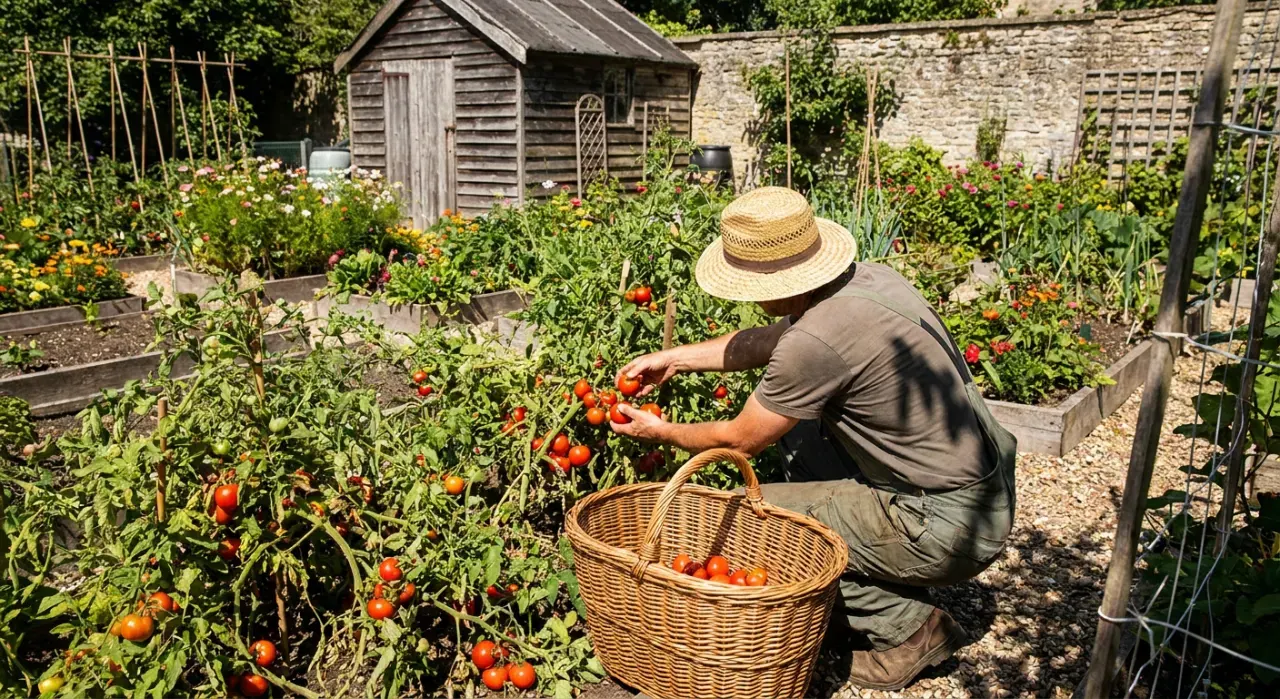
How you plant in May shapes the whole summer. A few techniques give warm-season crops the best possible start in freshly warmed soil.
- Plant tomatoes deep — bury two-thirds of the stem; tomatoes root along buried stems and build a bigger root system.
- Water in at planting — settle transplants with a thorough soak to close air pockets around the roots.
- Mulch after the soil warms — a mulch layer conserves moisture and suppresses weeds; see best mulch for a vegetable garden.
- Provide support early — install stakes, cages, and trellises at planting so you are not disturbing roots later.
Common May planting mistakes
| Mistake | Result | Fix |
|---|---|---|
| Rushing tomatoes out before frost passes | Cold damage or death | Wait for last frost and 50°F+ nights |
| Planting cool-season crops in warm zones | Bolting and bitterness | Switch to heat-tolerant crops in the South |
| Setting tomato transplants shallow | Weak root systems | Bury two-thirds of the stem |
| Planting corn in a single row | Poor pollination, gappy ears | Sow in blocks of at least four rows |
Guarding against a late-May frost
May tempts gardeners to plant the moment the weather turns warm, but a late frost after the average date is one of the most common ways a summer garden gets set back. Average last-frost dates are just that — averages — and roughly half of years see frost a little later. Tender crops set out in early May, especially in cold and temperate zones, need a plan for the cold night that still arrives.
- Watch the forecast, not the calendar — a clear, still, dry night with temperatures dropping toward the mid-30s°F is prime frost weather. Wind and cloud cover reduce the risk.
- Keep row cover on hand — a floating cover thrown over transplants at dusk and removed in the morning adds several degrees and turns a killing frost into a harmless one.
- Use water-filled cloches for tomatoes — tepee-style water walls around individual tomato plants store daytime heat and release it overnight, letting you plant a week or two earlier with confidence.
- Water the soil before a cold night — moist soil holds and radiates more heat than dry soil, offering a small but real buffer around low plants.
If a frost catches unprotected plants, act at dawn: a light frost sometimes only nips the outer leaves, and gently rinsing frost off before the sun hits can reduce the damage. Have a few spare transplants held back in reserve as insurance — it is far easier to replace a frosted tomato from a backup plant than to start over from seed in late May. The staggered approach many experienced gardeners use is to set out a portion of the tender crop at the average frost date and hold the rest for a week or two, spreading the risk across the tail end of the frost season.
Related: look back at what to plant in April, ahead to what to plant in June, review the full spring planting guide, or read how we rank.