 Garden

Affiliate Disclosure
Some links on this page are affiliate links. As an Amazon Associate, we earn from qualifying purchases — at no extra cost to you. We do not buy, test, or physically handle the products we cover; our rankings come from aggregated owner reviews, ratings and expert consensus. Commissions never change our verdicts. How we rank · full disclosure.
Most lawns want about one inch of water per week, delivered in one or two deep soakings rather than daily sprinkles. That typically means 30 to 45 minutes per zone with rotor heads, or 15 to 20 minutes with fixed spray heads, and roughly 60 to 90 minutes for a single oscillating hose sprinkler covering one area. The only reliable way to know your own number is a catch-can test: set straight-sided cans out, run for 15 minutes, measure the depth, and multiply by four to get the hourly rate.
How do you find your own run time?
Do the catch-can test once and you will never guess again. Place five or six empty tuna cans across the zone — some near the head, some at the edge of the throw — and run the sprinkler for exactly 15 minutes. Measure the water depth in each can with a ruler, average the readings, and multiply by four. If the average is 0.25 inches, your rate is one inch per hour, so a 30 minute run delivers half an inch and you need two runs a week. The spread between cans matters as much as the average: a wide variation means poor overlap and dry patches that no run time will fix.
| Sprinkler type | Typical rate | Run time for 0.5 in |
|---|---|---|
| Fixed spray heads | 1.5–2.0 in/hr | 15–20 min |
| Rotor heads | 0.4–0.8 in/hr | 35–75 min |
| Rotary nozzles | 0.4–0.6 in/hr | 50–75 min |
| Oscillating hose sprinkler | 0.3–0.6 in/hr | 50–100 min |
| Impact sprinkler | 0.3–0.5 in/hr | 60–100 min |
These are starting points, not answers. Water pressure, nozzle size and spacing all shift the real figure, sometimes by half.
How does soil type change the run time?
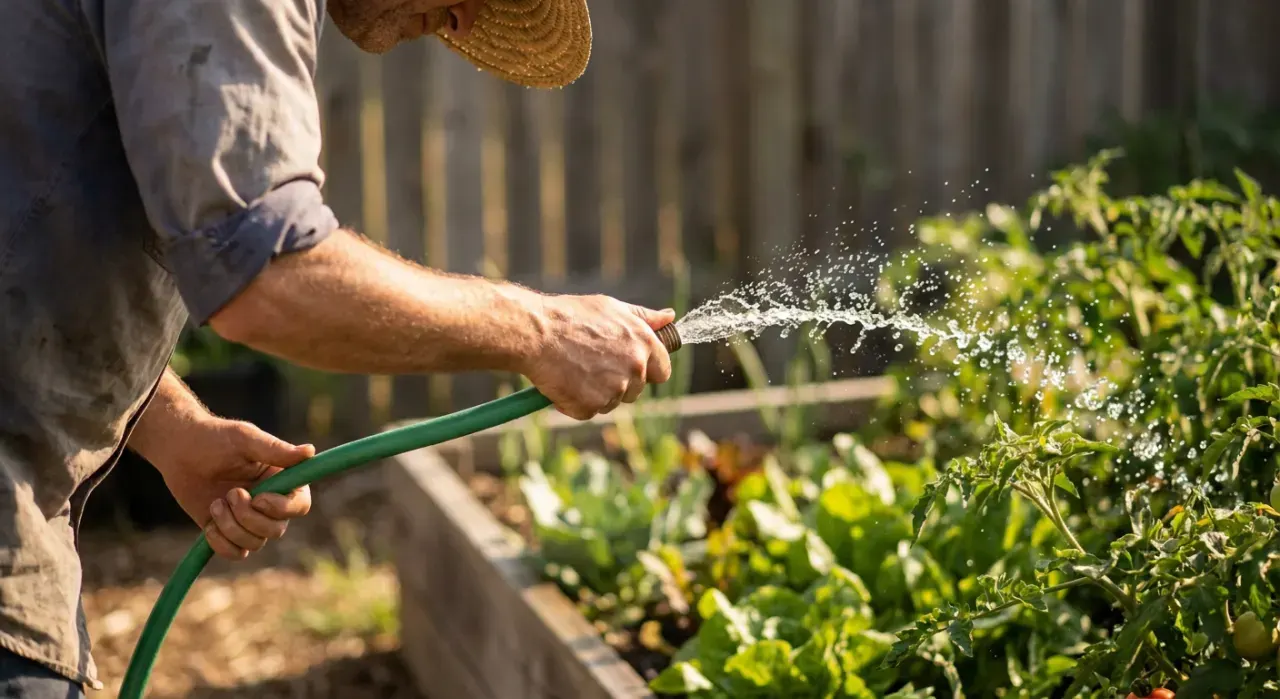
It changes how you split the time rather than the weekly total. Sandy soil absorbs water quickly but holds little, so it prefers two or three shorter waterings a week. Loam is the easy case: one or two deep runs. Clay absorbs slowly — often well under a quarter inch per hour — so a long continuous run produces runoff into the street long before the root zone is wet. On clay and on any slope, use cycle-and-soak: split the run into two or three shorter cycles an hour apart, which lets each application infiltrate. If you see water running off the edge of the lawn, the cycle is too long regardless of what the schedule says.
Does the run time change through the year?
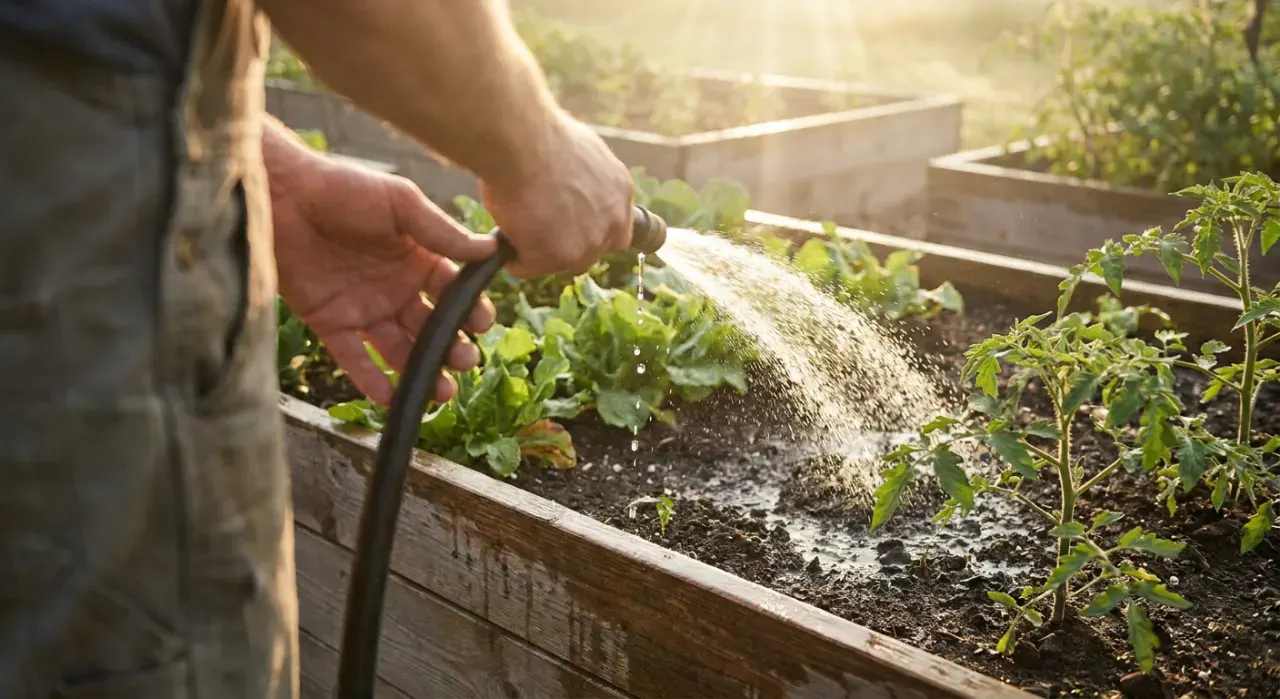
Substantially. One inch per week is a midsummer figure for actively growing turf. In cool spring and fall weather, evapotranspiration falls and half an inch a week is often plenty; during a heat wave in a hot, dry region, cool-season grass may want an inch and a half. Warm-season grasses such as bermuda and zoysia need less than cool-season fescue and bluegrass for the same appearance. Grass going dormant and browning in a drought is a survival response, not death — many extension programs advise letting cool-season lawns go dormant rather than fighting a drought, provided they get roughly a quarter to half an inch every two to three weeks to keep the crowns alive. Also check local watering restrictions, which vary by municipality and often set both days and hours.

What time of day should the sprinkler run?
Between about 4am and 9am. Early morning has low evaporation loss, usually the calmest air, and it lets foliage dry quickly once the sun rises, which matters because extended leaf wetness feeds brown patch and dollar spot in cool-season turf. Evening and overnight irrigation keeps blades wet through the humid hours and is the timing turf specialists most consistently discourage — the reasoning is set out in is it bad to water plants at night and is it okay to water plants in the evening. A timer is the practical answer, since almost nobody drags a sprinkler out at 5am; see how a hose timer works.
Where to go next
Our ranked best lawn sprinklers compares current models on aggregated owner ratings and recurring complaints, and the best hose timers covers automating a dawn schedule. See also how much to water a garden and gear drive vs impact sprinkler. Everything sits under the watering and irrigation hub.
We never buy or physically handle the products we rank — our recommendations come from aggregated owner reviews and expert consensus, and the method is on how we rank.