 Garden
Affiliate Disclosure
Some links on this page are affiliate links. As an Amazon Associate, we earn from qualifying purchases — at no extra cost to you. We do not buy, test, or physically handle the products we cover; our rankings come from aggregated owner reviews, ratings and expert consensus. Commissions never change our verdicts. How we rank · full disclosure.
The short version: for a room with a mold problem our #1 pick is the Coway Airmega AP-1512HH. Start with the honest framing, though, because it changes what you buy: an air purifier captures airborne mold spores and reduces musty odor while it runs. It does not remove growth from a surface, dry out a wall, or fix the leak. The EPA’s guidance on mold is unambiguous — control the moisture and the mold problem follows. A purifier is what you run while you do that, and for that job the Coway is the best-balanced machine here.
If your issue is really pollen or dust-mite allergen rather than mold, best air purifier for allergies is the better read. If the room simply needs drying, a machine from best dehumidifier for a basement will do more for a musty basement than any purifier. And the general field is ranked in best air purifier.
Top Picks at a Glance
Our #1 Pick: COWAY Airmega AP-1512HH
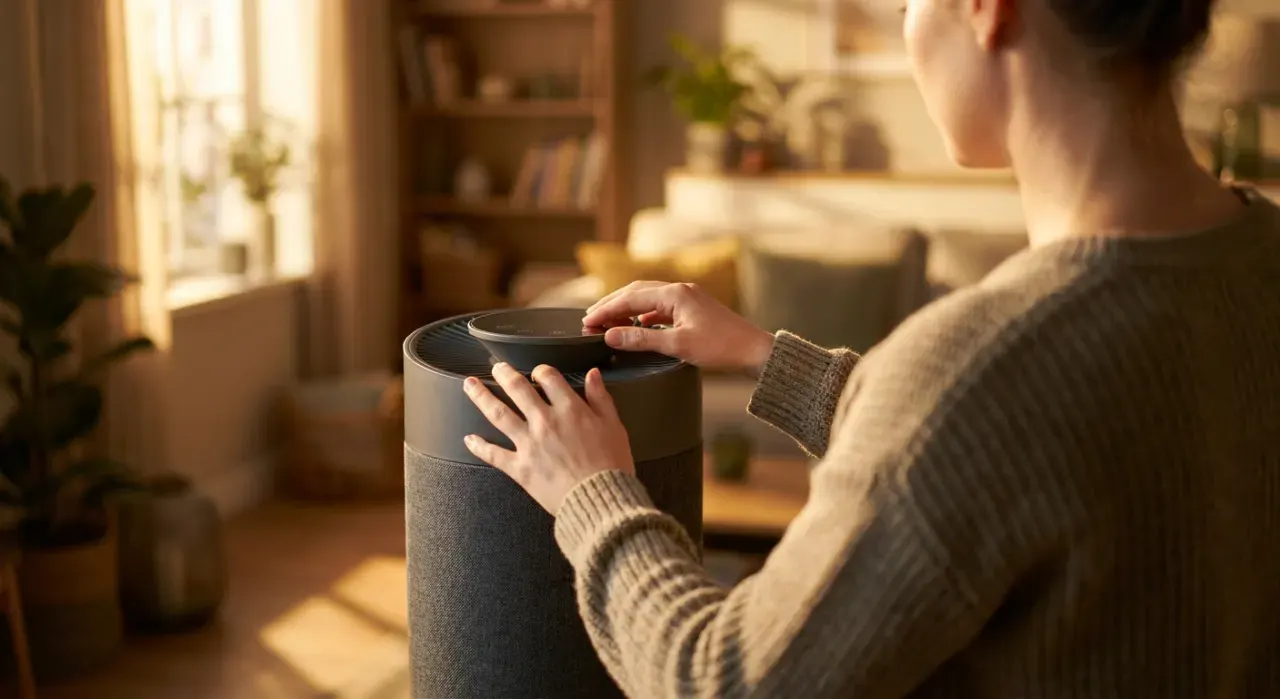
The Airmega ranks first here for the same reason it ranks well everywhere: it has no weak axis. The filter stack is a washable pre-filter, an activated-carbon deodorizing layer and a true HEPA element, and the housing is sealed well enough that air genuinely passes through the media instead of leaking around it. In a mold context that sealing matters more than usual, because spore concentrations in a damp room can be high and a leaky machine returns a share of what it captured.
The washable pre-filter is the second reason. Mold spores are large as airborne particles go, and a room with a moisture problem also tends to carry more dust, lint and settled debris. A pre-filter you rinse under a tap every few weeks keeps that load off the HEPA element and stretches its life substantially.
Third is the running cost. A purifier in a damp room loads its filters faster than one in a dry bedroom, and the Coway’s filters are widely stocked and reasonably priced. A machine whose filters cost $90 gets changed late; one whose filters cost less does not.
Consensus Score ██████████░ 9.2 — the deepest and most stable owner consensus of any purifier in this ranking.
The honest weaknesses: top speed is loud enough that few owners run it there for long, the air-quality light cannot be fully dimmed on older units, and it costs more than the LEVOIT for a similar room size. It is also, like every purifier, powerless against the actual source.
Check price on Amazon → (paid link)
The Ranked Field

Best for a damp bedroom, basement office or room recovering from a leak
- Four-stage filtration with sealed true HEPA
- Washable pre-filter catches the largest spores
- Particle sensor drives a genuine auto mode
- Filters cheap enough to change on schedule
Why buy it: a well-sealed true-HEPA path plus a washable pre-filter, which is the combination that keeps working in a room where spore load is high.

Best for a basement or large room with a persistent musty problem
- H13 media rated down to 0.1 microns
- Gasketed filter housing limits bypass
- Three-stage pre-filter, H13 and carbon
- High top-speed airflow for fast knockdown
Why buy it: a tighter filter grade in a genuinely gasketed body, so the air goes through the media rather than around it.

Best for an open basement or a large family room
- AHAM-verified CADR for honest coverage
- Auto mode driven by a real particle sensor
- Sleep mode quoted near 24 dB
- The cheapest widely-stocked filters in this field
Why buy it: verified airflow high enough to turn a large basement over several times an hour rather than once, at a filter cost you will actually keep paying.

Best for a room where the musty smell is the main complaint
- Large washable activated-carbon filter
- True HEPA plus a particle sensor
- PlasmaWave that can be switched off
- Auto and sleep modes with an air-quality light
Why buy it: the biggest genuine carbon filter per dollar here, which is what actually addresses the musty odor rather than only the spores.

Best for moving a lot of air through a big, damp space quickly
- Very high CADR for the price
- Three true HEPA filters plus a carbon pre-filter
- Turbo Clean setting for fast turnover
- Simple mechanical controls, no app needed
Why buy it: raw air movement, which matters more in a big damp room than any refinement of the filter media.
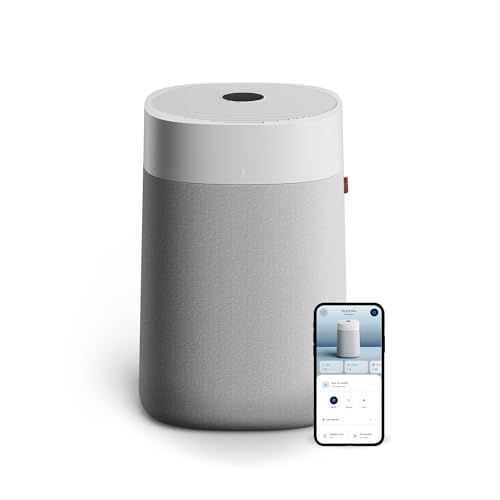
Best for a large living space where noise is the deciding factor
- HEPASilent electrostatic plus mechanical filtration
- Very high airflow at low measured noise
- Washable fabric pre-filter
- Auto mode with a particle sensor and app
Why buy it: the highest airflow-per-decibel here, so it can run continuously in a living room instead of being turned down and forgotten.
Quick Comparison
| Product | Best for | Rating | Price | Buy |
|---|---|---|---|---|
| COWAY Airmega AP-1512HH Air Purifier with True HEPA Filter | Best Overall | — | Check (paid link) | |
| Medify MA-40 Air Purifier with H13 True HEPA Filter | Best H13 Filtration | — | Check (paid link) | |
| LEVOIT Core 400S-P Smart Air Purifier | Best for Large Rooms | — | Check (paid link) | |
| Winix 5500-2 Air Purifier with True HEPA and Washable AOC Carbon Filter | Best Odor Control | — | Check (paid link) | |
| Honeywell HPA300 HEPA Air Purifier for Extra Large Rooms | Best Airflow | — | Check (paid link) | |
| BLUEAIR Blue Pure 211i Max Smart Air Purifier for Large Rooms | Best Quiet Premium | — | Check (paid link) |
How We Rank
We do not buy, test or physically handle air purifiers. We rank them on evidence that scales: star ratings weighted by review volume, AHAM-verified CADR figures compared like for like rather than against marketing coverage claims, the recurring complaints in critical reviews, long-term owner reports written after a filter change or two, and expert consensus across established outlets as a cross-check. For a mold page we weight three things harder than usual — how well the filter path is sealed, how much genuine activated carbon the machine carries, and what a year of filters costs — because a damp room loads filters faster than a dry one. Prices were current at the time of writing. Full method on how we rank.
The Mold Purifiers, Reviewed
1. COWAY Airmega AP-1512HH — Best Overall
Covered above. What owners praise: quiet running on low and medium, an auto mode that visibly reacts to a room being disturbed, sane filter prices, and a build that survives years of continuous operation. What owners complain about: genuinely loud top speed, an indicator light that bothers light sleepers, and a price above the budget field. The most consistently recommended purifier in the American market.
2. Medify MA-40 — Best H13 Filtration
The Medify is the pointed choice rather than the balanced one. Its H13 media is a grade tighter than standard HEPA, rated down to 0.1 microns, and it sits in a gasketed housing that limits bypass. For mold specifically the tighter grade is not strictly necessary — spores are much larger than HEPA’s hardest particle size — but the sealing is genuinely useful, and top-speed airflow is high enough to clear a room quickly after disturbing something. What owners praise: rapid knockdown on high, solid build, and a noticeable drop in musty smell in the first days. What owners complain about: proprietary filters that cost more than LEVOIT or Winix equivalents, a touch panel that is easy to nudge, and a large physical footprint. Buy it if the problem justifies the running cost.
3. LEVOIT Core 400S-P — Best for Large Rooms
Sizing is where most mold-purifier purchases fail, and the 400S-P is the sensible answer for a big space. Its CADR is AHAM verified, which means the airflow figure has been measured by an independent body rather than asserted, and it is high enough to give a large basement or family room several air changes an hour. It keeps the LEVOIT range’s cheap-filter advantage, which matters when a damp room is loading media faster than normal. What owners praise: the verified airflow, a responsive auto mode, near-silent sleep operation, and the lowest filter cost here. What owners complain about: it is bulky, high speed is loud, the display cannot always be fully switched off, and app setup is occasionally awkward. The right pick for open-plan basements.
4. Winix 5500-2 — Best Odor Control
If the complaint that brought you here is the smell rather than the spores, this is the machine. The 5500-2 carries an unusually large washable activated-carbon filter for its price, and carbon is the only part of a purifier that does anything about the microbial VOCs responsible for a musty odor. True HEPA and a particle sensor come alongside it, and the PlasmaWave ionizer can be switched off — which we would suggest doing. What owners praise: a real difference in odor within a day or two, strong airflow for the money, a washable carbon filter that stretches the replacement interval. What owners complain about: a faint smell some people attribute to PlasmaWave, carbon that saturates within a few months in a badly musty room, and an air-quality sensor that occasionally overreacts to humidity. Best value in the field.
5. Honeywell HPA300 — Best Airflow
The HPA300 is the unsubtle option and there is a case for unsubtle. It has one of the highest CADR figures per dollar in the consumer market, three true HEPA filters behind a carbon pre-filter, and a Turbo Clean setting for fast turnover after you have disturbed a damp storage area. The controls are mechanical buttons rather than an app, which some owners regard as a feature. What owners praise: raw air movement, quick results in a big room, simple operation, and a long stable review history. What owners complain about: it is loud at anything above the lowest setting, it is physically large and heavy, and it uses three filters at once so replacement is the most expensive here. Right when the room is big and the priority is turnover.
6. BLUEAIR Blue Pure 211i Max — Best Quiet Premium
Blueair’s HEPASilent approach combines a light electrostatic charge with mechanical filtration, which lets it move a lot of air through a less restrictive filter and therefore at lower fan speed. The practical result is the best airflow-per-decibel figure here, and that matters more than it sounds: the purifier that stays on medium in a living room all day does more than a louder one that gets turned down to its lowest setting. A washable fabric pre-filter handles the coarse load. What owners praise: genuinely quiet at high output, clean design, an effective auto mode, and easy pre-filter maintenance. What owners complain about: a high purchase price, filters that cost more than the LEVOIT or Winix, and the electrostatic stage, which some buyers dislike on principle even though Blueair states its units meet CARB ozone limits. Right when noise is the deciding factor.
What a Purifier Can and Cannot Do About Mold
This is the section that saves people money. Mold reproduces by releasing spores, which travel through air and settle. A HEPA filter captures those spores at very high efficiency, so a purifier genuinely lowers the airborne spore count in the room it serves, and it reduces the odor while its carbon is fresh. Those are real results.
What it does not do is equally clear. It cannot pull spores out of drywall, carpet backing, framing or the underside of a subfloor. It cannot dry a wall. It cannot stop growth, because growth is a function of moisture and food, and a purifier changes neither. And the moment you disturb a colony — moving boxes, pulling up a soaked carpet — you release far more spores than the machine can capture. The EPA’s guidance is that the fix for mold is fixing the water: repair the leak, correct the grade, extend the downspout, run a dehumidifier, and dry anything wet within 24 to 48 hours. A purifier is support, not treatment. Nothing here is medical advice, and remediation of a large area — the EPA uses roughly 10 square feet as a rule of thumb — is a job for a professional.
Sizing a Purifier for a Damp Room
Match roughly two-thirds of the room’s square footage in smoke CADR — AHAM’s 2/3 Rule — which produces about four to five air changes an hour. A 300 square foot room wants a smoke CADR near 200; a 600 square foot basement wants nearer 400. Manufacturer coverage claims are almost always calculated at one or two air changes an hour, which is enough to call a room covered and nowhere near enough to hold down a spore load in a room that keeps producing them.
Two adjustments apply specifically to mold rooms. Basements often have poor natural air movement, so a machine with real airflow beats a refined one with low output. And a damp room loads pre-filters fast, so plan to rinse a washable pre-filter monthly rather than quarterly. Our full method is in true HEPA vs HEPA-type, which also explains why the marketing term matters here.
What Owners Actually Complain About
Read the critical reviews across all six machines and the same five themes repeat. Expectation drift leads and is specific to this category: owners who bought a purifier expecting the mold to go away and found the smell returned when the carbon saturated. Undersizing is second and is usually a buyer decision, not a machine failure. Noise on high is universal — every unit here is loud at maximum. Filter cost generates more anger than any other issue, particularly where filters are proprietary; the Medify and Honeywell draw this most and the LEVOIT range least. And carbon saturation, which in a genuinely musty basement can happen within a few months rather than a year. Related reading: do air purifiers help with mold spores and how to test a house for mold.
Running It Alongside the Real Fix
Put the purifier in the room with the problem, give it a foot or two of clear space on every side, and close the door while it runs — a machine fighting an open hallway is being asked to clean the whole house. Run it continuously on a medium setting rather than intermittently on high; purifiers work by cycling the room’s air repeatedly, and continuous medium is quieter and easier on the filter.
Then handle the moisture, which is the part that actually ends the problem. Hold relative humidity below 50 percent, which is the EPA’s recommended range for limiting mold and dust-mite growth, using a dehumidifier sized for the space. Check that downspouts discharge well away from the foundation and that grade slopes away from the house. Dry anything that gets wet within 24 to 48 hours. Ventilate bathrooms and laundry rooms to the outside, not into an attic. And if you want to see the numbers rather than argue about them, a hygrometer or a monitor from our best air quality monitor ranking removes the guesswork. Background on the smell itself is in what causes musty basement smell and why a house smells musty in summer.
How to Choose Between These Six
One room, want the best all-rounder? The Coway Airmega AP-1512HH. Large basement or family room? The LEVOIT Core 400S-P. Musty smell is the main complaint? The Winix 5500-2 for its carbon filter. Want the tightest media in a sealed body? The Medify MA-40. Big space, want maximum turnover for the money? The Honeywell HPA300. Living room where noise decides it? The Blueair 211i Max. The full field, including smaller and cheaper machines, is in best air purifier, and everything else lives in the air quality hub.
The Verdict
For a room with a mold problem the Coway Airmega AP-1512HH is the machine we would recommend: a sealed true-HEPA path, a washable pre-filter that survives a dusty damp room, an auto mode that reacts to real particle readings, and filter costs low enough that it keeps working in year three. Choose the Winix 5500-2 if the odor is the complaint, the LEVOIT 400S-P if the room is large, and the Blueair if it has to be quiet. But run whichever you choose while you fix the water — that is the part that actually ends a mold problem. Check price on Amazon → (paid link)