 Garden
Affiliate Disclosure
Some links on this page are affiliate links. As an Amazon Associate, we earn from qualifying purchases — at no extra cost to you. We do not buy, test, or physically handle the products we cover; our rankings come from aggregated owner reviews, ratings and expert consensus. Commissions never change our verdicts. How we rank · full disclosure.
The short version: the best dehumidifier for an RV in use is the Pro Breeze mini, and for an RV in unpowered winter storage it is a set of Eva-Dry renewable silica gel units. Those are genuinely two different problems and the same product cannot solve both. In use you have shore power, a person generating moisture continuously, and a need for something silent that will not rattle. In storage you usually have no power at all, months of unattended time, and a slow, steady moisture load. Buy for the situation you actually have.
If the damp space is a garage or a basement rather than a rig, the machines are completely different — see best dehumidifier for a garage and best dehumidifier for a basement. The general ranking is in best dehumidifier.
Top Picks at a Glance

Our #1 Pick: Pro Breeze Electric Mini Dehumidifier
The Pro Breeze effectively created the mini dehumidifier category, and it remains the reference for a rig in use. It is thermoelectric, which means a Peltier element chills a small plate and moisture condenses on it. There is no compressor, so there is no vibration, no start-up surge and no mechanism to shake loose on a rough road.
Three things make that technology right for an RV specifically. It is near-silent, which matters enormously in a space where the machine is eight feet from your head. It draws modest power, so it coexists with a 30-amp hookup already running an air conditioner. And it is physically small enough to live on a shelf or under the dinette rather than occupying floor space you do not have.
The 17 oz reservoir shuts the unit off automatically when full, which is essential in a vehicle where a spill goes into a floor you cannot easily dry.
Consensus Score ████████░░░ 8.0 — a broad owner consensus with clear agreement on what it is and is not for.
The honest weaknesses: extraction is low, so in a genuinely wet climate you will empty it often and still see condensation; thermoelectric performance falls away below about 60°F, which is exactly when RV condensation is worst; and it needs 120V, so it is useless in unpowered storage. Buyers who expected household performance are the source of most of its critical reviews.
Check price on Amazon → (paid link)
The Ranked Field

Best for a travel trailer or Class C interior while you are hooked up to power
- Thermoelectric — no compressor, no vibration
- 17 oz reservoir with automatic shut-off
- Near-silent, safe to run overnight
- Small enough for a dinette shelf
Why buy it: the right size and the right technology for an RV — silent, low draw, and no compressor to rattle itself apart on the road.

Best for winter storage, a closet or a rig with no shore power
- Renewable silica gel — no electricity at all
- Covers roughly 333 cubic feet
- Color indicator shows when to renew
- Recharges by plugging into an outlet for hours
Why buy it: needs no power at all while working, which is the entire problem with dehumidifying a stored RV.

Best for a wardrobe, a gun safe, an under-bunk locker or a wet bay
- Compact silica gel unit for enclosed spaces
- No electricity required in use
- Reusable for years with recharging
- Hangs or sits anywhere
Why buy it: cheap enough to put one in every locker and cupboard, which is where RV mildew actually starts.
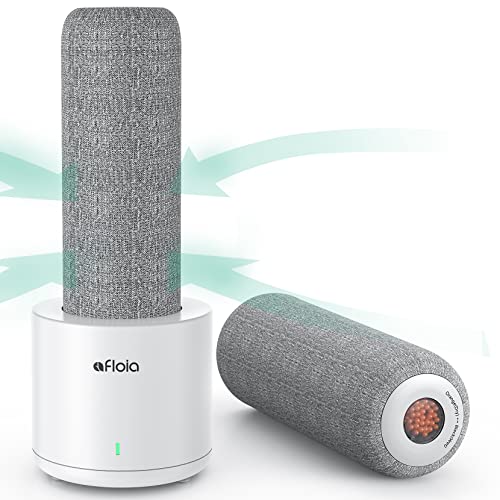
Best for closets and cabinets where you want faster renewal between cycles
- Cordless silica gel unit with a heating base
- Renews in roughly two hours on the base
- Color-change beads show saturation
- Multiple units share one base
Why buy it: a dedicated heating base renews the beads in a couple of hours rather than eight to ten, so it keeps up in a genuinely damp rig.

Best for a large fifth wheel or a park model on full hookups
- 20 pints per day, far beyond any mini unit
- Expanding reservoir plus a drain hose option
- Humidity setpoint with app control
- Energy Star certified
Why buy it: the only machine here that can genuinely dry a big rig in a wet climate — provided you have 120V shore power to run it.

Best for a seasonal site setup or a rig stored under cover with power
- 30 pints per day with a drain hose included
- Coverage claimed to 1,000 sq ft
- Continuous drainage for unattended running
- Casters for repositioning
Why buy it: real compressor extraction with continuous drainage, so a rig on a seasonal site can be left to look after itself.
Quick Comparison
| Product | Best for | Rating | Price | Buy |
|---|---|---|---|---|
| Pro Breeze Electric Mini Dehumidifier for Home, 215 Sq Ft | Best Overall | — | Check (paid link) | |
| Eva-Dry E-333 Wireless Mini Dehumidifier | Best No-Power Option | — | Check (paid link) | |
| Eva-Dry E-250 Renewable Mini Dehumidifier | Best for Small Lockers | — | Check (paid link) | |
| Afloia Renewable Mini Dehumidifier with Heating Base | Best Rechargeable | — | Check (paid link) | |
| Midea Cube 20 Pint Dehumidifier for Basements up to 1,500 Sq Ft | Best Compressor Option | — | Check (paid link) | |
| COLZER 30 Pint Portable Dehumidifier for Spaces up to 1,000 Sq Ft | Best Portable Compressor | — | Check (paid link) |
How We Rank
We do not buy, test or physically handle dehumidifiers. We rank them on evidence that scales: star ratings weighted by review volume, published capacity and coverage compared like for like within each technology, the recurring complaints that surface in critical reviews, long-term owner reports written after a season of use or storage, and expert consensus across established outlets as a cross-check. For an RV page we weight three things harder than usual — power requirement, physical size and noise, and whether the unit works at all without electricity — because those are the constraints that actually apply in a rig. Prices were current at the time of writing. Full method on how we rank.
The RV Dehumidifiers, Reviewed
1. Pro Breeze Electric Mini — Best Overall
Covered above. What owners praise: silence, size, visible water collection in a damp rig, and a low enough draw to run alongside everything else. What owners complain about: a tiny reservoir that fills fast in wet weather, low extraction that disappoints anyone expecting household performance, and thermoelectric output falling away in cold conditions. The right machine for a rig in use.
2. Eva-Dry E-333 — Best No-Power Option
This is the storage answer, and it works on a completely different principle: renewable silica gel beads adsorb moisture from the air with no electricity involved. When the indicator changes color, you plug the unit into an outlet for several hours to drive the moisture off, then put it back. Cover is roughly 333 cubic feet, which is about one closet or a small bay — so plan on several distributed through the rig rather than one. What owners praise: it works with no power at all, it is reusable for years, there is nothing to spill, and it is cheap enough to buy in multiples. What owners complain about: low total capacity, so it will not dry a genuinely wet rig; a renewal cycle that takes eight to ten hours; and the need to check and rotate them through a long storage period. Buy four or five, not one.
3. Eva-Dry E-250 — Best for Small Lockers
The smaller sibling, and arguably the more useful product, because RV mildew almost always starts in an enclosed space with no air movement: a wardrobe, an under-bunk locker, a wet bay, the cupboard behind the water heater. At this price you can put one in each of them. What owners praise: price, size, the fact that it is reusable indefinitely, and visible results in a musty locker. What owners complain about: very small capacity, an indicator that some find hard to read, and a renewal cycle that is easy to forget. Buy several and treat them as consumable infrastructure rather than an appliance.
4. Afloia Renewable Mini with Heating Base — Best Rechargeable
The Afloia solves the main irritation of silica gel: renewal time. Instead of plugging the whole unit into an outlet for eight to ten hours, the beads sit on a dedicated PTC heating base that drives the moisture off in roughly two. Multiple units can share one base, so you can rotate them through a rig continuously. What owners praise: the fast turnaround, cordless operation in place, clear color-change beads, and the shared-base arrangement. What owners complain about: still very low capacity per unit, a base that must be plugged in somewhere, and the same need to remember the cycle. The best silica gel setup if the rig is genuinely damp.
5. Midea Cube 20 Pint — Best Compressor Option
If you are in a large fifth wheel or a park model on full hookups in a wet climate, the mini units will not keep up and a real compressor machine is the answer. The 20 pint Cube is the smallest version of the best-designed consumer dehumidifier on the market: an expanding reservoir so it runs long without a hose, a drain hose option so it can run indefinitely, a humidity setpoint it holds, app control and ENERGY STAR certification, which is worth about 20 percent less energy than a similarly sized conventional unit. What owners praise: extraction far beyond any mini unit, the reservoir design, app visibility, and efficiency. What owners complain about: it is large for an RV and takes real floor space; it is a compressor, so it is audible and it vibrates; it draws proper household power; and it must be secured or stored before travel. Right for a big rig on a site, wrong for a weekend trailer.
6. COLZER 30 Pint Portable — Best Portable Compressor
The Colzer is the seasonal-site machine. Thirty pints a day with an included drain hose and continuous drainage means a rig parked for a season, or stored under cover with power, can be left to look after itself entirely. Casters make it easy to reposition when you arrive and leave. What owners praise: strong extraction for the price, continuous drainage that removes any emptying chore, and simple operation. What owners complain about: it is noisy, it is bulky in an RV interior, it draws serious power, and coverage claims are optimistic. Buy it for a static setup, not for touring.
The Storage Problem, Which Is Different
Most RV moisture damage happens when nobody is in the rig. It is stored from October to April, unheated, sealed, with no power connected, and the temperature cycles daily. Warm afternoon air holds moisture; overnight cooling drops it below the dew point and it condenses on every cold surface inside. Repeat for six months and you get mildew on upholstery, black spotting on ceiling panels, and a smell that takes a season to shift.
The countermeasure has three parts. Reduce what is in there — take out bedding, towels, fabric and anything holding water, and make sure the fresh and gray tanks are drained. Allow some air movement by cracking a roof vent under a cover, leaving cupboard and wardrobe doors ajar, and lifting cushions off the bench so air reaches both faces. Adsorb what remains with several silica gel units distributed through the cabin and bays, checked every few weeks. If you have power at the storage site, a small compressor unit hosed to a floor drain outperforms all of that combined.
Matching the Machine to the Power You Have
| Situation | Power available | What to use |
|---|---|---|
| Touring, plugged in nightly | 30A shore power | Thermoelectric mini such as the Pro Breeze |
| Boondocking | Battery and solar only | Silica gel units — nothing electric is viable |
| Winter storage, no hookup | None | Several silica gel units, checked monthly |
| Winter storage with power | 120V at the site | Compact compressor unit with a drain hose |
| Seasonal site, large rig | Full hookups | 20–30 pint compressor unit |
The single most common purchasing mistake in this category is buying an electric mini for a rig that spends the winter unpowered. It will sit there doing nothing for six months while the silica gel unit that cost a quarter as much would have been working the whole time.

What Owners Actually Complain About
Read the critical reviews across all six products and five themes repeat. Capacity disappointment leads by a distance, and it is almost always a mismatch: a mini unit rated for a closet bought to dry a whole trailer in a wet coastal winter. Reservoir size is second for the electric minis, which fill in a day when it is genuinely damp. Renewal hassle is third for the silica gel units, where an eight-hour recharge cycle needs remembering. Cold performance is fourth and affects both technologies — thermoelectric output collapses below about 60°F, and compressor units ice up. And size in a small space, which surprises buyers who ordered a compressor unit for a travel trailer without measuring. Background on the technologies is in desiccant vs compressor dehumidifiers.
Reducing the Moisture Load in the First Place
A dehumidifier is the last step, not the first, and in a rig the earlier steps do more. Run the bathroom fan for the whole shower and ten minutes after, and the range hood whenever you cook — boiling a pot with no extraction puts more water into a trailer than a mini dehumidifier removes in a day. Crack a roof vent even in cold weather; a small continuous air exchange costs a little heat and removes a great deal of moisture. Avoid unvented propane catalytic heaters if condensation is already a problem, because burning propane produces water vapor as a combustion product — and make sure any propane appliance is properly vented, with a working carbon monoxide alarm fitted — the CPSC asks for an alarm meeting the UL 2034 standard, tested monthly, outside sleeping areas — which our best carbon monoxide detector ranking covers.
Dry wet gear outside or in a bay rather than over the shower rail. Lift cushions occasionally so air reaches the underside. Wipe window condensation each morning rather than letting it run into the frame. Aim to keep interior humidity below 60 percent and ideally in the 30 to 50 percent band the EPA recommends for limiting mold and dust-mite growth — a $10 hygrometer tells you where you actually are, or a device from best air quality monitor if you want a fuller picture. This is maintenance information, not medical advice.
How to Choose Between These Six
Touring in a trailer or Class C, plugged in? The Pro Breeze mini. Winter storage with no power? Several Eva-Dry E-333 units. Lockers, wardrobes and bays? Eva-Dry E-250 units, one per space. Damp rig where silica gel cannot keep up? The Afloia with its fast heating base. Large fifth wheel on hookups? The Midea Cube 20 Pint. Seasonal site or powered storage? The Colzer 30 Pint with continuous drainage. If the moisture is really in a garage where the rig is parked, best dehumidifier for a garage is the better page, and everything else lives in the air quality hub.
The Verdict
For a rig in use the Pro Breeze mini is the machine we would recommend: silent, small, low draw, and correctly sized for the space rather than the marketing. For a rig in storage, buy four or five Eva-Dry silica gel units instead and distribute them through the cabin and bays — they work when there is no power, which is the whole storage problem. If you have hookups and a big rig, a 20 to 30 pint compressor unit outperforms everything else here. And before any of it, vent the shower, crack a roof vent and take the wet gear out. Check price on Amazon → (paid link)