 Garden
Affiliate Disclosure
Some links on this page are affiliate links. As an Amazon Associate, we earn from qualifying purchases — at no extra cost to you. We do not buy, test, or physically handle the products we cover; our rankings come from aggregated owner reviews, ratings and expert consensus. Commissions never change our verdicts. How we rank · full disclosure.
A conventional tank water heater lasts 8 to 12 years. A tankless unit lasts 20 or more. That gap is not about build quality — it is about the fact that a tank is a steel drum full of hot water slowly eating itself, and a tankless heater has no drum. Within the tank range, the difference between a heater that dies at year 8 and one still working at year 18 is almost entirely down to one $30 part that most owners have never heard of: the sacrificial anode rod.
We never buy, install or physically handle the equipment we write about; everything here comes from aggregated owner reports, manufacturer specifications and published safety guidance. See how we rank. The rest of this subject lives in the DIY plumbing hub.
How long each type actually lasts
Expected service life tracks warranty length closely, because manufacturers price the warranty on the same failure data. A 12-year tank is usually the same tank as the 6-year model with a heavier anode rod and a slightly thicker jacket — which tells you exactly where the wear happens.
| Type | Typical life | What kills it | Typical warranty |
|---|---|---|---|
| Gas storage tank | 8–12 years | Tank corrosion; sediment overheating the base | 6–12 years |
| Electric storage tank | 10–15 years | Tank corrosion; burnt-out lower element | 6–12 years |
| Heat pump / hybrid | 10–15 years | Tank corrosion; compressor and fan wear | 10 years |
| Tankless (gas or electric) | 20+ years | Scaled heat exchanger; failed flow sensor | 10–15 years on the exchanger |
| Point-of-use mini tank | 6–10 years | Same corrosion, smaller tank, often no serviceable anode | 2–6 years |
Two practical notes. First, an electric tank generally outlives a gas one of the same age because a gas tank has a flue tube running up through the middle, which adds surface area to corrode and a second hot zone. Second, tankless longevity is conditional: a tankless heater in 20-grain water that is never descaled will scale its heat exchanger closed in a handful of years. The 20-year figure assumes annual descaling, or soft water.
The anode rod: the part that decides everything
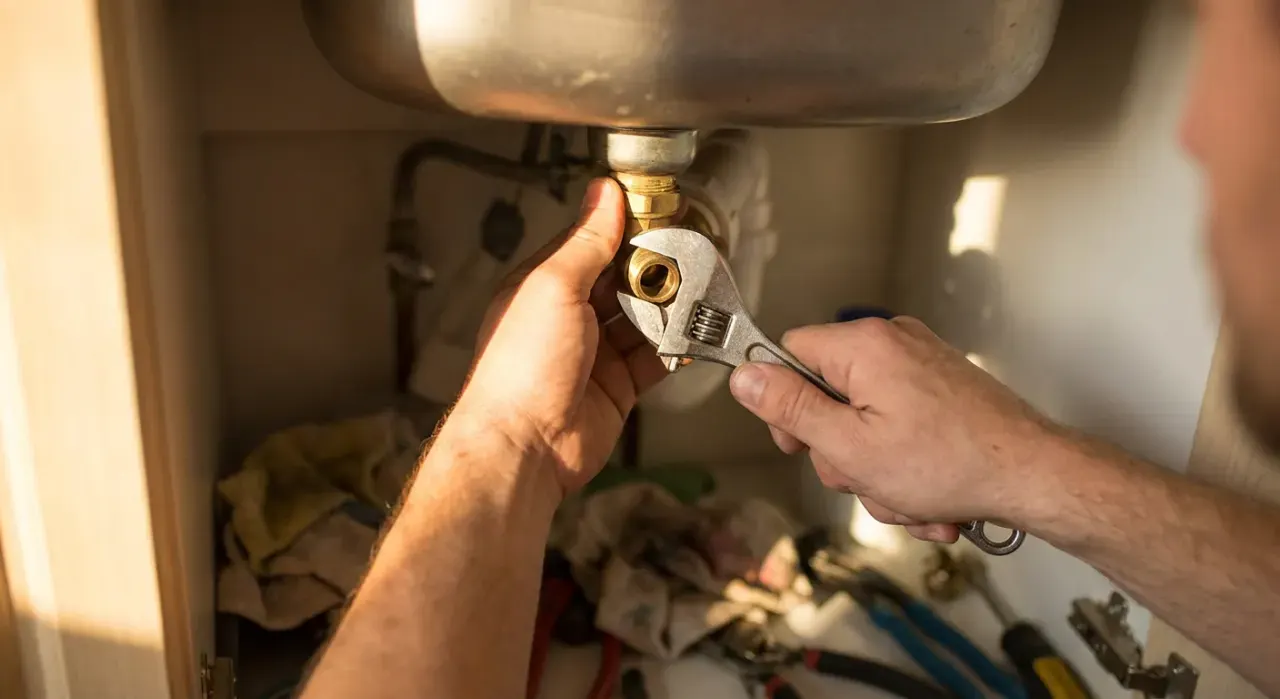
Inside every glass-lined steel tank is a rod of magnesium or aluminum alloy, threaded into the top, hanging down most of the height of the tank. It is called a sacrificial anode because that is literally its function. The glass lining on the inside of the tank is never perfect — there are always pinholes and hairline gaps at welds. Left alone, water would attack the exposed steel at those points. The anode metal is more electrochemically reactive than steel, so it corrodes preferentially and the tank does not.
The rod is consumed at a rate set by your water. In soft, low-mineral water it may last 5 or 6 years. In hard water, in water with high chloride, or in water that has been through a softener (softened water is more aggressive to anodes, not less), it can be gone in 2 to 3 years. From the day it is gone, the clock on the tank starts.
How to check it. Turn off the fuel or breaker and the cold supply, drain a couple of gallons to drop the level below the top, then break the hex head loose with a 1-1/16-inch socket and a breaker bar. It will be tight — many need a cheater pipe, and some tanks in tight closets need a segmented flexible rod on reinstallation because there is no headroom to lift a straight one out. If what comes out looks like a bare steel wire with a few crumbs of metal on it, it has been doing nothing for a while.
One warning. A magnesium rod in water with certain sulfate-reducing bacteria produces hydrogen sulfide — the rotten egg smell some homes get only from the hot tap. Switching to an aluminum-zinc rod usually fixes it. Do not simply remove the rod to stop the smell; you are trading an odor for the tank.
What actually shortens a water heater's life
In rough order of how much damage they do:
- Never replacing the anode rod. The dominant factor, and the one nobody does. Everything below is secondary to it.
- Hard water. Calcium and magnesium precipitate out of solution as water is heated and settle on the tank floor. Above roughly 10 grains per gallon this happens fast enough to matter within a couple of years. If you are on hard water, our water softener picks are the structural fix — but remember the anode caveat above and check the rod more often afterward, not less.
- Never flushing. Sediment is not just inefficiency. In a gas heater it insulates the steel base from the water above it, so the burner drives the metal hotter than design, and the glass lining crazes and fails. In an electric heater the sediment eventually buries the lower element, which then runs dry and burns out.
- A high thermostat setting. Corrosion rates rise with temperature, and so do mineral precipitation rates. Running at 140°F rather than 120°F measurably shortens tank life and raises standby losses — and, as covered below, it is the scalding risk. The CPSC recommends setting residential water heaters to 120°F. Our page on water heater temperature covers the trade-off with Legionella risk in detail.
- No thermal expansion tank on a closed system. If your house has a check valve, pressure-reducing valve or backflow preventer on the incoming main, heated water has nowhere to expand into. Pressure spikes every heating cycle, the relief valve weeps, and the tank is stressed. An expansion tank is an inexpensive part and is required by code on closed systems in most jurisdictions.
- High incoming water pressure. Anything much above 80 psi hammers every fixture and appliance in the house, including the heater. See what psi should home water pressure be.
How to flush a water heater — and the safety steps that are not optional
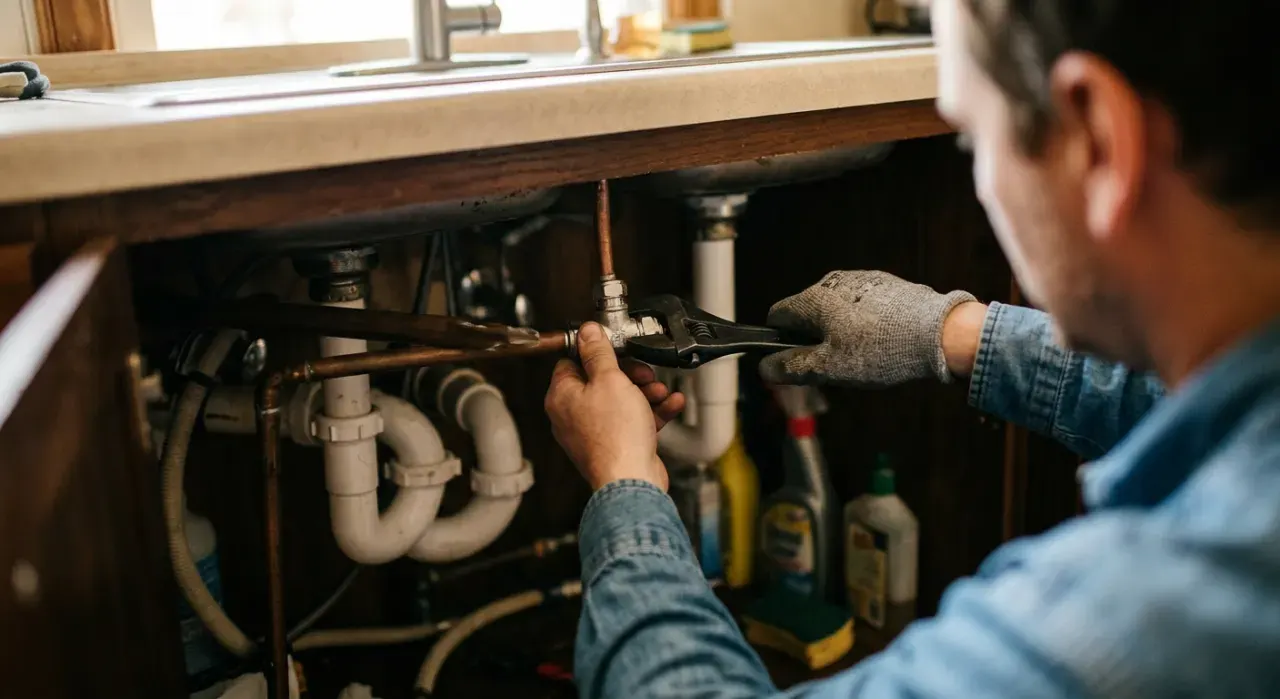
Flushing is a 45-minute job with a garden hose. It is also the job where people get hurt, because the water in a tank is hot enough to cause a third-degree burn faster than you can pull your hand back.
Scalding is the real risk here. Many water heaters are set at 140°F. According to the U.S. Consumer Product Safety Commission, an adult suffers third-degree burns after about six seconds of exposure to 140°F water, two seconds at 150°F, and thirty seconds at 130°F — and even 120°F water can cause third-degree burns given a five-minute exposure (CPSC, Avoiding Tap Water Scalds). Either turn the thermostat down and let the tank cool for several hours before you start, or accept that the water leaving that hose can put you in a burn unit. Wear gloves, long sleeves and closed shoes, and run the discharge hose somewhere it cannot spray back at you.
Gas units: turn the gas control to PILOT or OFF before draining. Electric units: switch the dedicated breaker OFF at the panel before draining — this is not optional. Electric elements are designed to be submerged; energizing them in an empty tank destroys them in seconds, and a dry-fired element is the most common self-inflicted injury to an electric water heater.
- Kill the heat. Gas control to PILOT or OFF; electric breaker OFF at the panel. Confirm it is off, do not assume.
- Close the cold-water inlet valve on top of the tank.
- Open a hot tap somewhere in the house and leave it open. This breaks the vacuum so the tank will actually drain, and it tells you when the water is no longer scalding.
- Connect a garden hose to the drain valve at the base and run it to a floor drain, a driveway, or downhill outside. Hot sediment-laden water will kill lawn.
- Open the drain valve. Expect it to run slowly or stall — sediment blocks the plastic valve constantly. If it stalls, briefly reopen the cold inlet to stir the tank floor, then close it again.
- Flush until it runs clear. Once drained, open the cold inlet in short bursts to agitate and push the remaining sediment out. Repeat until the discharge is clean.
- Refill completely before restoring power. Close the drain valve, open the cold inlet, and leave that hot tap open until water flows steadily with no spitting air. Only then switch the breaker back on or relight the gas.
Frequency: annually in hard water, every two years in soft water. If the tank is already 10 years old and has never been flushed, understand that dislodging a decade of sediment can unseat the drain valve or reveal a leak that the sediment was plugging. Many plumbers will tell you not to flush a neglected old tank for exactly that reason. Our companion page on how often to flush a water heater goes further into that judgment call.
A flushing wand that reaches into the tank through the drain port makes a real difference on a neglected unit, because gravity alone will not move a hard sediment cake. The Sediment Buster flushing tool (paid link) is the one owners most consistently report success with; a simpler water heater cleaning wand (paid link) does the same job for less on a tank that is merely dusty rather than packed.
Why is my water heater leaking?
Where the water is tells you almost everything. Work top to bottom, and dry the whole unit first so you can see where it comes back.
| Where the water is | Most likely cause | Repairable? |
|---|---|---|
| On top, around the pipe connections | Loose or corroded inlet/outlet union, or a failed dielectric nipple | Yes — tighten or replace the fitting |
| Dripping from the discharge pipe | Temperature and pressure relief valve opening, or a failed valve seat | Yes — but find out why it opened first |
| At the bottom drain valve | Worn plastic drain valve, or grit holding it off its seat | Yes — a brass replacement valve is inexpensive |
| Under the jacket, no fitting wet | The tank itself has corroded through | No — replace the heater |
| Around the base of an electric unit | Failed element gasket | Usually yes — replace the element and gasket |
Do not cap or plug a dripping T&P valve. That valve is the only thing standing between a runaway thermostat and a steam explosion. If it is discharging, the causes are excessive temperature, excessive pressure (often a closed system with no expansion tank), or a valve that has simply failed after years of sitting. All three need fixing, and none of them are fixed by a plug.
If the tank itself is leaking: shut the cold supply valve, kill the gas or breaker, and connect a hose to the drain to empty it in a controlled way. Then plan a replacement rather than a repair — a corroded tank cannot be patched. In most jurisdictions replacing a water heater is permitted work; see do you need a permit to replace a water heater, and check with your local building department, because the answer genuinely differs by city.
Signs a tank is close to the end
- Rusty or metallic-tasting hot water only. If the cold runs clear and the hot runs rusty, the rust is coming from inside your tank. That is late-stage.
- Popping, rumbling or kettling during a heating cycle. Water is boiling underneath a sediment layer and forcing steam bubbles up through it.
- Hot water running out faster than it used to. Sediment displaces usable volume, and a failed lower element in an electric unit halves your effective capacity. Our page on why hot water runs out so fast separates the causes.
- Moisture, rust streaks or mineral crust at the base. Small seeps precede large ones.
- Age past the warranty with no anode service. A 12-year-old tank with an original anode is running on borrowed time regardless of how it looks.
The short list for getting 18 years out of a 10-year tank
- Replace the anode rod at year 3, then every 3 to 4 years. This is the whole game.
- Flush annually in hard water, every two years otherwise.
- Set the thermostat to 120°F unless you have a specific reason not to.
- Fit a thermal expansion tank if your supply has a check valve or pressure reducer.
- Keep house pressure under 80 psi.
- Soften genuinely hard water — and then check the anode more often, because softened water consumes it faster.
- Insulate the tank and the first six feet of hot pipe if the unit is in an unconditioned space. See water heater blankets, and read the clearance warnings before you wrap a gas unit.
When it is time to replace, decide the format before you shop: tankless vs tank is the decision that determines everything else, and our best water heater and best electric water heater roundups cover the field from aggregated owner reviews.
More from this hub: DIY plumbing · how long does a water heater last · what temperature should a water heater be set to · best water softener · how we rank.