 Garden

Affiliate Disclosure
Some links on this page are affiliate links. As an Amazon Associate, we earn from qualifying purchases — at no extra cost to you. We do not buy, test, or physically handle the products we cover; our rankings come from aggregated owner reviews, ratings and expert consensus. Commissions never change our verdicts. How we rank · full disclosure.
The short answer: to fix low water pressure, first find out whether it affects one fixture or the whole house. One fixture almost always means a clogged aerator or showerhead — unscrew and clean it. Whole-house low pressure points upstream: a partially closed main or meter valve, a failing pressure-reducing valve (PRV), corroded pipes, or a supply-line issue. Measure your pressure with an inexpensive gauge on an outdoor spigot; normal is about 45 to 60 psi. That one diagnostic split tells you where to look.
Chasing the wrong cause is the usual mistake. If only the kitchen faucet is weak, there is no point adjusting a whole-house valve; if every tap in the house is weak, cleaning one aerator will not help. Start by isolating the problem.
Step 1: Is it one fixture or the whole house?
Walk the house and open faucets, showers, and check the toilet fill speed. Note which are affected.
| Pattern | Likely cause |
|---|---|
| One faucet or shower only | Clogged aerator/showerhead or partly closed fixture valve |
| Only hot water is weak | Water heater, its shutoff valve, or scaled hot-side lines |
| Whole house, gradual over years | Pipe scaling/corrosion (common in older galvanized pipe) |
| Whole house, sudden | PRV, partly closed main/meter valve, main-line leak, or utility issue |
Step 2: Measure your pressure
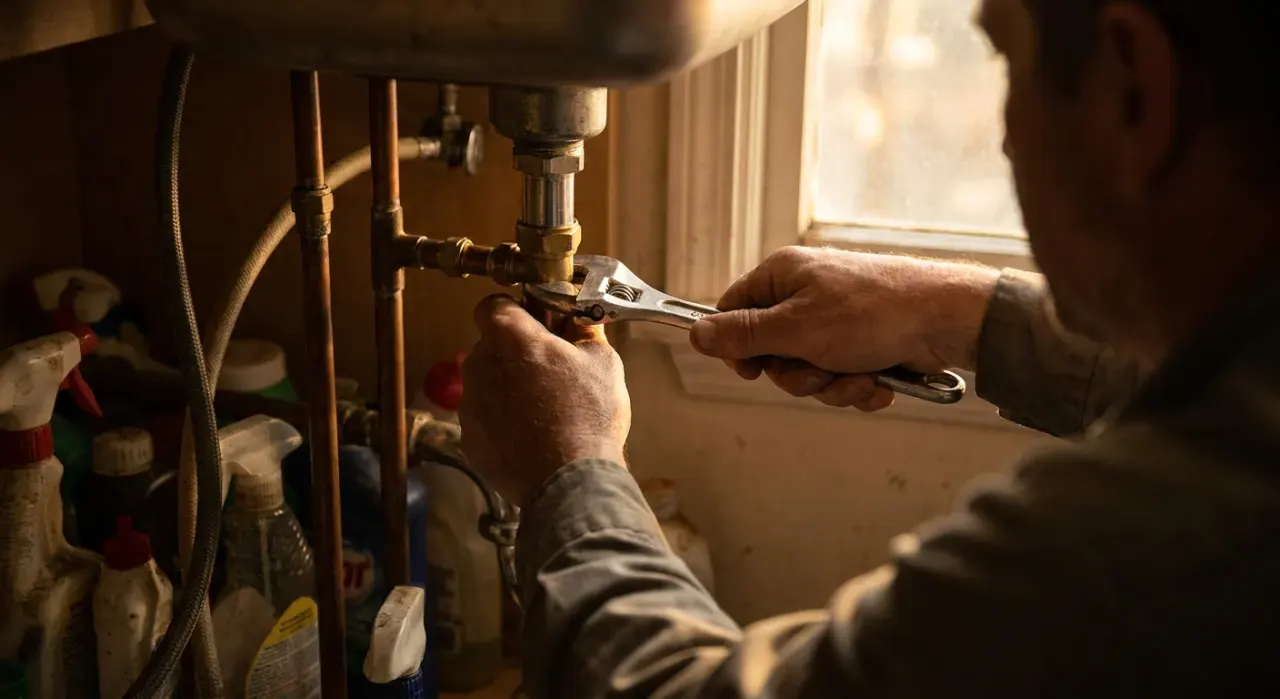
An inexpensive pressure gauge that screws onto an outdoor hose bib or laundry faucet tells you the real number in seconds. Normal residential pressure is about 45 to 60 psi, and code generally caps it at 80 psi.
- Below ~40 psi: genuinely low — pursue the whole-house causes below.
- 45–60 psi but weak at fixtures: the problem is local (aerators, fixture valves) or a flow restriction, not system pressure.
- Above 80 psi: too high — a PRV should be installed or adjusted to protect your plumbing.
What the target should be is covered in what psi should home water pressure be.
Step 3: Fix a single weak fixture
If only one tap is weak, the fix is quick and cheap. Mineral scale and debris collect in the aerator and showerhead, choking flow.
- Unscrew the aerator from the faucet tip by hand or with pliers padded with a cloth.
- Rinse and clear the screen, then soak it in white vinegar for a few hours to dissolve mineral scale. Reassemble and reinstall.
- For a weak shower, soak the showerhead in vinegar the same way, or replace it — see how to replace a shower head.
- Check the fixture shutoff valves under the sink are fully open — a half-closed valve chokes that one fixture.
- Still weak? The supply line or faucet cartridge may be partly blocked. See how to fix a leaky faucet for cartridge access.
Step 4: Check the main and meter valves
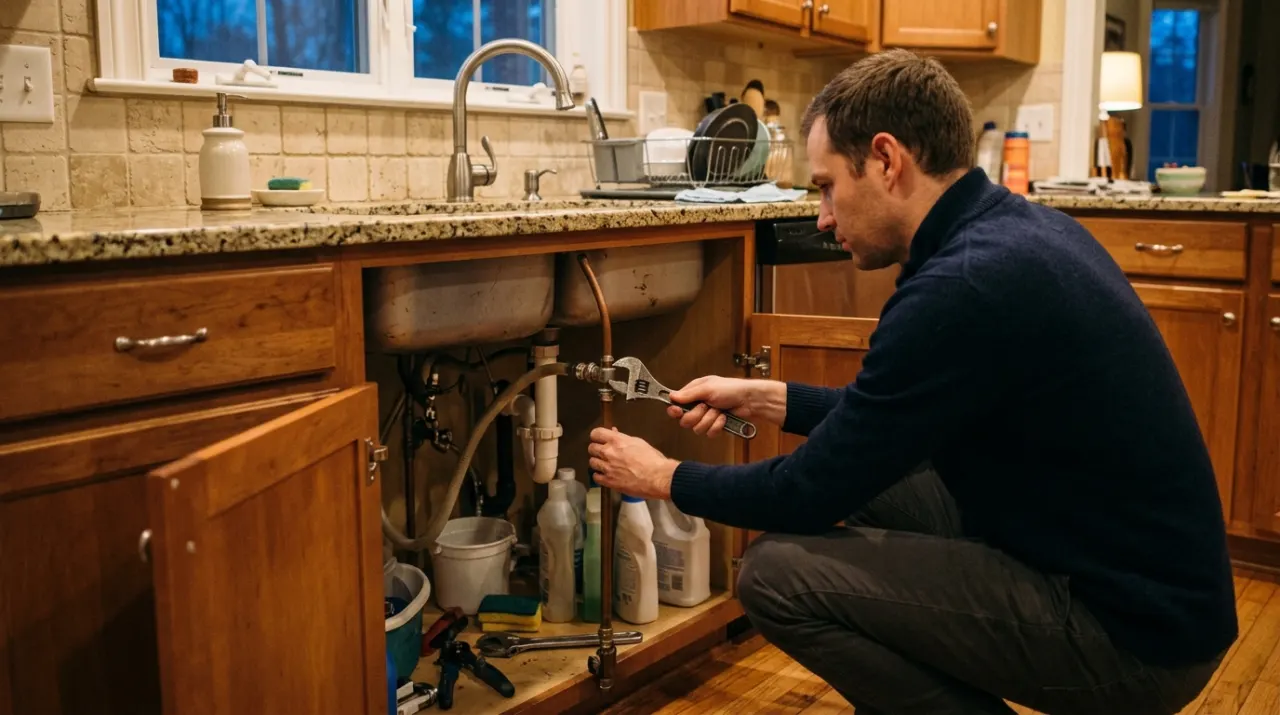
Before assuming anything expensive, confirm the whole-house valves are fully open. A main or meter valve left partly closed — after recent plumbing work, for instance — chokes flow to the entire house.
- Main shutoff valve (where the line enters the house): make sure it is fully open. A lever should be in line with the pipe; a wheel valve should be backed off fully. See how to shut off water to house to locate it.
- Meter-side valve at the street: confirm it is fully open too.
This costs nothing to check and is a surprisingly common cause of a sudden whole-house drop.
Step 5: The pressure-reducing valve (PRV)
Many homes have a PRV where the main line enters, lowering high municipal pressure to a safe level. A PRV that is set too low or has failed drops whole-house pressure.
- Locate the PRV — a bell-shaped brass valve on the main line near where it enters, usually with an adjustment screw and locknut.
- With a gauge attached, loosen the locknut and turn the screw clockwise in small increments to raise pressure (counterclockwise to lower it), checking the gauge as you go.
- Retighten the locknut once you reach the 50–60 psi range.
- No change or erratic pressure? The PRV has likely failed and needs replacing — a plumber job.
If you are not comfortable adjusting it, a plumber can test and set the PRV quickly.
Step 6: Pipe scaling and corrosion
If whole-house pressure has declined gradually over years, the cause is often scale and corrosion narrowing the pipes from the inside — especially in older galvanized steel plumbing, which corrodes and clogs internally. Hard water accelerates this.
- Test your water hardness — see how to test water hardness. Hard water builds scale in pipes and fixtures.
- Clean all aerators and showerheads, which scale up fastest.
- Widespread internal pipe scaling may need sections of pipe replaced — a plumber's assessment. Treating the water slows future buildup.
If only the hot water is weak
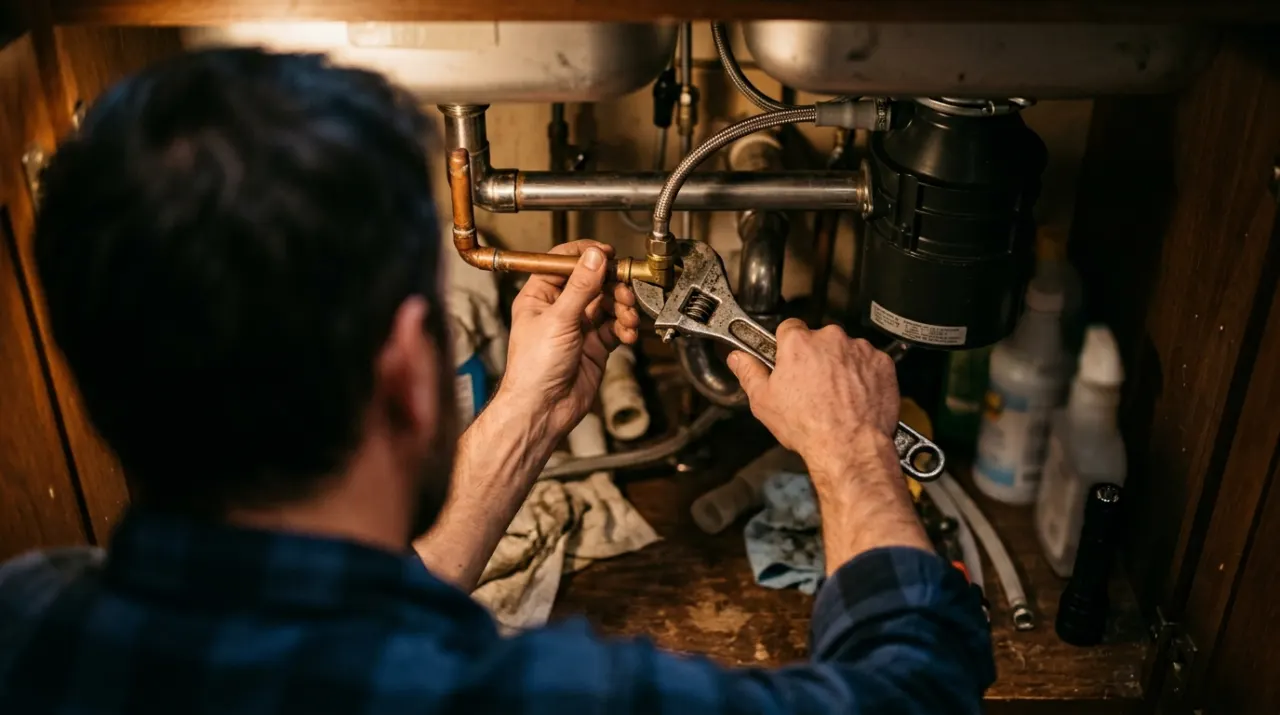
Low pressure on the hot side alone points to the water heater or its plumbing. Sediment builds in the tank and can restrict flow, the heater's shutoff valve may be partly closed, or hot-side lines may be scaled. Flushing the heater clears sediment — see how to flush a water heater. Confirm the heater's cold-inlet and hot-outlet valves are fully open.
When the supply itself is just low
Sometimes nothing in your house is broken — the water simply arrives at low pressure because you are at the end of a municipal line, on a well, at high elevation, or far from the street. In those cases the fixes above will not help because there is no fault to correct.
- Confirm with the gauge and the utility. If the reading is genuinely low at the point of entry and the utility confirms low supply pressure, the issue is the incoming water, not your plumbing.
- A water pressure booster pump raises pressure for the whole house where supply is chronically low. It is a permanent, powered fix and typically a plumber installation.
- Well systems depend on the pressure tank and pump switch settings; a waterlogged tank or a switch set too low is a common well-specific cause worth having checked.
- A larger supply line from the meter can help homes fed by an undersized old service line, though this is a bigger job.
Diagnose before spending: a booster pump on a house whose real problem is a clogged aerator or a throttled valve wastes money and fixes nothing. Rule out the cheap causes first.
When to call a plumber or the utility
Call your water utility if the whole neighborhood or your whole house suddenly lost pressure and your valves are open — it may be a municipal issue. Call a plumber for a failed PRV, a suspected main-line leak (unexplained pressure loss plus a high water bill), or widespread pipe scaling. For choosing tools for the DIY steps, see best plumbing tools.
How we evaluate plumbing tools and fixtures — from aggregated owner reviews and expert consensus rather than first-hand testing — is set out in how we rank. For every pressure, fixture, and repair question, the DIY plumbing hub has the full library of guides and picks.