 Garden
Affiliate Disclosure
Some links on this page are affiliate links. As an Amazon Associate, we earn from qualifying purchases — at no extra cost to you. We do not buy, test, or physically handle the products we cover; our rankings come from aggregated owner reviews, ratings and expert consensus. Commissions never change our verdicts. How we rank · full disclosure.
The short answer: shut off water to your house at the main shutoff valve, which is on the main water line where it enters the home — most often on an exterior-facing wall in the basement, crawl space, garage, or utility area, near the water heater or the foundation penetration. Turn it clockwise to close (a lever ball valve takes a quarter turn crosswise; a round wheel valve takes several full turns). There is also a street-side shutoff at the meter you can operate with a water meter key. Find yours now, before an emergency.
The reason to locate it today, on a calm afternoon, is that the moment you actually need it — a pipe bursting and water pouring into the house — is the worst possible time to be hunting for a valve you have never seen. Knowing where it is and how it turns can save thousands of dollars in water damage.
Where to find the main shutoff valve
The main valve is almost always at the point where the water supply line enters the house. Where that is depends on your climate and construction.
| Home type / climate | Most likely location |
|---|---|
| Cold climate, has a basement | Basement wall facing the street, near the water heater or foundation |
| Warm climate, slab foundation | Outside near an exterior wall, in the garage, or in a covered wall box |
| Crawl space home | In the crawl space near the front foundation wall |
| Any home (street side) | At the water meter, in a buried box near the curb or sidewalk |
Follow the logic of the plumbing: the line comes in from the street, passes the meter, enters the house, and the main valve sits right at or just inside that entry point. If you cannot find it, your water utility can tell you where your service enters, and the property inspection report from when you bought the home usually notes it.
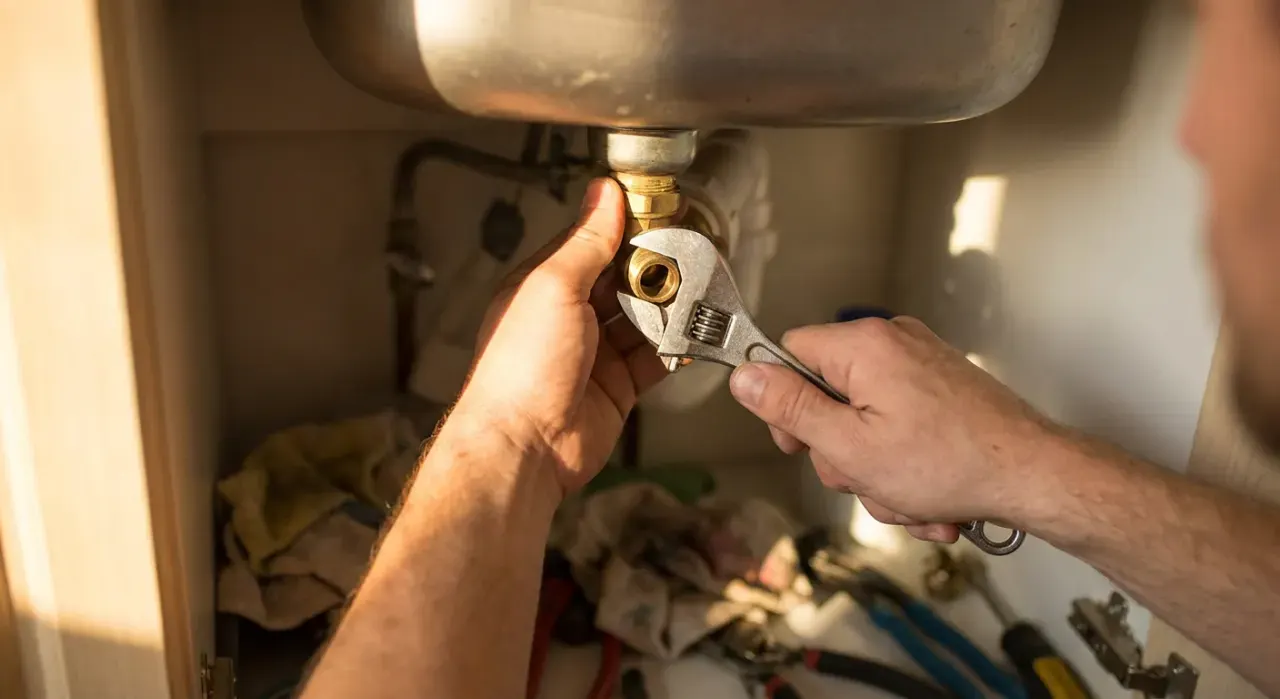
Know your house valve type before you need it
There are two common valve styles, and they operate differently.
- Ball valve (lever handle): the modern type. A single quarter turn closes it. When the lever is in line with the pipe, water flows; when the lever sits crosswise (perpendicular) to the pipe, it is shut. Fast and reliable.
- Gate valve (round wheel handle): the older type. Turn the wheel clockwise several full rotations to close it completely. These seize with age and are the ones most likely to fail or leak when operated after years untouched.
If yours is an old gate valve, consider having it replaced with a quarter-turn ball valve. A plumber can swap it in an hour, and you will trust it in an emergency. Our how to replace a water shut-off valve guide walks through the job.
How to shut off the water, step by step
- Locate the main valve where the line enters the house.
- Close it. For a lever valve, turn it a quarter turn until the handle is crosswise to the pipe. For a wheel valve, turn clockwise until it stops — usually several full turns. Do not overtighten past firm resistance.
- Open a low faucet. Turn on a faucet or tub on the lowest level of the house, and one upstairs. Water will drain out and stop, confirming the shutoff worked and relieving pressure in the lines.
- Do the work or wait for help. The house is now isolated from the supply.
- Reopen slowly. When done, close the open faucets, then reopen the main valve slowly to avoid a pressure surge, and check for leaks around the valve.
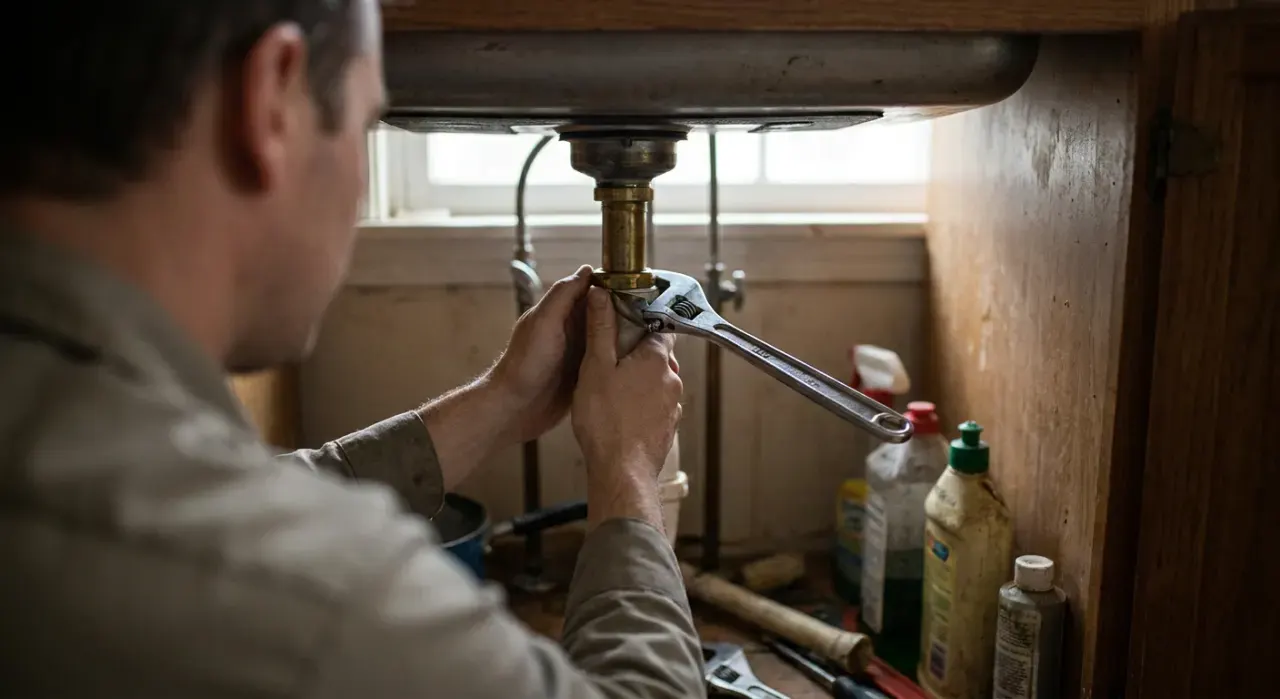
Shutting off at the street meter
If the interior valve is stuck, missing, or you cannot reach it, the street-side shutoff at the meter always works because the utility uses it too. It sits in a buried box near the curb or sidewalk.
- Find the meter box lid — a rectangular metal or plastic cover in the ground near the property line.
- Lift the lid with a screwdriver in the pry slot; watch for spiders and debris.
- Locate the valve on the house side of the meter, usually a nut or a small lever.
- Turn it a quarter turn with a water meter key until it sits crosswise to the pipe. This special long-handled tool fits the valve when a regular wrench will not.
A water meter key costs only a few dollars at any hardware store. If the street shutoff is your only option, buy one now and keep it where you will find it. Note that in some jurisdictions the meter-side valve is technically the utility's to operate; using it in an emergency is fine, but do not tamper with the meter seal.
When you only need to isolate one fixture
You often do not need to shut off the whole house. Most fixtures have their own local shutoff valves, letting you work on one while the rest of the home keeps water.
| Problem | Use this shutoff |
|---|---|
| Running or leaking toilet | The valve on the wall behind the toilet base |
| Leaky or replacing a faucet | The two valves under the sink |
| Water heater service | The cold-inlet valve on top of the heater |
| Burst pipe, no local valve, whole-house work | The main valve |
For fixture-specific jobs, see how to stop a running toilet and how to replace a faucet — both start by closing the local valve, not the main.
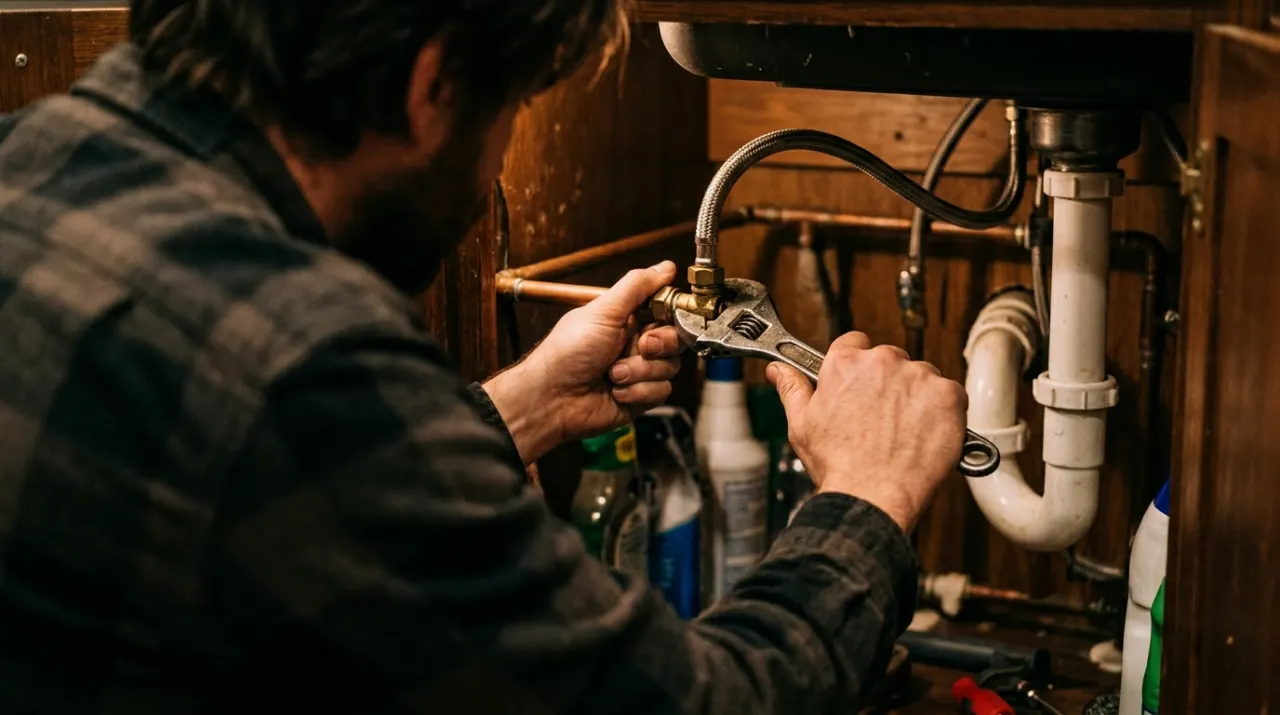
Shutting off water in a burst-pipe emergency
When a pipe bursts, speed limits the damage. Water can flood a room in minutes, and cleanup and repairs run into the thousands.
- Go straight to the main valve and close it. Do not stop to mop first.
- Open faucets to drain the remaining water in the lines away from the break.
- Cut power to any area with standing water near outlets or appliances, at the breaker, if you can do so safely.
- Call a plumber and, if the flooding is significant, your insurer.
Frozen pipes are a leading cause of winter bursts. If cold weather is the risk, see how to winterize outdoor faucets and how to thaw frozen pipes to prevent one in the first place.
Keep your home's water shutoff working
A shutoff valve you never touch is a shutoff valve that will fail when you finally need it. Old gate valves seize with mineral buildup and can crack when forced.
- Exercise the valve once or twice a year by fully closing and reopening it, so it does not seize.
- Label it and make sure everyone in the household knows where it is and how it turns.
- Keep the area clear so you can reach it fast.
- Replace an aging gate valve with a quarter-turn ball valve before it fails.
How we evaluate plumbing tools and products — from aggregated owner reviews and expert consensus, never first-hand testing — is explained in how we rank. For every home plumbing task, the DIY plumbing hub collects the guides and product picks, including the plumbing tools worth keeping on hand.