 Garden
Affiliate Disclosure
Some links on this page are affiliate links. As an Amazon Associate, we earn from qualifying purchases — at no extra cost to you. We do not buy, test, or physically handle the products we cover; our rankings come from aggregated owner reviews, ratings and expert consensus. Commissions never change our verdicts. How we rank · full disclosure.
To use a drain snake: pick a cable sized to the pipe, feed it in by hand until you feel the clog, lock the drum, then crank clockwise with light forward pressure until the cable passes freely. Withdraw it slowly, still turning clockwise, then flush with hot water for two minutes. The whole job takes 20 to 40 minutes. The single rule that separates a cleared drain from a cracked pipe is that you never force a stalled cable — steady rotation does the work, and a hard stop that will not give is a signal to stop, not to push harder.
We never buy, test or physically handle the products we rank; recommendations come from aggregated owner reviews and expert consensus, described in how we rank. The rest of this subject sits in the DIY plumbing hub.
Which drain snake do you actually need?
The word snake covers four different tools that are not interchangeable, and using the wrong one is the most common reason a clog survives an afternoon of effort. Cable diameter should roughly track pipe diameter: a cable much thinner than the pipe coils up inside it and never engages the blockage, while a cable too stiff for the line will not turn a trap bend.
| Tool | Cable | Reach | Right for |
|---|---|---|---|
| Barbed plastic hair tool | None (flat strip) | 18–24 in | Hair at a bathroom sink or shower strainer |
| Hand-crank drum auger | 1/4 in | 15–25 ft | Sinks, tubs, showers on 1.25–2 in lines |
| Closet (toilet) auger | 1/2 in in vinyl sleeve | 3–6 ft | Toilets only — the sleeve protects the porcelain |
| Drill-driven or powered drum | 5/16–3/8 in | 25–50 ft | Kitchen branches, laundry standpipes, stubborn grease |
| Sectional or drum machine | 1/2–3/4 in | 75–100 ft | Main lines and roots — rental or pro territory |
For most households the 25-foot hand-crank drum auger plus a closet auger covers everything you will legitimately attempt. Our ranked picks by owner consensus are in best drain snake, and the broader kit in best plumbing tools.
Do the two things that beat snaking first
Snaking is the third move, not the first. Before you unwind any cable, plunge the drain properly — a cup plunger on a sink with the overflow blocked, 15 to 20 firm strokes, seal maintained throughout. The technique matters more than the effort, which is why we wrote how to use a plunger correctly as its own page. If that fails, open the P-trap under the sink into a bucket and clean it out. A remarkable share of kitchen and bathroom clogs live in those first 18 inches, and clearing them by hand takes ten minutes with no risk of scratching anything.
Only when both have failed is the blockage genuinely down the branch line and worth a cable.
Step 1: Choose the access point (5 minutes)
You have three realistic entries, and the choice determines how hard the rest of the job is.
- Through the drain opening. Fastest, but the cable must negotiate the strainer basket, the tailpiece and both bends of the P-trap before it reaches useful pipe. Fine for a 1/4-inch cable and a shallow clog.
- Through the trap arm (recommended for sinks). Remove the P-trap into a bucket and feed the cable straight into the wall stub. This skips two 90-degree bends and puts the cable in the branch line immediately. It is worth the extra five minutes almost every time.
- Through the tub overflow. Remove the two screws holding the overflow cover plate and feed the cable down past the linkage. Never feed a tub snake through the drain grate itself — the bend directly below it is tighter than the trap.
Toilets are their own case: only a closet auger goes in a toilet, and the walkthrough is here for the plunger stage first.
Step 2: Feed the cable and read the resistance (5–10 minutes)
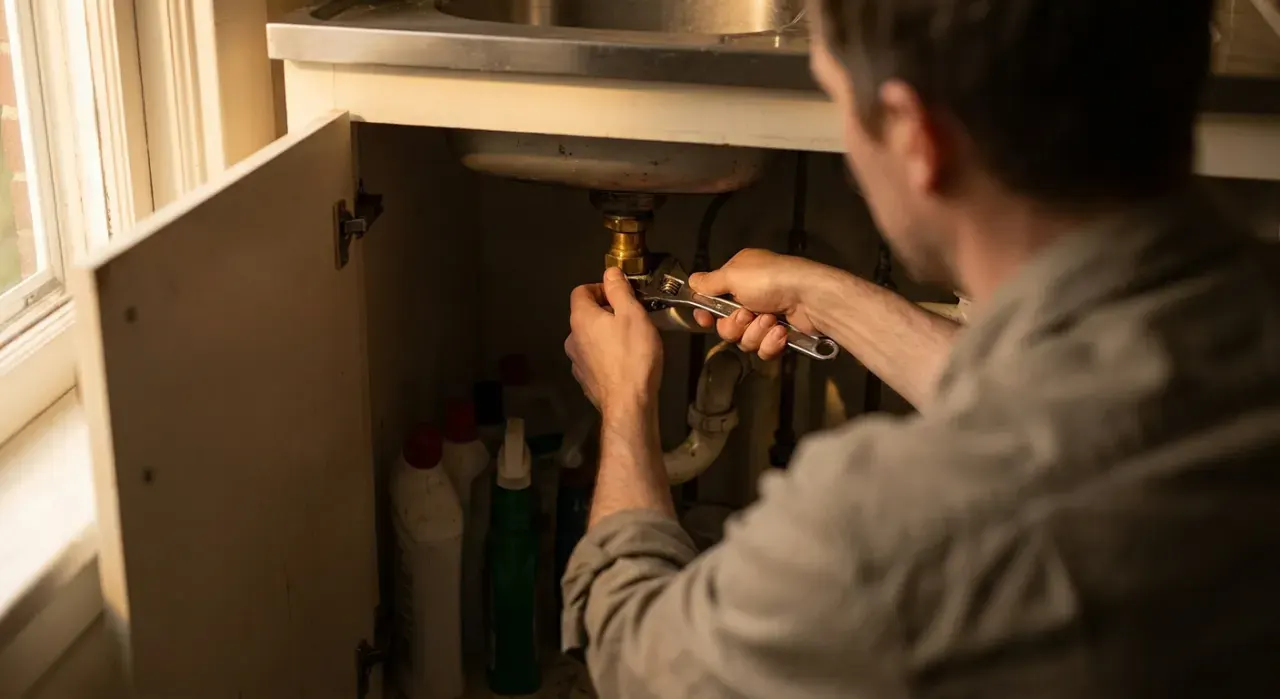
Hold the drum roughly 12 inches from the opening and push cable in with your free hand. Keep that gap small the entire time. Exposed cable between the drum and the pipe is what whips, kinks and birdcages when the tip binds — and a kinked cable is scrap.
Feed by hand until you meet resistance, then interpret what you are feeling, because the three sensations are genuinely distinguishable:
- Springy, gives when you rotate: a bend in the pipe. Rotate gently and keep advancing.
- Soft, mushy, cable sinks slowly: the clog. This is what you came for.
- Dead hard stop, no give at all, cable wants to buckle back at you: stop. That is a fitting, an offset joint, or damage. See the limits section below.
Note your depth as you go. Most branch clogs sit between 3 and 15 feet from the fixture. If you are 20 feet in and have felt nothing, the clog is not on this branch.
Step 3: Work through the clog (5–15 minutes)
Tighten the drum set screw about 6 to 12 inches back from where the cable enters the pipe, so you have a short working section. Crank the handle clockwise with light, constant forward pressure — think of leaning on it, not shoving it. The rotating tip either bores through soft material or hooks a solid mass.
When the cable binds and the drum stops turning, release forward pressure, back off two or three inches, and re-advance. Repeat. Feeding out another 12 inches of cable, re-tightening the set screw and continuing is the correct rhythm; it also prevents the long unsupported cable that causes kinks.
You know you are through when the cable suddenly moves freely and the resistance drops away. Push another foot or two past that point to widen the opening, then work the tip back and forth over the clog zone a few times. A grease clog in particular will often re-close if you only bore a pencil-width hole through it.
Step 4: Retrieve slowly and flush (5 minutes)
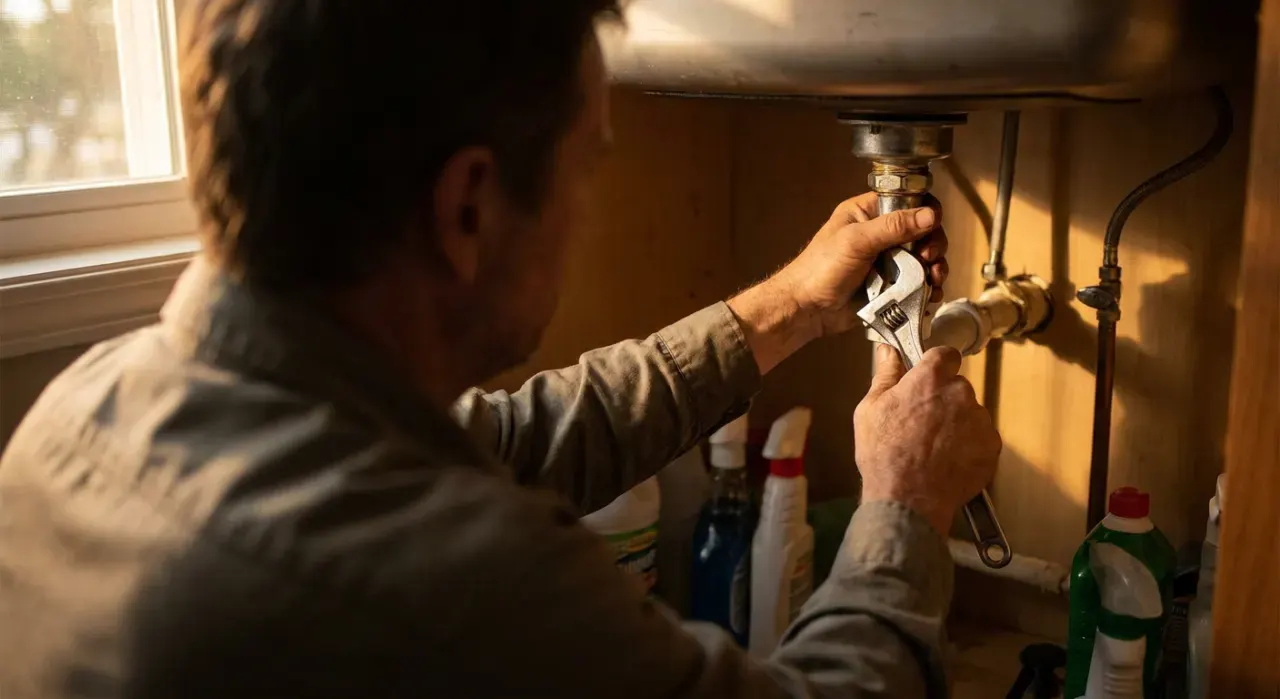
Withdraw the cable while still turning clockwise. This is the step people rush, and it is why hooked hair masses drop off halfway back and re-lodge in the trap. Wipe the cable with a rag as it winds back onto the drum — packing wet debris into a drum is how a cable rusts and seizes between jobs.
Reassemble the trap or overflow plate, then run the hottest water the tap gives for a full two minutes with the drain open. On a kitchen line, add a squirt of dish detergent partway through; it emulsifies the grease film the cable loosened but did not carry out. If the drain gulps and runs freely, you are done. If it is merely better, do a second pass — that is normal on grease and does not mean you failed.
When a snake damages pipe — the four real risks
A cable in the hands of someone who does not force it is a low-risk tool. Damage clusters around four situations, and all four are recognizable before you cause them:
- Corroded galvanized steel. Common in homes built before about 1960. The pipe rusts from the inside, and a cable can punch through a wall that is already paper-thin. Symptom: rusty flakes coming back on the cable.
- Orangeburg or clay sewer pipe. Bituminized fiber pipe used roughly 1945 to 1972 deforms and delaminates with age; clay joints offset. Neither survives an aggressive cable. Main-line work on either belongs to a plumber with a camera.
- Forcing past a hard stop. The single biggest cause. If moderate steady pressure will not advance the cable after a couple of attempts, something structural is in the way.
- A drum-auger cable in a toilet. Bare cable against vitreous china leaves permanent black scoring, and the trapway geometry means it usually will not reach the clog anyway. Closet auger only.
We go deeper on the failure modes and the pipe materials involved in can a drain snake damage pipes.
When to stop and call a licensed plumber
Clearing a fixture drain needs no permit anywhere in the US, and homeowners are free to do it. Stop and call a licensed plumber when any of these appear, because each one indicates a problem past the reach and the legal scope of homeowner work:
- Multiple fixtures backing up together, or water rising in the tub when the toilet flushes — that is the main line, not a branch.
- Sewage odor or backup at a floor drain in the basement or garage.
- A hard immovable stop at a consistent depth, especially if it is at the same distance every attempt. Roots and collapsed sections behave exactly like this.
- Any drain, waste or vent pipe alteration. Repairing or re-routing DWV piping is permitted work in most jurisdictions and the rules are set locally — check with your city or county building department rather than assuming a national standard.
A camera inspection typically runs $200 to $500 and is money well spent before anyone digs. Hourly and flat-rate figures are in how much a plumber charges per hour, and the buy-versus-rent math is in how much a drain snake costs.
Related reading: how to snake a clogged drain, how to clear a clogged kitchen sink and how to unclog a bathtub drain.