 Garden

Affiliate Disclosure
Some links on this page are affiliate links. As an Amazon Associate, we earn from qualifying purchases — at no extra cost to you. We do not buy, test, or physically handle the products we cover; our rankings come from aggregated owner reviews, ratings and expert consensus. Commissions never change our verdicts. How we rank · full disclosure.
A hand-cranked drain snake used with reasonable care will not damage sound pipe, but four situations genuinely cause damage: a power auger in old cast iron or clay, an aggressive cutting head in thin-wall plastic, a thin chrome or plastic P-trap that twists apart, and forcing a cable through a fitting it will not turn. The common thread is force applied where the cable has stopped advancing. When a snake stops moving forward, it is meeting something — a fitting, a joint, or the wall of the pipe — and continuing to crank is what turns a clog into a repair.
Which pipes are actually at risk?
| Pipe | Risk from a hand snake | Risk from a power auger |
|---|---|---|
| Schedule 40 PVC or ABS | Very low | Low with a bulb head, moderate with a cutter |
| Copper DWV | Very low | Low |
| Sound cast iron | Low | Moderate |
| Corroded, scaled cast iron | Moderate | High — can perforate |
| Clay sewer lateral | Moderate | High — can shear at joints |
| Thin chrome or plastic P-trap | High — can twist off | Do not use |
| Orangeburg (tar paper) sewer | High | Very high — collapses |
Homes built before about 1970 are where the caution belongs. Cast iron drain lines corrode from the inside over decades and thin unevenly, and clay laterals crack at the joints where roots enter, which is exactly where a cutter concentrates its force.
Why do P-traps come apart under a snake?
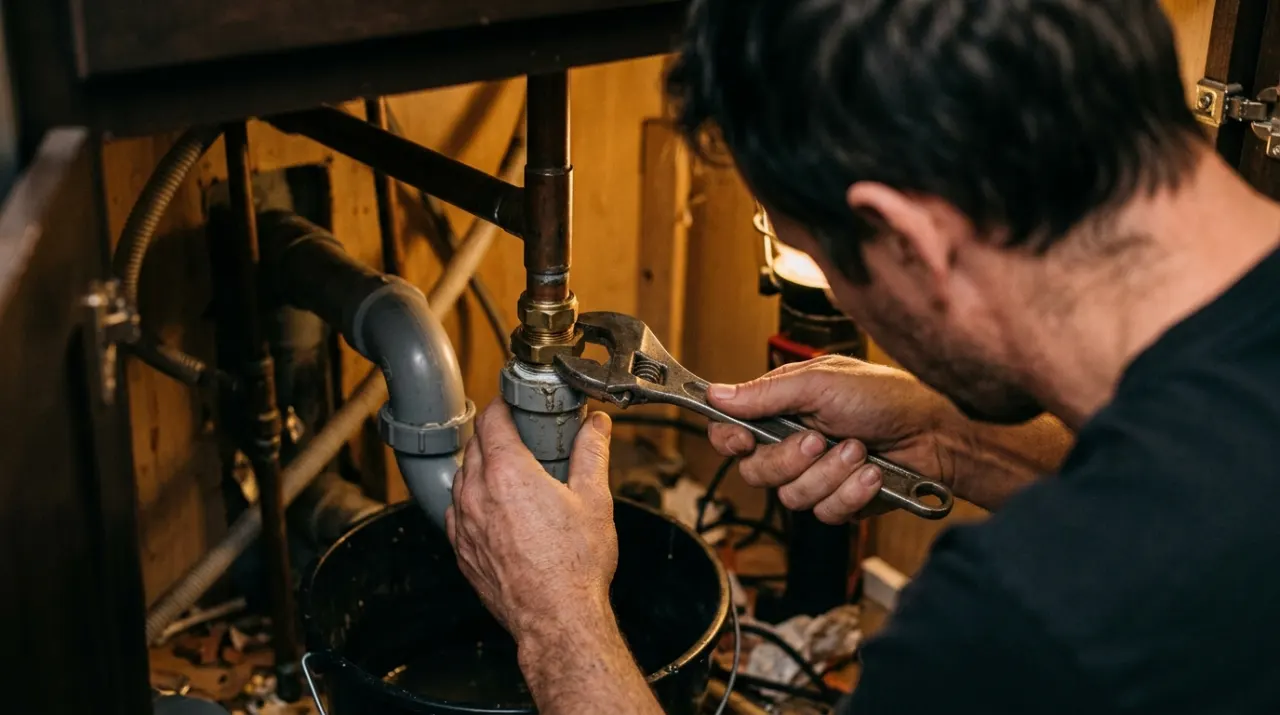
Because the trap is the thinnest, weakest component in the whole run and it sits directly in the cable path. A quarter-inch cable turning inside a 20-gauge chrome trap will grab the inside wall, and the rotation transfers to the trap body, unthreading the slip nuts or twisting the tubing itself out of round. Plastic traps are more forgiving but their slip joints still loosen.
The fix is simple and it is what plumbers do routinely: remove the trap and run the snake into the wall stub directly. You get a straight shot at the actual blockage, which is usually in the branch arm rather than the trap, and you get to see and clean the trap while it is off. That approach is described in how to snake a clogged drain, and the trap itself is a beginner-friendly part to service — see how to replace a P-trap under a sink.
How do you snake a drain without doing damage?
- Match the tool to the drain. A quarter-inch cable for sink and tub lines, three-eighths for a laundry or main branch, and a drum machine only for a cleanout or a sewer lateral. Oversized cable in a small line is where kinking starts.
- Feed, do not force. Advance in short pushes, keeping the cable turning. Resistance that does not yield within a few inches is a fitting, not a clog.
- Turn clockwise only. Reversing under load unwinds the cable lay and can snap it, leaving a length of steel in the pipe that a plumber then has to retrieve.
- Start with the least aggressive head. A bulb or drop head clears hair and soft blockages without touching the pipe wall. Reach for a cutter only for roots, and only in a line you know is sound.
- Stop and reassess after two failed attempts. Repeated clogs in the same line usually indicate a slope problem, a belly, or root intrusion, none of which a snake fixes.
When should you stop and call a plumber?
Call when the house is on a clay or Orangeburg sewer lateral, when multiple fixtures back up at once — which points at the main rather than a branch — when the drain clogs again within a week, or when a snake has already gone in and come back with nothing while the line stays blocked. A sewer camera inspection costs a fraction of a pipe repair and tells you whether you are dealing with grease, roots, or a broken line. Cutting roots in a cracked clay pipe with a rented machine is the classic way a 200-dollar service call becomes an excavation.
Our best drain snake roundup covers the cable sizes and head types owners report clearing household lines without incident, and best plumbing tools covers the rest of the kit. For the clogs a snake is not the right answer to, start with how to clear a clogged kitchen sink.
We never buy, test or physically handle the products we rank. Recommendations come from aggregated owner reviews, star ratings, review volume and expert consensus — see how we rank.
More from this hub: DIY Plumbing · Best drain snake · Unclog a bathtub drain · Gurgling drains · How we rank