 Garden


Affiliate Disclosure
Some links on this page are affiliate links. As an Amazon Associate, we earn from qualifying purchases — at no extra cost to you. We do not buy, test, or physically handle the products we cover; our rankings come from aggregated owner reviews, ratings and expert consensus. Commissions never change our verdicts. How we rank · full disclosure.
The short answer: the Breville Bambino Plus is the best semi-automatic espresso machine for most people — PID temperature control, three-second heat-up, genuine steam power, and a footprint under eight inches. If you want commercial 58mm parts and a machine you will still be repairing in 2040, buy the Gaggia Classic Evo Pro. If you want the grinder built in, the Breville Barista Express. And if you want brass internals and a machine that outlives its owner, the Rancilio Silvia.
A semi-automatic gives you the controls that matter — grind, dose, tamp, timing, milk — and automates only pressure and temperature. That is the whole appeal, and it is why every serious home espresso setup is built around one.
Top Picks at a Glance
Our #1 Pick: Breville Bambino Plus
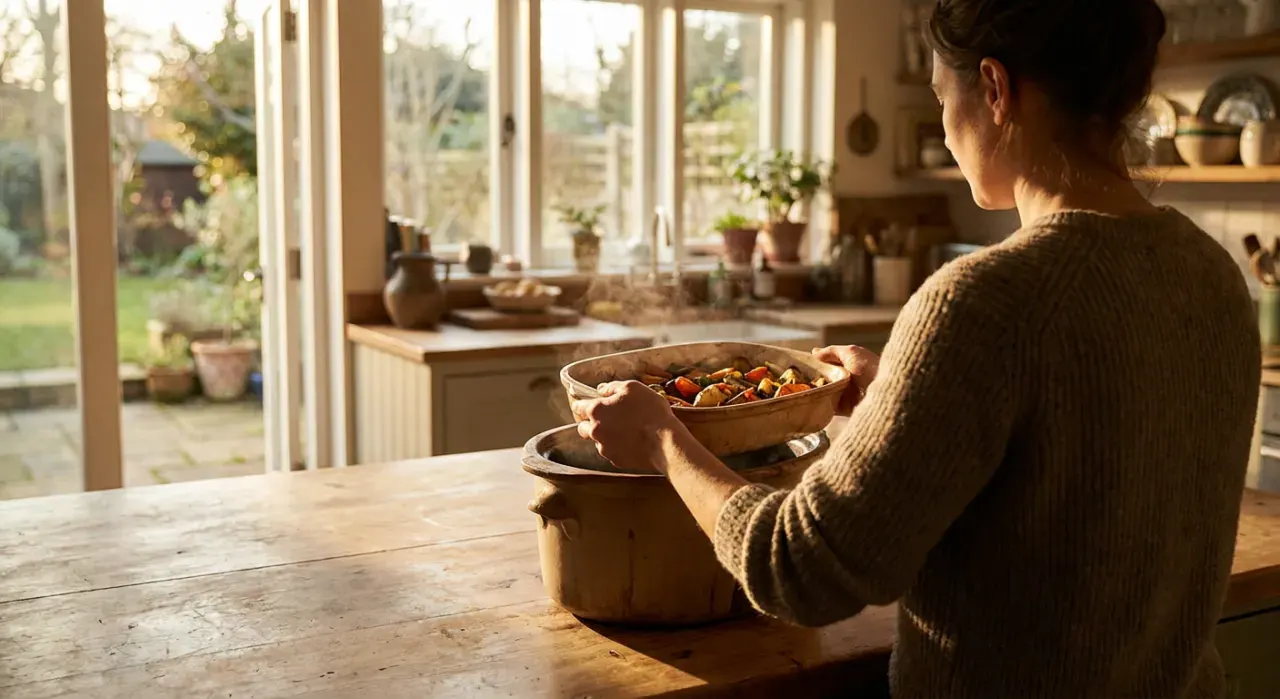
The Bambino Plus is a study in leaving things out. No grinder, no screen, no programmable menu. What Breville spent the money on is the two things that decide whether a semi-automatic works: a ThermoJet heater that reaches brew temperature in about three seconds with a PID controller holding it there, and a steam wand that produces dry steam at enough pressure to spin milk into a whirlpool.
It also does low-pressure pre-infusion, gently wetting the puck before full pressure arrives, which reduces channeling — the single biggest cause of an uneven shot. And the automatic milk mode means a beginner gets usable microfoam in week one and can switch to manual once their hands learn the motion.
The honest catches: no grinder, so budget separately; a 54mm portafilter, so the accessory market is narrower than 58mm; a small drip tray; and a water tank that is awkward to refill without moving the machine. None of those affect what is in the cup. See our espresso grinder ranking for the other half of the setup.
Check price on Amazon → (paid link)
The Ranked Field

Best for the most capable semi-automatic per dollar and per inch of counter
- PID temperature control, ThermoJet heats in ~3 seconds
- Low-pressure pre-infusion before full pressure
- Automatic or manual steam wand
- 54mm portafilter, both basket types, 7.7 inches wide
Why buy it: it holds temperature like a machine twice the price and steams like one three times the price, and skips everything that does not change the cup.

Best for a machine you can modify, repair and still be using in fifteen years
- 58mm commercial portafilter and brass group head
- Three-hole commercial steam wand
- Aluminum boiler, made in Italy, fully serviceable
- Takes aftermarket PID kits, OPV mods and precision baskets
Why buy it: the only machine near this price that takes standard 58mm commercial parts, which turns it from an appliance into a platform.

Best for one machine that grinds, doses, brews and steams
- Integrated conical burr grinder, 16 outer grind settings
- PID temperature control and pre-infusion
- Razor dose-trimming tool for a repeatable puck
- 67-oz tank, half-pound hopper
Why buy it: it removes the second appliance and the second decision, which is why it remains the most common first serious espresso machine in America.
Best for commercial-grade internals in a home-sized body
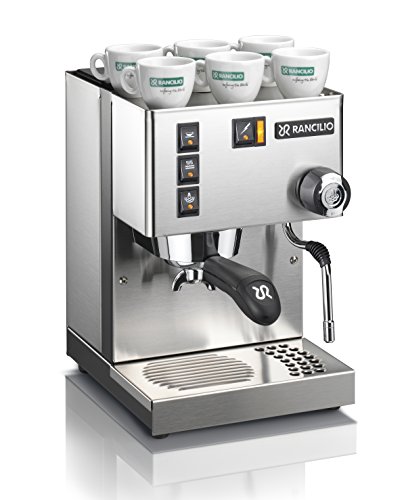
- Marine-grade brass boiler with a chrome-plated brass group head
- 58mm commercial portafilter, articulated steam wand
- Iron frame with stainless panels
- Serviceable with widely available parts
Why buy it: a brass boiler and brass group give thermal mass nothing else here has, which is why these machines are still running two decades on.

Best for a narrow counter and a modest budget
- 6 inches wide
- Thermoblock heats in about 40 seconds
- Automatic flow stop for single and double shots
- Adjustable drip tray for tall glasses
Why buy it: nothing else this narrow is this competent, and footprint is the specification that quietly decides most apartment purchases.

Best for a stainless machine with a working steam wand under $200
- Stainless housing, 1,350 W
- 43.9-oz removable tank
- Steam wand for milk drinks
- Pressurised dual-wall baskets
Why buy it: it frees several hundred dollars for a grinder, which improves the cup more than the same money spent on the machine would.
Quick Comparison
| Product | Best for | Rating | Price | Buy |
|---|---|---|---|---|
| Breville Bambino Plus Espresso Machine (BES500BSS) | Best Overall | — | Check (paid link) | |
| Gaggia Classic Evo Pro Espresso Machine | Best Build Quality | — | Check (paid link) | |
| Breville Barista Express Espresso Machine (BES870XL) | Best with Built-In Grinder | — | Check (paid link) | |
| Rancilio Silvia Espresso Machine | Best Long-Term Machine | — | Check (paid link) | |
| De’Longhi Dedica Deluxe Espresso Machine (EC685M) | Best Compact | — | Check (paid link) | |
| CASABREWS 3700 Essential Espresso Machine | Best Budget | — | Check (paid link) |
The Four Specifications That Actually Matter
Ignore the bar rating on the box — it is pump maximum with nothing in the way, and espresso is brewed at roughly 9 bar at the puck. These four are what separate machines:
| Specification | Why it matters | What to look for |
|---|---|---|
| Temperature stability | Extraction changes noticeably across a few degrees | PID, or a well-engineered thermoblock |
| Steam quality | Wet steam heats milk; dry steam textures it | Dedicated steam mode, multi-hole tip, real recovery |
| Portafilter size | Decides which accessories you can ever buy | 58mm for the widest ecosystem |
| Thermal mass | Holds temperature through the shot and between shots | Brass group head; thermoblocks compensate with speed |
A fifth, which is not a specification: whether parts are sold. A machine with available seals, solenoids and steam valves is repairable for a decade. One without is a five-year appliance regardless of how it is built.
Pressurised vs non-pressurised baskets
Every machine here ships with both. A pressurised (dual-wall) basket has a tiny restriction hole behind the coffee that creates back-pressure on its own, so any coffee — even stale pre-ground — produces a slow pour and thick foam. A non-pressurised (single-wall) basket makes the coffee bed itself create the resistance, which is how espresso actually works, and it exposes every flaw in your grind.
The practical sequence: start pressurised, buy a burr grinder, then switch. Going straight to single-wall without a proper grinder produces a week of watery, sour shots and a machine you blame. Burr vs blade grinder explains why the grinder is the constraint.
How We Rank
We do not buy these machines or pull shots on them. We weight rating quality against review volume; documented specifications — temperature control type, boiler or thermoblock material, portafilter size, steam design — over marketing pressure claims; parts availability and repairability, which is the strongest predictor of a ten-year machine; and durability signals from reviews written six months or more into ownership, where pump failures, scale damage, leaking solenoids and dead steam valves finally appear. Full method: how we rank.
The Semi-Automatics, Reviewed
1. Breville Bambino Plus — Best Overall
Covered above. Owner feedback is unusually consistent on two points: the three-second heat-up changes how often the machine actually gets used on a weekday, and the steam is startling to anyone arriving from a sub-$200 machine.
Owners praise: heat-up speed, temperature stability, automatic milk texturing, footprint. Owners gripe about: no grinder, small drip tray, awkward tank access, 54mm accessory ecosystem, and steam tips that clog if not purged after each use. Check price (paid link).
2. Gaggia Classic Evo Pro — Best Build Quality
The Gaggia is the enthusiast's default under $500 and the reason is the parts list: a 58mm commercial portafilter, a brass group head with genuine thermal mass, and a three-hole commercial steam wand. Every bottomless portafilter, precision basket, puck screen and tamper on the market fits it. Nothing is sealed shut, spares are stocked, and a large modification community documents PID kits, over-pressure valve changes and flow control.
What you trade is convenience. There is no PID from the factory, so you either temperature-surf — flushing the group and timing your shot to the heating cycle — or fit an aftermarket controller. It rewards attention and punishes indifference.
Owners praise: build, steam power, 58mm compatibility, repairability, the ceiling with a good grinder. Owners gripe about: the learning curve, no PID out of the box, a small drip tray, and a plastic tank on an otherwise metal machine. Check price (paid link).
3. Breville Barista Express — Best with Built-In Grinder
The Barista Express is the machine that made grind-to-cup mainstream. The integrated conical burr grinder doses straight into the portafilter, sixteen outer settings plus an inner burr adjustment cover the espresso range, and the razor tool trims the puck to a repeatable dose. PID temperature control and pre-infusion do the rest.
The grinder is genuinely a burr grinder and genuinely mid-tier. It makes excellent espresso and it will not satisfy someone who ends up chasing light-roast single origins, at which point most owners add a standalone grinder and keep using the machine.
Owners praise: everything in one box, dose consistency, steam power, PID. Owners gripe about: grind retention in the chute, a multi-step cleaning routine, footprint, and a grinder that plateaus. Check price (paid link).
4. Rancilio Silvia — Best Long-Term Machine
The Silvia is a home machine built from commercial parts: a marine-grade brass boiler, a chrome-plated brass group head, a 58mm commercial portafilter and an articulated steam wand taken from Rancilio's cafe machines. That brass mass is the point — it holds temperature through a shot and recovers between them in a way no thermoblock can, and it is why fifteen and twenty-year-old Silvias are still in daily use.
It is also famously demanding. The stock machine has no PID and a single boiler that must swing between brew and steam temperature, so temperature surfing is a skill you learn or a PID kit you fit. Owners describe it as the machine that taught them espresso.
Owners praise: brass thermal mass, commercial steam wand, longevity, parts availability, the ceiling it reaches. Owners gripe about: no PID from the factory, a steep learning curve, a long warm-up of 15 to 20 minutes, and a small drip tray. Check price (paid link).
5. De’Longhi Dedica Deluxe — Best Compact
Six inches wide, about forty seconds to heat, automatic flow stop for single and double shots, and a drip tray that raises for a latte glass. In an apartment kitchen the footprint is not a convenience, it is the deciding factor, and the Dedica is the only genuinely narrow machine that is also genuinely competent.
Owners praise: the width, quick warm-up, build for the money, tidy design. Owners gripe about: a steam wand that takes practice, frequent tank refills, and pressurised baskets that cap quality unless you fit single-wall replacements. Check price (paid link).
6. CASABREWS 3700 Essential — Best Budget
Stainless housing, a large removable tank, 1,350 watts, and a steam wand that makes usable foam, for under two hundred dollars. Its argument is arithmetic rather than engineering: buy it and you can still afford a proper burr grinder, and that combination beats a $500 machine fed badly ground coffee.
Owners praise: price, metal shell, tank size, quick heat-up. Owners gripe about: temperature drift across back-to-back shots, a light body that shifts when locking the portafilter, pressurised baskets in practice, and variable quality control. Check price (paid link).
What Owners Actually Complain About
Waiting between brew and steam. Every machine here is a single boiler or thermoblock and has to change temperature between the two jobs — ten to forty seconds is normal. A dual boiler removes this and costs over $1,000.
Sour, gushing shots. A grind problem in nearly every case. See why espresso tastes sour and how to dial in espresso grind.
Wet pucks and portafilter sneezes. Machines without a three-way solenoid valve cannot release pressure after the shot, so the puck stays soggy and the group spits when you unlock it. Annoying; not a fault.
Scale. The leading cause of death in this category. Slow flow and weak steam are the early warnings — our descaling guide has intervals by water hardness.
Height under cabinets. Several of these need clearance to lift the tank lid. Measure first — see counter space planning.
The Verdict
The Breville Bambino Plus is the semi-automatic to buy for most kitchens: the temperature and steam of a much more expensive machine, in eight inches of counter. Choose the Gaggia Classic Evo Pro if you want a platform with commercial 58mm parts, the Barista Express if you want the grinder included, and the Rancilio Silvia if you want brass and two decades. Then spend properly on the grinder — it changes the cup more than any of these choices do. Check price on Amazon → (paid link)
More from this hub: small kitchen appliances · best espresso machine · semi-automatic vs super-automatic · best espresso machine under $500 · how we rank.