 Garden


Affiliate Disclosure
Some links on this page are affiliate links. As an Amazon Associate, we earn from qualifying purchases — at no extra cost to you. We do not buy, test, or physically handle the products we cover; our rankings come from aggregated owner reviews, ratings and expert consensus. Commissions never change our verdicts. How we rank · full disclosure.
You cannot raise a pressure washer's pressure above what its pump was built for, and almost every method suggested online either does nothing or is dangerous. What you can do is stop losing pressure. Four things are legitimate: fit a correctly sized, unworn nozzle; feed the machine enough water; clean the inlet filter; and use the shortest high-pressure hose that reaches. On a neglected machine those four together are often worth several hundred PSI. What is not legitimate is adjusting the unloader valve to force the gauge higher — that pushes the pump, hose and gun past their ratings, and this page will not tell you how.
What actually sets the pressure at the tip
Two things, and only two: how much water the pump moves, and how small the hole is that it moves it through. The pump's displacement is fixed by its design. The nozzle orifice is the variable you control. Restrict the orifice and pressure rises; open it and pressure falls, at the same flow.
The professional sizing rule, used across the pressure-washing trade and published by suppliers including MTM Hydro, is straightforward:
A 4.0 GPM machine targeting 3000 PSI works out to about 4.6, so you fit a 4.5 orifice. Go one size smaller and pressure rises; go one size larger and it falls.
That formula is also the trap. Fitting a nozzle smaller than your machine's rating does raise pressure — and it raises it past what the pump, unloader and hose were designed for, exactly as cranking the unloader does, just with an extra step. The rule the trade uses is that the orifice must be sized to flow at or slightly below the machine's rated GPM at its rated pressure. A nozzle that flows too little produces pressure spikes and kills pumps.

The four legitimate ways to get pressure back
| Fix | Realistic gain | Why it works |
|---|---|---|
| Replace a worn or wrong-sized nozzle | Often 200–600 PSI | Orifices erode wider with use; a wider orifice at the same flow means lower pressure |
| Fix a starved water supply | Up to full rated pressure | A pump that cannot get rated flow in cannot make rated pressure, and cavitates |
| Clean the inlet filter | Similar — restores what sediment is choking off | Same mechanism as a starved supply, from a part almost nobody checks |
| Shorten the high-pressure hose | Roughly 50–100 PSI per extra 50 ft of 1/4-inch hose | Friction loss along the hose; a 3/8-inch hose loses much less than 1/4-inch |
Nozzles first, always. A tip is a precision orifice made of brass or stainless and it wears every hour it runs, especially on gritty water. Owners repeatedly describe a machine that "lost power over a season" and is fixed by a nozzle set costing less than a tank of fuel. If your tips are more than a couple of seasons old, replace them before you diagnose anything else.
Then the inlet. Run a 5/8-inch or 3/4-inch supply hose, keep it under about 50 feet, open the spigot fully, and confirm the spigot actually delivers more gallons per minute than the machine is rated for — time how long it takes to fill a five-gallon bucket and do the arithmetic. A starved pump produces a pulsing, surging stream, and the surging is the pump ingesting air. Left alone it destroys valves. If your machine surges, our page on pressure washer surging works through the causes in order.
Then the filter. There is a small screen at the water inlet, and on municipal water it fills with grit and pipe scale within a couple of seasons. Pull it, rinse it, refit it. It takes two minutes and it is the most overlooked pressure fix in the category.
Then the hose. Every extra 50 feet of 1/4-inch high-pressure hose costs you meaningful pressure at the tip. If you have added a 50-foot extension because it is convenient, you have paid for that convenience in PSI. Moving the machine closer, or going up to 3/8-inch hose on a higher-flow unit, buys it back.
The one modification we refuse: cranking the unloader
Search this topic and you will find people explaining how to turn the unloader valve's adjustment screw clockwise to raise pressure. It works, in the narrow sense that the gauge goes up. Here is what else happens.
The unloader has two jobs. When you release the trigger it diverts flow into bypass so the pump is not dead-heading against a closed gun. And it caps system pressure at a value the whole system is rated for — pump, hose, gun, fittings, quick-connects. Every component has a maximum, and as pump suppliers put it, the component with the lowest rating determines the maximum performance available from the system. Turn the unloader up and you have raised the load on all of them at once.
Two specific failure modes follow. First, the pressure spike that occurs each time the unloader shifts from spraying into bypass gets larger as the setting rises — industry guidance from suppliers such as Envirospec describes that spike growing until it starts breaking hoses, blowing valve caps and destroying unloader seals. Second, bypass heat. In bypass the same small volume of water recirculates through the pump, and friction heats it fast; once it passes roughly 155°F the packings begin to fail, then the plungers, then the seals and hoses. A pressure washer left idling in bypass while you move a ladder is already doing this at the factory setting. Raising the setting makes it worse.
A high-pressure hose that lets go at a fitting, or a gun that fails while you are holding it, is not a mess — it is the mechanism behind the injuries described in are pressure washers dangerous. There is no household cleaning result worth that trade. If the pressure your machine makes is genuinely not enough, buy a machine that makes more.
What does not work
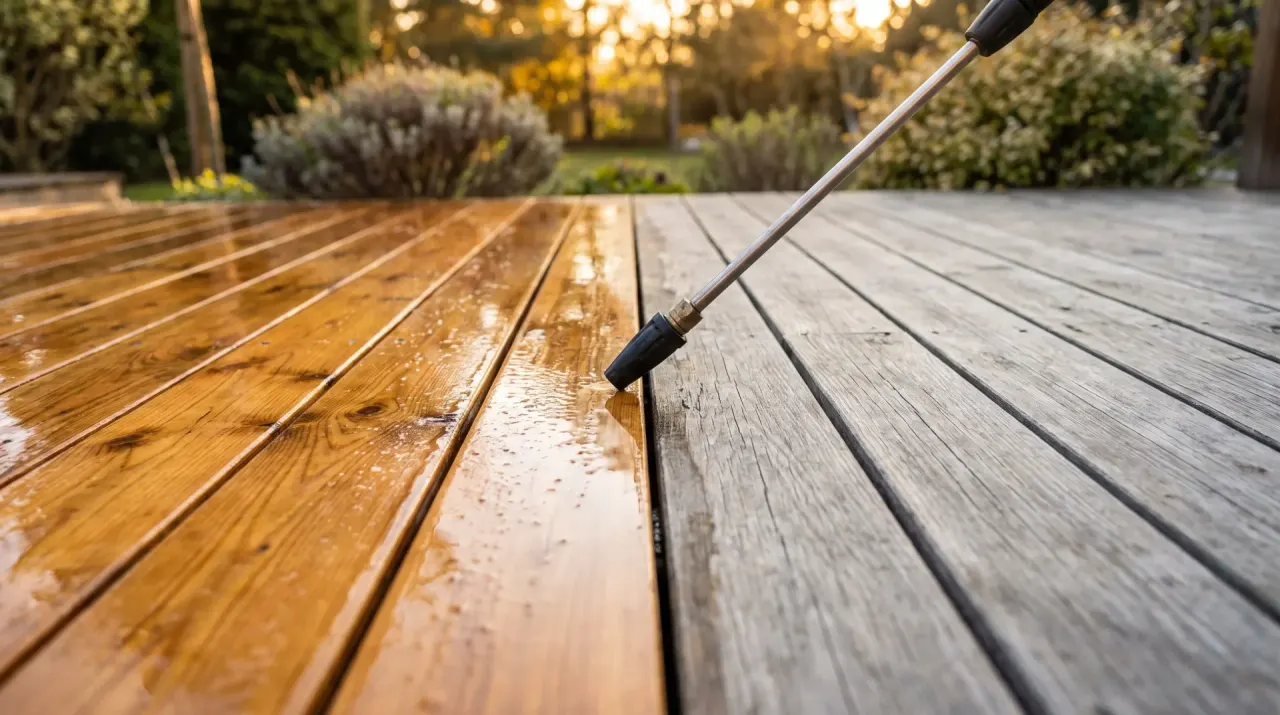
- Removing the nozzle entirely. This drops pressure to almost nothing. The orifice is what creates pressure; without it you have an expensive hose.
- A booster pump on the garden hose. Inlet pressure barely affects outlet pressure — the pump is a positive-displacement device, not an amplifier. Adequate inlet flow matters; inlet pressure above what the pump needs does nothing, and over-pressurizing the inlet can damage the pump.
- A longer wand. Reach, yes. Pressure, no — it costs a little through added friction.
- Hotter water in a cold-water machine. Hot water cleans better, but most cold-water pumps and seals are rated to around 100–140°F and running above that destroys them. Check your manual before you try it; our page on hot water in a pressure washer covers the limits.
- Detergent in the high-pressure line. It does not add pressure and it damages seals. Detergent goes through the soap nozzle at low pressure, which is the only setting the siphon works at.
What you actually want: more cleaning, not more pressure
Almost everyone asking how to make a pressure washer more powerful wants a surface clean faster. Cleaning speed is pressure multiplied by flow — pressure loosens the dirt, water volume carries it away — so there are several routes to a dramatically faster job that leave PSI untouched:
- A rotating turbo nozzle. The single biggest perceived upgrade most owners make. It spins a tight jet in a cone, so you get the impact of a very narrow tip across the coverage of a wide one.
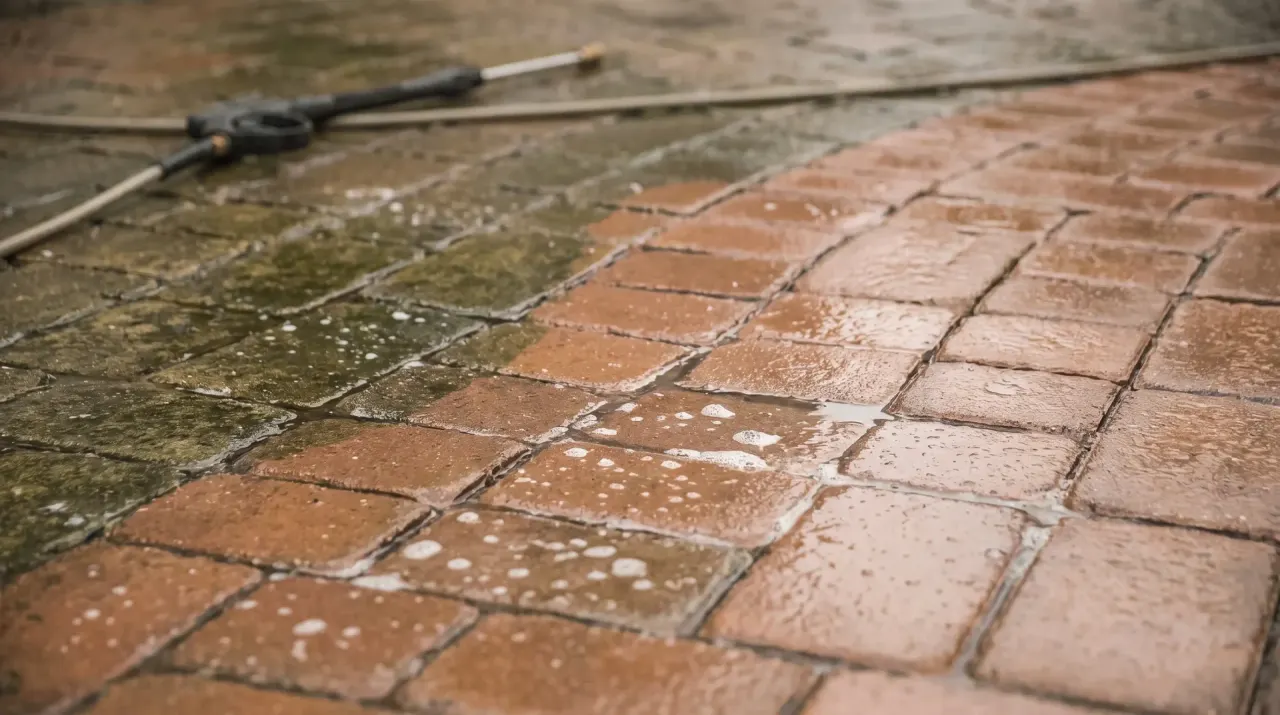
- A surface cleaner. On concrete this is transformative — two spinning jets under a shroud, even coverage, no wand stripes, and typically three to four times faster than a wand. See our surface cleaner picks.
- Detergent and dwell time. Chemistry does work that pressure cannot. Apply through the soap nozzle, let it sit five to ten minutes without drying, then rinse. On biological staining this beats any amount of extra PSI, which is the whole principle behind soft washing.
- A higher-GPM machine. If you have a 1.76 GPM electric and a long driveway, the upgrade that changes your afternoon is flow, not pressure. A 2.5 GPM gas unit at the same nominal PSI cleans well over twice as fast.
Gear That Genuinely Helps

Best for restoring the pressure a worn or wrong-sized nozzle is throwing away
- Quick-connect tips in 0°, 15°, 25°, 40° and soap
- Sized for machines around 2.5 GPM
- Stainless orifices that hold their size longer than brass
- Replaces the worn tips that quietly cost you several hundred PSI
Why buy it: a nozzle orifice widens as it wears, and a widened orifice drops pressure at the surface — replacing a tired tip is the cheapest genuine pressure gain available. Throw the red 0° tip away; it earns nothing and causes injuries.

Best for concrete and pavers where a 25° fan is simply too slow
- Spins a narrow jet in a cone rather than parking it in one spot
- Rated to 3600 PSI, hot or cold water
- Covers roughly the width of a 25° fan at the impact of a much tighter tip
- Universal 1/4-inch quick connect
Why buy it: this is what people actually want when they ask for more PSI — more cleaning effect per pass. It delivers that without raising system pressure or fitting a 0° tip.

Best for a gas machine that has genuinely lost pressure and will not get it back
- Direct replacement for common vertical 7/8-inch shaft gas units
- Restores rated pressure on a machine with worn valves or seals
- Includes a thermal relief valve
- Fits several Craftsman and Troy-Bilt platforms
Why buy it: the pump sets the ceiling, so a worn pump is the one component whose replacement genuinely restores lost pressure — but match the pump to the engine you have, because a bigger pump on a small engine simply stalls it.
If it used to be stronger
A sudden loss is a fault, not a tuning problem, and it has a short list of causes: a clogged inlet filter or nozzle, a starved supply, air in the system, worn pump valves, or a failing unloader. Work through them in that order — cheapest and most likely first. Our guide to a pressure washer with no pressure covers the diagnosis step by step, and winterizing prevents the most common seasonal cause, which is a pump cracked by water left in it through a freeze.
The honest answer
Fit fresh, correctly sized nozzles. Give the machine all the water it asks for. Clean the inlet filter. Shorten the hose. Then stop, because everything past that point is either a myth or a way to break a component while you are holding it. If the machine still is not enough, the problem is the machine, and the fix is a higher-flow one rather than a modified one. Our pressure washer rankings explain why flow rate, not the PSI badge, is the number to shop on.
More from this hub: leaf blowers & yard cleanup · best pressure washer nozzles · best pressure washer pumps · pressure washer safety tips · how we rank.