 Garden


Affiliate Disclosure
Some links on this page are affiliate links. As an Amazon Associate, we earn from qualifying purchases — at no extra cost to you. We do not buy, test, or physically handle the products we cover; our rankings come from aggregated owner reviews, ratings and expert consensus. Commissions never change our verdicts. How we rank · full disclosure.
The best paint finish for bathrooms is satin or semi-gloss. Both resist moisture and can be wiped clean, which flat and eggshell finishes cannot. Choose satin for a softer look that still handles a well-ventilated bathroom, and semi-gloss for the most moisture and mildew resistance in a steamy or poorly vented room. A common winning combination is satin on the walls and semi-gloss on the trim and any high-splash areas. Avoid flat and matte on bathroom walls, and remember that ventilation matters as much as sheen for keeping mold away.
We do not test paints ourselves; our picks come from aggregated owner reviews and expert consensus, described in how we rank. The sheen guidance below reflects that consensus.
Why sheen matters more in a bathroom
In a bedroom, paint sheen is mostly a style decision. In a bathroom it is a performance decision, because sheen and moisture resistance are directly linked. The more sheen a paint has, the tighter and less porous its dried film. A tight film absorbs less water vapor, wipes clean without lifting, and gives mildew less to grip. A porous, low-sheen film does the opposite: it drinks in moisture, stains permanently, and grows mildew in the corners over the shower.
That single relationship is why the finishes that look best in a living room, flat and matte, are the wrong choice on a bathroom wall, and why a slightly shinier finish that you might avoid elsewhere earns its place here.
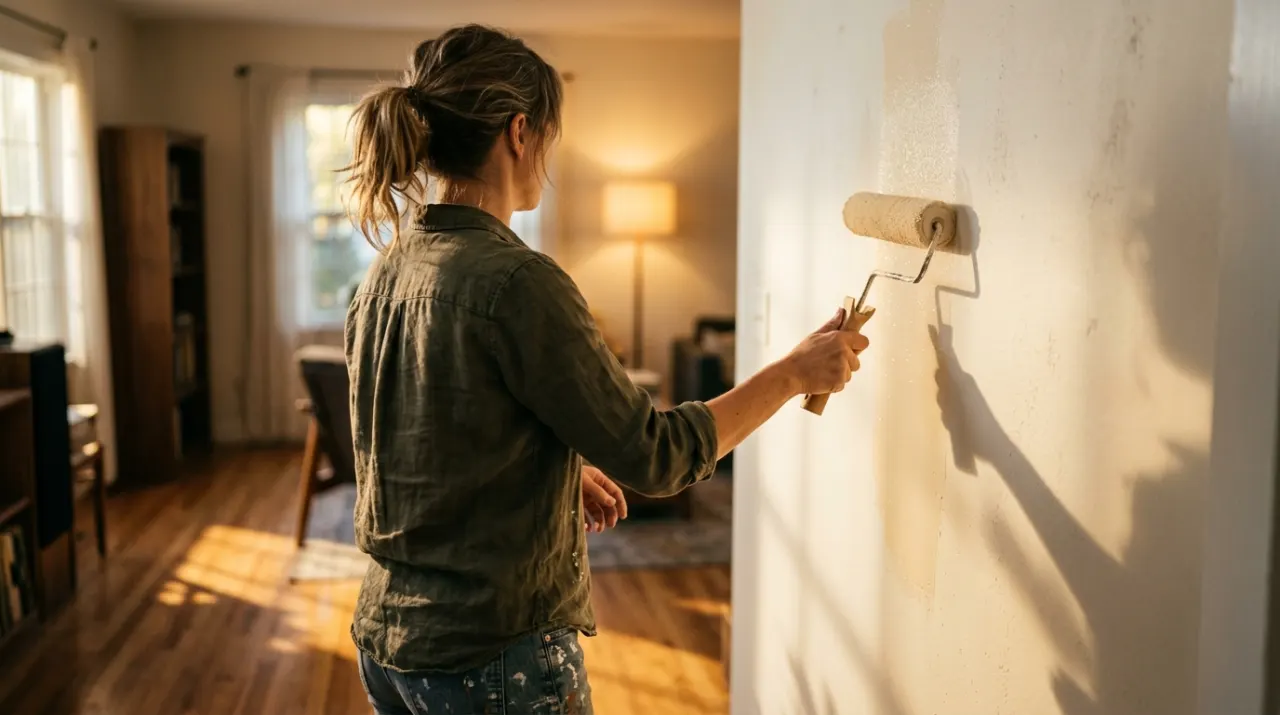
The sheens compared for bathroom use
Here is how each finish performs in the conditions a bathroom actually creates.
| Finish | Moisture resistance | Wipe-clean | Hides flaws | Bathroom verdict |
|---|---|---|---|---|
| Flat / matte | Poor | Poor | Excellent | Avoid on walls |
| Eggshell | Fair | Fair | Very good | Powder rooms only |
| Satin | Good | Good | Good | Great for most baths |
| Semi-gloss | Very good | Very good | Fair | Best for steamy baths |
| Gloss | Excellent | Excellent | Poor | Trim and doors |
Notice the trade-off running through the table: the more moisture resistance you gain, the more the finish shows wall imperfections. That tension is the whole reason the decision takes any thought. For a broader look at eggshell versus satin, see the difference between eggshell and satin paint.
Satin: the popular middle ground
Satin is the most-recommended bathroom wall finish for good reason. It carries enough sheen to resist moisture and be wiped down, but not so much that every trowel mark and roller lap jumps out. Its soft luster reads as modern and calm, which suits a room people want to feel clean and bright.
Satin is the right call when your bathroom has decent ventilation, a working exhaust fan or a window you open, and normal daily use. It is also the more forgiving finish if your walls are not perfectly smooth, which many bathroom walls are not.
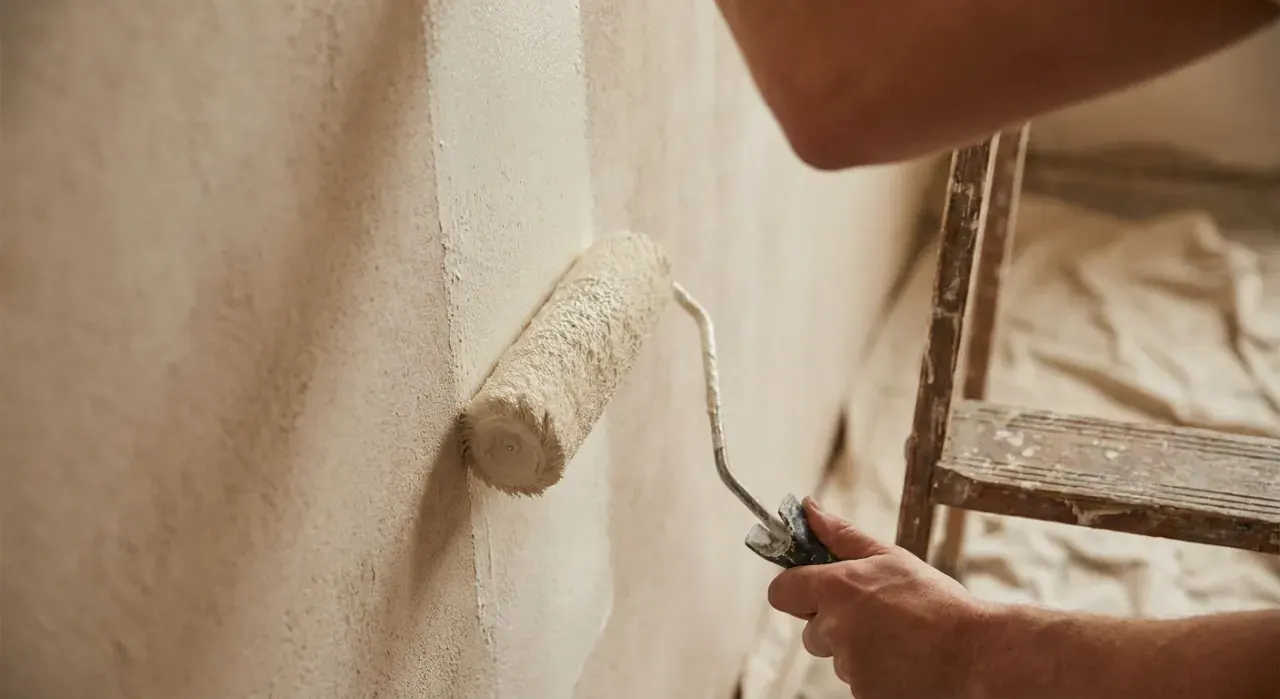
Semi-gloss: maximum protection
Semi-gloss is the durability champion among practical wall finishes. Its tighter film sheds moisture, resists mildew best, and takes repeated scrubbing without wearing, which is why it is the traditional choice for the wettest, hardest-working bathrooms.
Reach for semi-gloss when the bathroom is small and steamy, ventilation is weak, the room is a busy family bath, or you simply want the easiest surface to keep clean. The cost is cosmetic: semi-gloss reflects light, so it highlights any bumps, patches, or uneven texture. If you go semi-gloss on imperfect walls, invest extra effort in prep, covered in how to prep walls for painting.
Matching the finish to each surface
You do not have to use one sheen everywhere. The pros often mix finishes by surface to get the best of both.
- Main walls: satin for a nicer look, or semi-gloss if the room is steamy.
- Ceiling: satin or a dedicated bathroom paint, not standard flat, since the ceiling over a shower takes the most steam and shows mildew first.
- Trim, doors, and window frames: semi-gloss or gloss, which wipe clean and highlight the trim profile. See how to paint trim.
- High-splash zones around the sink and tub surround: semi-gloss for the toughest, most wipeable film.
A frequent winning setup is satin walls with semi-gloss trim and a bathroom-specific ceiling paint, which balances looks against durability across the room.
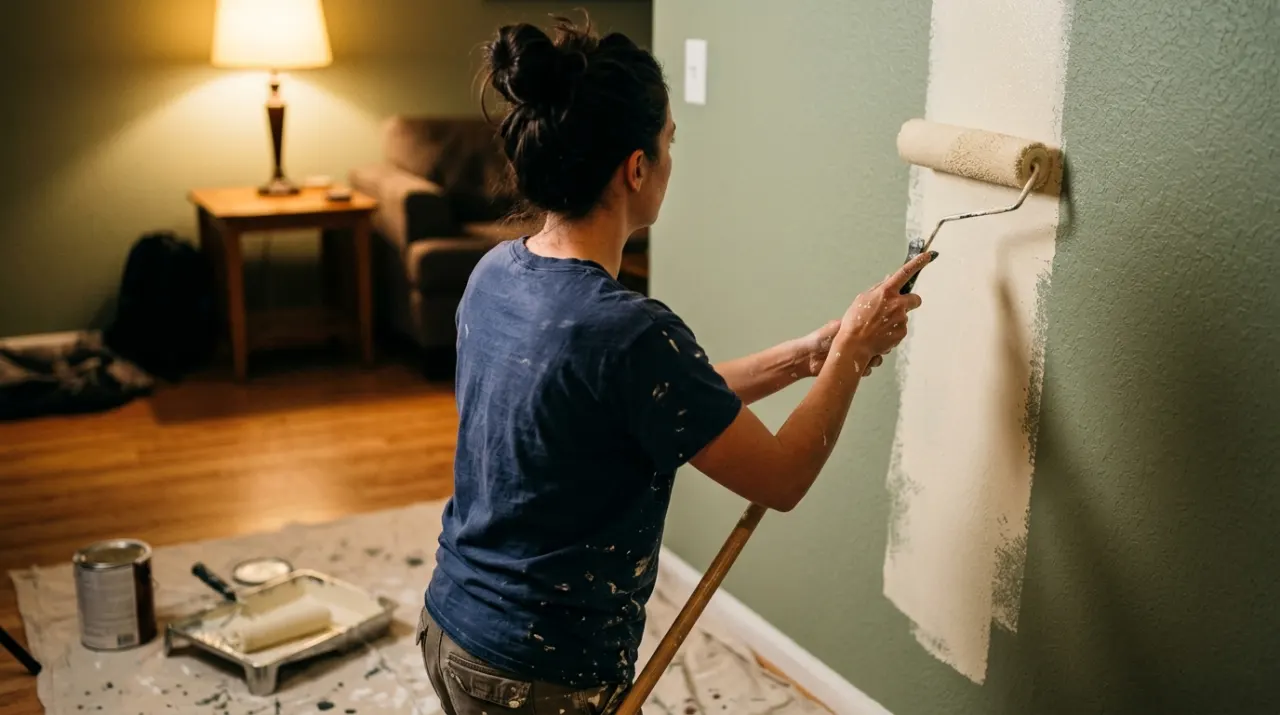
Bathroom-specific and mildew-resistant paints
Beyond sheen, the paint formula itself matters in a damp room. Paints labeled for bathrooms or kitchens include mildewcides and moisture-resistant binders that resist the mold and peeling that plague wet spaces. Some deliver that protection at a lower, better-looking sheen than a standard paint would need, letting you get semi-gloss-level moisture resistance with a satin-like appearance.
If your bathroom is well ventilated and lightly used, a quality standard interior paint in satin or semi-gloss is fine. If it is small, steamy, or poorly vented, a dedicated bathroom paint is worth the modest premium for the mildew resistance alone. The ranked field of quality interior paints, including moisture-resistant lines, is in best interior paint, and for the ceiling specifically, best paint for a ceiling.
Sheen is not a substitute for ventilation
The most important point about bathroom paint is that no finish, however glossy or mildew-resistant, can overcome a bathroom that stays wet. Paint resists moisture; ventilation removes it. An exhaust fan that actually clears steam, run during and for a while after every shower, does more to prevent mold than any sheen upgrade.
If your bathroom fogs up and stays damp, address the ventilation first, then choose your finish. With good airflow, satin walls are plenty. Without it, even semi-gloss is fighting a losing battle against constant moisture.
The bottom line
For most bathrooms, satin on the walls with semi-gloss trim is the sweet spot: good looks, good moisture resistance, and easy cleaning. For small, steamy, or poorly ventilated bathrooms, go semi-gloss on the walls too, or choose a bathroom-specific paint that gives you that protection at a softer sheen. Keep flat and matte off bathroom walls, prioritize a working exhaust fan, and prep the walls well if you choose a shinier finish.
Once you have picked the finish, the application steps are the same as any room, covered in how to paint a room. Everything else lives at the paint and walls hub.