 Garden
Affiliate Disclosure
Some links on this page are affiliate links. As an Amazon Associate, we earn from qualifying purchases — at no extra cost to you. We do not buy, test, or physically handle the products we cover; our rankings come from aggregated owner reviews, ratings and expert consensus. Commissions never change our verdicts. How we rank · full disclosure.
The one thing this page ranks on: droplet size at the surface, and the overspray you accept to get it. Cabinet doors sit at eye level in side light and are touched fifty times a day, so fine atomization at low pressure beats throughput every time — which is why our pick is the HomeRight Super Finish Max and why the airless that wins our general sprayer roundup does not appear on this page at all.
That inversion is real, not editorial. On walls and siding the job is square feet per hour and the Graco Magnum X5 wins our main sprayer rankings; on cabinets the job is forty square feet examined from eighteen inches away in a room full of appliances you cannot afford to fog with paint. For the technology split in detail, see airless versus HVLP, and sprayer versus roller for cabinets for whether to spray at all. The paint and walls hub maps the whole job.
Top Picks at a Glance
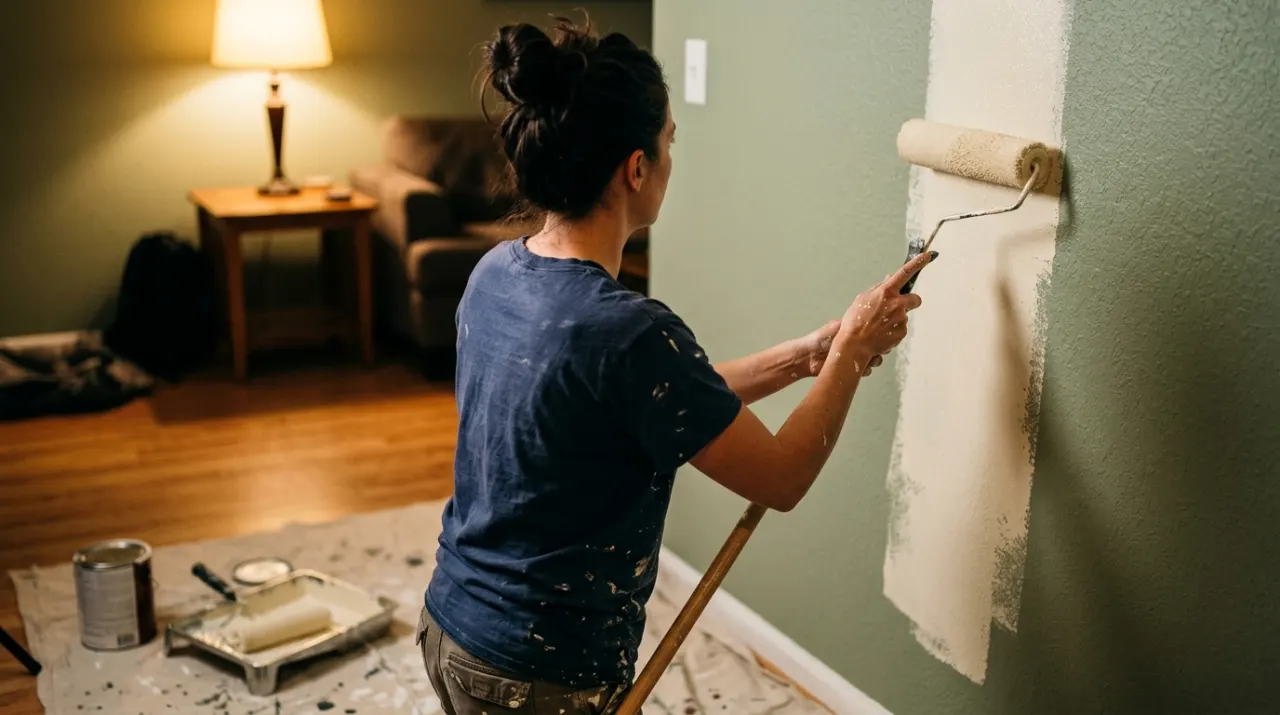
Our #1 Pick: HomeRight Super Finish Max
Everything about a sprayed cabinet door comes down to how big the droplets are when they land. Small droplets have surface tension left to flow together, and they level into a continuous film that reads as glass. Large droplets land as discrete bumps, skin over before they can merge, and cure as the pebbled texture everyone calls orange peel. Nobody prints droplet size on a box, but two things control it: how the machine atomizes, and whether the tip suits the paint.
HVLP turbines handle the first. They shear paint with a high volume of air at low pressure, which produces a fine, slow mist that mostly lands on the door instead of drifting across the room — the reason cabinet work is HVLP work. The Super Finish Max wins the second, and it is the whole argument for it over cheaper HVLP units. It ships with 1.5mm, 2.0mm and 2.5mm brass nozzles. Modern water-based cabinet enamels are thick on purpose, because that body is where their hardness and self-leveling come from; force one through a 1.5mm tip and you get spitting and tails, fit the 2.5mm and the same paint atomizes properly with far less thinning. Every ounce of thinner you do not add is film build and hardness you keep. Brass tips also survive repeated cleaning, which is where budget sprayers quietly die.
Three spray patterns plus adjustable flow let you set a narrow vertical fan for stiles and rails and a wide horizontal one for the panel, which is the difference between two coats and four. And it strips down without tools — a mundane feature that decides more outcomes than any spec, because an HVLP sprayer that is a chore to clean is a sprayer you abandon halfway through the second cabinet.
The honest weaknesses: the motor is in your hand, and your wrist knows it after twenty doors — if the job is bigger than that, the floor-standing Control Spray Max below is the kinder machine. It is loud. And it still needs some thinning with the heaviest enamels even on the largest tip. Owners who rush the cleaning once report clogging and spitting the next time out, and that complaint is entirely earned.
Check price on Amazon → (paid link)
The Ranked Field
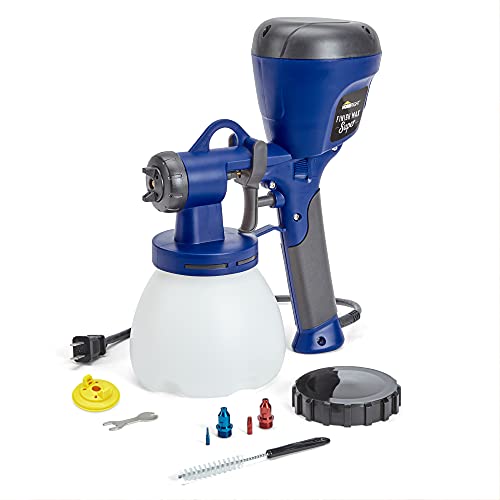
Best for matching a tip to a thick cabinet enamel instead of thinning the paint to suit the gun
- HVLP turbine — fine atomization at low pressure
- Three brass tips: 1.5mm, 2.0mm and 2.5mm
- Three spray patterns and adjustable material flow
- Tool-free teardown for cleaning
Why buy it: the only sprayer here that lets you move up a tip size when the enamel is too thick, which is what keeps the film build the paint was formulated to have.

Best for thin lacquers and pre-catalyzed enamels over thirty doors
- Floor-standing two-stage turbine, light gun in hand
- Long air hose keeps the motor weight off your wrist
- Full control over pattern, flow and air
- Second material container included
Why buy it: atomization this fine on thin finishes is the closest a homeowner gets to a spray booth, and a light gun means the thirtieth door looks like the first.
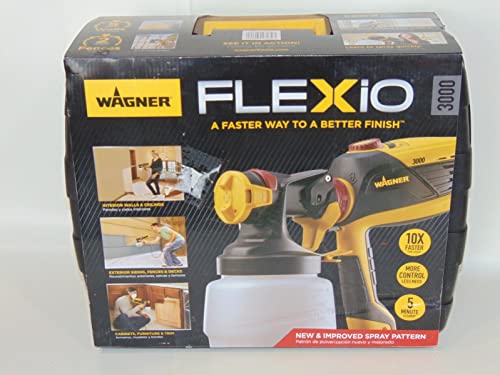
Best for the doors on Saturday and the kitchen walls on Sunday
- Two nozzles: fine finish and wall
- X-Boost turbine with variable power
- Sprays unthinned latex on the wall nozzle
- Adjustable pattern width and flow
Why buy it: the detail nozzle is a genuine fine-finish head rather than a wall gun turned down, which is the difference between a cabinet that looks sprayed and one that looks stippled.

Best for lacquer, shellac and thin cabinet finishes on a budget
- Two-stage HVLP turbine at a fraction of the price
- Built for stains, sealers and thin finishes
- Adjustable pattern and flow
- Two material cups included
Why buy it: if your cabinet finish is a sprayable lacquer rather than a thick latex enamel, this atomizes it as finely as machines costing twice as much.

Best for one bathroom vanity or a small run of shaker doors
- Compact handheld HVLP, low overspray indoors
- Adjustable flow for thin enamels
- Small cup that empties and rinses quickly
- Light enough for detail work on rails and stiles
Why buy it: a small gun with a narrow fan is easier to control on a 2-inch stile than a wide-pattern machine, and cleanup on a one-cup job takes minutes.

Best for thick cabinet enamel sprayed at full strength
- Airless — sprays unthinned latex and enamel
- Sprays at any angle including inverted
- Variable speed pressure control
- Reversible tip clears clogs without teardown
Why buy it: airless keeps every bit of the film build and hardness in the can, and the trade is overspray you have to mask for — a straight swap, honestly made.
Quick Comparison
| Product | Best for | Rating | Price | Buy |
|---|---|---|---|---|
| HomeRight Super Finish Max HVLP Paint Sprayer | Best Overall for Cabinets | — | Check (paid link) | |
| Wagner Spraytech 0518080 Control Spray Max HVLP Paint Sprayer | Best Fine-Finish Turbine | — | Check (paid link) | |
| Wagner 0529085 FLEXiO 3000 HVLP Paint Sprayer | Best Versatility | — | Check (paid link) | |
| Wagner Spraytech 0518050 Control Spray Double Duty HVLP Stain Sprayer | Best Value | — | Check (paid link) | |
| Wagner Spraytech 520008 Control Painter HVLP Handheld Paint Sprayer | Best for a Single Vanity | — | Check (paid link) | |
| Graco 17D889 TrueCoat 360 VSP Handheld Paint Sprayer | Best If You Refuse to Thin | — | Check (paid link) |
How We Rank for This Use Case
We do not buy, test or physically handle these products. For cabinets we rank on four properties in order. Atomization on thick enamel — the finish quality owners report on flat door panels, which is where orange peel shows. Tip range, because the ability to match a nozzle to your specific paint is worth more than any wattage figure. Overspray indoors, since a kitchen is full of surfaces that cannot be sanded clean. Gun weight and cleaning time, which decide whether the last door matches the first and whether the machine works next year. Those sit on top of aggregated owner ratings weighted by review volume and the failure modes that repeat across hundreds of reviews. Prices were current at the time of writing. Full method on how we rank.
The Cabinet Sprayers, Reviewed
1. HomeRight Super Finish Max — Best Overall for Cabinets
Covered above. What owners praise: the brass tip set, the finish it lays down on flat panels, and how fast it comes apart to clean. What owners complain about: hand fatigue from the all-in-one design, noise, and clogging when the cleaning is rushed. The default cabinet sprayer for a homeowner.
2. Wagner Control Spray Max — Best Fine-Finish Turbine
The finest atomization on this page, on the right materials. A two-stage turbine sits on the floor, a long air hose runs to a light gun, and the difference over a thirty-door job is not subtle: a tired hand wavers, a wavering hand leaves runs, and holding only a gun and cup for four hours is a different day's work from holding a motor. On thin materials — lacquer, shellac, pre-catalyzed enamel — nothing here lays a smoother film. What owners complain about: thick latex enamels need genuine thinning, and it takes floor space and setup time. The choice for a large job in a sprayable finish.
3. Wagner FLEXiO 3000 — Best Versatility
Ranked here because its detail nozzle is an actual fine-finish head rather than a wall gun turned down, which is the compromise most two-in-one sprayers make and the reason they leave cabinet doors stippled. The second nozzle sprays unthinned latex, so the same machine does the doors and then the room they live in. What owners praise: genuine two-job flexibility. What owners complain about: the fine nozzle is a step behind a dedicated turbine, and there are more parts to clean. Buy it if the sprayer has a life beyond this project.
4. Wagner Control Spray Double Duty — Best Value
The one to know about if your cabinet finish is a lacquer, shellac or thin enamel rather than a heavy latex. It is a two-stage HVLP turbine at roughly half the price of the Control Spray Max, and on the thin materials it is designed for it atomizes beautifully — those are exactly the finishes that produce a factory look on a shaker door. What owners complain about: it will not push a thick modern cabinet enamel without heavy thinning, and the cup is small enough that a big kitchen means frequent refills. Know your paint before you buy this one, and it is the best money on the page.
5. Wagner Control Painter — Best for a Single Vanity
Small jobs punish big machines. A bathroom vanity, a linen press, six shaker doors — on work like that the setup and cleanup of a turbine unit costs more time than the spraying, and a wide fan pattern is actively harder to control on a 2-inch stile than a narrow one. This is a compact handheld HVLP with adjustable flow and a cup you rinse in a couple of minutes. What owners complain about: limited to thinner materials, a small cup, and a motor in your hand. Correct tool for a one-cabinet job, wrong tool for a kitchen.
6. Graco TrueCoat 360 VSP — Best If You Refuse to Thin
The one airless on the page, and it is here for a specific reader: the one who does not want to thin a premium cabinet enamel by a single drop. Airless forces paint through a small tip under pressure rather than atomizing it with air, so it sprays thick enamel at full strength, preserving all the film build and hardness the chemist put in. It also sprays inverted, which is genuinely useful under a face frame. The trade is honest and it is why this is sixth rather than first: overspray is heavier than any HVLP here, so indoor masking has to be total, and on a flat panel the finish is a small step behind a good turbine. What owners praise: no thinning, speed, and a reversible tip that clears clogs without a teardown.
What Owners Actually Complain About
Read enough owner reviews of cabinet sprayers and the same five problems appear regardless of brand.
Clogging and spitting. The top complaint by volume, and overwhelmingly a cleaning issue. Paint that dries inside a nozzle, needle or air cap does not redissolve politely. Owners reporting years of trouble-free use are the ones who flush immediately and strip the gun rather than running water through it. Our guide to cleaning a sprayer covers the routine.
Orange peel. The exact failure this page ranks against. It is paint too thick for the tip, or a gun held too far away so droplets start skinning before they land. Go up a tip size or thin correctly, and hold 6 to 10 inches off the door. See thinning paint for a sprayer and whether airless sprayers need thinning.
Overspray everywhere. Sprayers turn paint into airborne dust and air moves, which is why the EPA advises maximum ventilation during painting and why a kitchen is a bad room to seal yourself into. Spraying indoors without floor-to-ceiling plastic, a fan exhausting out a window and covers on every surface reliably produces a fine grit of cabinet paint on countertops and appliances. The honest answer is to spray doors outside or in a garage on a rack and brush the face frames in place. See using a paint sprayer indoors.
Runs on door edges. Vertical surface plus heavy pass equals a run, and edges collect the paint. Two light coats beat one heavy one, and spraying doors flat on a rack removes most of the problem.
The finish chipped within months. A prep failure, not a sprayer failure. Without a scuff sand, a degrease and a bonding primer, a perfectly sprayed enamel still peels off the door edge where fingernails catch it. In a kitchen older than 1978, check what you are sanding into first — the EPA notes that lead dust forms when lead-based paint is scraped, sanded or heated, and paid work disturbing it requires an EPA- or state-certified firm using certified renovators. Our cabinet painting guide walks the sequence.
How to Choose a Cabinet Sprayer
Start with the can, not the machine. Thick water-based cabinet enamel needs a 2.0mm tip or larger, or an airless. Lacquer, shellac and pre-catalyzed finishes want 1.0 to 1.5mm and reward the finest turbine you can get. Buying a sprayer before you have chosen the paint is how people end up thinning a premium enamel into a wash.
Count the doors. Under about fifteen and a handheld is fine. Over that and the motor in your hand becomes the limiting factor on finish quality, because fatigue shows up as inconsistent gun distance and speed.
Count the cleaning steps before you buy. Guns that need tools and twenty minutes get cleaned badly, then clog, then get returned. Guns that strip in two minutes get cleaned properly.
Set up a spray station. Doors sprayed flat on painter’s pyramids dry without runs and let you do both sides in a day. Number the doors and their hinge positions before removal; the hardware never goes back the way you remember. Good painter’s tape and plastic cost far less than cleaning overspray off a refrigerator.
The Verdict
Ranked on droplet size at the surface rather than square feet per hour, the HomeRight Super Finish Max is the cabinet sprayer to buy — HVLP atomization plus a brass tip set that lets you spray real cabinet enamel instead of thinned paint. Step to the Wagner Control Spray Max if the job is thirty doors in a thin finish and you want a light gun, take the Control Spray Double Duty if lacquer is your material and money is tight, and the Graco TrueCoat 360 VSP only if you refuse to thin and will mask accordingly. The airless that wins our general sprayer page is the wrong tool here, and that is the point. Check price on Amazon → (paid link)