 Garden
Affiliate Disclosure
Some links on this page are affiliate links. As an Amazon Associate, we earn from qualifying purchases — at no extra cost to you. We do not buy, test, or physically handle the products we cover; our rankings come from aggregated owner reviews, ratings and expert consensus. Commissions never change our verdicts. How we rank · full disclosure.
Painting a stairwell is ordinary painting made risky by one thing: reaching the high walls safely. The color work is easy; the whole challenge — and the reason to slow down — is access at height. Budget a weekend, no permit, and $60 to $150 in paint plus whatever access gear you rent or own. The right setup is a stable ladder-and-plank platform or a stair-leveling ladder, plus an extension pole to minimize climbing. This is DIY for a normal stairwell with proper equipment; a soaring two-story foyer, or any situation where you cannot stand safely, is a job to hand to a pro with real staging.
Step-by-step: painting a stairwell
- Set up safe access first. Rig a stable platform — a scaffold plank between a stepladder on the landing and a secured point on the stairs, or an adjustable stair-leveling ladder standing plumb. It must be level and rated for your weight. This step is the job's safety.
- Prep and protect. Fill holes, sand, and clean the walls. Cover the stairs and landing with secured drop cloths — canvas grips better than plastic on treads.
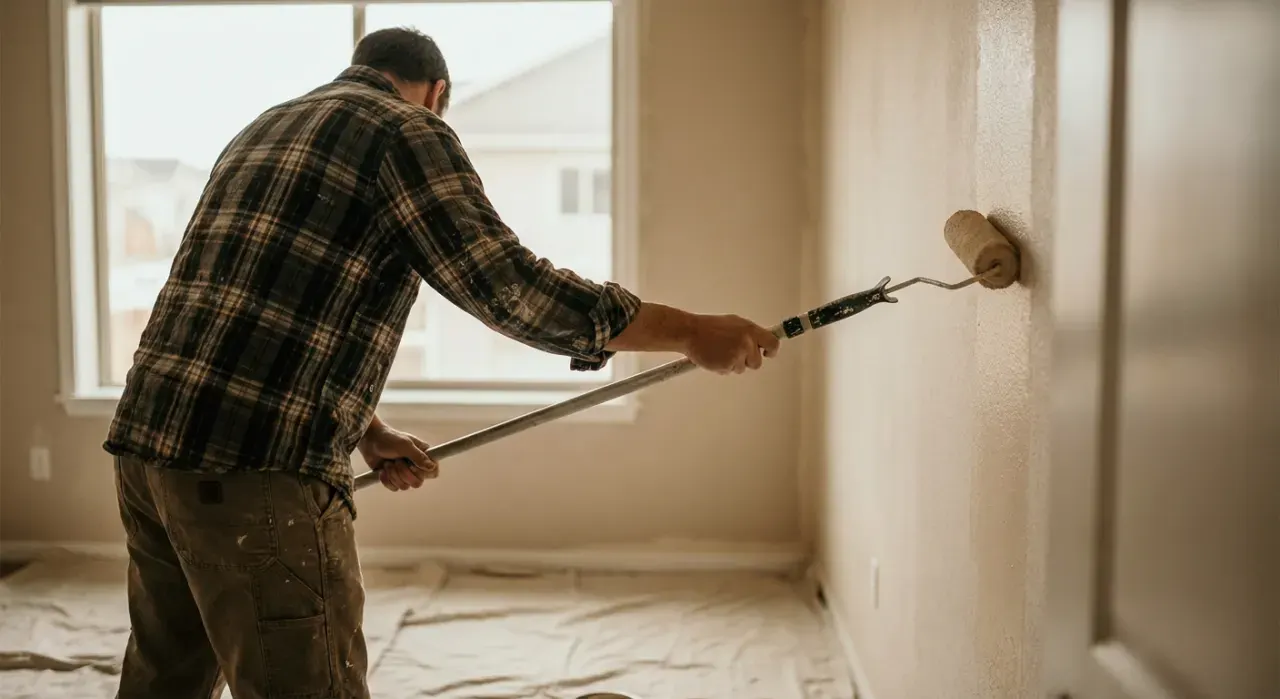
- Gather long-reach tools. Fit an extension pole to your roller and have a long-handled edger or brush for high corners to minimize how far you climb and reach.
- Cut in the high edges. From your stable platform, cut in the top corners and ceiling line of one section. Never lean out — reposition the ladder instead.
- Roll full-height sections. Using the extension pole, roll each full-height strip from top to bottom while the cut-in is wet, keeping a wet edge.
- Move and repeat. Complete each vertical section — cut and roll — before moving your platform, so you never leave a half-dry high wall to lap-mark.
- Second coat. Let the first coat dry the recoat time, then repeat. Two coats is standard.
Tools and materials
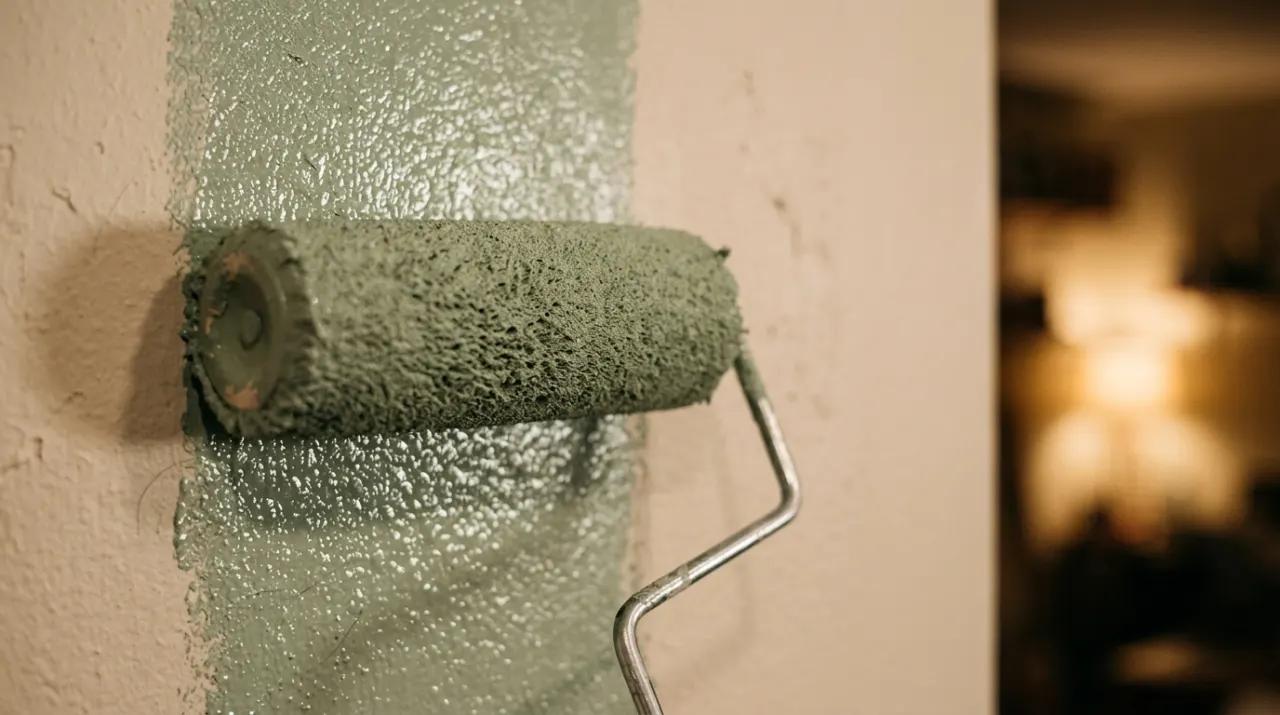
You need a safe elevated platform (stair-leveling ladder or plank-and-ladder rig), an extension pole, a roller and brush, a long-handled edger, drop cloths, and paint. Reaching high walls smoothly is far easier with a good roller on a pole, so our roller picks matter here, as does a paint that covers a big wall in two coats — see our interior paint roundup. Clean painter's tape helps with the ceiling and trim lines you cut from a ladder. The overall technique follows our painting a room guide, adapted for height.
Mistakes and hazards to avoid
- Unstable ladder on stairs. A leaning or stacked setup can fall. Use a level, rated platform.
- Reaching out too far. Overreaching causes falls. Reposition instead of stretching.
- Losing the wet edge. Half-dry high walls lap-mark badly. Finish each section before moving.
- Not securing drop cloths. Loose cloths on stairs are a trip hazard. Tape them down.
- Taking on a two-story foyer without staging. The access risk is real. Hire a pro for extreme heights.
We never buy, test or physically handle the products we rank. Recommendations come from aggregated owner reviews, star ratings, review volume and expert consensus — see how we rank.
More from this hub: Paint & Walls · Painting a room · Cutting in without tape · Priming a wall · Best paint roller · How we rank