 Garden
Affiliate Disclosure
Some links on this page are affiliate links. As an Amazon Associate, we earn from qualifying purchases — at no extra cost to you. We do not buy, test, or physically handle the products we cover; our rankings come from aggregated owner reviews, ratings and expert consensus. Commissions never change our verdicts. How we rank · full disclosure.
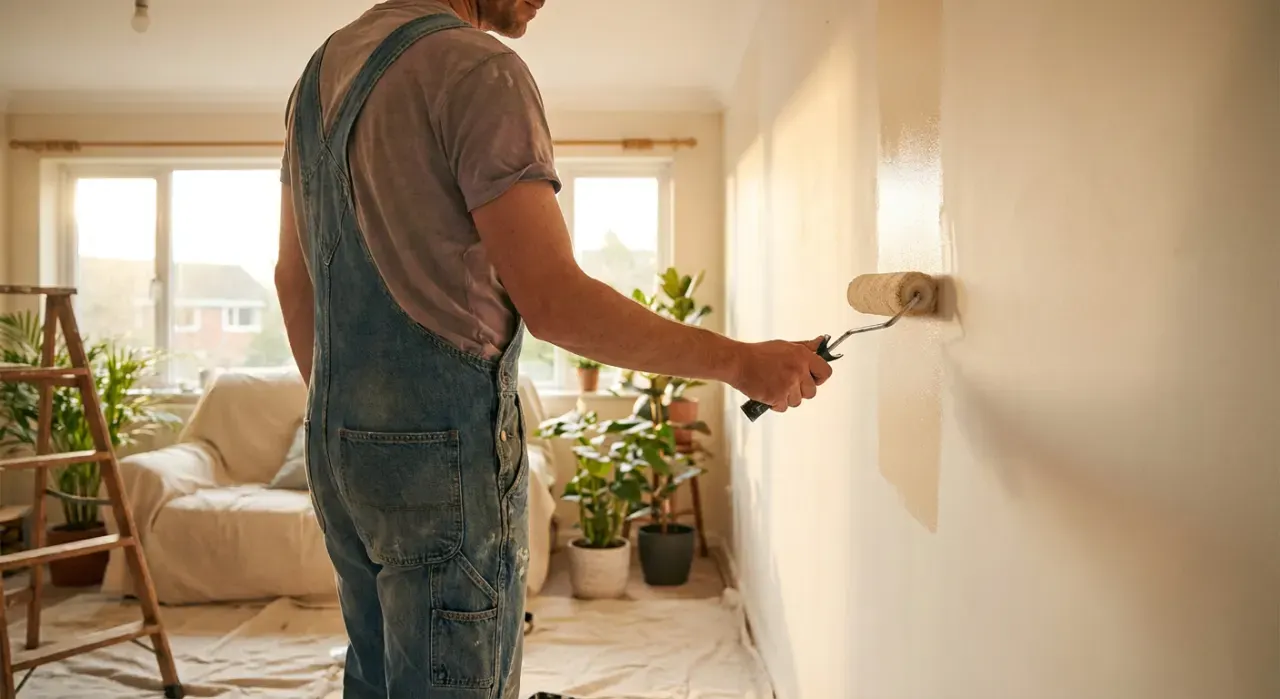
Painting an accent wall is an easy, high-impact DIY project — a few hours plus dry time, no permit, no pro, and one gallon of paint. It is the cheapest way to transform a room. The two things that separate a designed-looking accent wall from an amateur one are choosing the right wall (the one your eye hits first, uninterrupted by clutter) and getting a knife-sharp corner line where the accent color stops. Bold and dark colors also need a tinted primer and patience for even coverage. Do those and a single wall reframes the whole room.
Step-by-step: painting an accent wall
- Choose the wall. Pick the first wall you see entering the room, ideally solid and architecturally meaningful — behind a bed, sofa, or fireplace. Avoid cluttered, opening-filled walls.
- Prep and repair. Fill holes, sand smooth, and clean the wall. An accent color under a spotlight shows every flaw, so prep it well.
- Paint the field walls first. Do the surrounding walls first and let them dry fully, so you can tape onto them and cut the accent corner cleanly on top.
- Prime for bold colors. For deep or saturated shades, apply a gray-tinted primer suited to the color to boost coverage and cut finish coats.
- Cut the corners crisp. Cut in the inside corners by hand into the crease, or tape the adjoining walls a hair back from the corner. This line is what makes it look intentional.
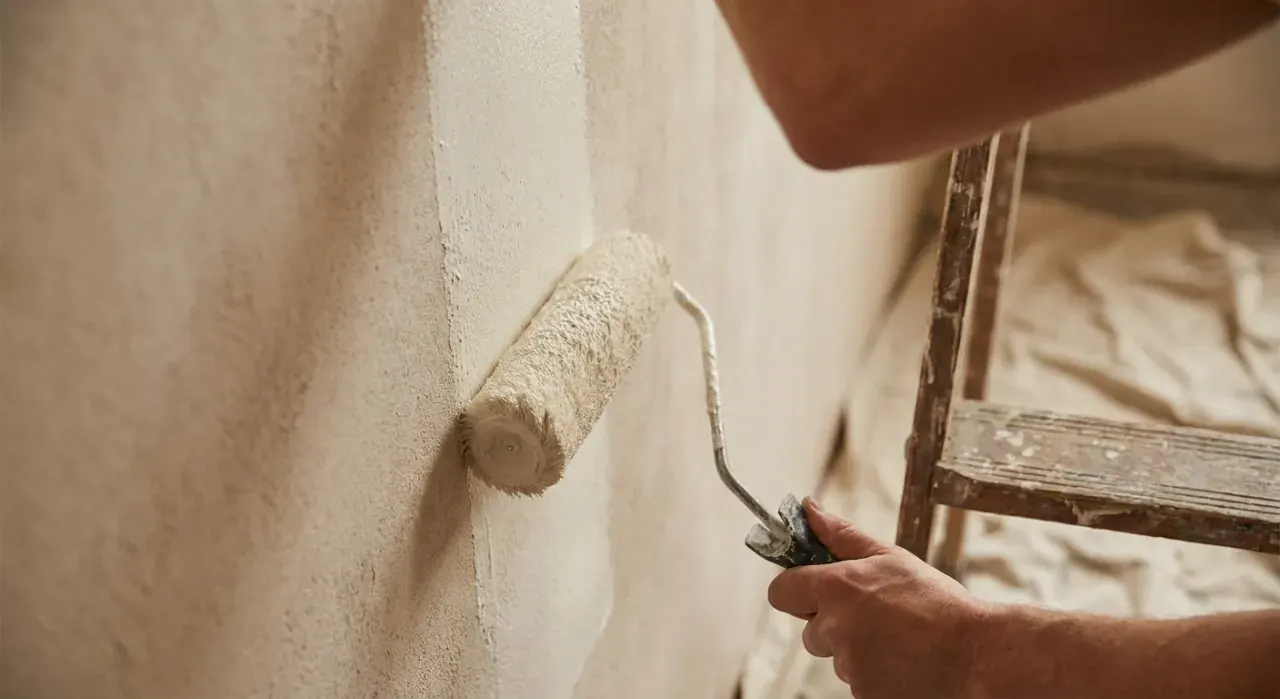
- Roll the field. Roll the accent color with a wet edge, working in sections. Keep an even film — bold colors streak if applied thin or unevenly.
- Second coat and reveal. Let it dry the recoat time, apply the second coat (a third for deep colors), and pull any tape while the paint is slightly wet for a sharp edge.
Tools and materials
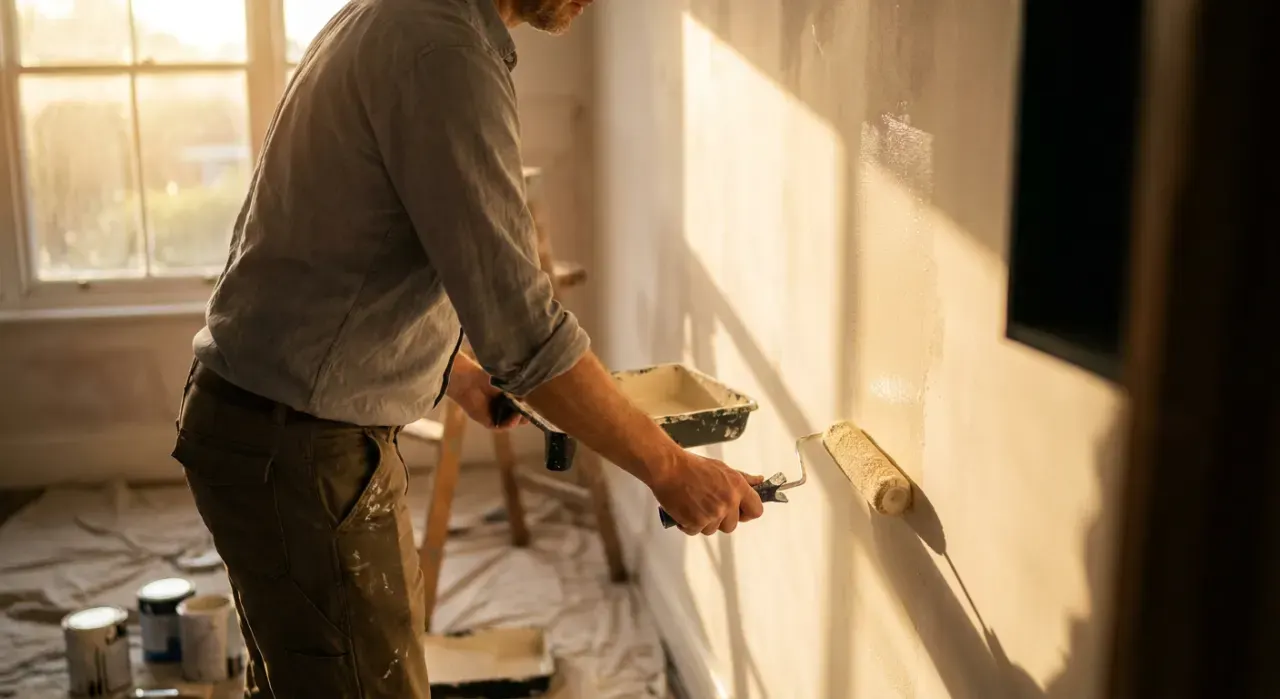
You need your accent paint (and a tinted primer for bold colors), an angled sash brush, a roller, a tray, and painter's tape. Because the color is the star, paint quality shows more than usual — see our interior paint picks for lines that hold rich, even color in fewer coats. A clean corner is everything on an accent wall, so a low-bleed painter's tape earns its place if you are not cutting the corner freehand, and a smooth-lay roller keeps the bold field free of streaks and stipple.
Mistakes that undercut the look
- Wrong wall. A cluttered or off-center wall reads as a mistake. Choose the focal wall.
- Wobbly corner line. Kills the effect. Cut the corner sharp by hand or with tape.
- Skipping tinted primer on dark colors. Blotchy, streaky coverage. Prime saturated shades.
- Thin, uneven coats. Bold colors show every streak. Keep a full, even film.
- Painting accent first. Field color bleeds into the corner. Do the field walls first.
We never buy, test or physically handle the products we rank. Recommendations come from aggregated owner reviews, star ratings, review volume and expert consensus — see how we rank.
More from this hub: Paint & Walls · Painting a room · Cutting in without tape · Painting over a dark wall · Best interior paint · How we rank