 Garden
Affiliate Disclosure
Some links on this page are affiliate links. As an Amazon Associate, we earn from qualifying purchases — at no extra cost to you. We do not buy, test, or physically handle the products we cover; our rankings come from aggregated owner reviews, ratings and expert consensus. Commissions never change our verdicts. How we rank · full disclosure.
Painting brick is achievable DIY, but it is a commitment — once painted, brick is very hard to return to bare — and it demands the right masonry products. An interior accent wall is a weekend; exterior brick is more involved. Materials cost more than a normal wall because brick drinks paint, and you need a masonry primer and breathable masonry paint, not ordinary wall paint. No permit for painting, but the wall must be sound, clean, and fully dry first, and new masonry must cure a month or more. Success comes down to the right paint, a masonry primer, and working paint into the mortar joints.
Step-by-step: painting brick
- Confirm the brick is ready. It must be sound, clean, and fully dry. New brick or mortar has to cure a month or more first. Fix any crumbling mortar or moisture problems before painting.
- Clean thoroughly. Remove dust, dirt, efflorescence (the white powdery mineral deposit), and any loose material with a stiff brush and appropriate cleaner. Let it dry completely.
- Repair the mortar. Repoint any damaged mortar joints and let them cure. Paint will not save failing masonry — fix it first.
- Prime with masonry primer. Apply an alkali-resistant masonry or bonding primer, brushing it into the mortar joints and rolling or spraying the faces. Let it dry fully. The porous brick will drink it.
- Cut in the joints. With a masonry brush, work the color paint into the recessed mortar lines and rough spots that a roller skips.
- Coat the field. Roll with a thick-nap (3/4-inch or more) roller or spray and back-roll to push paint into the texture. Expect heavy paint use.
- Second coat. Let the first coat dry the recoat time, then apply a second full coat for even, durable coverage.
Tools and materials
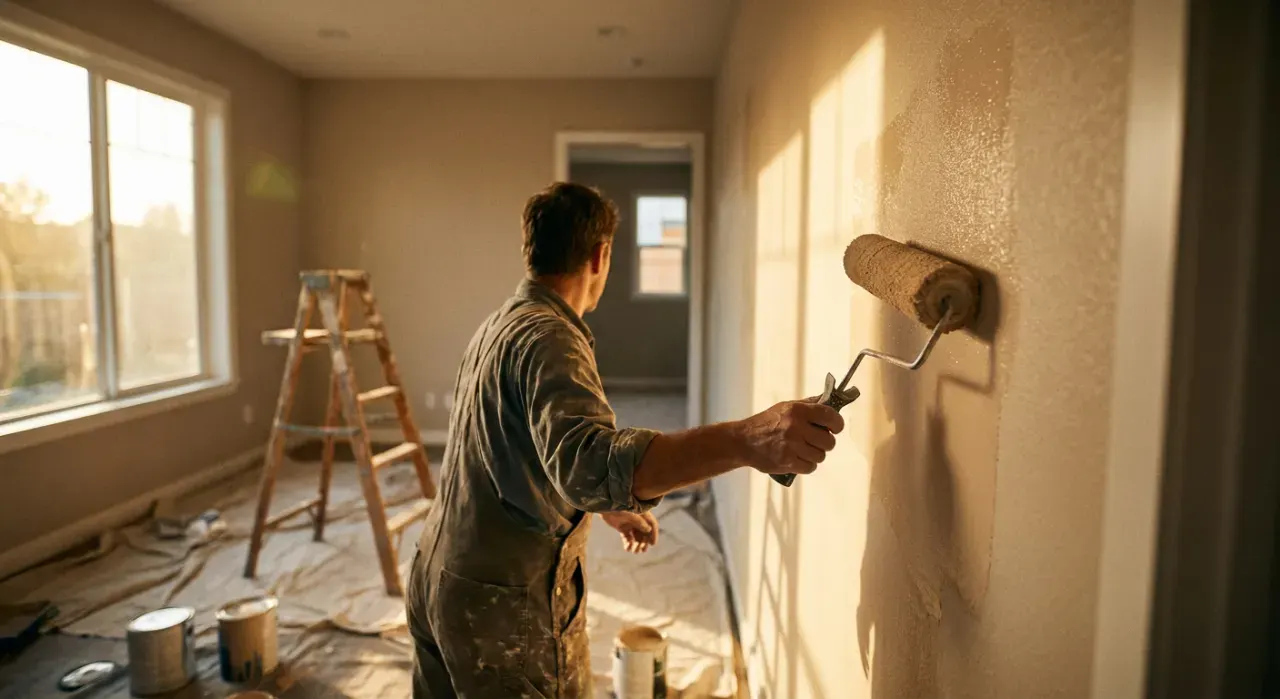
You need a stiff brush and masonry cleaner, an alkali-resistant masonry primer, a breathable masonry paint, a masonry brush, a thick-nap roller or a sprayer, and painter's tape. Because brick has enormous surface area and deep texture, a paint sprayer paired with back-rolling is the fastest way to get full, even coverage — this is a job where a sprayer really earns its keep. A heavy-nap roller reaches into the brick and mortar texture, and the right masonry-suitable paint is what keeps the finish from peeling. Clean painter's tape masks adjacent trim and surfaces.
Mistakes that make brick paint fail
- Ordinary wall paint on brick. It traps moisture and peels. Use breathable masonry paint.
- Skipping masonry primer. Alkalinity attacks the paint and it goes blotchy. Prime first.
- Painting damp or new masonry. Moisture and alkalinity ruin the coating. Let it dry and cure.
- Missing the mortar joints. A roller skips the recesses. Brush the joints in first.
- Painting failing brick. Sealing moisture into bad masonry accelerates damage. Repair it first.
When to call a pro
Bring in a mason if the brick has significant crumbling mortar, spalling (flaking) faces, or a moisture problem — those need repair, not paint, and sealing over them causes worse damage. For historic brick, consult a preservation specialist before painting, since it is essentially irreversible and may harm the masonry's value and breathability. Pre-1978 buildings may have lead paint on already-painted brick; do not dry-sand or blast it, and follow lead-safe practices.
We never buy, test or physically handle the products we rank. Recommendations come from aggregated owner reviews, star ratings, review volume and expert consensus — see how we rank.
More from this hub: Paint & Walls · Priming a wall · Painting an accent wall · Repairing peeling paint · Best paint sprayer · How we rank