 Garden


Affiliate Disclosure
Some links on this page are affiliate links. As an Amazon Associate, we earn from qualifying purchases — at no extra cost to you. We do not buy, test, or physically handle the products we cover; our rankings come from aggregated owner reviews, ratings and expert consensus. Commissions never change our verdicts. How we rank · full disclosure.
Break in a new generator with about 10 minutes at no load, then one to two hours at a quarter to a half of its rated output, then change the oil. Most manufacturers specify that first oil change between 5 and 25 hours, and it matters more than any other service the engine will get, because the oil coming out carries the metal particles shed while the piston rings and bearings seat. Do it the week you buy the machine — not the night the power goes out.
Before it starts: what almost every generator needs
Portable generators ship without oil. This surprises a remarkable number of buyers, and starting one dry destroys it in seconds. The low-oil shutdown fitted to most machines is a safety net with a delay, not a guarantee.
- Add oil to the grade and quantity in the manual. Many portable generators take between 0.6 and 1.2 quarts — considerably less than a car — so pour slowly and check the dipstick or fill level often. Overfilling causes smoking, oil pushed into the air filter, and in inverter machines oil where it should not be.
- Check that the fuel valve and any shipping plug are correct. Some machines ship with a fuel line clamped or a vent screw closed for transport.
- Fit the wheel kit and handles before you need to move it. Doing this in the dark in a storm is a poor plan, and several kits require the machine on its side.
- Charge or connect the starting battery on any electric-start unit. Many ship with the battery disconnected and partially charged.
- Read the section on the neutral bond. If you intend to feed a transfer switch later, the electrician will need to know whether your generator is bonded-neutral or floating-neutral. It is in the manual.
Fuel, from the very first tank
Put stabilized fuel in from the beginning. US pump gasoline is typically E10, containing up to 10% ethanol, and ethanol absorbs water from the air and begins breaking down within about 30 days. In a small carburetor with pilot jets measured in thousandths of an inch, the varnish it leaves blocks the fuel path completely — which is why an overwhelming share of "brand new generator will not start" reports are in fact a fuel problem in a machine that was run once and then stored full.
Fresh gasoline, a stabilizer added at the pump or at fill time, and the fuel shut-off valve closed at the end of every session so the carburetor bowl runs dry: those three habits prevent nearly all of it. If your machine is dual fuel, running the break-in on propane avoids the issue entirely, though check the manual — a few manufacturers prefer gasoline for the break-in period.

Best for every tank of gasoline that goes into a generator you do not use weekly
- Treats up to 40 gallons per 16 oz bottle
- Keeps fuel usable for up to 24 months
- Formulated to resist ethanol-related corrosion and gum
- Add at fill time, before degradation starts
Why buy it: a brand-new generator that will not start next spring is almost always a fuel problem, not an engine problem — and the fix begins with the very first tank you put in.
The break-in sequence
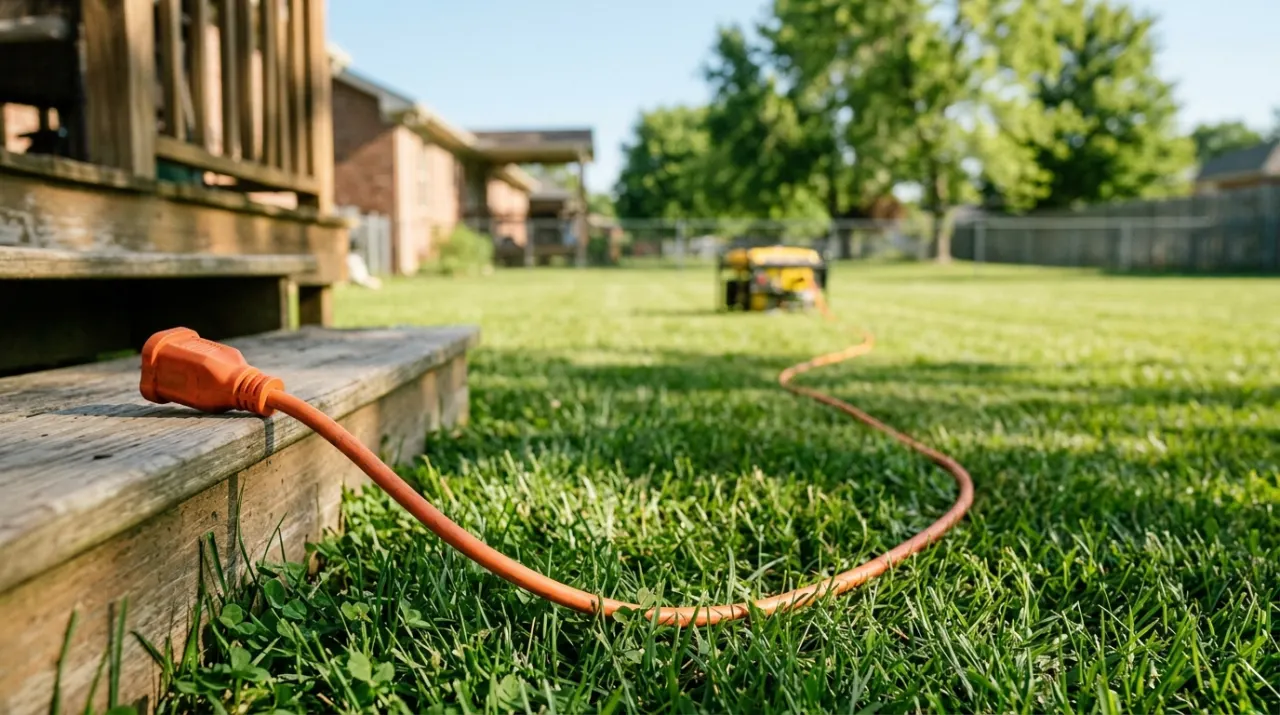
- Site it correctly first. Outdoors, on level, dry ground, at least 20 feet from the house, exhaust pointed away from doors, windows and vents. This is not a step to relax because it is only a test run — the exhaust is identical.
- Start and run at no load for about 10 minutes. This circulates oil, brings the engine to temperature and lets you check for leaks, unusual noise and correct voltage at the outlets. Watch the oil level once it has run and settled.
- Apply a light load — roughly 25% of rated output — for 20 to 30 minutes. Two 1,500-watt space heaters, or a set of work lights, make a steady, easily measured test load. A heater is ideal because it is purely resistive and draws exactly what it says.
- Increase to around 50% for another 30 to 60 minutes. Vary the load a little within that band rather than holding one figure. Avoid full load and avoid long stretches of idling with nothing connected.
- Shut down and let it cool completely.
- Change the oil and the filter if fitted. Do this at the hour figure in your manual — commonly the first 5, 8, 20 or 25 hours depending on the manufacturer. Drain it warm, not hot, so the particles come out with the oil. Expect the oil to look dirty; that is the point.
- Refill, check the level, and run for a few minutes to confirm.
- Test the machine on the loads you actually bought it for, including starting the largest motor — the well pump, the furnace, the RV air conditioner — while nothing else is running. This is the moment to discover it is undersized, not during an outage.

Why the first oil change is the one that matters
New piston rings and cylinder walls have machining marks that wear against each other for the first hours of running until they mate. That process sheds fine metal particles into the oil. The oil filter — where one exists at all; many small generator engines use only a screen — cannot capture particles that fine, so they circulate through the bearings until removed.
Changing the oil early takes them out of the engine. Leaving them in for the standard 100-hour interval means they spend a hundred hours as a mild abrasive in the plain bearings. It will not kill an engine outright, but it is the difference between an engine that runs for 2,000 hours and one that runs for 1,200.
Note the interval carefully: manufacturers do not agree. Some specify the first change at 5 hours, some at 8, some at 20 or 25. Follow yours rather than a general rule.
After break-in: the routine that decides whether it starts
| Task | Interval | Why |
|---|---|---|
| Exercise under load for 20 minutes | Monthly | Circulates fuel, charges the starting battery, proves it works |
| Oil and filter change | Every 50–100 hours or annually | The second most common cause of engine failure after fuel |
| Air filter clean or replace | Every 50 hours, sooner in dust | A clogged filter richens the mixture and wastes fuel |
| Spark plug inspect and gap | Every 100 hours or annually | Hard starting usually shows here first |
| Add fuel stabilizer | Every fill | Prevents the varnish that blocks carburetor jets |
| Run the carburetor dry | End of every session before storage | Removes the fuel that would degrade in the bowl |
| Check and charge the starting battery | Every 3 months | Electric-start machines fail at the battery first |
The monthly exercise run is the item people skip and the one that matters most. Twenty minutes under a real load once a month does four things at once: it keeps fresh fuel through the carburetor, brings the engine to temperature so condensation is driven out of the crankcase, keeps the starting battery charged, and — most valuable of all — tells you the machine works while you still have time to do something about it.

Four break-in mistakes
Starting it dry. Generators ship without oil. Confirm the level before the first pull, every time, not once.
Overfilling the oil. These engines hold less than a quart. Too much oil smokes, fouls the plug and pushes oil into the air filter, and owners frequently interpret that as a defective machine.
Running it at full load from cold. A brand-new engine at maximum output before the rings have seated is the one genuinely harmful thing you can do during break-in.
Leaving it in the box until the storm. The most expensive mistake of all. Break it in, then store it properly — the routine is in how to store a generator long term.
Where to go next
If you have not bought yet, size the machine in what size generator do I need and compare the field in best generators for home backup. Once it is broken in, the connection method is in how to connect a generator to your house and fuel planning in how much gas a generator uses. Everything sits under the power tools and workshop hub.
We never buy or physically handle the equipment we write about — guidance here is drawn from manufacturer service documentation and aggregated owner experience. The method is on how we rank. Product links are affiliate links; they earn us a small commission at no cost to you and never change a recommendation. Always follow the manual for your specific model, which overrides any general figure on this page.