 Garden

Affiliate Disclosure
Some links on this page are affiliate links. As an Amazon Associate, we earn from qualifying purchases — at no extra cost to you. We do not buy, test, or physically handle the products we cover; our rankings come from aggregated owner reviews, ratings and expert consensus. Commissions never change our verdicts. How we rank · full disclosure.
A renter-friendly garden follows five rules: nothing drilled, nothing adhesive, nothing in contact with the deck surface, no runoff leaving your balcony, and nothing you cannot carry out at the end of the lease. Work within those and you can build a genuinely productive garden — freestanding stands, clamp-on railing boxes, grow bags, tension rods and rolling caddies do everything screws would, and they all come with you.
The constraint is smaller than it seems. The deposit-risk list on a rental balcony is short and specific: holes in masonry or siding, adhesive that pulls paint, stained decking, water damage to the unit below, and anything the building considers a falling hazard. Every one of those has a cheap workaround.
Freestanding: The Backbone of a Rental Garden
Almost everything a wall-mounted system does, a freestanding one does within a few inches of the same footprint.
Tiered plant stands and A-frame ladder shelves are the workhorses. A three-tier corner stand puts nine to twelve small pots into about two square feet of floor, and an A-frame ladder does the same against a wall without touching it. Look for a wide base and a low center of gravity — narrow tall stands go over in balcony wind, which is stronger than ground-level wind and gets worse with height.
Stacking towers give you the most planting pockets per square foot of any format and need no attachment whatsoever. The trade-off is watering: a tower exposes far more surface area per gallon of soil than a wide pot, and gravity drains the upper tiers first, so towers with an internal watering column behave very differently from plain stacked pots. That distinction is most of what separates the field in our ranked vertical garden planters.
Rolling plant caddies are the most underrated piece of rental garden hardware. They lift the pot off the deck so nothing stains, they let you chase the sun through the season, and they mean a 10-gallon container never has to be lifted — which matters enormously on moving day.
Fabric grow bags are close to purpose-built for renting: cheap, light, they fold flat when empty, and they leave no mark. They dry out faster than rigid pots because the fabric breathes on every side, so size up a little and expect to water more often.
Using the Railing Without Touching It
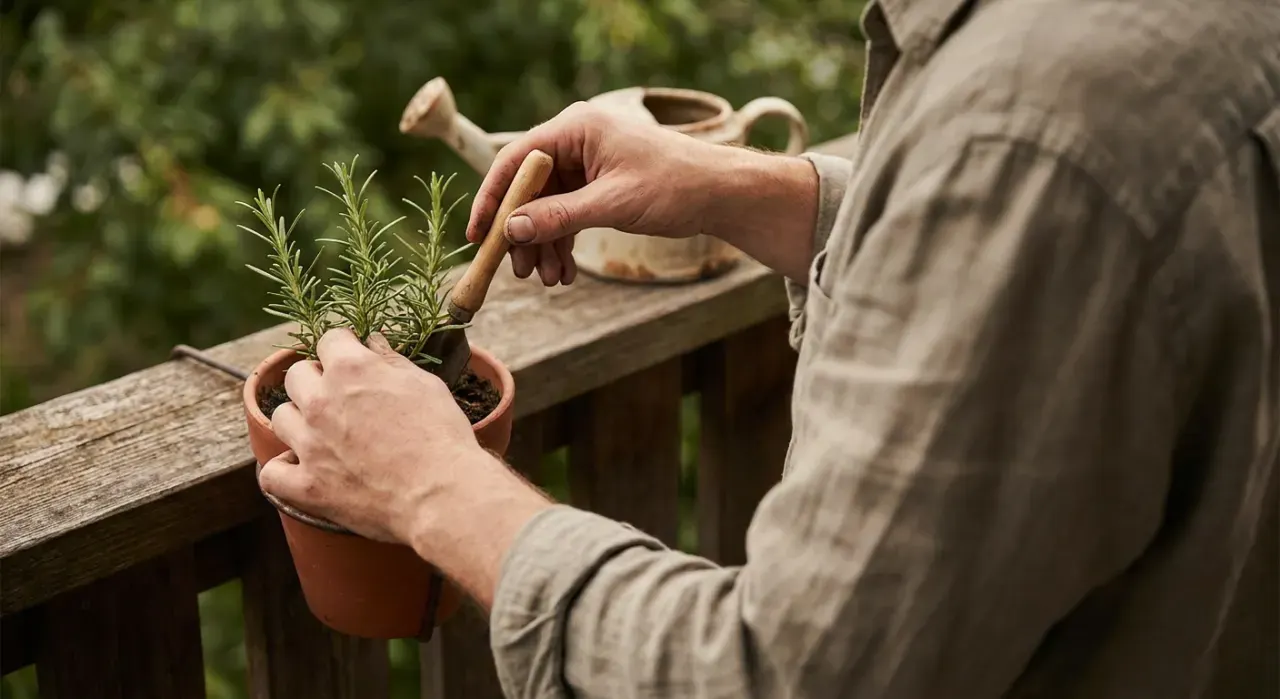
The top of a balcony rail is usually the brightest strip of real estate you own, because a solid railing panel shades the first foot or two of the floor behind it. Over-the-rail planters exploit that, and the good ones need no tools at all.
Two mounting styles exist. Saddle boxes sit astride the rail with a well on each side and rely on balance plus friction; they suit flat-topped rails and are the simplest to move. Clamp or bracket systems tighten onto the rail with a screw that bears against the metal or wood, spreading load through a rubber pad; these handle round and irregular rails and hold far better in wind. Neither puts a hole in anything.
Three cautions worth taking seriously. Hang them on the inside. Many leases, HOAs and municipal codes prohibit anything mounted outside the rail line because a planter falling four floors is a serious matter, and inside-mounting also means runoff lands on your floor rather than on the sidewalk. Check the rail profile before buying — the most common complaint in this category is a box that does not fit the rail it was bought for. And plan for wind: a full trough is heavy and stable, a half-empty one in a gust is not. Fit, drainage and wind stability are exactly the axes our railing planter rankings are built on.
Vertical Without a Single Hole
Growing upward is where renters usually assume they are stuck, and they are not.
- Tension rods between two facing walls or inside a recessed balcony carry hanging baskets. Check the rated load — most spring rods manage 20 to 40 pounds, and a watered basket is heavier than people expect.
- Freestanding obelisks and tripod trellises planted into a heavy container support pole beans, peas, cucumbers and climbing flowers with nothing attached to the building.
- Lean-to trellis panels rest against a wall at a slight angle and are held by the weight of the containers at their base. Add a strap around the panel and a full pot for wind.
- Over-the-door and over-the-rail hooks hang baskets and tool caddies from anything with an edge.
- Freestanding pallet-style planters and vertical pocket frames deliver the wall-garden look on legs rather than on brackets.
What to avoid: adhesive hooks and mounting strips of any kind for load-bearing use outdoors. Heat, cold and humidity cycle the adhesive, and when it lets go it usually takes paint or render with it. That is the exact damage you were avoiding by not drilling.
Protecting the Surface Underneath
This is where most deposits actually get lost — not from holes, but from stains.
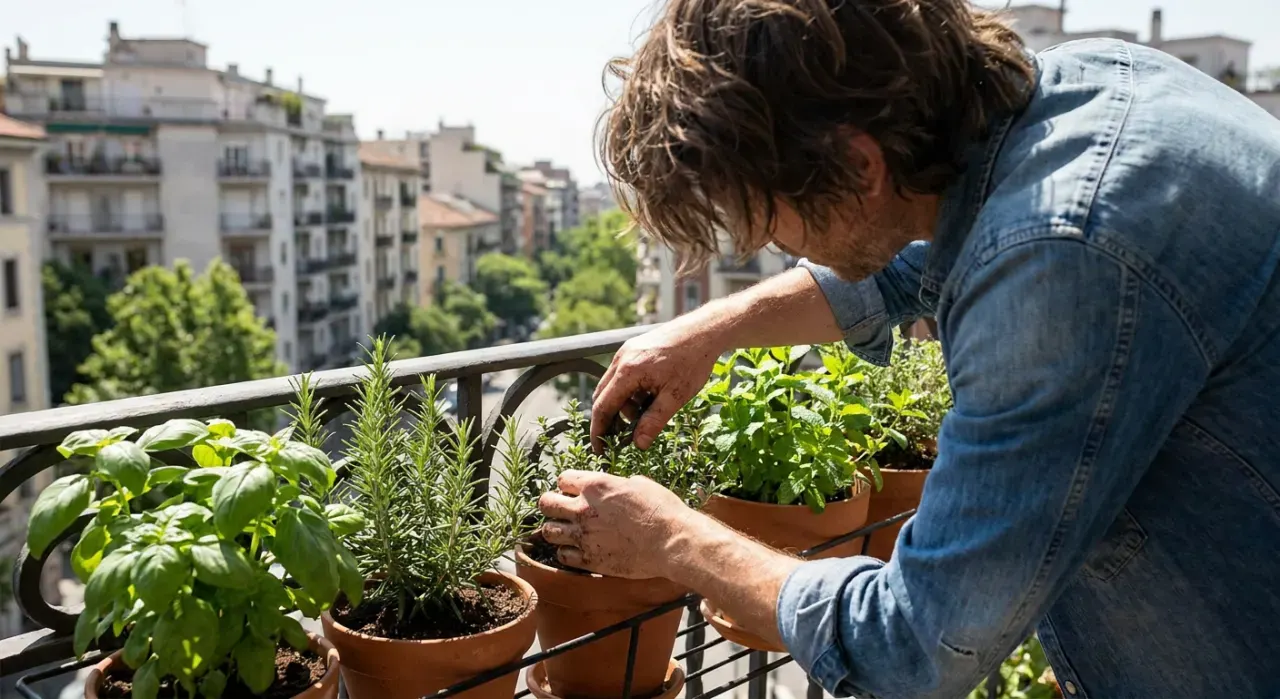
Never let a container sit directly on decking. Wood under a pot stays damp permanently, and a dark ring appears within a season; on softwood it can progress to rot. Pot feet, a slatted trolley or a caddy solve it for a couple of dollars per pot.
Assume unglazed pots will stain concrete. Terra cotta wicks moisture and mineral salts through its wall and leaves a pale halo on the slab. Glazed pots, plastic and fabric bags do not. If you love terra cotta, sit it in a saucer on feet.
Cover the whole area if you are going to be there a while. Interlocking deck tiles or a synthetic outdoor rug protect the entire floor, look considerably better than bare slab, and lift out in twenty minutes on moving day. Lift them a few times a season so nothing stays permanently wet underneath.
Keep soil off the drain. Balcony scuppers and floor drains clog with potting mix and fallen leaves, and a blocked drain that ponds water is a maintenance call and a genuine liability. Sweep after repotting.
Water: The Thing That Actually Causes Complaints
Runoff dripping onto the balcony below is the most common way an apartment garden becomes a conversation with the building manager. Three habits prevent it entirely.
A saucer under every container, emptied after heavy rain so nothing sits in standing water. Water slowly and in stages — a small amount, wait two minutes for the mix to accept it, then more — rather than filling the pot to the rim and watching it pour straight through. And use reservoir containers where you can: a self-watering pot holds its water internally and drains far less than a conventional one, which is why they suit apartments particularly well. The wicking designs that genuinely work are ranked in best self-watering container pots.
For anyone with a hose bib on the balcony, a $25 battery hose timer and a run of quarter-inch drip line is renter-safe — it clips on, it comes off, and it removes the daily watering trip. Without a bib, a gravity-fed reservoir or a set of larger containers does the same job less elegantly. The full hot-weather routine is in watering containers in summer heat.
The Lease and the Paperwork
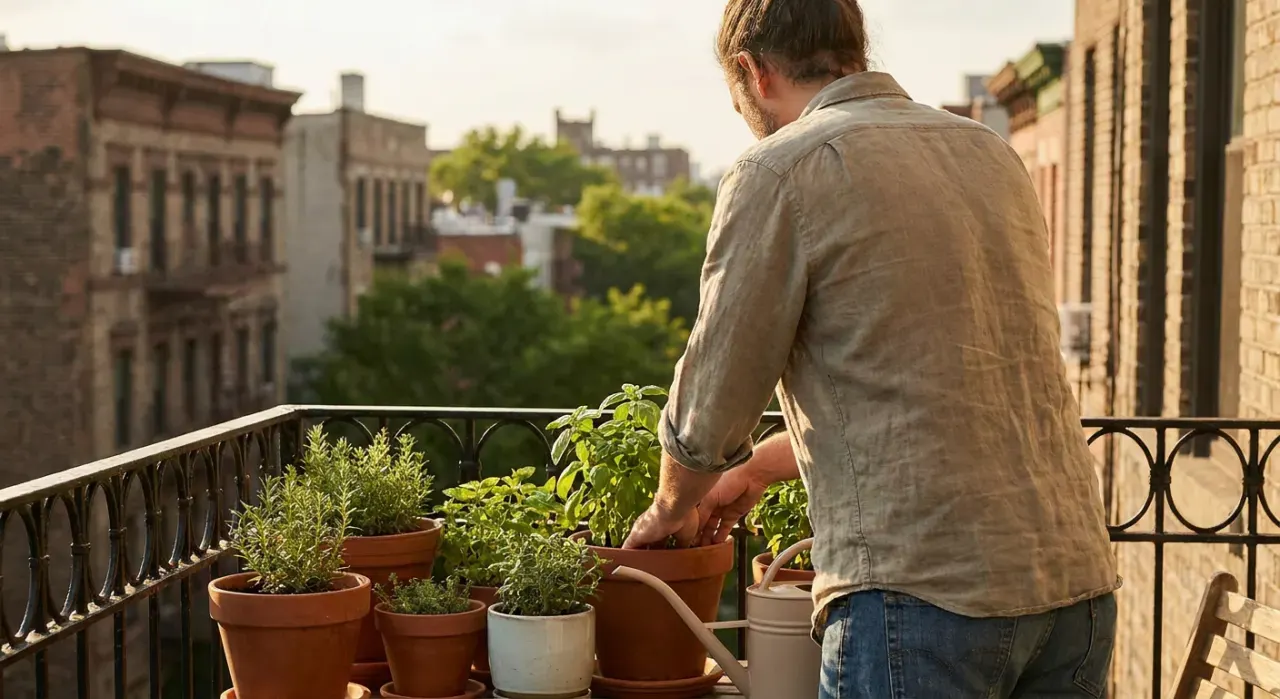
Five minutes of admin removes almost all the risk.
- Read the balcony clause. Look specifically for rules on hanging anything outside the rail, weight limits, permanent fixtures, and whether water may drain from the balcony.
- Photograph the space before you start, including the deck surface and the railing. Date-stamped photos settle move-out disputes in about thirty seconds.
- Keep original hardware. If you remove a rail cap or an existing hook, bag it and label it.
- Ask in writing for anything borderline. A short email and a one-line reply is a record; a verbal yes from a manager who has since left the company is not.
- Watch the weight. Wet potting mix runs 6 to 9 pounds per gallon, so a row of large pots along a railing adds up fast. Keep the heaviest containers against the building wall — the numbers are laid out in our balcony garden starter guide.
Designing for Move-Out From Day One
The best renter gardens are built with the last day in mind. Buy containers you can lift when wet — a 15-gallon pot of damp mix is around 110 pounds and a genuine two-person carry, while three 5-gallon pots hold the same soil and move one at a time. Favor fabric bags, which empty, shake out and fold into a grocery sack. Keep everything on caddies so nothing has to be lifted at all. And choose plants that travel: herbs and perennials divide into smaller pots, while a fruiting tomato in August does not move well and is best treated as an annual you harvest and compost.
In the final fortnight, stop watering heavily so the mix is as light as it will get, harvest hard, divide what you want to keep, and bag the potting mix separately rather than transporting full containers. A garden set up this way loads into a hatchback in an afternoon, which is exactly the point.
Where to Go Next
Start with a sun count — how much sun a balcony really gets — then size containers properly with container sizes by crop and pick the format that suits your floor space in vertical planter vs grow bag vs raised bed. Everything sits under our vertical and small-space gardening hub. We never buy or physically handle the products we rank — the method is on how we rank.