 Garden

Affiliate Disclosure
Some links on this page are affiliate links. As an Amazon Associate, we earn from qualifying purchases — at no extra cost to you. We do not buy, test, or physically handle the products we cover; our rankings come from aggregated owner reviews, ratings and expert consensus. Commissions never change our verdicts. How we rank · full disclosure.
Three to six cameras cover most single-family homes: one on the front door, one on the back door, one on the driveway or garage, and one on whichever side has no windows overlooking it. The number is set by entry points and approach paths, not by square footage. Count every exterior door, every ground-floor window a person could reach, and every route onto the property, then group them into scenes a single camera can watch. A townhouse often needs two. A corner lot with an alley and a detached garage can need eight.
How do you work out your own number?
Walk the perimeter once with a notepad and answer four questions. This takes fifteen minutes and saves buying a kit that watches the wrong things.
- Where can someone get in? Every exterior door and every ground-floor window. Research from the University of North Carolina at Charlotte, which surveyed convicted burglars for the Alarm Industry Research and Educational Foundation, found offenders overwhelmingly favor doors and first-floor windows over anything requiring a climb.
- Where can someone approach unseen? Side yards between houses, fence gates, alleys, and anything screened by hedging.
- Where do deliveries land? Porch theft is the most common thing a home camera will ever record.
- Where do you need to recognize a face rather than see movement? Those spots need a camera close and narrow, not a wide one far away.
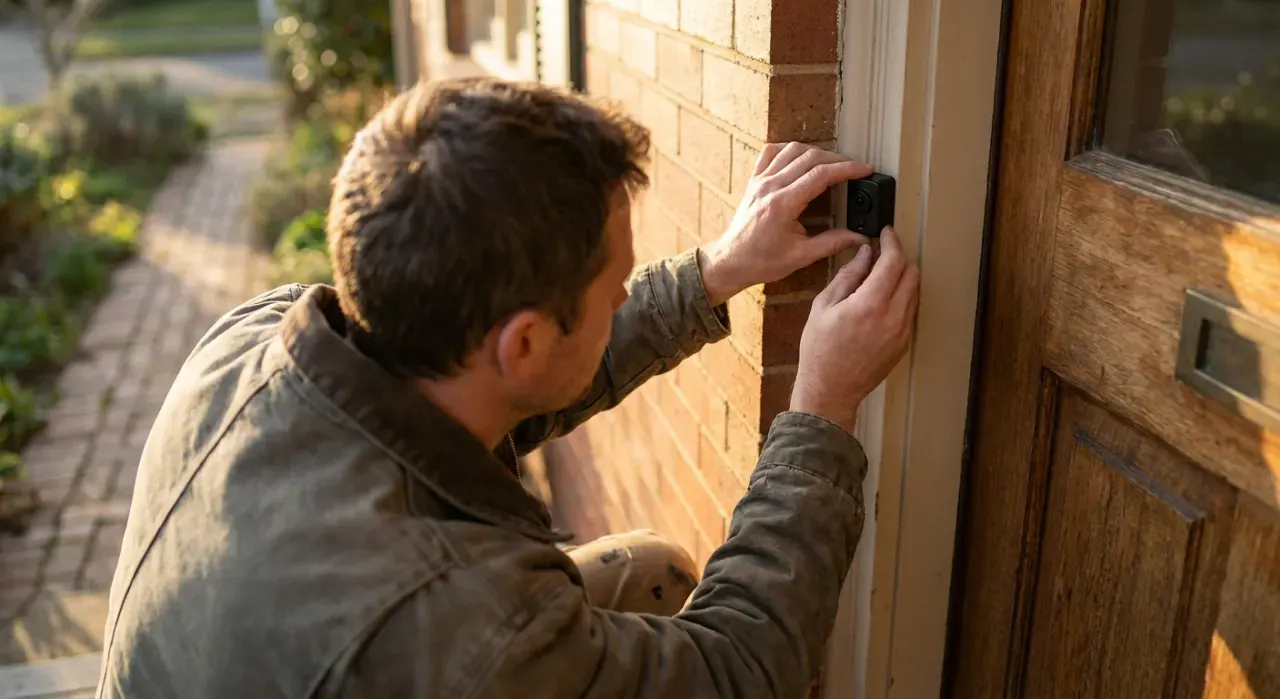
How many cameras by house type?
These are starting points from the layouts most US homes fall into. Adjust up for corner lots, detached structures and long driveways.
| Home type | Cameras | Where they go |
|---|---|---|
| Apartment or condo | 1 | Entry door, usually a doorbell camera |
| Townhouse, shared walls | 2 | Front door, rear patio or slider |
| Small single-story, one driveway | 3 | Front door, back door, driveway |
| Typical two-story, 1,800–2,500 sq ft | 4–5 | Add the blind side yard and the garage |
| Corner lot or alley access | 5–6 | Add the second street frontage and the gate |
| Detached garage or shop | +1–2 | Its own door and the path to it |
| Acreage, long driveway | 6–8 | Add a gate or driveway-entrance camera |
Where should each one actually go?
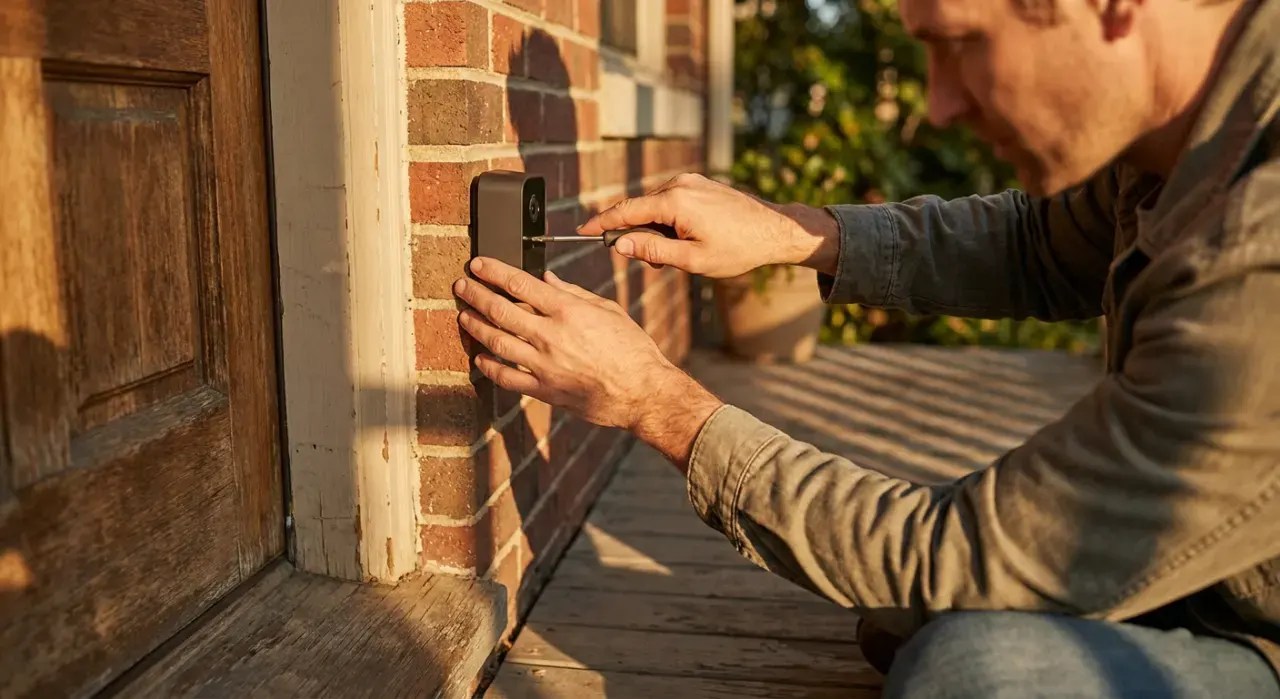
Placement decides whether a camera produces evidence or a blurry shape. Mount at 8 to 10 feet — high enough to be out of easy reach, low enough that faces are not all forehead. Aim across an approach path rather than straight down it, so a person is in frame for several seconds instead of one. Avoid pointing into the rising or setting sun, which blows out the exposure twice a day.
- Front door. A doorbell camera, because it sees the face at the closest range you will ever get.
- Back door or patio slider. The second most used entry point and usually the least overlooked by neighbors.
- Driveway. Wide angle, positioned to catch vehicles and plates as they turn in, not head-on at night when headlights blind the sensor.
- Blind side yard. The narrow gap between houses, where a camera with good night range earns its place.
- Garage interior. Cheap, indoors, and covers the tools and bikes that actually get taken.
Night coverage is the constraint people underestimate: a camera that identifies a face at 15 feet in daylight may only detect motion at that range after dark, which is why the figures in how far a security camera sees at night matter more than the marketing range. Mounting height and cable routing are covered in how to mount outdoor security cameras.
Before settling on a count, price the subscription. Plans that charge per camera make a six-camera system permanently expensive, which is why the local-storage options in cameras without a subscription are worth reading first. The models owners rate most highly for night performance and reliable notifications are in our home security camera picks.
We never buy, install or physically handle the products we rank. Every recommendation comes from aggregated owner reviews, star ratings, review volume and published expert consensus — see how we rank.
More from this hub: Smart Home & Security · Do cameras deter burglars? · Wired vs wireless cameras · Best DIY security system · How we rank