 Garden

Affiliate Disclosure
Some links on this page are affiliate links. As an Amazon Associate, we earn from qualifying purchases — at no extra cost to you. We do not buy, test, or physically handle the products we cover; our rankings come from aggregated owner reviews, ratings and expert consensus. Commissions never change our verdicts. How we rank · full disclosure.
Cover the four places break-ins actually happen first: the front door, the back door, the driveway, and any ground-floor slider or window out of sight from the street. Mount at 8 to 10 feet, angled down 15 to 30 degrees so faces are identifiable rather than just the tops of heads. Then check the limits: do not aim a camera into a neighbor's windows or fenced yard, treat audio recording as a separate and more strictly regulated question — roughly a dozen states require all-party consent — and if you rent, get written permission before drilling anything. Coverage and legality are both part of the placement decision.
We never buy or physically handle the products we rank; recommendations come from aggregated owner reviews, published law enforcement guidance and manufacturer specifications, as described in how we rank. The category sits at the smart home and security hub, and the physical mounting steps are in how to mount outdoor security cameras.
Placement in priority order
Most households do not need eight cameras. They need four in the right places. Add in this order and stop when the entry points are covered.
| Priority | Location | Height | What it is for |
|---|---|---|---|
| 1 | Front door | Doorbell height, or 8 – 9 ft above | Deliveries, visitors, and the most-used entry |
| 2 | Back or side door | 8 – 10 ft | The entry least visible from the street |
| 3 | Driveway and garage | 9 – 10 ft | Vehicles, plates, and the approach to the house |
| 4 | Ground-floor slider or patio door | 8 – 10 ft | Large glass out of public view |
| 5 | Main interior hallway or stairs | 7 – 8 ft | A funnel point every intruder must cross |
| 6 | Detached garage, shed, side gate | 8 – 10 ft | Tools and equipment, and a common first target |
The reasoning behind the order is that the front and back doors account for the large majority of residential entries, and first-floor windows for most of the rest. A camera watching the middle of a lawn is watching a place nobody enters through.
One interior camera is worth more than most people expect. If an intruder defeats or avoids the exterior cameras, a hallway camera is the one that captures a clear, well-lit face indoors, which is far more useful to an investigation than a hooded figure at 2 am on a driveway.
Getting the angle right
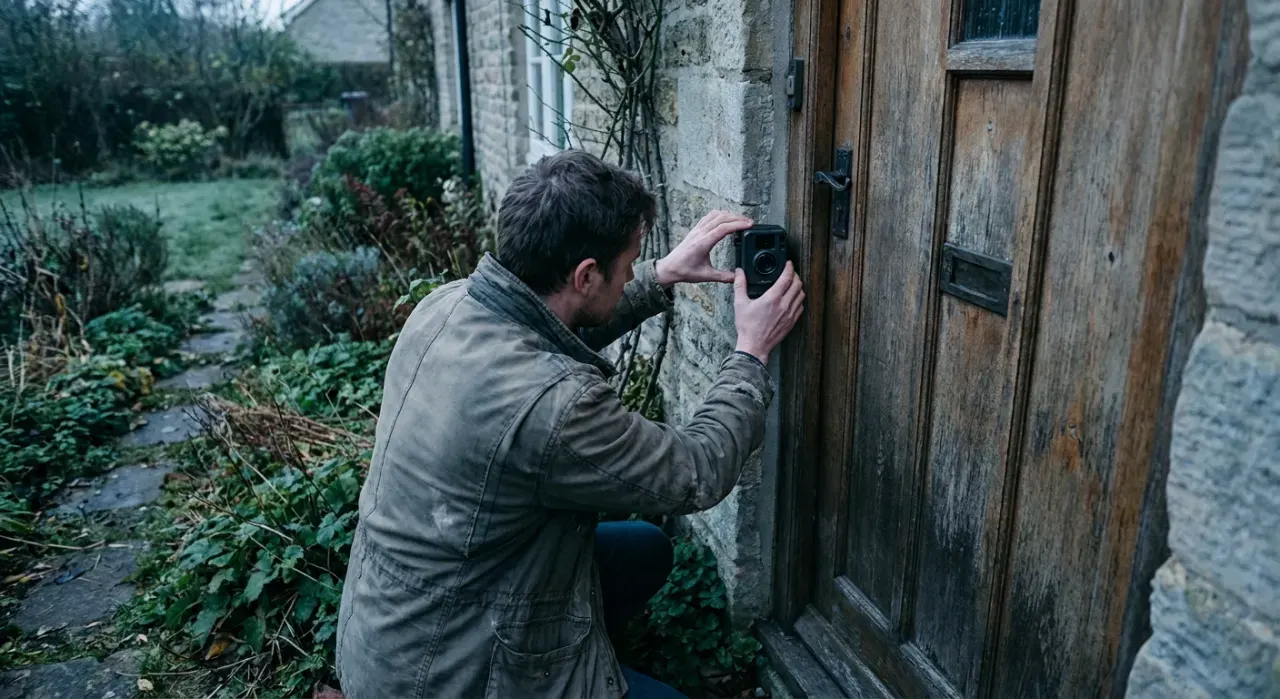
- 8 to 10 feet, angled down 15 to 30 degrees. Higher looks neater and produces useless footage — you get the crown of a head and no face.
- Frame for identification, not scenery. A face should occupy a meaningful part of the frame at the distance you care about. A camera covering an entire yard identifies nobody in it.
- Avoid shooting into the sun. A camera facing east or west will be blown out for part of every day. Face north where you can, or use a wide eave to shade the lens.
- Do not shoot through glass at night. Infrared illuminators reflect off the pane and produce a white wall. If a camera must sit inside a window, disable IR and rely on outside lighting.
- Watch what triggers motion. A branch, a flag, a busy road or a heat vent will generate alerts all day. Trim the branch or use activity zones.
- Mind the night-time range. Most consumer IR reaches usable detail out to about 25 to 40 feet, less than the marketing figure — see how far cameras see at night.
- Overlap slightly. Each camera should catch the edge of the next one's view, so there is no corridor across the property with no coverage.
- Protect the camera itself. Mount above easy reach, and run cable inside where possible so a wire cut does not end the recording.
Wi-Fi range is a real constraint on placement, and detached garages and far corners are where owners run into trouble — see how far a Wi-Fi camera can be from the router.
Privacy and your neighbors
This is the part most placement guides skip, and it is the part most likely to cause you an actual problem.
Do not aim a camera into a neighbor's windows, fenced yard, or other space where they reasonably expect privacy. The general legal principle in the US turns on that reasonable expectation: recording a public street or sidewalk that happens to fall in frame is treated very differently from deliberately targeting a private space. Deliberate targeting can support civil claims for invasion of privacy or nuisance, and in some states it can fall under voyeurism or unlawful surveillance statutes. State and municipal law varies considerably, and some homeowners associations impose their own rules on exterior cameras.
Practical steps that keep you clear:
- Aim at your own property. Frame the door, the driveway, the gate — not the horizon.
- Use privacy masking. Most cameras let you black out regions of the frame permanently. Mask a neighbor's window rather than arguing about intent later.
- Angle down. A downward-tilted camera covering your entry naturally excludes second-floor windows across the fence.
- Tell your neighbors. A two-minute conversation before installation prevents most disputes, and a visible camera also does more deterrence work than a hidden one.
- Check local rules — your state statutes, city ordinance, and any HOA covenant. This page is general information, not legal advice, and the rules genuinely differ by jurisdiction.
Audio is a separate, stricter question
Video and audio are not governed the same way in the US, and this catches people out. Federal law and most states permit recording a conversation with the consent of one party. But roughly a dozen states — California, Florida, Illinois, Maryland, Massachusetts, Michigan, Montana, Nevada, New Hampshire, Pennsylvania and Washington among them — require the consent of all parties. Recording a conversation you are not a participant in raises further exposure under federal and state wiretapping law, and an outdoor camera picking up a sidewalk conversation is precisely that situation.
Three sensible responses: disable the microphone on outdoor cameras, which many owners do and rarely miss; post visible signage that recording is in progress, which supports a consent argument in one-party states; and check your own state law before enabling audio anywhere a conversation might occur. Interior cameras in your own home covering your own household are a much simpler case, but the same statutes still apply to guests.
If you rent
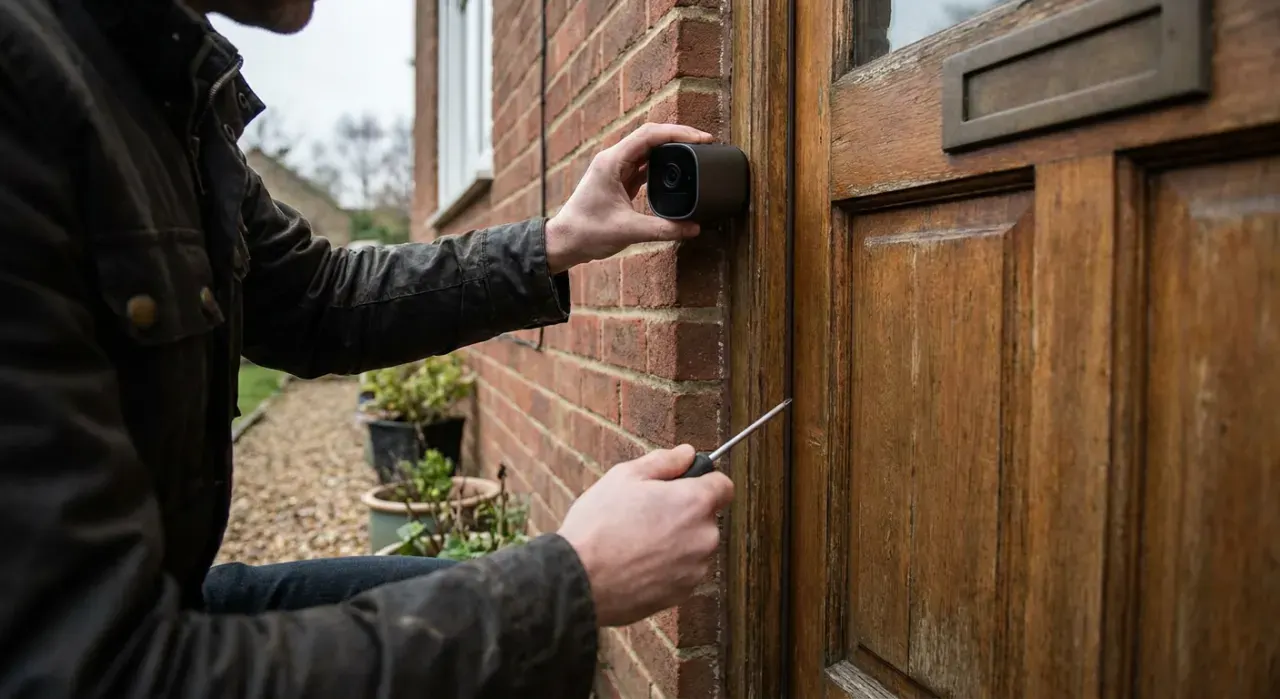
Your lease governs it. Interior cameras that sit on a shelf and record your own space are generally fine. Exterior cameras that require drilling into siding, brick, trim or a door frame are a property modification, and installing one without permission risks your deposit and, in some leases, the tenancy.
What usually works: ask in writing, propose a reversible mounting method, and offer to repair holes at move-out. Landlords frequently agree, since a camera at the entry benefits the property. Where they do not, the workarounds are a camera positioned inside a window facing out with IR disabled, adhesive or clamp mounts on a railing, or a video doorbell fitted to the existing chime wiring position, which is often treated as a like-for-like replacement rather than a modification. See how to install a video doorbell.
The reverse case matters too: a landlord may not place cameras inside a tenant's living space. Interior surveillance of a rented dwelling is prohibited in many states and is a serious matter regardless of who owns the building.
Placement mistakes that cost you the footage
- Mounted too high. The single most common error, and it turns identification footage into an incident log.
- Every camera on the outside. If they are all defeated or avoided, you have nothing. One interior camera fixes that.
- Facing the sun. Hours of unusable footage every day.
- Shooting through glass with IR on. A white screen every night.
- Motion zone left at default. Alerts on the street become alerts nobody reads.
- Camera and recorder in the same place. Both leave together. Hide the recorder, or store off-site — see subscription costs.
- Ignoring the actual dark spots. Walk the property at night before mounting anything. Where you cannot see is where a camera cannot either.
Work out the total count first with how many cameras do I need, decide the power and connection approach with wired vs wireless cameras, and see whether the deterrent effect is real in do security cameras deter burglars.
More from this hub: Smart Home & Security · best home security camera · are smart locks safe · how we rank. This page is general information about camera placement, not legal advice; consult your state and local rules before installing.