 Garden

Affiliate Disclosure
Some links on this page are affiliate links. As an Amazon Associate, we earn from qualifying purchases — at no extra cost to you. We do not buy, test, or physically handle the products we cover; our rankings come from aggregated owner reviews, ratings and expert consensus. Commissions never change our verdicts. How we rank · full disclosure.
The short answer: a soaker hose uses roughly 0.5 to 2 gallons per hour per 25 feet of hose at the low pressure it is designed for, so a 50-foot hose puts out about 1 to 4 gallons per hour overall. It is not a fixed number, because output depends on the hose's brand and wall thickness, your water pressure, and the length of the run — higher pressure and shorter length raise the per-foot flow, while long runs deliver noticeably less at the far end. The best way to know your hose is to measure it.
Because soaker hoses seep rather than spray, they lose very little water to evaporation — which matters, because EPA WaterSense attributes as much as 50 percent of outdoor water use to wind, evaporation and runoff caused by inefficient irrigation methods and systems. We do not test hoses on a bench; our irrigation rankings come from aggregated owner reviews and expert consensus, described in how we rank. The full picture is at the watering and irrigation hub.
How much per hour by hose length?
Output scales with length, but not perfectly, because pressure drops along a long hose and the far end weeps less than the faucet end. These ranges assume the low pressure a soaker hose is built for.
| Hose length | Approximate flow per hour |
|---|---|
| 25 ft | 0.5 to 2 gal |
| 50 ft | 1 to 4 gal |
| 100 ft | 2 to 8 gal (uneven end to end) |
Runs much longer than about 100 feet water very unevenly and are better split into shorter zones. The single biggest variable in these numbers is pressure, which is why controlling it matters, as covered in whether soaker hoses need a pressure regulator.
Why does pressure change the flow so much?
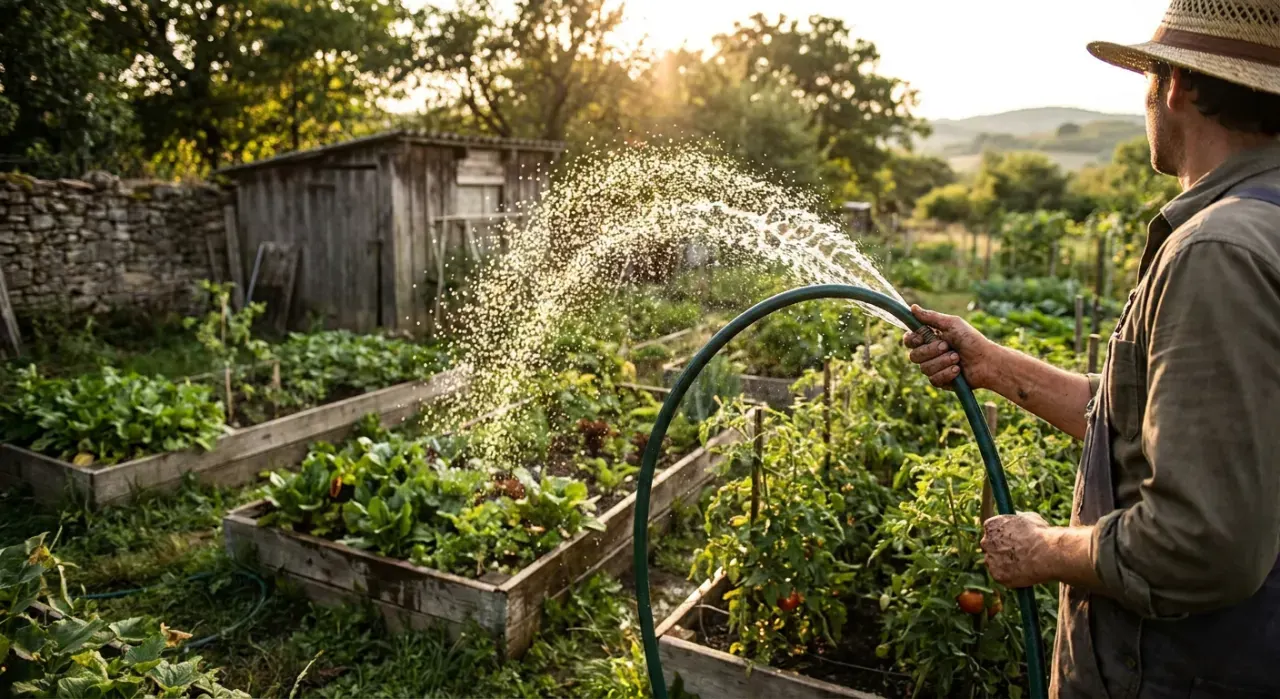
A soaker hose is a low-pressure device, designed to seep at around 10 to 25 psi. Feed it more pressure and it weeps faster and more unevenly — spraying near the faucet, splitting seams, and dumping most of its water in the first few feet — while the far end may barely dampen the soil. Feed it too little and it barely seeps at all. This is why the same hose can post very different hourly numbers on two different homes' spigots. A pressure regulator holds the flow steady and even, and it is the reason output figures are always a range rather than a single value.
How do you measure your soaker hose's output?
Two simple methods pin down your actual rate:
- Container method: place a bucket or several shallow cans along the hose, run it for 15 minutes, measure what collected, and multiply by four for the hourly rate.
- Depth method: set a few tuna cans or straight-sided cups under the hose and time how long it takes to collect about an inch of water — that is roughly your run time for a deep watering of a bed.
- Soil check: after a run, dig down; you want the soil moist to about 6 inches for beds and vegetables. If it is dry below a couple inches, run it longer next time.
Measuring beats guessing because two hoses of the same length can differ widely by brand and pressure.
How long should you run it?
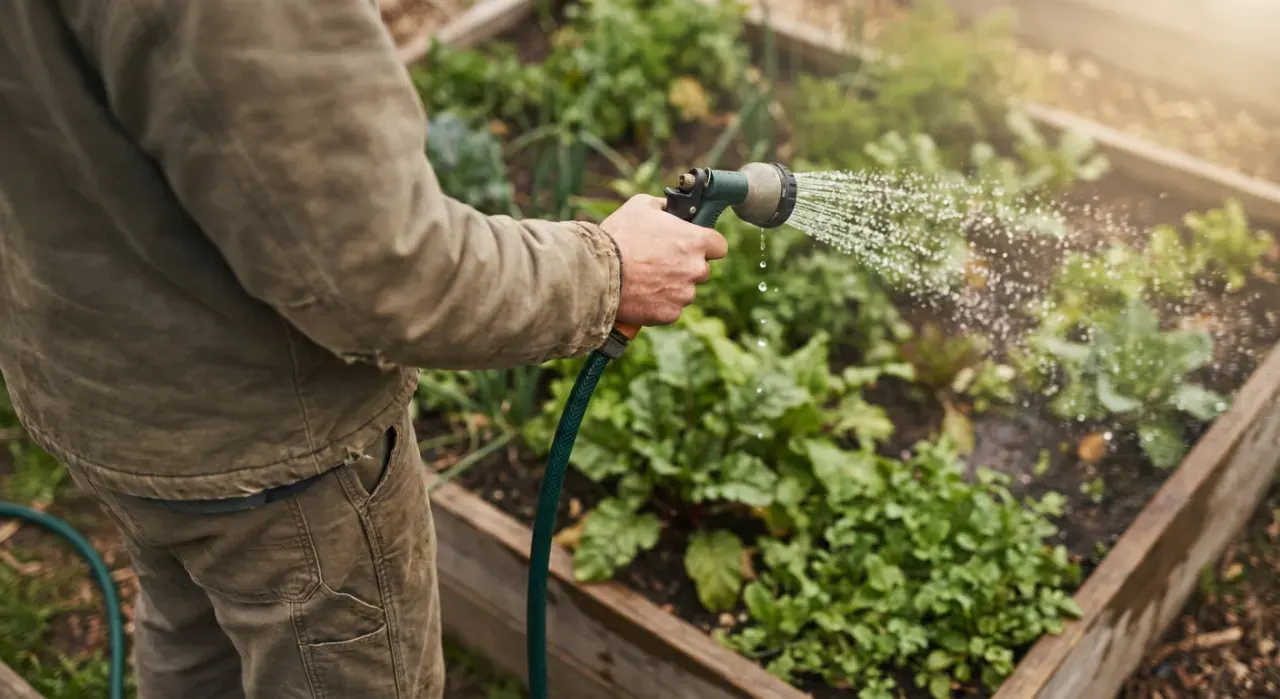
For most beds, run the soaker hose 30 minutes to an hour, two or three times a week, aiming to wet the root zone deeply rather than watering shallowly every day. The volume target is the familiar one: EPA WaterSense puts typical landscape demand at about one inch of water a week, including rainfall. Deep, less frequent watering drives roots downward and makes plants more drought-tough, the same logic behind lawn and garden watering in how much to water a garden. Adjust for weather and soil: sandy soil drains fast and needs shorter, more frequent runs, while clay holds water and needs longer, less frequent ones. Pairing the hose with a timer automates this — see best hose timers.
Know your hose's rate by measuring it once, then water by soil depth rather than by the clock. Related questions: do soaker hoses need a regulator?, watering a newly planted tree, and the comparison in drip vs soaker hose.