 Garden

Affiliate Disclosure
Some links on this page are affiliate links. As an Amazon Associate, we earn from qualifying purchases — at no extra cost to you. We do not buy, test, or physically handle the products we cover; our rankings come from aggregated owner reviews, ratings and expert consensus. Commissions never change our verdicts. How we rank · full disclosure.
No. An air purifier warms a room very slightly. It has no refrigeration cycle and no way to move heat outdoors, so every watt the fan motor draws ends up as heat in the room. A unit pulling 50 watts on a high setting adds about 171 BTU per hour, roughly what one seated person gives off. What people are noticing is airflow: moving air across skin speeds evaporation and convection and feels several degrees cooler even though a thermometer reads no change. The Department of Energy makes the same point about fans, which cool people rather than rooms.
We do not buy or physically handle the units we rank; our picks come from aggregated owner reviews and expert consensus, explained in how we rank. Model shortlists are in best air purifier, inside the air quality hub.
How much heat are we actually talking about?
Little enough that it is not a reason to avoid running one. Electrical power converted by a fan motor becomes kinetic energy in the airstream, which then degrades to heat through friction and turbulence within the room, so the heat added equals the power drawn almost exactly. Multiply watts by 3.412 to get BTU per hour. Even a large-room purifier on maximum is contributing less than a laptop and a monitor.
| Unit and setting | Typical draw | Heat added | Comparable to |
|---|---|---|---|
| Small bedroom purifier, low | 5 W | 17 BTU/hr | A phone charger |
| Mid-size purifier, medium | 25 W | 85 BTU/hr | A table lamp |
| Mid-size purifier, high | 50 W | 171 BTU/hr | One seated adult |
| Large-room purifier, high | 75 W | 256 BTU/hr | A laptop and monitor |
| Box fan on high, for reference | 90 W | 307 BTU/hr | An old incandescent floodlight |
| Window air conditioner, for contrast | 500 W | Removes 5,000 to 8,000 BTU/hr | Actual cooling |
The bottom row is the important comparison. An air conditioner does not create cold; it moves heat from indoors to outdoors through a refrigerant loop and an exhaust path. A purifier has no exhaust path to anywhere but the same room, which is the whole reason it cannot cool. It is the same reason leaving a refrigerator door open warms a kitchen rather than cooling it.
Why does it feel cooler in front of one?
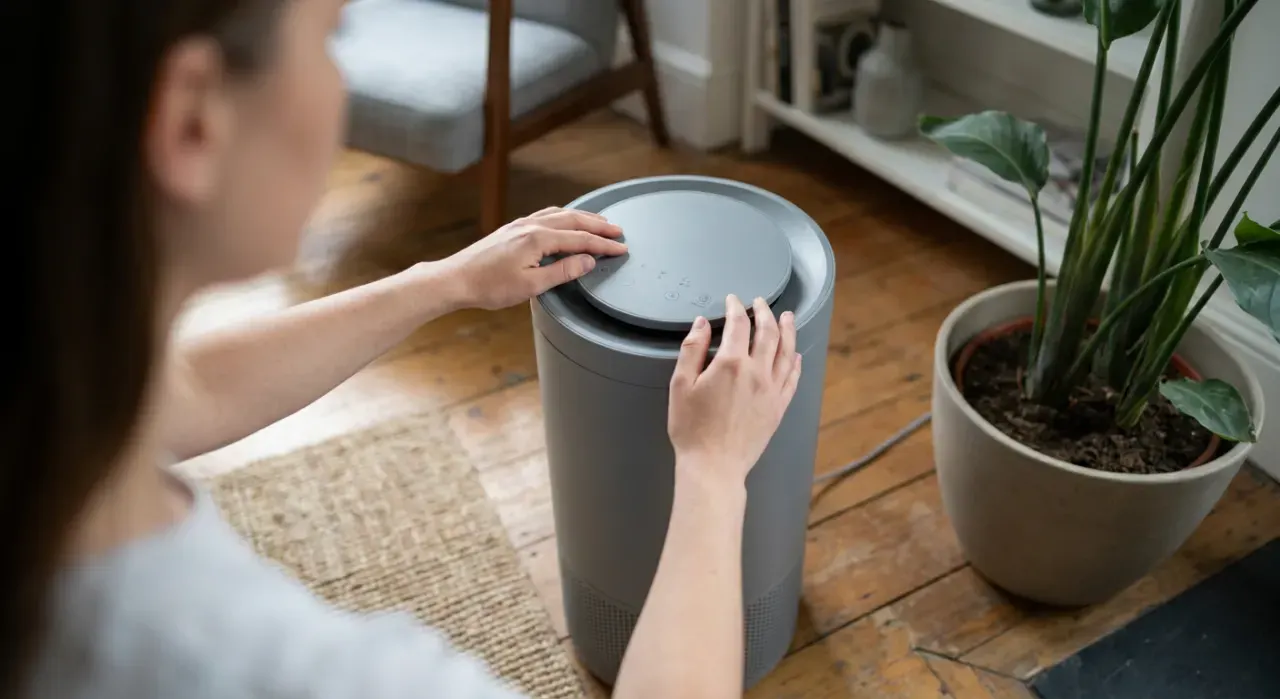
Because human thermal comfort depends on heat loss from skin, not on air temperature alone. Still air forms an insulating boundary layer against your skin; moving air strips that layer away and accelerates both convective heat transfer and the evaporation of perspiration. The perceived difference is commonly cited as the equivalent of about 4 degrees Fahrenheit at typical fan speeds, which is why the Department of Energy suggests raising a thermostat setting when a ceiling fan is running and switching the fan off in an unoccupied room. The purifier is doing the same thing incidentally, and its discharge is usually narrower and more directional than a fan, which makes the effect noticeable up close and negligible across the room.
One consequence worth knowing: if you are choosing between purifier models partly for this reason, the units that feel best are the ones with a strong directional discharge, which are frequently also the loudest. Noise is the most common reason a purifier ends up switched off, and a purifier that is off has a clean air delivery rate of zero.
What should I run in a hot room instead?
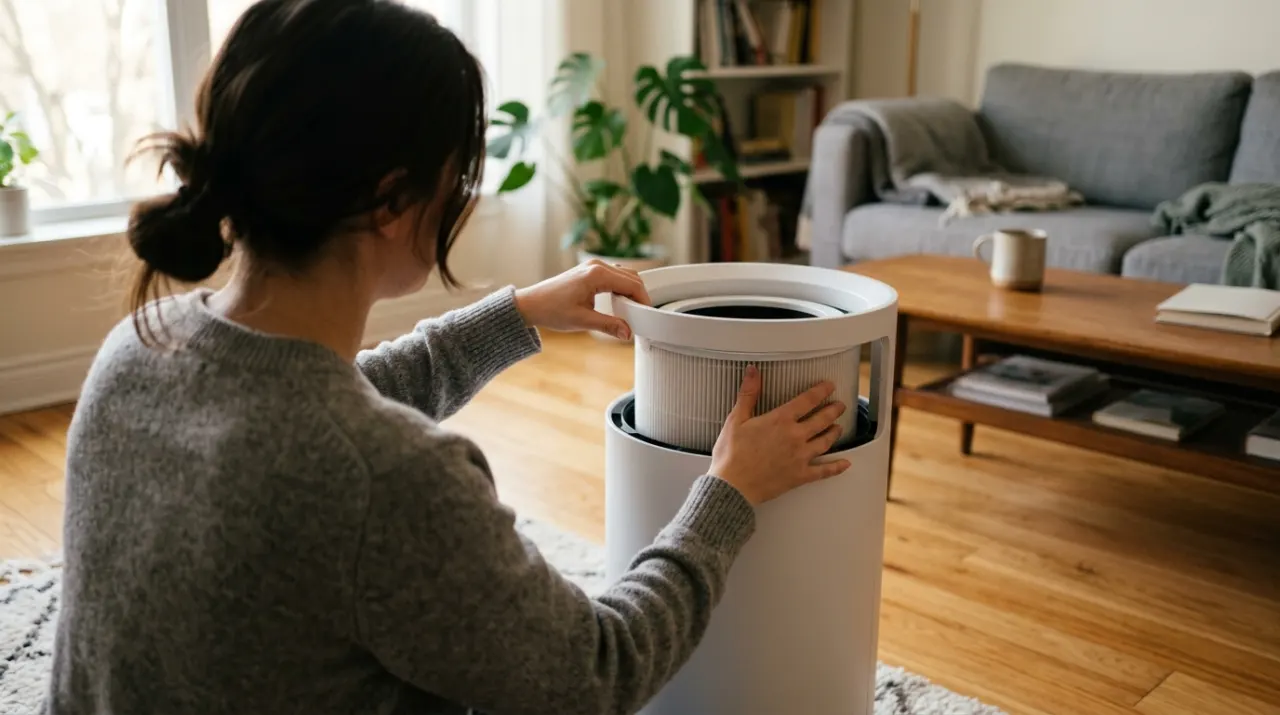
Match the appliance to the problem, and be honest that they are different problems. If the room is hot, you need an air conditioner, which removes heat, or a whole-house fan or window fan setup that exhausts hot indoor air and pulls cooler outdoor air in once the outdoor temperature has dropped below the indoor temperature in the evening. If the air is dirty, smoky or full of pollen, you need filtration, and a purifier is the right tool. If the air is muggy, you need dehumidification, since removing moisture makes a room feel several degrees more comfortable without changing its temperature at all; see best dehumidifier and what should I set my dehumidifier to.
In a wildfire smoke event the choice becomes constrained, because the correct response is to keep windows closed and filter indoor air, which removes the evening ventilation option and means leaning on air conditioning plus a purifier together. That situation is covered in best air purifier for wildfire smoke, and a cheap high-capacity option is in how to build a DIY box fan air purifier, which as a bonus does move enough air to produce a genuine breeze.
Does where I put it change anything?
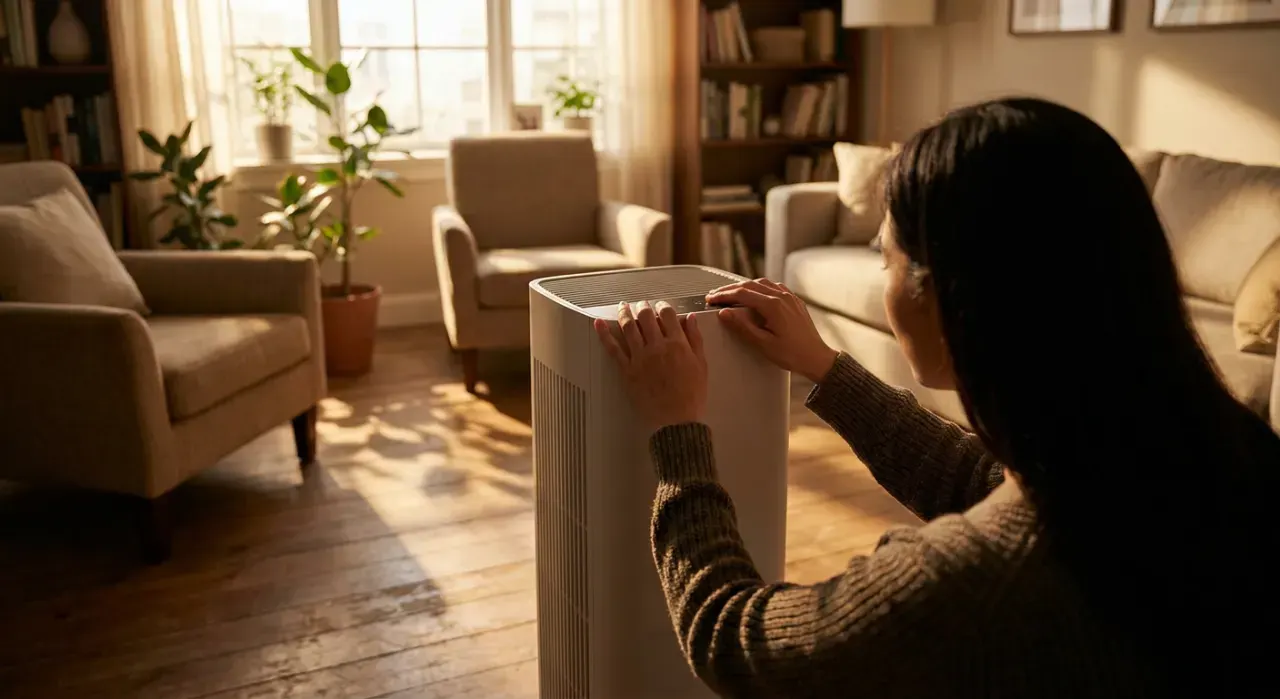
It changes how well the room is cleaned, not its temperature. A purifier in a corner or behind furniture recirculates its own filtered discharge and satisfies nothing, while one in the open with clear intake and discharge treats the whole volume. If you want the perceived breeze as well, aim the discharge toward where people sit rather than at a wall, and give the unit at least a foot of clearance on every grille face. Detail is in where is the best place to put an air purifier. On what the machine is genuinely good for, see do air purifiers help with dust and do air purifiers help with allergies.