 Garden

Affiliate Disclosure
Some links on this page are affiliate links. As an Amazon Associate, we earn from qualifying purchases — at no extra cost to you. We do not buy, test, or physically handle the products we cover; our rankings come from aggregated owner reviews, ratings and expert consensus. Commissions never change our verdicts. How we rank · full disclosure.
Start with five: leafy greens, herbs, tomatoes, peppers and cucumbers. Greens and herbs are the genuine beginner crops because they tolerate the wide temperature swings a first greenhouse inevitably produces, they crop within weeks, and a failure costs you very little. Tomatoes, peppers and cucumbers are the three that repay greenhouse space most in flavor and yield, and all three want the same conditions, so they can share a structure without conflict. Add a spring seed-starting bench and a small greenhouse earns its cost before summer.
Which crops are hardest to kill?
| Crop | Sow | To harvest | Why it suits beginners |
|---|---|---|---|
| Lettuce & salad mix | Feb–Sep | 25–45 days | Fast, forgiving, cut and come again |
| Spinach & arugula | Sep–Mar | 30–45 days | Thrives in cool; winter workhorse |
| Radish | Feb–Apr | 25–30 days | Fastest visible result in the house |
| Basil & soft herbs | Mar–Jul | 40–60 days | Loves warmth and shelter |
| Tomatoes | Feb–Mar start | 65–85 days from set | Biggest quality gain over outdoors |
| Peppers & chiles | Feb start | 70–90 days | Ripens fully in short-season states |
| Cucumbers | Apr–May | 50–70 days | Heavy yield from one vine |
Radishes are worth sowing in the first week purely as feedback. They germinate in three days and are edible in a month, which tells you the house is working before anything slower has committed.
What grows in each season?
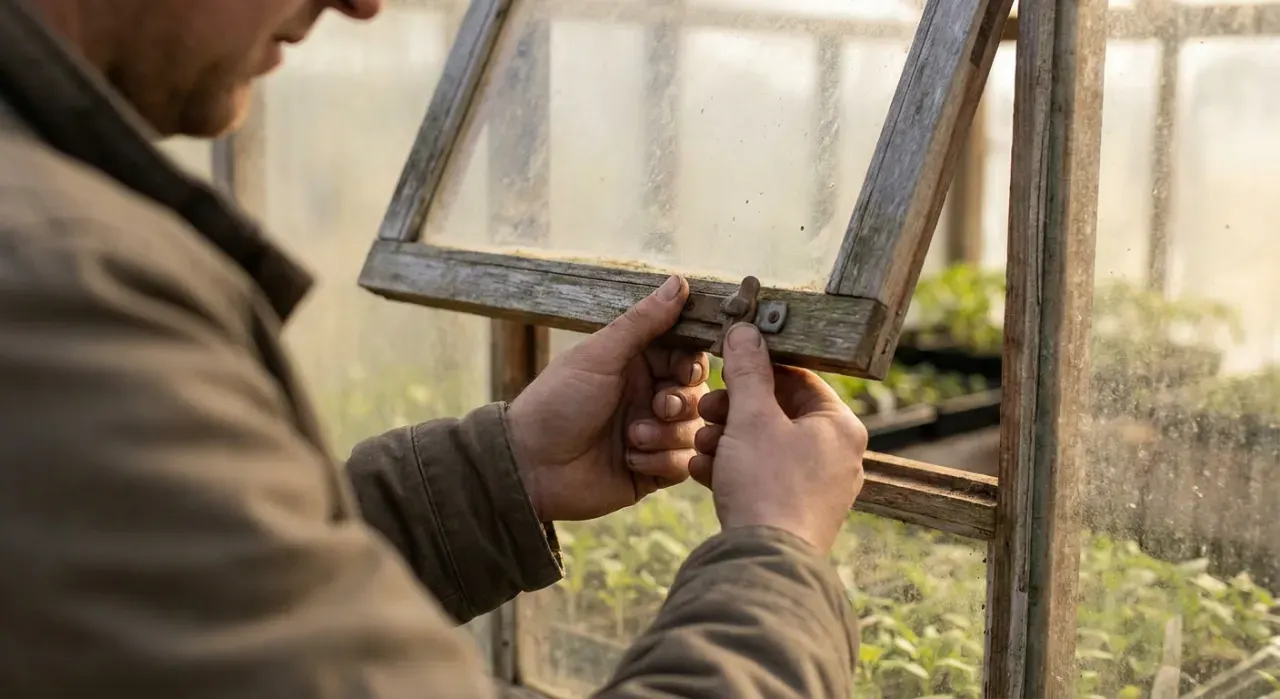
A small greenhouse has four distinct phases, and planning around them is what separates a productive house from one that sits empty half the year.
Late winter, February to March. Seed starting on a heated mat, plus hardy greens already in the ground from fall. This is the highest-value period in the whole calendar.
Spring, April to May. Transplants hardening off, early salad, radish, and the first tomatoes and peppers going into their permanent positions once night temperatures inside stay reliably above 50°F.
Summer, June to September. Tomatoes, peppers, cucumbers, basil, eggplant. Ventilation and shade become the whole job — heat, not cold, is the summer constraint.
Fall and winter, October to January. Clear the summer crop, sow spinach, mache, claytonia, kale and hardy Asian greens by early October so they reach useful size before day length drops. Growth stalls midwinter and resumes in February. The crops that hold through are listed in unheated greenhouse winter crops.
What should a beginner not try first?
Melons and winter squash, because they sprawl over an area a small house cannot spare and demand hand pollination of separate male and female flowers. Corn, which is wind-pollinated and needs a block to set properly. Full-size fruit trees, which outgrow the structure. And anything that requires a reliably heated house through winter, such as tropical fruit — heating a hobby greenhouse to 60°F through a northern winter costs more than the produce is worth, as the numbers in how to heat a greenhouse in winter make clear.
What does the house itself need?
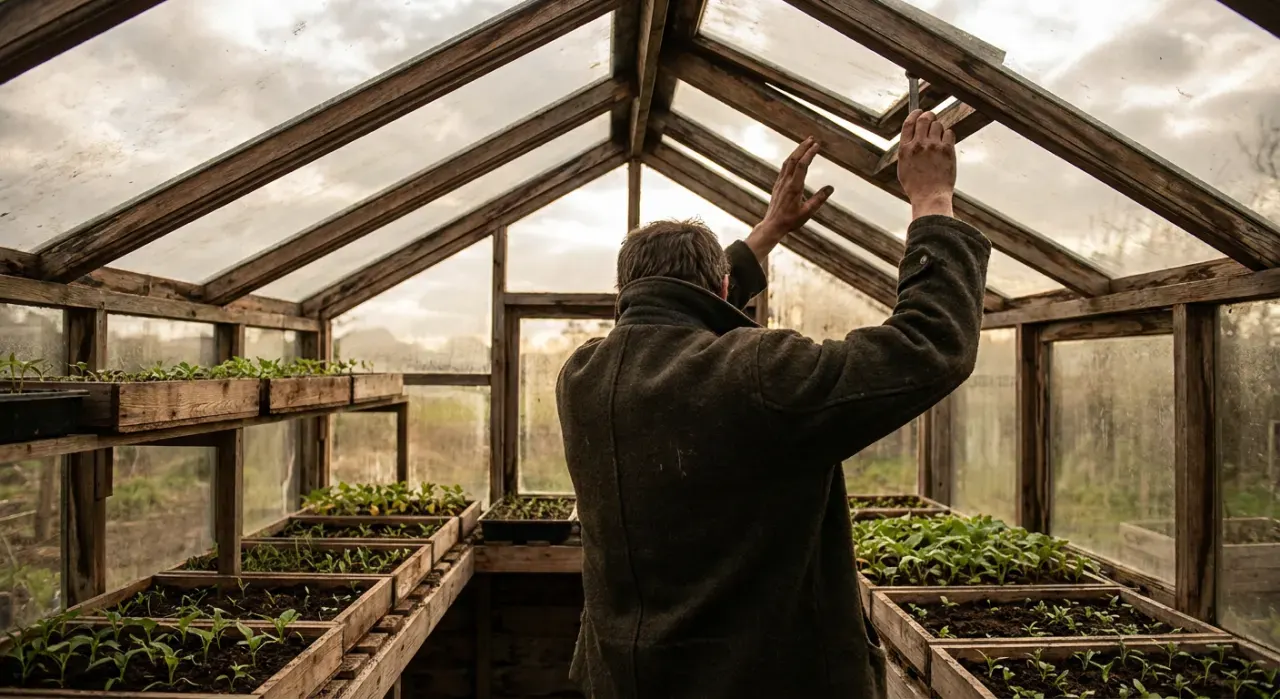
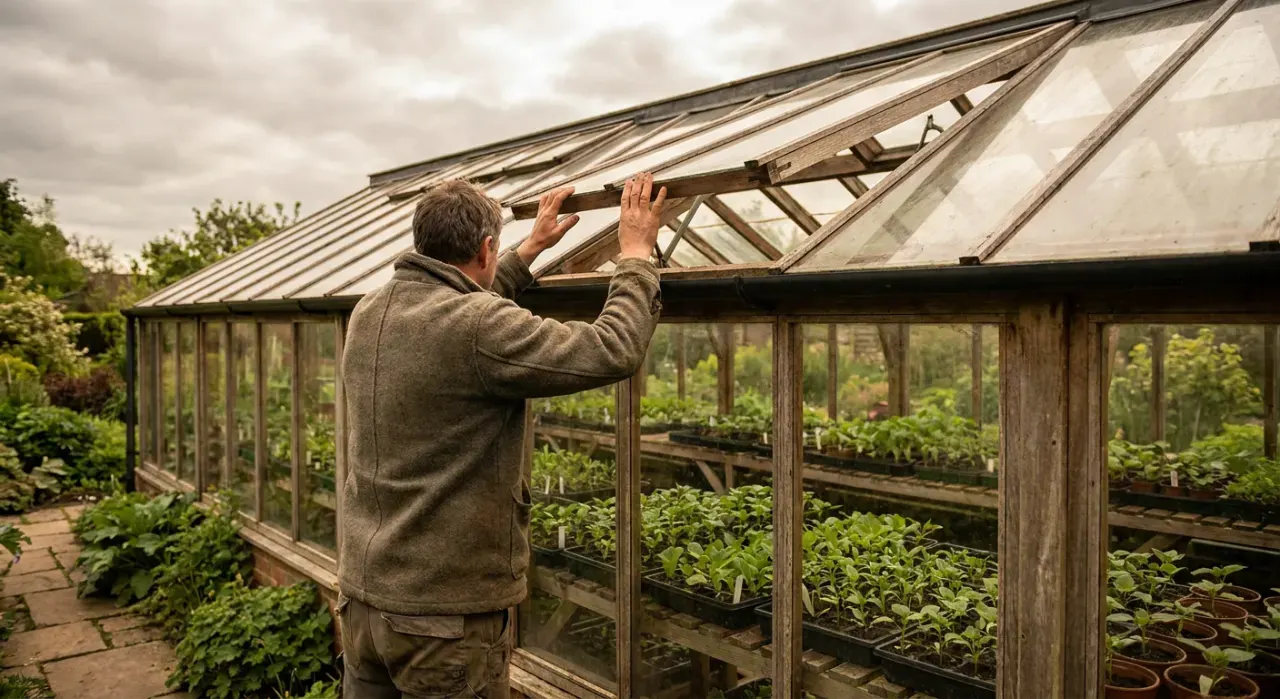
Three things before any seed goes in: automatic ventilation, because unattended overheating kills more greenhouse plants than cold does; a thermometer that records the daily minimum and maximum, so you know what your structure actually does rather than what you assume; and a watering plan, since nothing inside receives rain. Siting and sizing decisions are covered in greenhouse sizing and siting, and the overheating problem specifically in greenhouse ventilation and overheating.
If you have not bought a structure yet, our best backyard greenhouse roundup ranks on the durability and wind resistance owners report over multiple seasons. For a smaller start, a cold frame does much of this work for a fraction of the cost — see how does a cold frame work.
We never buy, test or physically handle the products we rank. Recommendations come from aggregated owner reviews, star ratings, review volume and expert consensus — see how we rank.
More from this hub: Greenhouses & Season Extension · Best backyard greenhouse · Cold frame vs greenhouse · Sizing and siting · How we rank