 Garden

Affiliate Disclosure
Some links on this page are affiliate links. As an Amazon Associate, we earn from qualifying purchases — at no extra cost to you. We do not buy, test, or physically handle the products we cover; our rankings come from aggregated owner reviews, ratings and expert consensus. Commissions never change our verdicts. How we rank · full disclosure.
A cold frame works by trapping solar radiation under a clear sloped lid and holding that warmth in the soil and air beneath, typically keeping the interior 5 to 10°F above outside temperature overnight — worth about one to one and a half USDA hardiness zones. Short-wave sunlight passes through the glazing and is absorbed by the soil and the dark interior surfaces, which re-radiate it as long-wave heat that the glazing and the closed box will not release. The still air inside also removes wind chill, which for plants matters as much as the temperature difference itself.
Why does a clear lid make such a difference?
Three effects, stacked. The first is the greenhouse effect proper: glass and twin-wall polycarbonate transmit visible light readily but are largely opaque to the long-wave infrared that warm soil emits, so energy enters more easily than it leaves. The second is the elimination of convective loss — a closed box stops the moving air that would otherwise strip heat from leaf surfaces and from the soil. The third is thermal mass: the soil beneath a frame, and any water containers you add, absorb heat all day and release it slowly through the night, which is what carries the frame through until dawn.
That last mechanism is why frame performance falls off during a run of gray days. Without solar input the mass gradually equalizes with the surroundings, and after three or four sunless days a frame is only a few degrees warmer than the open garden.
What is a cold frame actually for?
| Season | Use | What it gains you |
|---|---|---|
| Late winter | Overwintered greens, first sowings | Harvest 4–6 weeks earlier |
| Early spring | Hardening off transplants | Safe transition from indoors |
| Spring | Direct-sown salad, radish, carrots | 3–4 week head start |
| Summer | Lid off; propagation under shade | Rooting cuttings |
| Fall | Sown greens for winter standing | Extends harvest 6–8 weeks |
| Winter | Spinach, mache, kale holding | Live harvest through the cold |
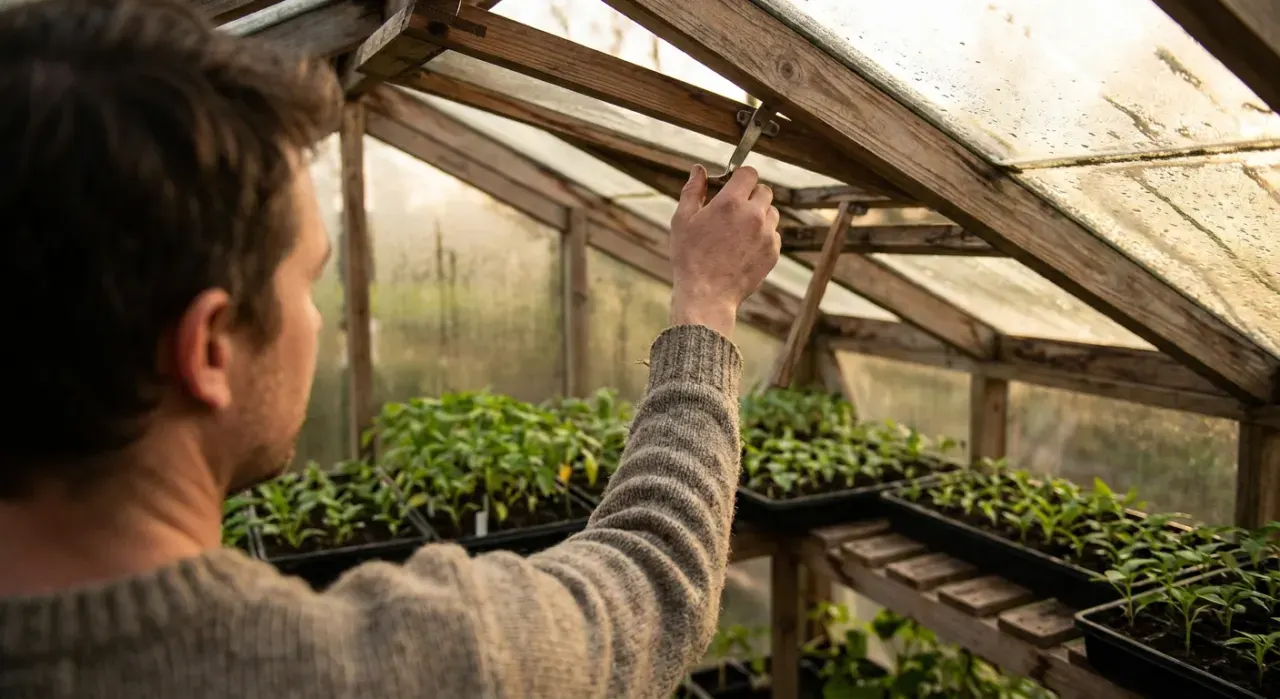
Hardening off is arguably the highest-value job on that list and the one gardeners most often skip. Transplants raised indoors have thin cuticles and undeveloped stems, and moving them straight to open ground causes wind burn and check that costs a week or two of growth. A frame with the lid progressively propped over seven to ten days does the acclimation reliably.
What makes a good frame?
- A sloped lid facing south, at 30 to 45 degrees. The angle matters most in winter, when the sun is low and a flat lid reflects much of what reaches it.
- A taller back wall than front. Roughly 18 inches at the back and 12 at the front is a common home-built proportion, which produces the slope and the headroom together.
- Thermal mass inside. Painted gallon jugs of water along the back wall, or a row of dark bricks, noticeably smooth the overnight low.
- A tight but not sealed fit. Gaps let heat out; total seal traps condensation on the glazing and invites botrytis on the crop.
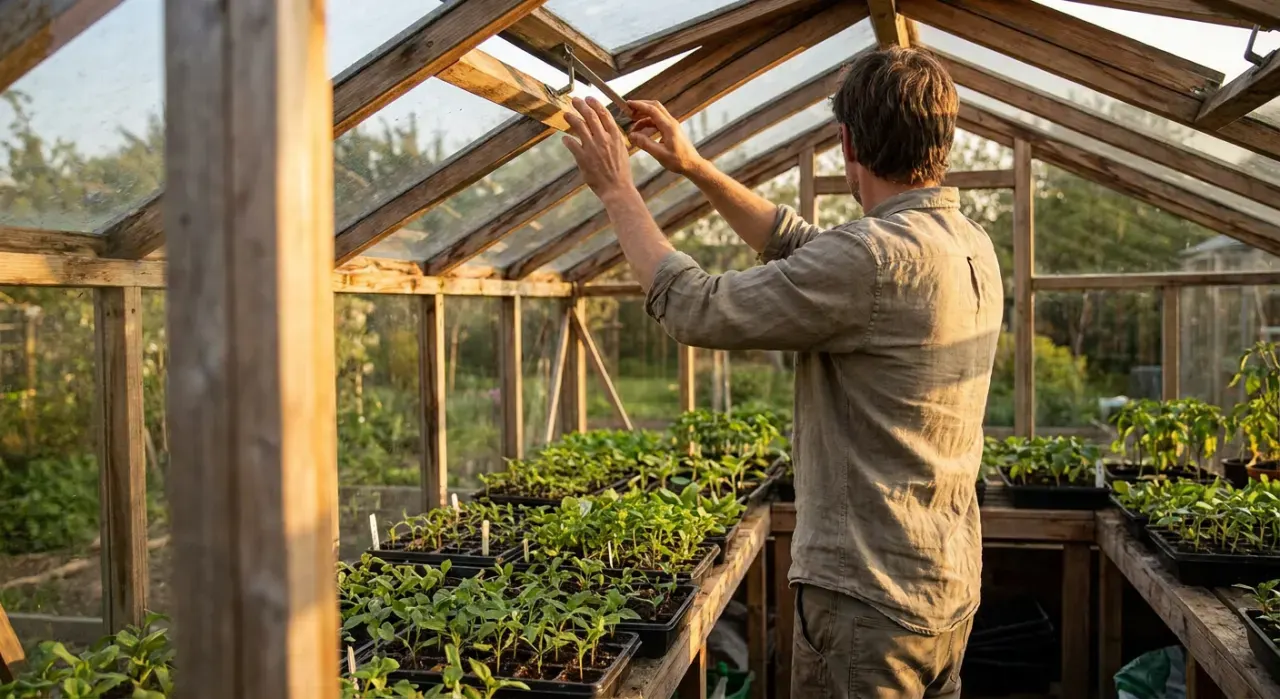
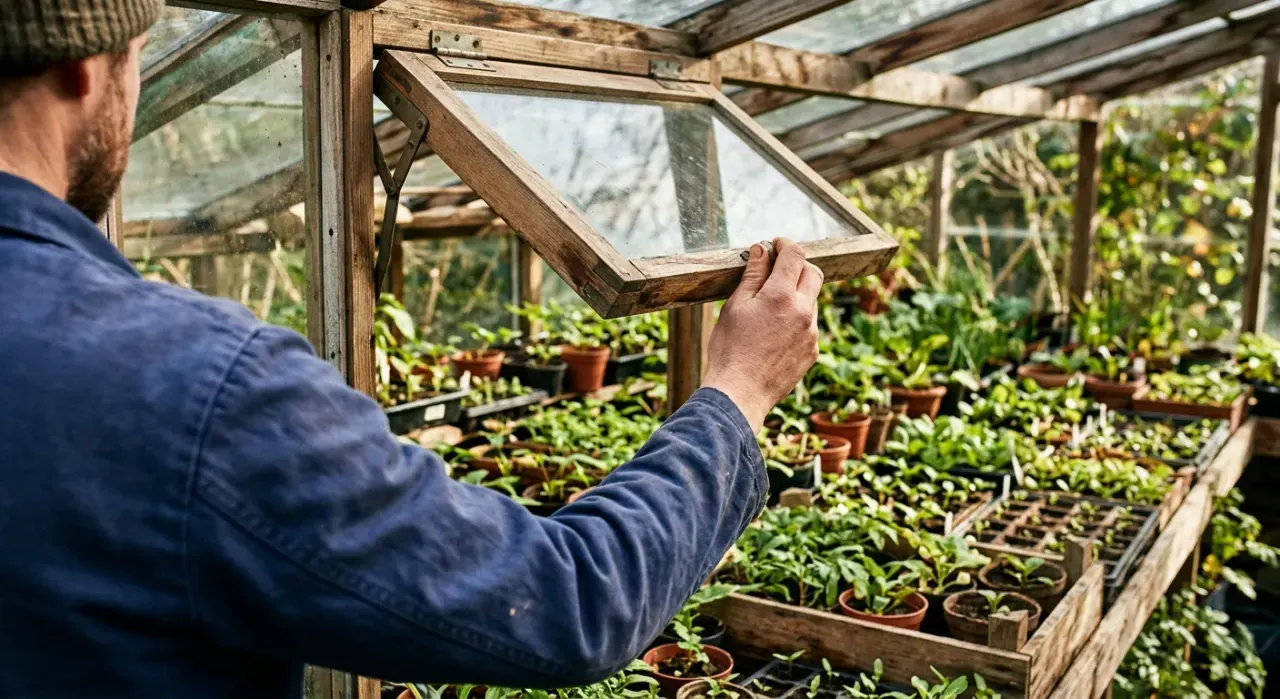
- Automatic venting. A wax-cylinder solar opener needs no power and prevents the single most common cold frame failure, which is cooking the contents on a bright day.
How does it compare to a greenhouse?
A cold frame gives roughly the same night-time temperature lift as a small unheated greenhouse over a much smaller area, at maybe a tenth of the cost, with no foundation, no permit question and no assembly weekend. What it does not give is standing room, bench space for seed trays at a workable height, or enough volume to buffer temperature swings, which is why a frame needs venting attention that a greenhouse can partly absorb. The full comparison is in cold frame versus greenhouse and the three-way version including hoop houses is in greenhouse vs hoop house vs cold frame.
Our best cold frames roundup ranks the ready-made units on the glazing durability and hinge quality owners report after a few seasons outdoors, and best row covers and frost cloth covers the lighter-weight alternative for protecting a whole bed. If you are moving up in scale, start with what to grow in a greenhouse for beginners.
We never buy, test or physically handle the products we rank. Recommendations come from aggregated owner reviews, star ratings, review volume and expert consensus — see how we rank.
More from this hub: Greenhouses & Season Extension · Best cold frames · Unheated winter crops · Ventilation and overheating · How we rank