 Garden
Affiliate Disclosure
Some links on this page are affiliate links. As an Amazon Associate, we earn from qualifying purchases — at no extra cost to you. We do not buy, test, or physically handle the products we cover; our rankings come from aggregated owner reviews, ratings and expert consensus. Commissions never change our verdicts. How we rank · full disclosure.
The short version: the best paint roller for cabinets is a 4 inch mini roller with a high-density foam cover, and the Wooster Mini-Koter R266 ten-pack is the one to buy — dense foam leaves almost no stipple and never sheds fibers into a wet enamel. If your doors have some texture, or you want something that carries more paint and is more forgiving of a slow worker, a short-nap microfiber mini roller like the Bates 4 inch kit is the better call. What you must not use is a standard 9 inch wall roller with a 3/8 inch nap: that nap is engineered to put texture on a wall, and it will put the same texture on your doors.
Cabinet doors are unforgiving because of where they live: eye level, side-lit by a window, touched constantly. Every bit of stipple, every lap mark and every stray brush hair is visible from three feet away. Rolling can get genuinely close to a sprayed finish if you use the right cover and the right paint — see sprayer versus roller for cabinets for the honest comparison, and foam versus microfiber for the cover choice. The paint and walls hub covers the rest.
Top Picks at a Glance
Our #1 Pick: Wooster Mini-Koter R266 Foam Covers
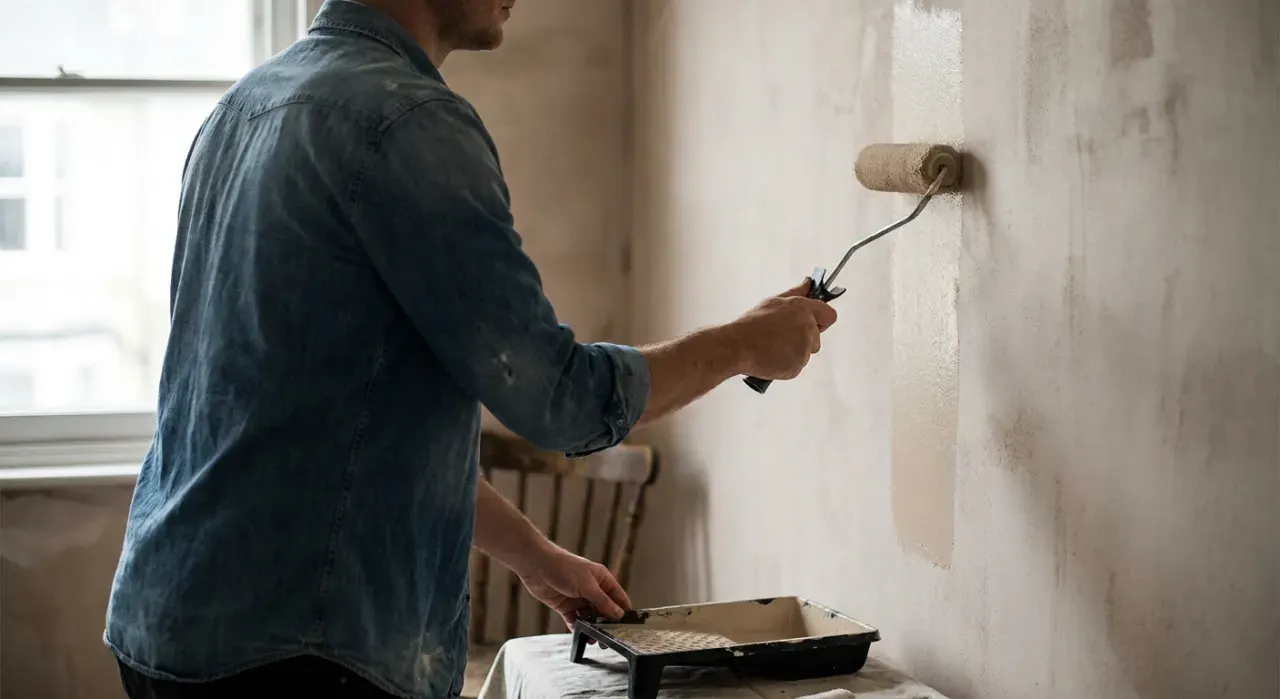
A roller cover puts texture on a surface. That is not a flaw, it is the entire mechanism — the nap picks up paint and releases it in thousands of small points, and the wetness of the paint then flows those points together into a film. How much texture is left when the flowing stops depends almost entirely on how deep the nap is. A 3/8 inch wall nap leaves peaks that flat wall paint mostly levels out and that a cabinet enamel absolutely does not, because enamel sets faster and holds its shape.
High-density foam has effectively no nap at all. It transfers a thin, even film with the finest possible texture, and it does not shed — which matters because a single microfiber hair stuck in a cured cabinet door means sanding it back and recoating. The Mini-Koter covers are 4 inches wide, which is the right size for the flat field of a standard cabinet door: wide enough to cross the panel in two or three passes, short enough that the roller stays flat instead of rocking on its ends.
The ten-pack is the real argument for this one. Foam covers do not last. After a couple of doors they start to compress, hold less paint and release it unevenly, and the natural instinct is to keep going with a tired cover to avoid wasting money. Owners consistently report better results simply because having ten covers removes that temptation — you use a fresh one, get a clean film, and throw the old one away.
Consensus Score █████████░ 8.5 — built from aggregated verified owner ratings, weighted for review volume.
The honest weaknesses: covers only, so you need a 4 inch frame; foam holds less paint than microfiber so you reload more often; and foam is unforgiving of a fast-setting paint, because if the film sets before it flows, the small texture that is there stays. It also does nothing for raised-panel profiles, which still need a brush.
Check price on Amazon → (paid link)
The Ranked Field

Best for the smoothest possible film on cabinet doors and drawer fronts
- High-density foam, no fiber shedding
- 4 inch width suits a cabinet door
- Ten covers, so you never reuse a tired one
- Works with water and oil-based enamels
Why buy it: high-density foam leaves almost no stipple, and having ten covers means you throw one away rather than nursing a matted roller through the last six doors.

Best for a slightly textured, brush-free finish that hides minor flaws
- Nine microfiber covers plus frame and tray
- Microfiber holds more paint than foam
- Short nap for a fine finish
- Complete kit, nothing else to buy
Why buy it: microfiber carries more paint per load than foam, so you cover a door in fewer passes and get less of the dry-edge dragging that causes lap marks.

Best for a single vanity, bookcase or small set of doors
- Frame, tray, liner and five foam covers
- Tray liner saves the cleanup
- Foam covers for a smooth enamel finish
- Everything for one small project
Why buy it: the tray liner alone justifies the kit — peel it out at the end and the tray is clean, which is the job everyone puts off and then does badly.
Best for the most covers per dollar for a full kitchen
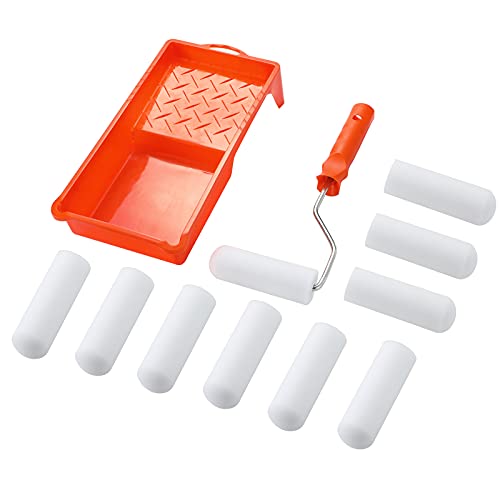
- Ten high-density foam covers included
- Frame, tray and sponge naps in the box
- Sized for doors, cabinets and trim
- Very low cost per cover
Why buy it: a kitchen of thirty doors chews through covers, and the cheapest way to keep using a fresh one is to buy them ten at a time in a kit like this.
Best for restocking covers when you already own a 4 inch frame
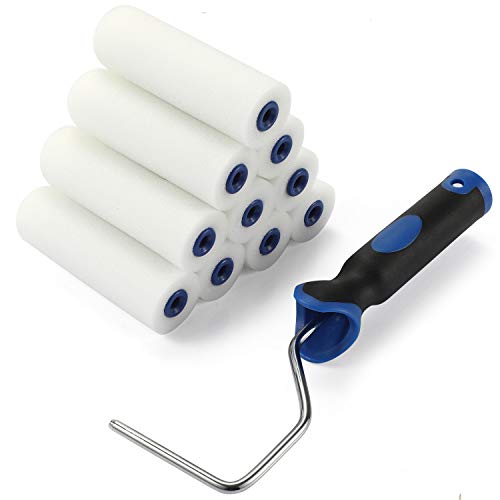
- Eleven high-density foam covers
- Rounded foam ends reduce edge lines
- Fits standard 4 inch mini frames
- No frame or tray to pay for again
Why buy it: the rounded foam ends are the detail that matters — a square-ended cover leaves a hard track line at the edge of every pass on a flat door panel.

Best for doing the cabinets and the kitchen walls in one project
- Full-size and mini frames plus sleeves
- Microfiber covers for walls and cabinets
- Includes tray, brush and scrapers
- Nineteen pieces, one purchase
Why buy it: a kitchen refinish almost always turns into painting the walls too, and one kit that carries both roller sizes saves a second trip and a second tray.
Quick Comparison
| Product | Best for | Rating | Price | Buy |
|---|---|---|---|---|
| Wooster Brush Mini-Koter R266 4 inch Mini Roller Foam, 10 Pack | Best Overall Cabinet Roller Covers | — | Check (paid link) | |
| Bates 4 Inch Paint Roller Kit, 11 pcs, Plastic Paint Tray, Roller Frame & 9 Microfiber Covers | Best Microfiber Kit | — | Check (paid link) | |
| Bates 4 Inch Foam Paint Roller Set, 8 pcs, Paint Tray, Tray Liner, Roller Frame & 5 Foam Covers | Best Starter Foam Kit | — | Check (paid link) | |
| Foam Paint Roller Set, 4 inch Roller with 10 High-Density Foam Covers, Frame, Tray and Naps, Pack of 12 | Best Value Kit | — | Check (paid link) | |
| Foam Paint Roller 4-Inch Mini Roller Cover Refills with Foam-Covered Ends, High-Density Foam, Pack of 11 | Best Refills | — | Check (paid link) | |
| Bates Paint Roller Kit, 19 pcs, Roller Set with Microfiber Sleeves & Frame for Walls, Cabinets, Interior and Exterior | Best for Cabinets Plus the Room | — | Check (paid link) |
How We Rank
We do not buy, test or physically handle these products. For cabinet rollers we weight finish smoothness on a flat door, shedding, paint capacity against how fast cabinet enamels set, cover count per pack and total cost for a kitchen-sized job. Rankings come from the aggregated owner-review record — ratings weighted by review volume, plus the complaints that repeat across many reviews rather than isolated bad units. Prices were current at the time of writing. Full method on how we rank.
The Cabinet Rollers, Reviewed
1. Wooster Mini-Koter R266 Foam, 10 Pack — Best Overall
Covered above. What owners praise: the near-sprayed smoothness on flat doors, zero shedding, and that ten covers is enough for a whole kitchen without reusing tired ones. What owners complain about: covers only with no frame, low paint capacity so you reload constantly, and foam edges that can leave a line if you press too hard. The default choice for a smooth-door kitchen.
2. Bates 4 Inch Roller Kit, 11 pcs Microfiber — Best Microfiber Kit
Microfiber is the underrated option for cabinets. It holds noticeably more paint than foam, which means fewer reloads and, more importantly, fewer dry passes — and dry passes are what create lap marks. The stipple it leaves is very fine and remarkably uniform, and on older cabinet doors with a bit of grain or a slightly imperfect surface that uniform micro-texture actually reads better than dead-flat foam, which highlights every underlying flaw. Nine covers plus a frame and tray makes it a complete purchase. What owners praise: the paint capacity, the fine even finish, and that everything needed is in the box. What owners complain about: it can shed a fiber or two on the first use (roll it on tape first), and it will never be quite as glass-smooth as foam. The most forgiving choice.
3. Bates 4 Inch Foam Roller Set, 8 pcs — Best Starter Kit
The small, sensible kit for a single project: a bathroom vanity, a built-in bookcase, one run of laundry cabinets. Frame, tray, tray liner and five foam covers, which is about right for a job of that size. The tray liner is the quietly useful piece — peel it out when you are done and there is no tray to scrub, which is the chore that otherwise gets skipped and ruins the next job. What owners praise: the completeness for the price and the smooth foam finish. What owners complain about: five covers runs out fast on a full kitchen, and the frame is light-duty. Buy it for one room, not for a kitchen.
4. Foam Paint Roller Set, 12 Piece — Best Value Kit
Ten high-density foam covers plus a frame, tray and sponge naps at a price that makes the cover count the story. A kitchen refinish is two coats on both sides of every door, and covers degrade; the honest per-cover economics of a big kitchen job favor buying ten cheap covers and replacing them freely over buying two good ones and nursing them. What owners praise: the number of covers for the money and that the foam is genuinely dense rather than spongy. What owners complain about: variable quality between covers in a pack, and a frame that is fine but not durable. The pragmatic buy for a big job.
5. Foam Roller Cover Refills, 11 Pack — Best Refills
If you already own a 4 inch mini frame, there is no reason to buy another one. These are covers only, with foam-covered rounded ends, which is a detail worth understanding: a cover with a hard square end leaves a distinct track line at the edge of every pass, and on a flat door panel that line will still be visible after the paint dries. Rounded ends feather the edge instead. What owners praise: the rounded ends, the density and the price per cover. What owners complain about: foam quality varies within the pack, and there is no frame or tray. The right restock.
6. Bates Paint Roller Kit, 19 pcs — Best for Cabinets Plus the Room
Cabinet projects expand. Once the doors are off and the kitchen is taped, painting the walls stops being optional, and this kit carries both a full-size roller with microfiber sleeves and the mini gear, plus a tray, a brush and scrapers. It is the highest-rated product in this roundup by owner ratings, largely because it removes a shopping trip mid-project. What owners praise: the completeness, the microfiber sleeve quality and the value. What owners complain about: the mini covers are microfiber rather than foam, so it is not the dead-smoothest option for doors, and there are pieces you will never use. Best when the whole kitchen is in scope. Pair it with our general paint roller picks for the wall work.

What Owners Actually Complain About
Cabinet rolling generates a very specific set of complaints, and almost all of them trace back to nap depth, paint open time or reusing a tired cover.
“It left an orange-peel texture.” Overwhelmingly the top complaint, and overwhelmingly the wrong cover. A wall nap of 3/8 inch or more puts a texture on the door that cabinet enamel is too fast-setting to level out. Dense foam or a very short microfiber is the answer. Our guide on nap depth for smooth surfaces explains the relationship.
“It shed fibers into the paint.” Real on cheap microfiber and nonexistent on foam. New microfiber covers should be rolled firmly on a strip of painter’s tape before first use, which pulls out the loose fibers. A single hair in a cured door means sanding and recoating that door — one more reason to keep dust down and, per EPA advice to provide maximum ventilation during painting, to keep air moving while you work.
“I got lap marks between passes.” The paint set before you rolled back into it. Cabinet enamels have short open times by design — that is what makes them hard. Work one door at a time, keep a wet edge, do not stop halfway across a panel, and consider a paint conditioner to extend the open time.
“There is a line down the edge of each pass.” A hard-ended roller cover, or too much pressure squeezing paint out at the ends. Use covers with foam-capped rounded ends, and let the roller’s own weight do the work.
“The finish is smooth but the door edges look rough.” A roller cannot get into a raised-panel profile or a bevel. Cut those in with a good angled sash brush immediately before rolling the flat field, so the brushed and rolled paint merge while both are wet. For a truly uniform finish on detailed doors, spraying is the honest answer — see our cabinet sprayer picks.
How to Roll a Cabinet Door Properly
Take the doors off and lay them flat. Gravity is the enemy of a smooth vertical film. Doors lying flat on painter’s pyramids do not run, do not sag, and let you lay off a final pass without fighting drips. Number the doors and their hinge positions in pencil on the hinge mortise before you remove them.
Prep properly or none of this matters. Degrease with a strong cleaner — kitchen cabinets carry a film of cooking oil that no paint will bond through — then scuff sand with 180 to 220 grit and prime with a bonding primer. Check the age of the house before you start sanding: the EPA notes that lead dust forms when lead-based paint is scraped, sanded or heated, and paid renovation work in a pre-1978 kitchen has to be done by an EPA- or state-certified firm using certified renovators. Our cabinet painting guide walks the full sequence.
Brush the profiles, roll the field. On a shaker or raised-panel door, brush the inside profile and the panel corners first, then immediately roll the flat panel and the rails and stiles. Both surfaces are wet, so the textures merge. Waiting even ten minutes leaves a visible frame.
Lay off in one light final pass. After you have covered the panel, do one slow, very light pass in a single direction with a nearly dry roller, going the full length of the door without stopping. That is what evens out the film. Then walk away — the most common way to ruin a good door is going back to fix a spot that would have flowed out on its own.
Two thin coats, sanded between. A light pass with 320 grit between coats knocks down any dust nibs and gives the second coat something to grip. Wipe with a tack cloth. And leave the doors flat to cure for at least 48 hours before rehanging, longer before stacking anything against them.
The Verdict
For flat or shaker cabinet doors, buy the Wooster Mini-Koter R266 foam covers and a 4 inch frame — dense foam is the closest a roller gets to a sprayed finish, and the ten-pack means you always use a fresh one. If your cabinets are older, textured, or you simply want a more forgiving cover that holds more paint, the Bates 4 inch microfiber kit is the better buy. And if the project has already grown to include the kitchen walls, the Bates 19-piece kit covers both. Whatever you pick: short nap, doors flat, brush the profiles first, and lay off in one pass. Check price on Amazon → (paid link)