 Garden

Affiliate Disclosure
Some links on this page are affiliate links. As an Amazon Associate, we earn from qualifying purchases — at no extra cost to you. We do not buy, test, or physically handle the products we cover; our rankings come from aggregated owner reviews, ratings and expert consensus. Commissions never change our verdicts. How we rank · full disclosure.
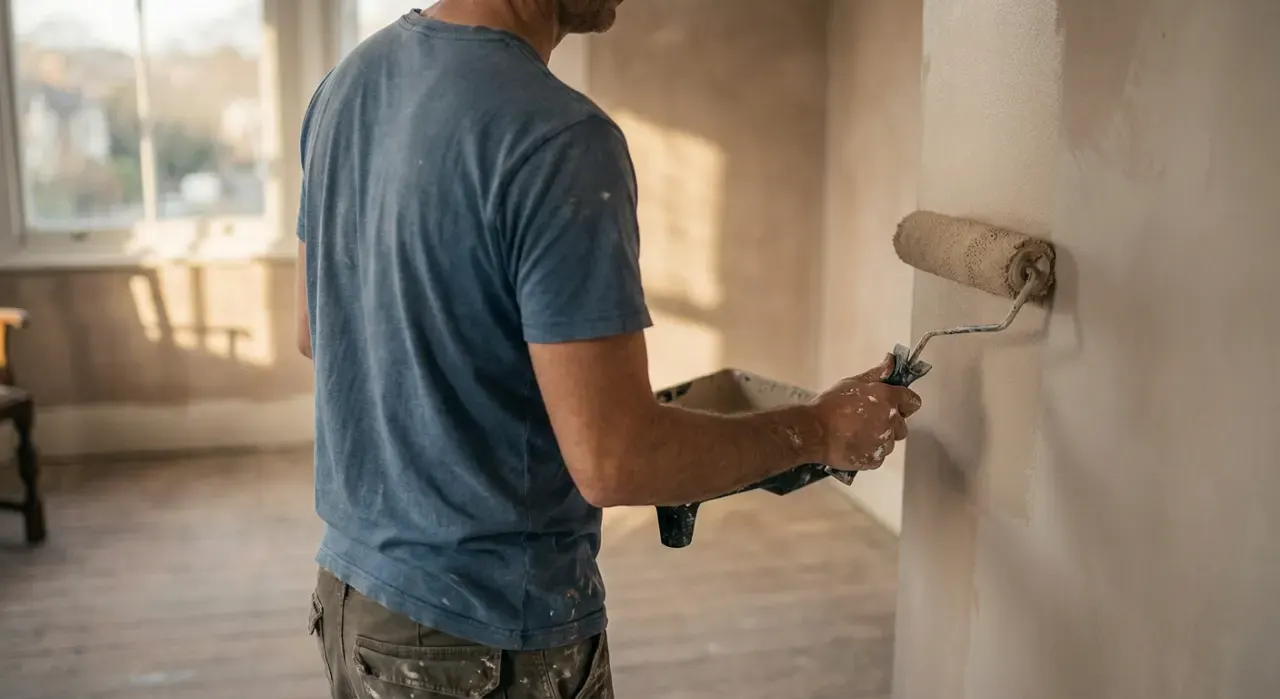
Use a 3/8 inch nap on smooth drywall, and a 1/4 inch nap on plaster, skim-coated or very smooth walls where you want a glass-flat finish. Nap length is simply how far the fibers reach into a surface — the smoother the wall, the shorter the nap it needs. A 1/2 or 3/4 inch cover on a smooth wall deposits more paint than the surface can level out, leaving a fine stipple that becomes obvious in eggshell or satin under raking light. Pair the short nap with a woven or microfiber cover rather than a shaggy knit.
Which nap goes with which surface?
| Surface | Nap | Cover type | Finish you get |
|---|---|---|---|
| Skim-coated or plaster, glass smooth | 1/4 in | Microfiber or mohair | Near-sprayed, minimal stipple |
| Smooth drywall, new construction | 3/8 in | Woven or microfiber | Very light, even stipple |
| Light orange peel texture | 3/8–1/2 in | Woven | Fills the texture evenly |
| Knockdown or medium texture | 1/2–3/4 in | Knitted | Reaches the valleys |
| Popcorn ceiling, heavy texture | 3/4–1 in | Knitted | Full coverage in one pass |
| Cabinets, doors, trim in high sheen | 1/4 in or foam | Foam or mohair | Smoothest available from a roller |
| Brick, block, stucco | 1–1 1/4 in | Knitted | Gets into deep pores |
The rule underneath the table: nap length should match the depth of the texture you are trying to reach into. On a smooth wall there is nothing to reach into, so extra nap only adds unwanted texture of its own.
Why does a long nap ruin a smooth wall?
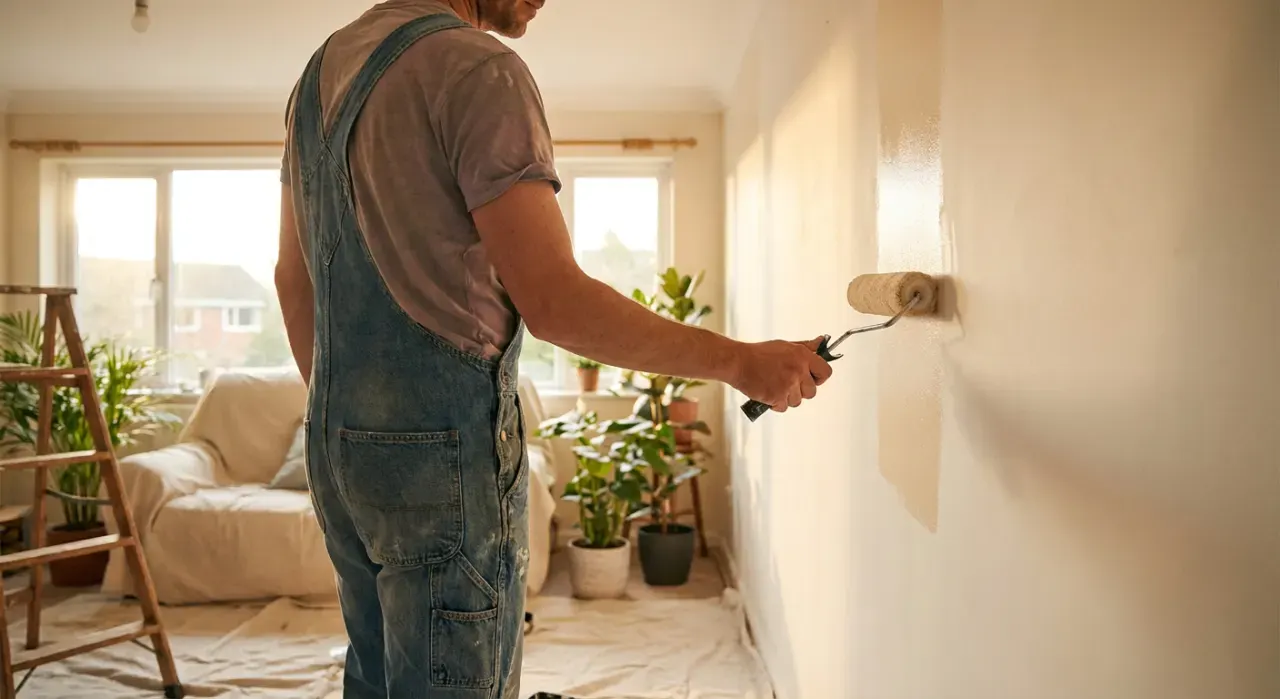
Because of how much paint it holds and how it releases it. A thick nap carries a large reservoir of paint and lets it go in a random pattern as the fibers flex against the wall. On a textured surface that randomness is invisible — the wall already has texture. On a flat wall it prints, and the resulting orange-peel-like stipple is a permanent part of the film once the paint dries.
Sheen makes it worse or better. Flat and matte paint scatters light and hides stipple well, which is why a wrong-nap job in flat paint often looks acceptable. Eggshell, satin and semi-gloss reflect, and every ridge shows under a window or a lamp. If you are painting in satin on a smooth wall, the nap choice matters more than anything else you do with the roller. Sheen differences are covered in eggshell versus satin.
Which cover material should you pair with it?
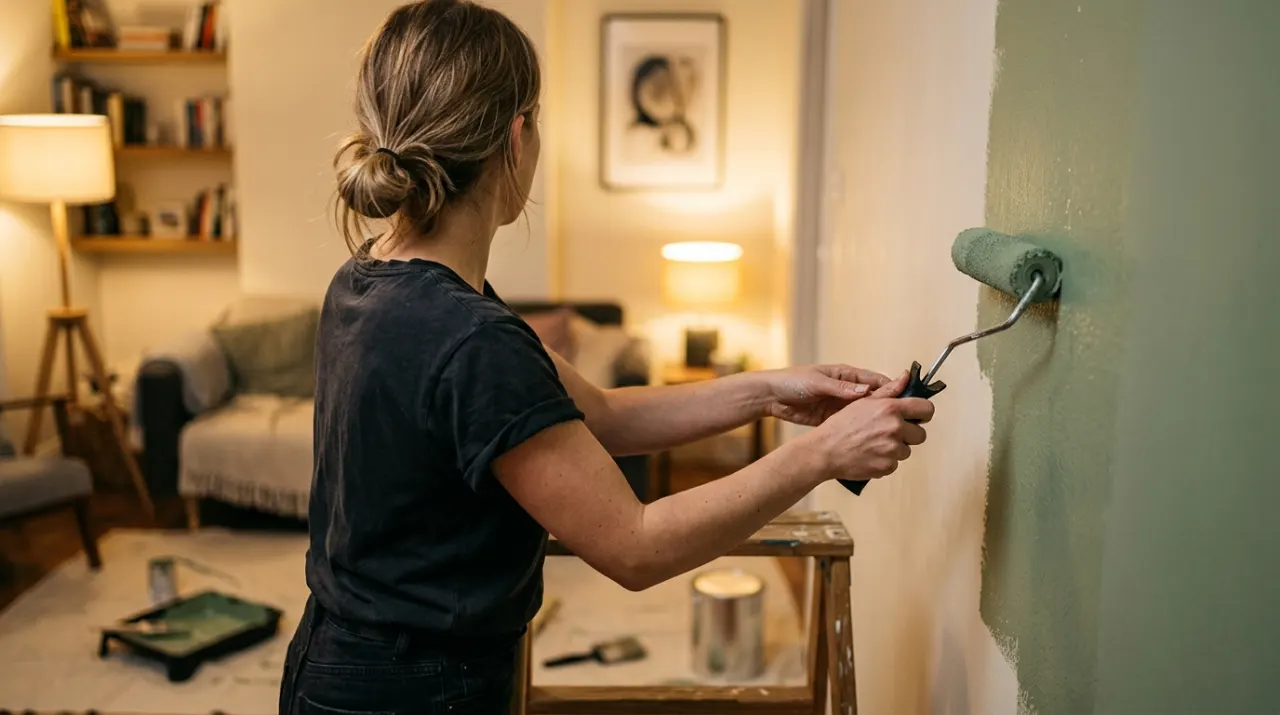
Microfiber is the best general choice on smooth walls: it holds a good load, releases paint evenly, and sheds very little lint, which matters because lint pulled into a drying film cannot be removed without sanding. Woven covers behave similarly and are the traditional choice for smooth surfaces and enamels. Knitted covers hold more paint and cover faster, but they shed and they leave more stipple — save them for texture.
Foam and mohair are the specialists. On a cabinet door or a slab of trim in semi-gloss they leave the smoothest roller finish available, close to a sprayed surface. On a wall they are impractical because they carry so little paint. The full material comparison is in foam versus microfiber paint rollers.

What technique gets the flattest result?
- Prep the cover. Wrap a new cover with painter tape and pull it off to lift loose fibers, or rinse and spin it dry before use.
- Load it fully. Roll it in the tray until it is saturated but not dripping. A dry roller drags and stipples.
- Do not press. Pressure forces paint out past the roller ends and leaves tram lines. Let the nap do the work.
- Work in sections about 3 feet wide, floor to ceiling, and roll into the previous section while it is still wet.
- Lay off each section with one light top-to-bottom pass, without reloading, all in the same direction.
- Do not go back into paint that has started to skin. Rolling over a tacky film is what creates the worst marks.
Two coats at the correct spread rate beat one heavy coat every time. Coverage figures are in how many square feet a gallon covers, and recoat timing in how long to wait between coats.
Does roller width matter too?
Nine inches is the standard for walls and the size most frames and trays are built around. An 18 inch roller covers a large open wall considerably faster but needs a matching frame, a bucket and screen rather than a tray, and more skill to keep even — it is a worthwhile upgrade for a whole-house repaint and overkill for one bedroom. Four and six inch mini rollers handle behind toilets, inside closets and the strip beside door casings.
Roller sizing for the wall itself is covered in what size paint roller for walls, and our paint roller picks rank frames and covers on owner reports of shedding and how well the cover holds up through a full room.
We never buy, test or physically handle the products we rank. Recommendations come from aggregated owner reviews, star ratings, review volume and expert consensus — see how we rank.
More from this hub: Paint & Walls · How to paint a room · Priming a wall · How we rank