 Garden

Affiliate Disclosure
Some links on this page are affiliate links. As an Amazon Associate, we earn from qualifying purchases — at no extra cost to you. We do not buy, test, or physically handle the products we cover; our rankings come from aggregated owner reviews, ratings and expert consensus. Commissions never change our verdicts. How we rank · full disclosure.
A 9 inch roller is the right size for almost every interior wall. It matches standard frames, trays and covers, holds enough paint to work a full floor-to-ceiling stroke, and is light enough to control on an extension pole. Step up to an 18 inch roller only for large uninterrupted walls and ceilings, where it roughly halves the number of passes but needs its own frame, a bucket and screen, and a stronger pole. Keep 4 or 6 inch mini rollers for behind toilets, inside closets and beside door casings. Nap length, not width, is what you change for texture.
Which size does what?
| Roller width | Best for | Needs | Notes |
|---|---|---|---|
| 4 in mini | Behind toilets, tight corners, touch-ups | Mini cage frame | Reloads constantly; use only where needed |
| 6 in mini | Closets, narrow walls, cabinet doors | Mini cage frame | Good with a foam cover for trim |
| 9 in | Standard interior walls and ceilings | 9 in frame, tray or bucket screen | The default; everything is made for it |
| 12 in | Larger walls without much cutting in | 12 in frame, bucket and screen | Uncommon; a middle option |
| 18 in | Long open walls, big ceilings, garages | 18 in frame, 5 gal bucket, screen, heavy pole | Fast but unforgiving of poor technique |

Why is 9 inch the standard?
Because it balances coverage against control. A 9 inch cover holds enough paint to roll a section of wall about 3 feet wide from floor to ceiling without reloading, which is exactly the working unit that lets you keep a wet edge. It is also light enough loaded that you can hold consistent, gentle pressure across the whole width — and even pressure is what prevents ridges at the roller ends.
The ecosystem matters too. Trays, screens, frames, covers in every nap and material, and every extension pole are all built around 9 inch. That means a wider choice of cover materials at lower prices, which in practice affects your finish more than roller width does.
When does an 18 inch roller pay off?
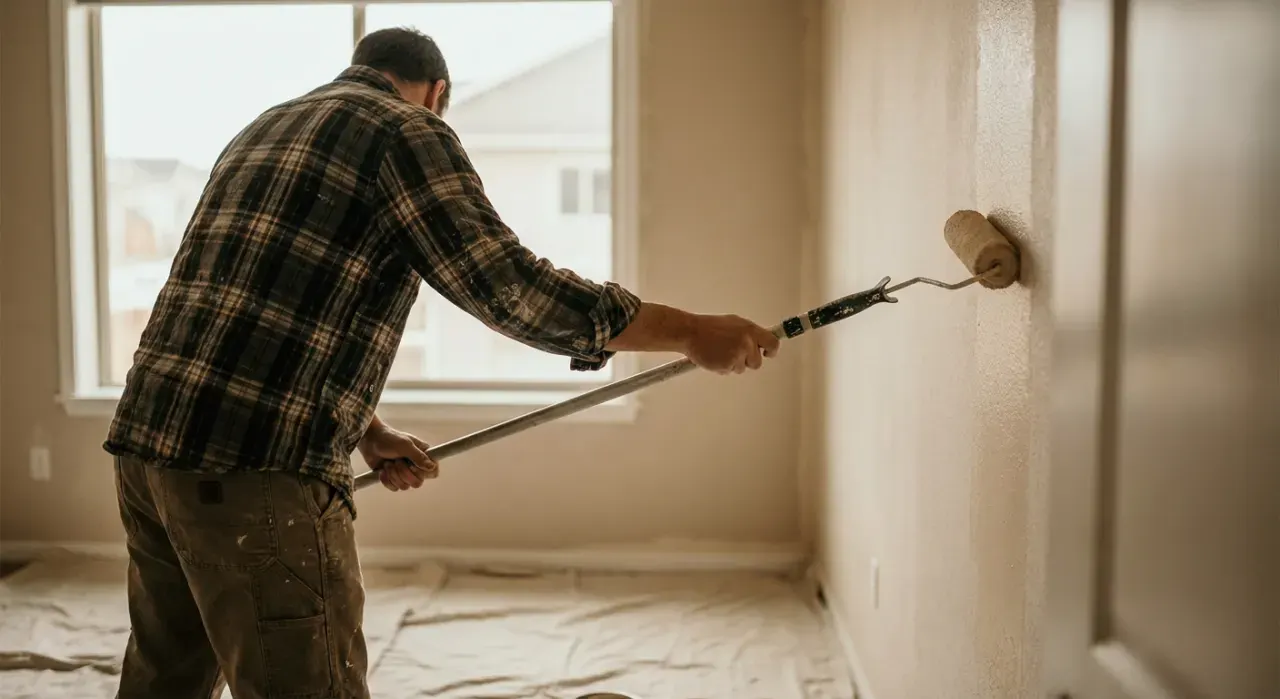
When the wall is large, flat and free of obstructions. On a garage, a basement, a great room or a long hallway ceiling, an 18 inch roller covers roughly twice the area per stroke and dramatically reduces reloading, which is where most of the time goes on a big job.
The costs are real though. You need an 18 inch frame and covers, which are less common and more expensive; a 5 gallon bucket with a roller screen, because no tray is that wide; and a solid extension pole, since a loaded 18 inch roller is heavy at arm length. It also amplifies technique errors — any tilt across that width leaves a ridge, and a partially loaded cover leaves a dry stripe. For one or two rooms, the setup cost is not worth it.
What about nap and cover material?
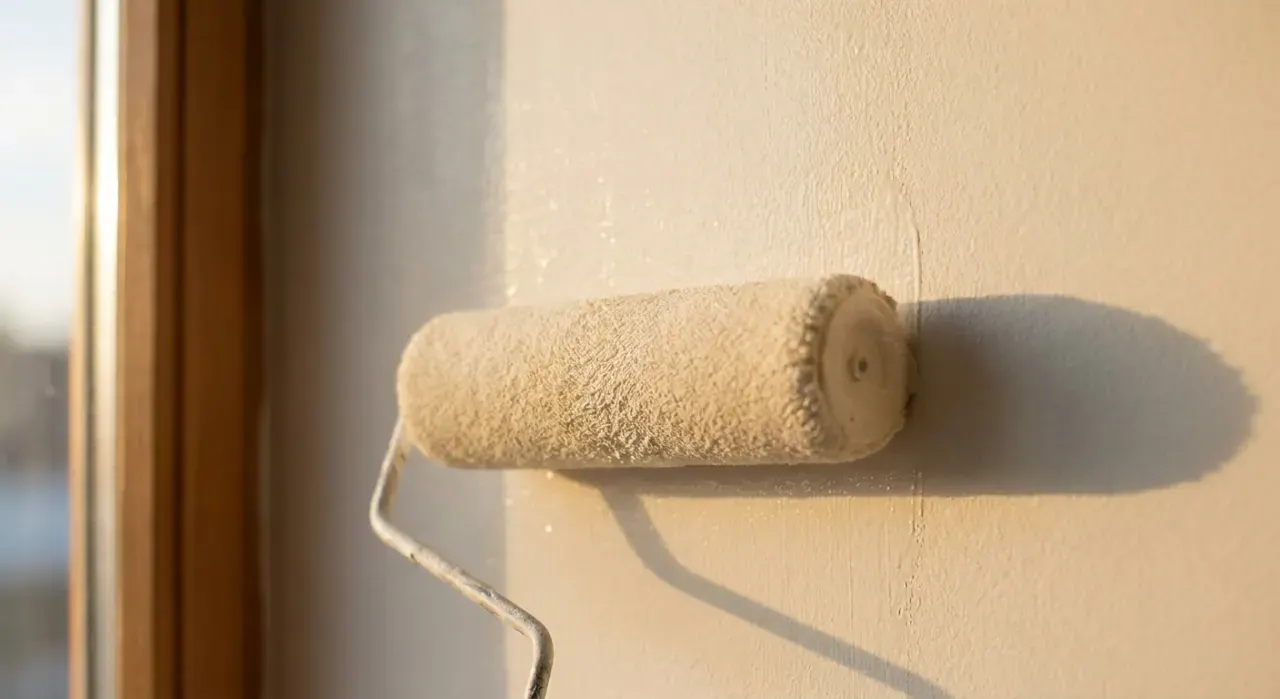
Width decides speed; nap decides finish. On smooth drywall use 3/8 inch, on skim-coated or plaster walls 1/4 inch, on light orange peel 1/2 inch, and on knockdown or popcorn 3/4 inch. A nap that is too long on a smooth wall leaves a stipple you cannot remove once it dries, which is the subject of what nap roller for smooth walls.
Material matters alongside it — microfiber and woven covers shed less and lay off more evenly than knitted, and foam belongs on trim and cabinet doors rather than walls. That comparison is in foam versus microfiber paint rollers.
Do you need an extension pole?
Yes, on any wall taller than you can comfortably reach in one stroke — which is most of them. The reason is not height but continuity: rolling floor to ceiling in a single unbroken pass avoids the horizontal band that forms where two passes meet, and it keeps you standing back far enough to see the section you are laying off. A 2 to 4 foot pole covers standard 8 to 9 foot ceilings; stairwells and vaulted rooms need 6 to 12 feet and a plan for footing, covered in how to paint a stairwell.
Check that the frame has a threaded handle end, since not all budget frames do. Our paint roller picks rank frames on cage stiffness and how easily covers slide on and off, and covers on shedding after a full room. For the rest of the job, how to paint a room covers sequence and gallon coverage covers how much paint to buy.
We never buy, test or physically handle the products we rank. Recommendations come from aggregated owner reviews, star ratings, review volume and expert consensus — see how we rank.
More from this hub: Paint & Walls · Cutting in without tape · Best interior paint · How we rank