 Garden
Affiliate Disclosure
Some links on this page are affiliate links. As an Amazon Associate, we earn from qualifying purchases — at no extra cost to you. We do not buy, test, or physically handle the products we cover; our rankings come from aggregated owner reviews, ratings and expert consensus. Commissions never change our verdicts. How we rank · full disclosure.
The short version: gravel is the one place where you genuinely want nothing to grow, which changes what you should buy. A plain weed killer knocks down what is there and leaves the ground open for the next flush; a bare-ground product kills and then blocks germination for months. Our #1 pick is RM43, a glyphosate-plus-imazapyr concentrate that holds a gravel drive clear for up to about a year. Ortho GroundClear Year Long is the consumer-shelf equivalent. If you might plant in that area later — or if it slopes toward beds or a waterway — use plain glyphosate such as Compare-N-Save instead, and accept that you will spray again in a couple of months.
That last caution is the one to read twice. The property that makes residual products work on gravel is the same property that damages a tree twenty feet away, and it is the most common regret in this category.
Top Picks at a Glance
Our #1 Pick: RM43
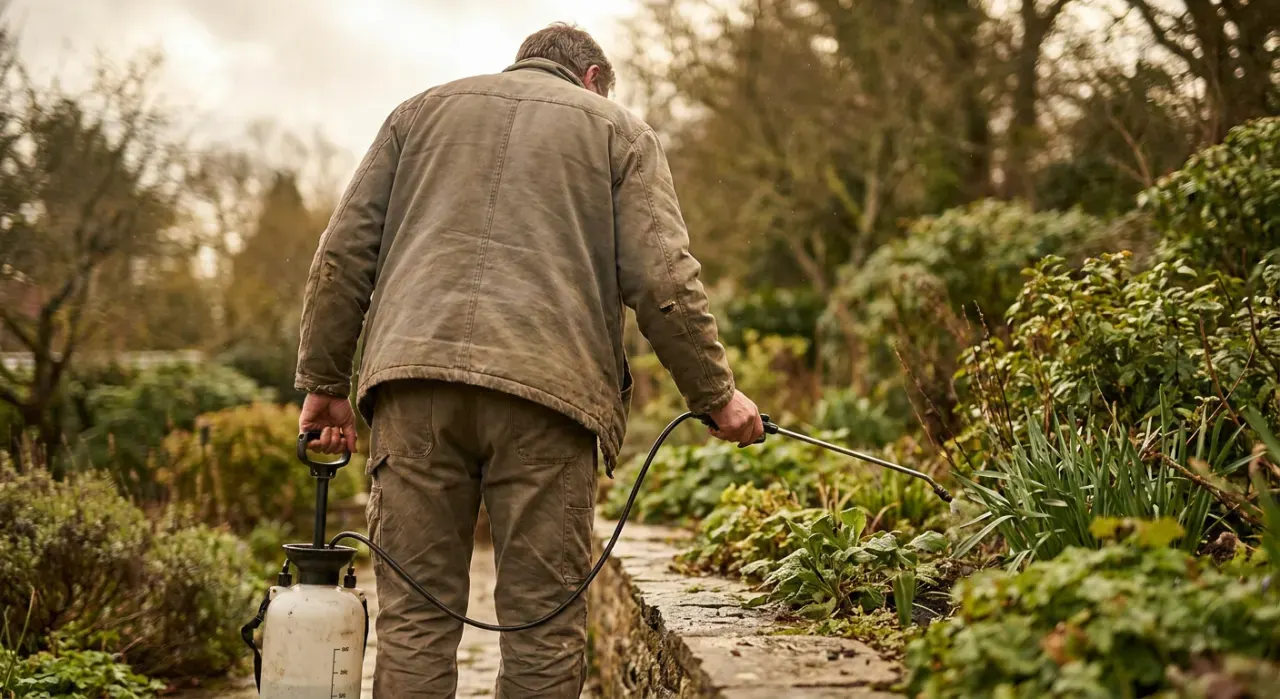
RM43 combines glyphosate, which kills what is currently growing by moving systemically into the roots, with imazapyr, which persists in the soil and prevents new seedlings establishing. That combination is what “bare ground” or “total vegetation control” means, and it is the correct category for a gravel drive, a parking area, a fence line or the strip along a barn.
Owners describe the same arc: existing vegetation yellows within a week and is brown within two to three, and the ground then stays clear for the rest of the season and usually into the next. One gallon of concentrate makes a large volume of spray, so despite the up-front price the cost per treated area is low — this is a jug most homeowners buy once and use across several years of spot work.
The limitations are serious and specific, and they are the reason this product is not simply the right answer everywhere. Imazapyr moves with water. On a sloped gravel drive above a garden bed, rainfall carries it downhill. Tree and shrub roots extend far beyond the canopy and can pick it up from a treated strip several feet away — reports of established trees declining after a nearby bare-ground application are a recurring theme in the reviews and are not a manufacturing defect. Do not use it near a well, above a waterway, within the root zone of anything you want to keep, or anywhere you might plant within the next couple of years.
Applied on a genuinely isolated gravel area, it does what nothing else here does, and it does it for a year.
Check price on Amazon → (paid link)
The Ranked Field
Best for gravel drives and lots you want clear for a full season
- Glyphosate plus imazapyr — kill and residual in one jug
- Up to a year of bare-ground control per application
- One gallon makes dozens of gallons of spray
- Labeled for fence rows, gravel paths, drives and around farm buildings
Why buy it: the only common homeowner product that both kills what is there and stops the next flush, which is the entire point on gravel.

Best for a bare-ground barrier without buying professional chemistry
- Kills existing growth and prevents regrowth for months
- Consumer packaging with straightforward mixing
- Covers a large area per jug
- Not for use where you intend to plant
Why buy it: the consumer-shelf version of bare-ground chemistry, easier to buy and easier to mix than the professional jugs.

Best for clearing large areas cheaply, with no residual left behind
- 41% glyphosate concentrate at a very low cost per gallon of spray
- Systemic — moves into roots and kills the whole plant
- No soil residual, so you can replant afterward
- A gallon mixes to well over 80 gallons of spray
Why buy it: by far the cheapest way to actually kill established weeds, and the right pick if the gravel area may become a bed later.

Best for patio joints, path edges and small gravel patches
- No mixing, no sprayer, no measuring
- Comfort wand reaches into joints and along edges
- Visible results in hours on most annual weeds
- Rainfast within a few hours per the label
Why buy it: for a paver patio or a short gravel path, a wand you can pick up and use in five minutes beats a concentrate you never mix.

Best for gravel near vegetable beds, play areas or where dogs walk
- 20% acetic acid, four times household vinegar strength
- Glyphosate free and OMRI listed
- Browns annual weeds within hours in strong sun
- No soil residual once dry
Why buy it: the honest low-residual option — weaker and shorter-lived, but nothing persists in the gravel afterward.

Best for gravel and paving where no spray at all is wanted
- Connects to a standard 20 lb propane tank
- Piezo igniter — no separate striker to lose
- 10 ft hose for working away from the tank
- Wilts weeds in seconds; no herbicide involved
Why buy it: on gravel and stone there is nothing to scorch, which makes flame weeding genuinely practical here in a way it never is on a lawn.
Quick Comparison
| Product | Best for | Rating | Price | Buy |
|---|---|---|---|---|
| RM43 Concentrated Extended Control Weed Killer, 1 Gallon | Best Overall | — | Check (paid link) | |
| Ortho GroundClear Year Long Vegetation Killer2 Concentrate, 1 gal. | Best Residual | — | Check (paid link) | |
| Compare-N-Save 75324 Herbicide, 1-gallon | Best Value | — | Check (paid link) | |
| Roundup Ready-to-Use Weed & Grass Killer III with Comfort Wand, 1.33 gal. | Best Ready-to-Use | — | Check (paid link) | |
| Green Gobbler 20% Vinegar Weed & Grass Killer, 1 Gallon | Best Non-Glyphosate | — | Check (paid link) | |
| Flame King Propane Torch Kit Heavy Duty Weed Burner, 340,000 BTU with Piezo Igniter | Best Chemical-Free | — | Check (paid link) |
Specifications Side by Side
| Product | Type | Soil residual | Typical clear period | Safe to plant after? |
|---|---|---|---|---|
| RM43 | Glyphosate + imazapyr concentrate | Yes, strong | Up to about 12 months | No — plan on a long wait |
| Ortho GroundClear Year Long | Bare-ground concentrate | Yes | Several months to a year | No |
| Compare-N-Save | 41% glyphosate concentrate | No | 4–8 weeks before regrowth | Yes, after the label interval |
| Roundup RTU with wand | Ready-to-use glyphosate | No | 4–8 weeks before regrowth | Yes, after the label interval |
| Green Gobbler 20% Vinegar | Acetic acid contact killer | No | Weeks; perennials regrow | Yes |
| Flame King torch | Thermal, no chemical | None | Weeks; repeat as needed | Yes, immediately |
How We Rank
We do not buy or apply these products. Rankings come from aggregated owner ratings, weighted heavily toward reviews written months after application — on gravel, the only question that matters is what the ground looks like in week twelve, and a review written on day three tells you nothing. Four factors carry the weight. Duration of bare ground, cross-checked against the residual active listed on the label rather than the marketing claim on the front. Reported effectiveness on the mix of grasses, broadleaf weeds and woody seedlings that actually colonize gravel. Cost per treated area at label rate, where concentrates and ready-to-use products differ by an order of magnitude. And collateral risk — how likely the product is to damage something the owner wanted to keep, which on residual chemistry is the dominant failure mode. Prices were checked at the time of writing. Full method: how we rank.
The Gravel Weed Killers, Reviewed
1. RM43 — Best Overall
Covered above. Owners praise: a full season or more of clear gravel from one application, a jug that treats an enormous area, and effectiveness on woody seedlings and brush that glyphosate alone struggles with. Owners gripe about: damage to nearby trees and shrubs from root uptake or runoff, the up-front price, and the long wait before anything can be planted in a treated area. Check price (paid link).
2. Ortho GroundClear Year Long — Best Residual
The consumer-aisle route to bare-ground control. It kills existing vegetation and leaves a residual barrier that suppresses regrowth for months, in packaging and with mixing instructions aimed at homeowners rather than at contractors. For a modest gravel path or a fence line it is easier to buy and easier to get right than a professional jug.
Ratings are more mixed than RM43 and the pattern behind that is clear in the reviews: owners who applied at the full label rate to a thoroughly wetted area report long clear periods, while owners who stretched a jug over a larger area than it covers report regrowth by mid-season. It carries the same planting restriction and the same caution about roots and runoff.
Owners praise: months of clear ground, easy availability, and clear consumer instructions. Owners gripe about: regrowth when under-applied, damage to adjacent plantings, and coverage that falls short of expectations on rough gravel. Check price (paid link).
3. Compare-N-Save — Best Value
A 41% glyphosate concentrate, which is the same active and roughly the same strength as the professional products, sold at a price that makes ready-to-use bottles look like a bad joke. A gallon mixes out to well over eighty gallons of spray at typical rates. It is systemic, so it moves into roots and kills perennial weeds properly rather than just burning the tops.
What it does not do is prevent anything. Glyphosate is deactivated on contact with soil and leaves no residual, so windblown seed germinating in the gravel four weeks later is entirely unaffected. On gravel that means repeat applications through the season. The upside of that same property is flexibility: a treated area can be planted after the label interval, which no bare-ground product allows.
Owners praise: cost per gallon of spray, thorough kill on established weeds and grasses, and the freedom to replant later. Owners gripe about: regrowth within weeks, needing a sprayer and accurate mixing, drift damage to desirable plants, and slow visible action compared with contact killers. Check price (paid link).
4. Roundup Ready-to-Use with Comfort Wand — Best Ready-to-Use
Cost per treated area is poor and convenience is excellent, and for a paver patio, a short path or a strip of gravel by the garage that is the right trade. The wand reaches into joints and along edges without bending, there is nothing to mix and nothing to clean, and the jug lives in the garage ready for the weed you notice on a Saturday.
Owners praise: zero preparation, the wand for edges and joints, and fast visible results. Owners gripe about: covering far less ground than expected, wand nozzles clogging or leaking, and regrowth within weeks. Check price (paid link).
5. Green Gobbler 20% Vinegar — Best Non-Glyphosate
Horticultural vinegar at four times kitchen strength, OMRI listed, with no glyphosate and no residual. On a hot sunny day it browns annual weeds within hours, and gravel is the ideal surface for it — there is nothing to scorch and no grass to protect. It belongs on any gravel area near a vegetable garden, a play space, a well, or where dogs walk daily.
The trade is honest and unavoidable: it is a contact killer. It destroys the foliage it wets and does not travel into a taproot, so established perennials regrow from the crown within a couple of weeks. Handle the concentrate carefully — at 20% acetic acid it is corrosive to eyes and skin.
Owners praise: speed in strong sun, no glyphosate, and comfort using it around food gardens and pets after drying. Owners gripe about: perennial regrowth, poor performance on cool or cloudy days, corroding sprayer fittings, and a strong smell during application. Check price (paid link).
6. Flame King Propane Torch — Best Chemical-Free
Flame weeding does not burn a weed to ash; it holds heat on the leaf for a second or two, ruptures the cells, and the plant wilts and dies over the following day. On a lawn that is useless, because the grass dies too. On gravel and paving it is genuinely practical — there is nothing else there to damage, and the fuel cost is trivial.
The obvious cautions apply, and they are not trivial. Do not use it in drought conditions, near dry grass or mulch, next to a wooden fence or under low branches, and check local burn restrictions before you start. Keep a hose or extinguisher at hand. Like every non-systemic method it does not kill roots, so perennials need repeat passes — but the passes take seconds and cost pennies.
Owners praise: no chemicals at all, instant results, low running cost, and usefulness for melting ice on the same drive in winter. Owners gripe about: perennial regrowth, the fire risk requiring genuine attention, the weight of dragging a propane tank, and hose fittings needing to be checked before each use. Check price (paid link).
What Owners Actually Complain About
It all came back. Almost always a residual mismatch. Glyphosate, vinegar and flame all kill what is present and leave the ground receptive to the next seed that blows in — on an exposed gravel drive that can be four weeks. If you want one treatment a year, you need a bare-ground product; if you want a non-residual product, you need to accept a schedule.
It killed my tree. The most serious complaint in this category, and the reason we lead with the caution rather than bury it. Residual actives move in soil water and are taken up by roots that extend well past a tree's canopy. A treated strip along a fence line can reach a mature tree several yards away, and a sloped drive can carry the product into everything below it. The damage shows up weeks or months later, which makes it easy to misattribute.
The debris layer. Owners are frequently surprised that a properly applied residual still ends with weeds by year two. The reason is that gravel accumulates dust, leaf litter and organic matter in its top inch, and that layer becomes a growing medium sitting above the treated soil. Blowing or raking out the debris each season does more for a gravel drive over five years than any product does.
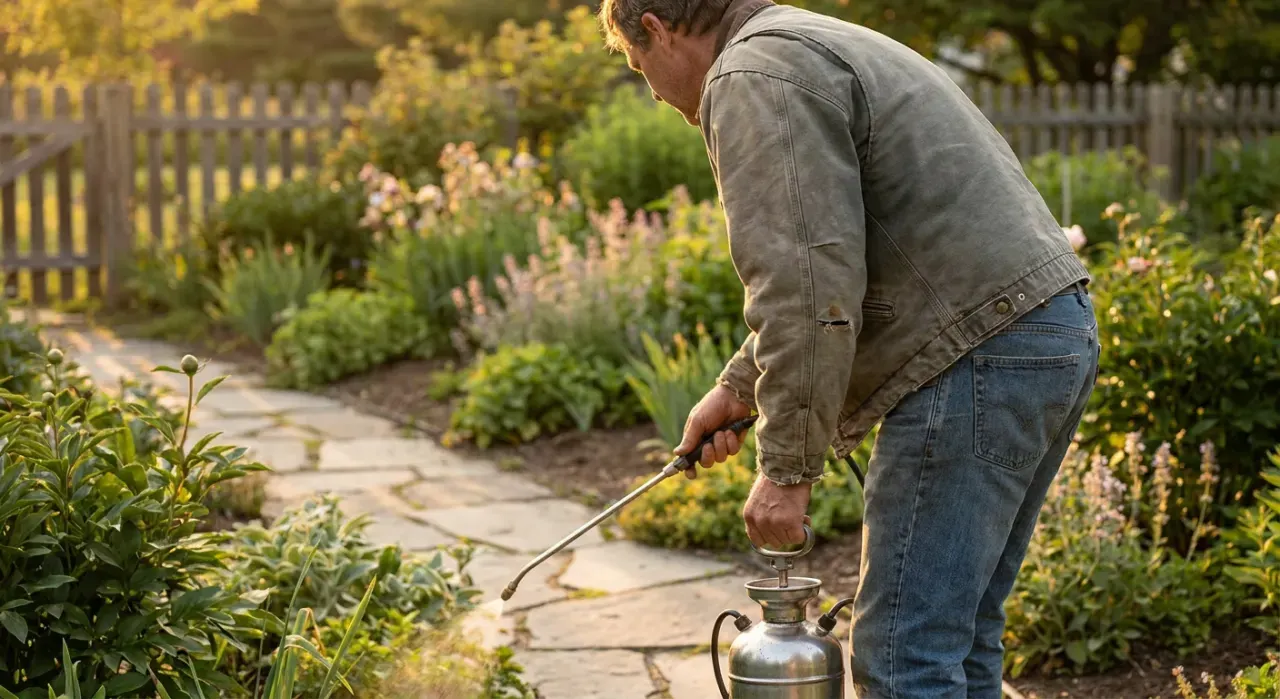
Drift and uneven application. Non-selective products — the category Penn State Extension defines as killing any plant they contact — do not distinguish gravel weeds from roses, and hose-end applicators are a recurring source of patchy results. Spray on a still morning with a pump sprayer and a coarse nozzle, and shield bed edges with a piece of cardboard.
How to Choose for a Gravel Area
Start with what is nearby. This is the first question, not the last. Trees, shrubs, beds downhill, a vegetable garden, a well, a creek — any of those rules out residual chemistry, and no amount of convenience is worth losing a mature tree over. An isolated gravel lot with nothing within reach is the only place a year-long product is straightforwardly the right answer.
Then decide the time horizon. Never planting here? Bare-ground product. Might become a bed or a lawn extension in a few years? Plain glyphosate, and repeat as needed.
Then match format to area. A driveway or a parking area justifies a concentrate and a backpack sprayer. Patio joints and a short path do not — the ready-to-use wand wins on effort, and the torch wins on principle if you would rather not spray at all.
Finally, deal with the cause. Weeds in gravel grow in accumulated organic debris, not in the stone. Blowing the surface out once or twice a year, topping up depth to three inches or so, and installing fabric when the area is first built all reduce the problem far more durably than an annual spray — prevention is the first line of control in the EPA’s IPM principles, which treat broadcast spraying as a last resort. Our guide to killing weeds without chemicals covers the mechanical options, and if animals use the area, read the pet-conscious picks before choosing anything residual. If you are treating a lawn rather than gravel, none of the products above belong there — see the selective lawn weed killers instead, and selective vs non-selective for why that distinction matters so much.
The Verdict
RM43 is the right product for a gravel drive or lot with nothing valuable growing nearby: one application, up to a year of clear ground, and a jug that lasts for years of spot work. Ortho GroundClear Year Long does the same job from a consumer shelf. If there are trees, beds or water anywhere near the area — or if you may plant there someday — step down to Compare-N-Save glyphosate, which is cheaper, leaves no residual, and simply needs repeating. For patio joints and short paths, the Roundup wand saves more time than it costs. And where no herbicide is wanted at all, vinegar or a propane torch both work on gravel in a way they never do on turf. Check price on Amazon → (paid link)
More from this hub: pest & weed control · best weed killers · how long weed killer stays in soil · best pet-safe weed killers · how long glyphosate takes to work · how we rank.