 Garden
Affiliate Disclosure
Some links on this page are affiliate links. As an Amazon Associate, we earn from qualifying purchases — at no extra cost to you. We do not buy, test, or physically handle the products we cover; our rankings come from aggregated owner reviews, ratings and expert consensus. Commissions never change our verdicts. How we rank · full disclosure.
The short version: spotted spurge resists plain 2,4-D better than most lawn weeds, so the active you want is dicamba. On a cool-season lawn that means Ortho Weed B Gon Plus Crabgrass Control, which combines 2,4-D, dicamba and quinclorac. On warm-season turf it means Celsius WG, which controls spurge and can be applied in the summer heat when spurge is actually growing. But the product that does the most for a spurge problem is a pre-emergent: spurge is a summer annual that comes entirely from seed, and stopping germination beats fighting mature plants every time.
You can identify it easily once you know what to look for. Spotted spurge grows flat against the ground in a circular mat radiating from a single central taproot, with small paired oval leaves that usually carry a dark reddish blotch in the middle. Snap a stem and it bleeds milky white sap — that sap is the giveaway, and UW-Madison Extension warns it can irritate skin, so wear gloves if you pull it. It thrives on hot, compacted, thin ground: driveway edges, sidewalk cracks, bare patches, and the strip along a south-facing wall.
Top Picks at a Glance
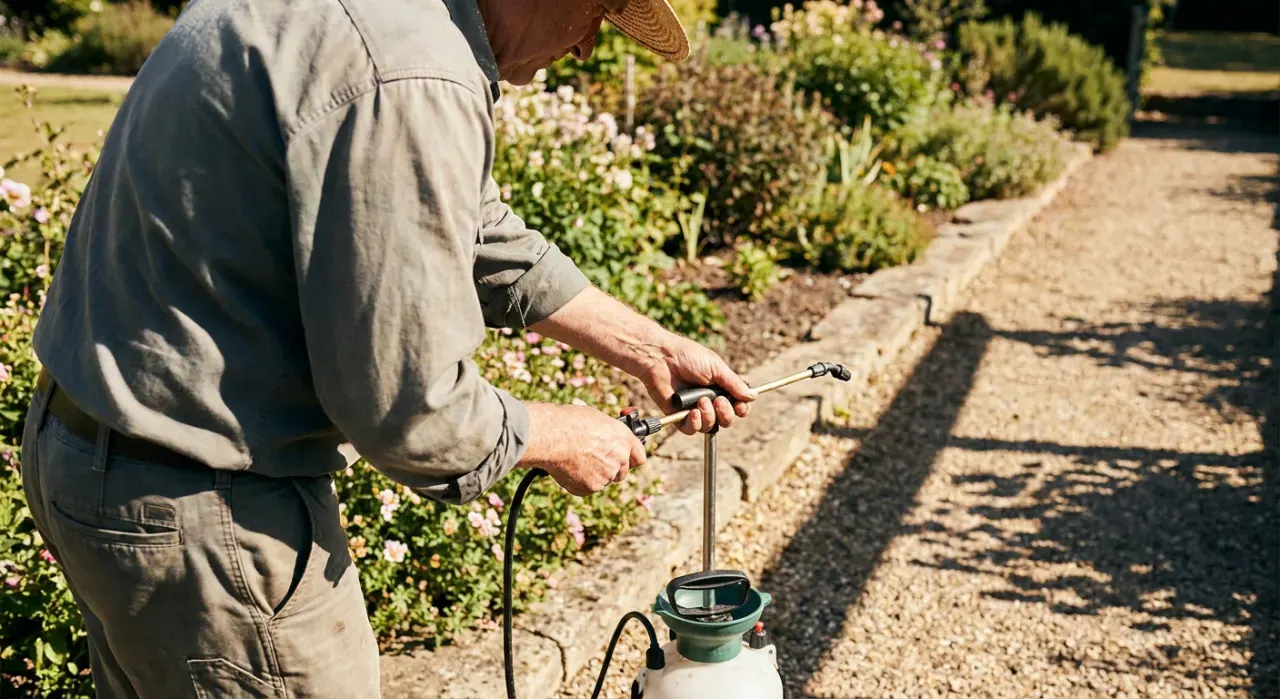
Our #1 Pick: Ortho Weed B Gon Plus Crabgrass Control
This premix combines three actives, and the reason it tops a spurge page is the middle one. 2,4-D alone is unreliable on spurge, particularly on established plants whose leaves have developed the waxy cuticle that makes mature spurge so much harder to kill than seedling spurge. Dicamba is considerably more effective on it, and this bottle carries both — plus quinclorac, which handles the crabgrass that almost always shares the same thin, hot, bare ground.
Owners describe visible twisting and curling on spurge within a day or two, with the mat browning and lifting over one to two weeks. Coverage technique matters more here than with upright weeds: a spurge mat lies flat, so a light pass over the top wets only the upper leaf surfaces. Wet the whole mat thoroughly, right out to the edges where the newest growth is.
The limitations are the standard ones for this chemistry, and two of them matter particularly for spurge. First, dicamba can move as a vapor in warm weather and injure ornamentals nearby, which is awkward because spurge lives on bed edges. Spray on a still morning, use a coarse droplet setting, and shield the bed side. Second, the label caps application around 85 to 90°F, and spurge peaks in exactly that weather — so on a hot August lawn you may be waiting for a mild morning while the plant sets seed.
Check price on Amazon → (paid link)
The Ranked Field
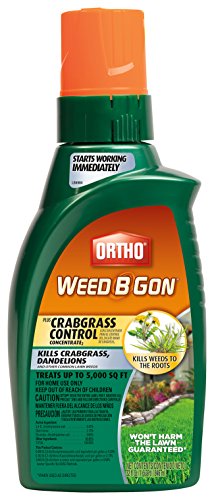
Best for spotted spurge already spreading across a cool-season lawn
- 2,4-D, dicamba and quinclorac together
- Dicamba is the component spurge responds to
- Also covers crabgrass, which usually arrives with it
- Cheap per treated area and widely stocked
Why buy it: spurge shrugs off 2,4-D alone — the dicamba in this premix is what actually takes it down.
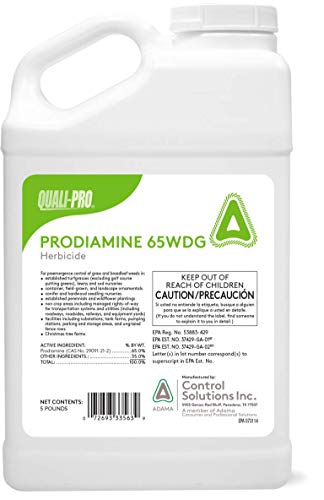
Best for stopping spurge germinating in the first place
- Prodiamine 65 WDG, the professional pre-emergent standard
- Barrier holds three to six months per application
- Blocks spurge, crabgrass, goosegrass and poa annua
- One jug lasts a home lawn for years
Why buy it: spurge is a summer annual that germinates from seed every year, which makes it one of the weeds prevention beats treatment most decisively.

Best for spurge in St. Augustine, centipede, bermuda or zoysia in summer heat
- Labeled for all four major warm-season turf types
- Spurge is on the controlled-weed list
- No high-temperature restriction on the label
- Very low use rate — a bottle treats acres
Why buy it: spurge peaks in July and August, exactly when southern lawn owners cannot legally spray anything else.
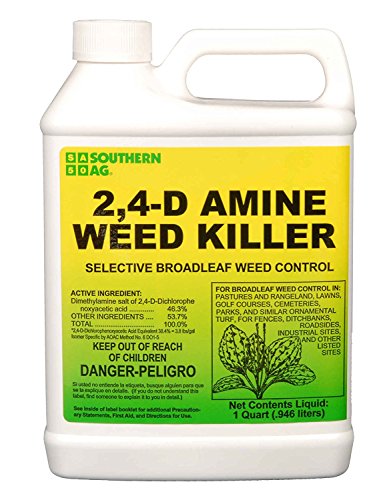
Best for young spurge seedlings caught early, on a budget
- Low-volatile amine 2,4-D formulation
- Works well on spurge while plants are small
- Very low cost per thousand square feet
- Also controls dandelion, clover and plantain
Why buy it: plain 2,4-D handles seedling spurge perfectly well — it is only the mature waxy plants it struggles with.
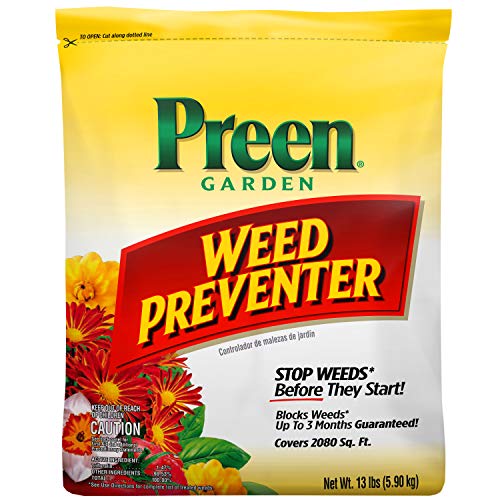
Best for spurge colonizing mulched beds, borders and gravel edges
- Trifluralin granules for ornamental beds
- Roughly three months of germination control
- Labeled around hundreds of established ornamentals
- Shaker or spreader application
Why buy it: spurge is arguably a worse bed weed than a lawn weed, and lawn herbicides cannot legally cross that line.

Best for spot treating scattered spurge patches with no mixing
- No dilution, no sprayer, no measuring
- Comfort wand for treating individual mats
- Selective on most common lawn grasses
- Results visible on young plants within days
Why buy it: spurge grows in flat isolated mats rather than evenly across a lawn, which makes it an unusually good candidate for spot treatment.
Quick Comparison
| Product | Best for | Rating | Price | Buy |
|---|---|---|---|---|
| Ortho Weed B Gon Plus Crabgrass Control Concentrate, 32 oz | Best Overall | — | Check (paid link) | |
| Quali-Pro Prodiamine, Pre-Emergent Herbicide, 5 lbs, Yellow Granules | Best Prevention | — | Check (paid link) | |
| Bayer Celsius WG Herbicide, 10 oz | Best for Southern Lawns | — | Check (paid link) | |
| Southern Ag Amine 2,4-D Weed Killer, 32 oz | Best Value | — | Check (paid link) | |
| Preen Garden Weed Preventer, 13 lb | Best for Garden Beds | — | Check (paid link) | |
| Spectracide Weed Stop For Lawns Plus Crabgrass Killer, 1 Gallon, Ready-To-Use | Best Ready-to-Use | — | Check (paid link) |
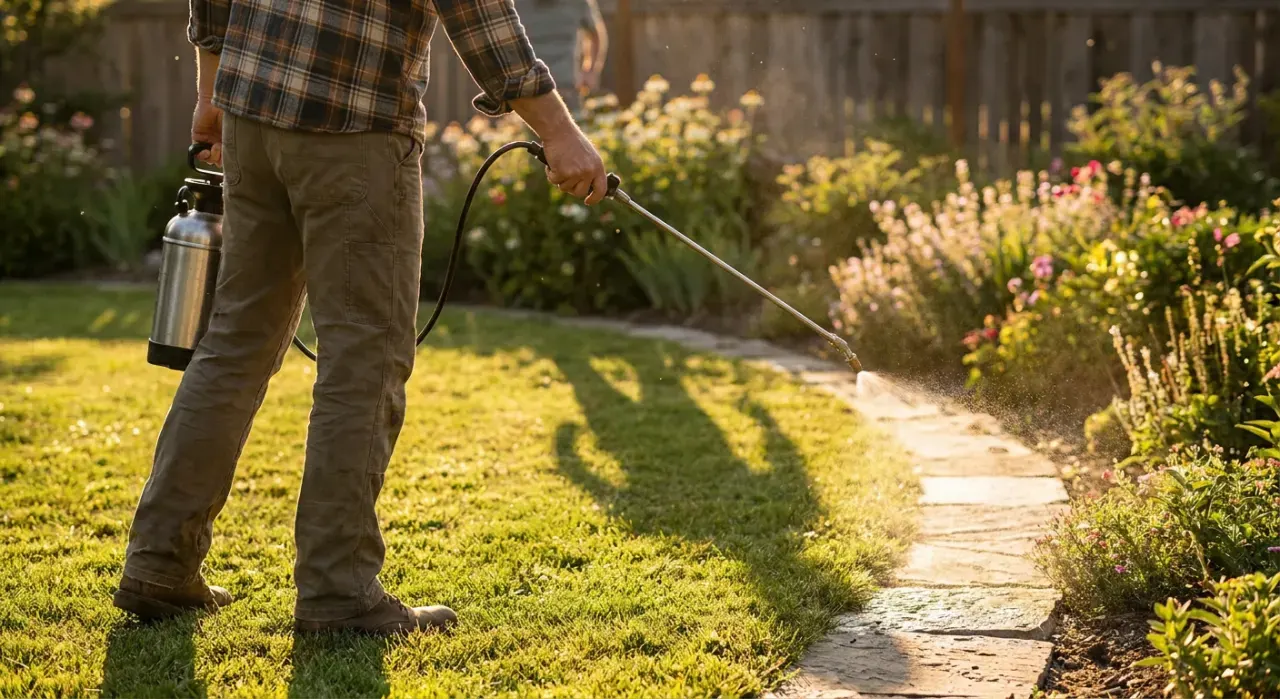
Specifications Side by Side
| Product | Type | Key active for spurge | Where it goes | Heat limit |
|---|---|---|---|---|
| Ortho Weed B Gon Plus | Post-emergent, selective | Dicamba | Cool-season lawns | About 85–90°F |
| Quali-Pro Prodiamine | Pre-emergent | Prodiamine | Most turf types | Applied before germination |
| Celsius WG | Post-emergent, selective | Thiencarbazone + iodosulfuron + dicamba | Warm-season lawns | None stated |
| Southern Ag 2,4-D | Post-emergent, selective | 2,4-D amine | Cool-season lawns and bermuda | About 85–90°F |
| Preen Garden Weed Preventer | Pre-emergent | Trifluralin | Mulched beds, not lawns | Applied before germination |
| Spectracide RTU | Post-emergent, selective | Broadleaf premix | Cool-season lawns | About 85–90°F |
How We Rank
We do not buy or spray these products. The ranking is built from aggregated owner ratings, with a filter that matters unusually much on this weed: we weight reviews that specify whether the spurge treated was seedling or mature, because the same product routinely earns five stars from one owner and one star from another purely on that difference. Four factors carry the weight. Documented activity on Euphorbia species, taken from the label weed list rather than from generic broadleaf claims. Reported effectiveness on established mats, which is the hard case. Fit to the grass type, since spurge is a problem in both northern and southern lawns and the safe products differ completely. And the size of the usable application window, because spurge peaks in the heat that most labels restrict. Prices were checked at the time of writing. Full method: how we rank.
Why Spurge Is Harder Than It Looks
Three biological facts explain nearly every complaint about spurge control:
- It is a prolific seeder. A single spotted spurge plant can set thousands of seeds in one season, and the plant can go from germination to seed production in a few weeks. Seed remains viable in the soil for years. This is why the weed reappears after a successful spray — those are new plants, not survivors.
- It develops a waxy cuticle. A seedling absorbs herbicide readily. A mature mat baked on a driveway edge for six weeks has a leaf surface that repels spray. The practical response is to treat early and to add a non-ionic surfactant where the label permits.
- It exploits bare, hot, compacted ground. Spurge does not invade thick healthy turf; it colonizes what turf has already vacated, which is why Penn State Extension treats dense turf as the best prevention. Sidewalk edges, mower scalp marks, dog paths and drought-thinned patches are where it starts.
Put together, those three points mean that the highest-value action on a spurge problem is usually not a stronger herbicide. It is a pre-emergent in the calendar plus fixing the thin spots. Our page on the best pre-emergent herbicides covers the same products and the same timing logic, and spurge follows crabgrass by only a few weeks.
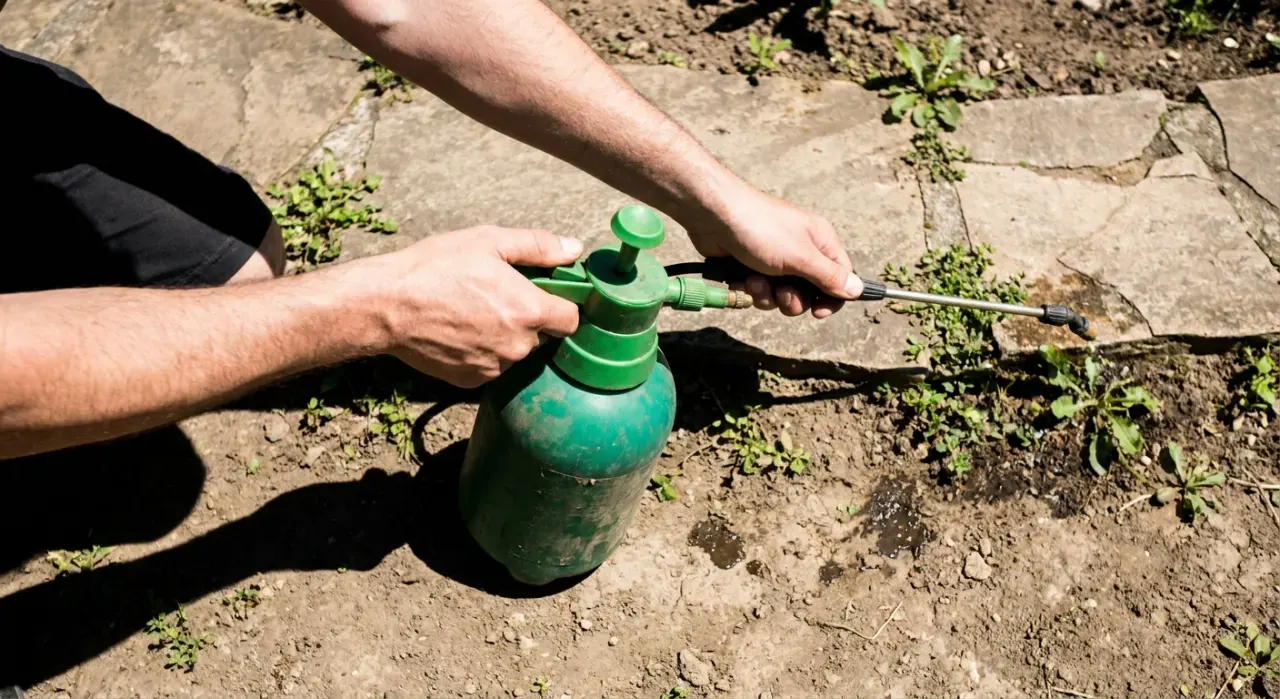
The Spurge Killers, Reviewed
1. Ortho Weed B Gon Plus Crabgrass Control — Best Overall
Covered above. Owners praise: visible action on spurge mats within days, covering crabgrass at the same time, low price, and turf that comes through unaffected. Owners gripe about: weaker results on large mature mats, the heat restriction landing in peak spurge season, and drift injury to nearby ornamentals. Check price (paid link).
2. Quali-Pro Prodiamine — Best Prevention
The most valuable product on this page for anyone dealing with spurge year after year. Prodiamine puts a barrier in the top layer of soil that stops germinating seedlings developing roots, and because spurge is a pure summer annual with no perennial structure, a barrier in place through the germination window removes the problem rather than treating it.
Spurge germinates a little later than crabgrass — surface soil around 60 to 65°F rather than 55°F — and it continues in flushes through summer. That argues strongly for a split application: roughly half the annual rate at the start of the crabgrass window in late winter, the remainder eight to ten weeks later. A single early application often leaves a gap that a July flush walks straight through.
Owners praise: a clean lawn all summer, tiny cost per application, and a jug that lasts years. Owners gripe about: calibration and lawn measurement, no effect on existing weeds, and the overseeding conflict. Check price (paid link).
3. Celsius WG — Best for Southern Lawns
If your lawn is St. Augustine, centipede, bermuda or zoysia, pick 1 is either risky or off limits, and this is the product to use. Celsius is labeled for all four grasses, lists spurge among the species it controls, and — the property that matters most here — carries no high-temperature restriction. Spurge peaks in July and August; so does the period when southern owners cannot legally spray an atrazine or 2,4-D product.
The costs are the ones we name on every page it appears on: a high up-front price, a use rate measured in fractions of an ounce that requires a scale or the supplied scoop, and deliberately slow visible action over two to three weeks. Per application it is cheap. Per bottle it is not.
Owners praise: summer usability, control of southern weeds that defeat consumer products, and safety across all four warm-season grasses. Owners gripe about: price, measuring very small quantities, slow results, and needing a surfactant bought separately. Check price (paid link).
4. Southern Ag Amine 2,4-D — Best Value
We include plain 2,4-D with a caveat attached, because the caveat is the useful part. On young spurge — seedlings and small plants, before the waxy cuticle develops — 2,4-D works perfectly well, and at this price it is the cheapest way to clear a large lawn of anything broadleaf. On mature mats it is markedly less reliable, which is the entire reason dicamba products rank above it here.
Owners praise: unbeatable value, a bottle that lasts years, and reliable control of a wide broadleaf list. Owners gripe about: inconsistent results on mature spurge, no effect on grassy weeds, a strong smell, and turf damage when used on southern grasses. Check price (paid link).
5. Preen Garden Weed Preventer — Best for Garden Beds
Spurge is arguably a worse bed weed than a lawn weed. It loves the hot bare surface of a thinly mulched border, it seeds prolifically into gravel, and lawn herbicides cannot legally or safely cross into ornamental plantings — the EPA makes it a violation of federal law to use a product in a manner inconsistent with its labeling. Preen is trifluralin in a granular carrier, labeled around hundreds of established ornamentals, and it prevents germination for roughly three months per application.
Owners praise: a dramatic reduction in bed weeding, easy shaker application, and safety around established plantings. Owners gripe about: needing reapplication every few months, no effect on existing weeds, and killing direct-sown seedlings when applied carelessly. Check price (paid link).
6. Spectracide Weed Stop RTU — Best Ready-to-Use
Spurge has one habit that makes it unusually well suited to spot treatment: it grows in discrete flat mats rather than spreading evenly through the turf. You can walk a lawn and treat twenty distinct patches without spraying the other 95% of the grass, and a ready-to-use wand is the fastest way to do that.
Cost per treated square foot is poor and concentration is consumer-grade, so mature mats often need a second pass. Get the wand right down into the mat and wet it fully — a light misting over the top of a flat spurge plant reaches surprisingly little leaf surface.
Owners praise: no mixing, the wand for targeted work, and fast results on young plants. Owners gripe about: weak results on established mats, poor coverage per dollar, nozzles clogging, and needing repeat applications. Check price (paid link).
What Owners Actually Complain About
It came straight back. Usually the seed bank rather than a failed treatment. Spurge seed germinates in flushes all summer, and a new seedling in the same warm bare spot looks exactly like a survivor. The tell is timing: regrowth from the same crown appears within days to a week or two, while a new flush appears as separate small plants two to four weeks later across the same area.
It worked on the small ones and not the big ones. This is real and it is the waxy cuticle. Mature spurge repels spray. Treat early, use a dicamba-containing product on established plants, add a non-ionic surfactant where the label allows, and wet the mat thoroughly rather than misting it.
Turf damage on southern grasses. The recurring, avoidable one. A standard broadleaf bottle on St. Augustine or centipede thins the lawn badly. Read the tolerated-grasses list, or go straight to the St. Augustine page.
Sap irritation from hand-pulling. The milky latex in spurge stems irritates skin and is worse in eyes. It is also the reason spurge is listed as toxic to pets if eaten in quantity. Gloves, and wash up afterward.
How to Choose a Spurge Treatment
Start with the grass. Cool-season lawn: dicamba premix. Warm-season lawn: Celsius. Bed or gravel: Preen and mulch. Getting this wrong on a southern lawn is expensive.
Then look at plant size. Small seedlings are easy and cheap to kill with almost anything selective. Established mats need dicamba or Celsius and thorough wetting, and are worth treating before they set the next generation of seed.
Then put a pre-emergent in the calendar. This is the step that changes next year. Prodiamine in late winter and again eight to ten weeks later covers both the crabgrass and the spurge germination windows, and costs a few dollars a season.
Finally, close the bare ground. Spurge is a diagnosis: it colonizes thin turf, compacted paths, scalped high spots and hot dry edges. Mow higher, aerate compacted ground in fall, water deeply and infrequently, and overseed the thin areas in autumn. Where turf will genuinely never thrive — a two-inch strip against hot concrete — accept it and mulch or gravel it instead of fighting it every summer. Our roundups of selective lawn weed killers and gravel weed killers cover the two sides of that line, and the weed identification guide is worth two minutes if you are not certain spurge is what you have — purslane and knotweed are both commonly mistaken for it.
The Verdict
Ortho Weed B Gon Plus Crabgrass Control is the spurge treatment we would recommend for a cool-season lawn: it carries the dicamba that spurge actually responds to, it covers the crabgrass that shares the same ground, and it costs very little per treatment. On St. Augustine, centipede, bermuda or zoysia, Celsius WG is the answer and can be sprayed in the heat when spurge is at its worst. Southern Ag 2,4-D is fine and very cheap if you catch the plants young. Preen handles the beds. But the product that will do most for the problem is prodiamine in late winter and again in late spring — spurge comes entirely from seed, and a barrier is worth more than any spray. Check price on Amazon → (paid link)
More from this hub: pest & weed control · best pre-emergent herbicides · best weed killers for lawns · best weed killer for bermuda · identify lawn weeds · how we rank.