 Garden

Affiliate Disclosure
Some links on this page are affiliate links. As an Amazon Associate, we earn from qualifying purchases — at no extra cost to you. We do not buy, test, or physically handle the products we cover; our rankings come from aggregated owner reviews, ratings and expert consensus. Commissions never change our verdicts. How we rank · full disclosure.
Start with the water, not the spray. Every mosquito in your yard hatched in standing water, and the CDC notes that as little as a bottle cap's worth can produce them. Walk the property once a week and empty, scrub, cover or throw out anything holding water; drop a Bti larvicide into what you cannot dump. Then treat the shaded foliage where adults rest during the day, and put a fan and a zone repeller over the seating area. That order matters — it is the difference between a yard that stops producing mosquitoes and one you spray forever.
Step 1: Find and eliminate the breeding water
This is the step people skip and the reason their spray "stopped working." A mosquito goes from egg to biting adult in roughly eight to ten days in warm weather, so a single overlooked container regenerates the population faster than you can knock it down. The CDC's guidance is a weekly pass to empty and scrub, turn over, cover or throw out anything that holds water — the scrubbing matters, because eggs stick to container walls above the waterline and hatch when the water rises again.
Walk the property with a bucket and look specifically at:
- Gutters and downspout extensions. The single most-missed site. Corrugated flexible extensions hold water in every ripple.
- Plant saucers. Under every potted plant, indoors and out. Tip them weekly or fill them with sand.
- Tarps, covers and trash-can lids. Any sag holds a puddle for days after rain.
- Kids' toys, wheelbarrows, buckets, boat covers, unused tires. Store them upside down.
- Birdbaths and pet bowls. Refresh every two to three days; that is faster than larvae can develop.
- Tree hollows, low ruts, French-drain outlets and clogged catch basins. Fill hollows with sand; treat the rest.
- AC condensate drip lines and dehumidifier trays. Small, constant, and reliably overlooked.
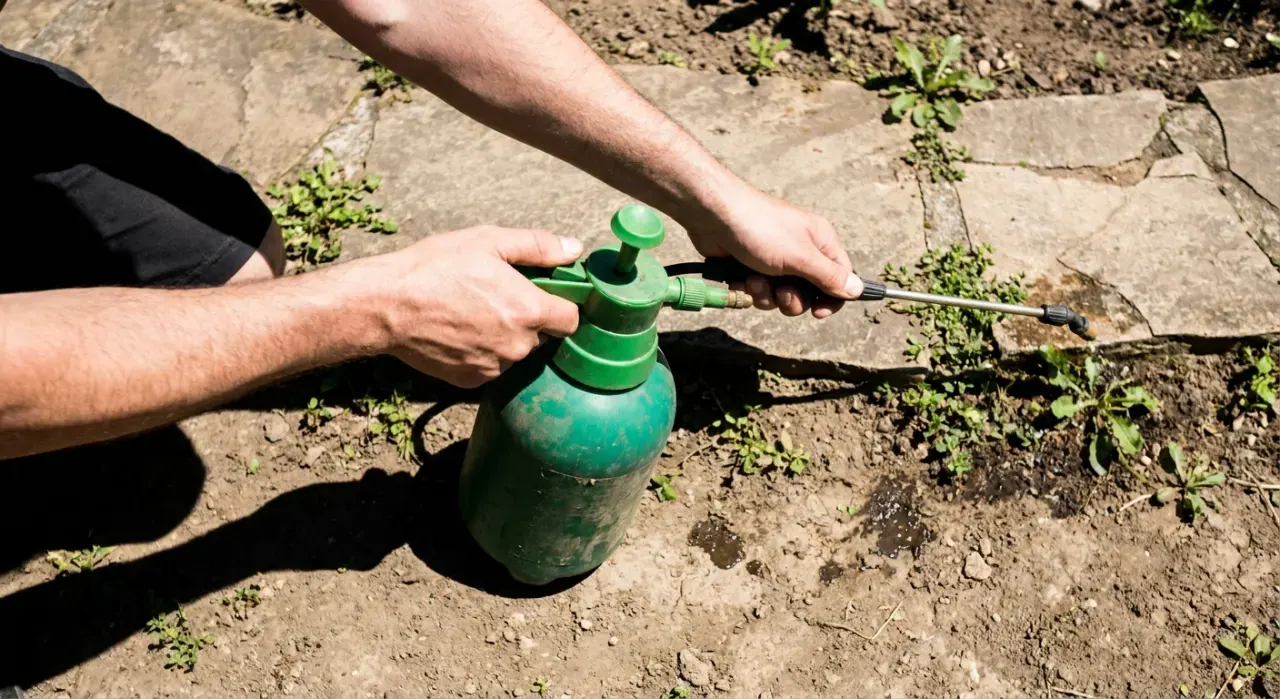
For water you genuinely cannot remove — a rain barrel, a pond without fish, a decorative fountain that is off, a low spot that stays wet — use a Bti larvicide. Bacillus thuringiensis subspecies israelensis kills mosquito, black fly and fungus gnat larvae and, as the EPA notes, has no toxicity to people; the labels permit use in birdbaths, animal troughs and fish ponds. A Mosquito Dunk (paid link) treats about 100 square feet of surface water for around 30 days; Mosquito Bits (paid link) are the scatterable version for lots of small sites. Both are affiliate links, and we cover the full field in best mosquito repellent for a yard.

Step 2: Treat where adults rest, not where they bite
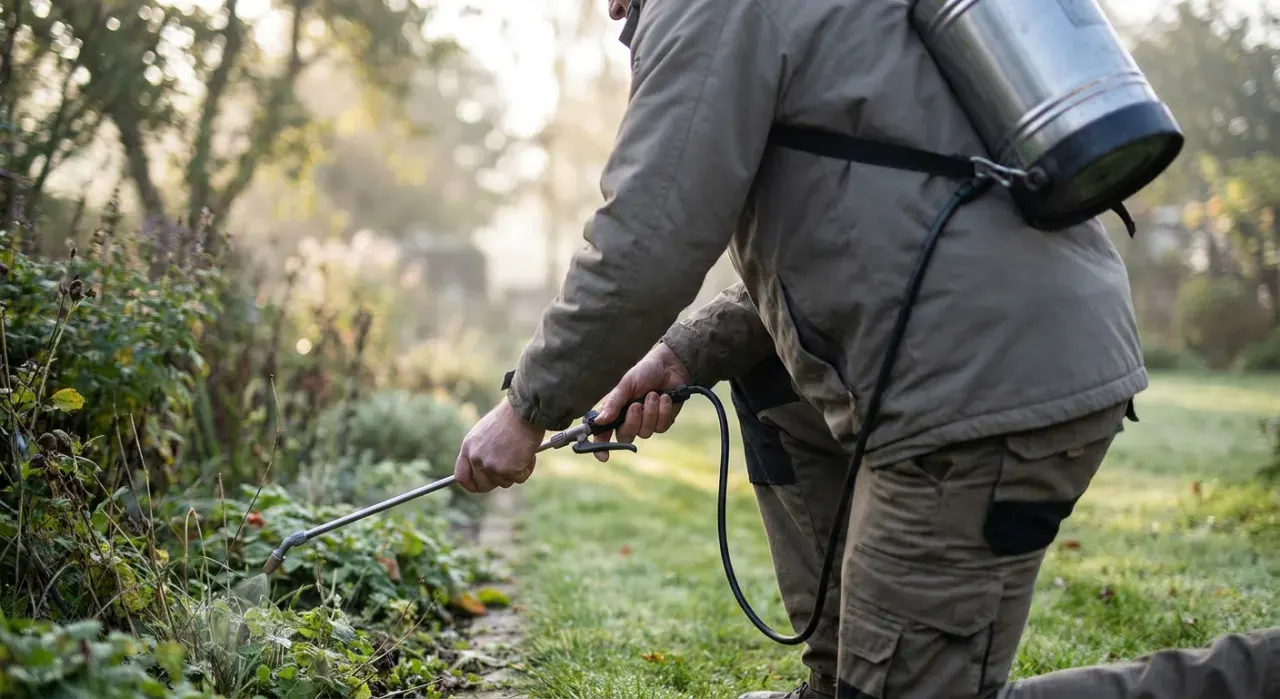
Adult mosquitoes do not hover over your open lawn in the middle of the day — they shelter somewhere cool, dark and humid and come out at dawn and dusk. That is where a barrier treatment belongs: the underside of shrub and hedge foliage, dense ground cover, tall grass along fence lines, under decks and porches, the shaded north side of the house, and anywhere damp and overgrown. Blanketing the sunny lawn wastes product and hits pollinators for no benefit.
Three rules that keep a barrier treatment from doing harm:
- Never spray blooming plants. Anything that kills a mosquito on contact kills a bee on contact. Synthetic pyrethroids are also highly toxic to fish — keep them away from ponds, streams and storm drains.
- Apply at dawn or dusk. Pollinator activity is lowest, and the residue has time to dry before bees are working.
- Follow the label exactly. Under FIFRA, using a pesticide in a manner inconsistent with its labeling is a federal violation. The label sets the rate, the sites, the reapplication interval and the re-entry period — typically "until dry" for consumer yard sprays, which means keeping children and pets off the treated area for a few hours.
The product comparison lives in best mosquito yard spray, and timing is covered in how often to spray a yard for mosquitoes.
Step 3: Make the seating area unusable to them
The last layer is the one you feel immediately. Two things work disproportionately well.
A fan. Mosquitoes are weak fliers and struggle in moving air. An oscillating pedestal fan aimed low across a patio both prevents landing and disperses the carbon dioxide plume that guides them toward you from across the yard. It is the cheapest effective mosquito tool in existence and it needs no label, no reapplication and no chemistry.
A zone repeller. A Thermacell-style device heats a repellent-treated mat or cartridge and builds a protected bubble roughly 10 to 15 feet across. Switch it on about 15 minutes before you sit down, and place it upwind if there is a breeze, because wind pushes the protected air downwind and leaves the upwind side exposed. Our best patio mosquito repellent guide ranks the field.
On skin, use an EPA-registered repellent with one of the actives the CDC lists — DEET, picaridin, IR3535, oil of lemon eucalyptus (OLE) or PMD, or 2-undecanone. One important distinction: OLE is a refined, registered extract and is not the same thing as the lemon eucalyptus essential oil sold for aromatherapy, which is not registered as a repellent and is not recommended for that use. See best mosquito repellent and DEET vs picaridin.
What to skip
| Product | Verdict | Why |
|---|---|---|
| Bug zappers | Skip for mosquitoes | The catch is overwhelmingly non-target insects, including beneficial ones; mosquitoes are a rounding error in it |
| Ultrasonic repellers | Skip | No credible evidence of mosquito repellency; the EPA and mosquito-control professionals both say so |
| Citronella candles | Marginal | A small, very local effect around the flame; pleasant, not protective |
| Repellent wristbands | Skip | Protect only the skin immediately under the band |
| Citronella plants in pots | Skip | A living plant releases almost no repellent oil into the air |
| Vitamin B1, garlic pills | Skip | No credible evidence of reduced attractiveness |
Bug zappers deserve the plain version, because people buy them specifically for mosquitoes. The classic residential study, by Frick and Tallamy at the University of Delaware, tallied the catch from six homeowner bug zappers across a summer and found that biting insects made up a fraction of one percent of the roughly 14,000 insects killed — the overwhelming majority were harmless or beneficial species. That is the trade you are making. We cover it in full in do bug zappers work on mosquitoes and rank the category honestly in best bug zapper.

A realistic season schedule
| When | Do this |
|---|---|
| Early spring, before adults appear | Clear gutters, store containers upside down, fill tree hollows and low ruts, dunk the rain barrel and pond |
| Every week, all season | Ten-minute water walk: empty, scrub, cover or discard. Refresh birdbaths and pet bowls |
| Every 2–4 weeks (per label) | Barrier treatment on shaded resting foliage, at dawn or dusk, never on blooms |
| After every heavy rain | Re-walk for new puddles; reapply barrier treatment if the label allows and residue was washed off |
| Every 30 days | Replace Bti dunks in permanent water |
| Each time you sit outside | Fan on, zone repeller on 15 minutes early, repellent on exposed skin |
Where to go next
If ticks are also a problem where you live, the plan is different and clothing-based — see best tick repellent. To understand why some people in the same yard get bitten far more than others, read what attracts mosquitoes. And if a trap is what you had in mind, we sorted the ones that do something from the ones that do not in best mosquito trap. Everything sits under the pest and weed control hub.
We never buy, spray or physically handle the products we cover — our assessments come from aggregated owner reviews, EPA and CDC guidance and expert consensus, and the method is on how we rank.