 Garden

Affiliate Disclosure
Some links on this page are affiliate links. As an Amazon Associate, we earn from qualifying purchases — at no extra cost to you. We do not buy, test, or physically handle the products we cover; our rankings come from aggregated owner reviews, ratings and expert consensus. Commissions never change our verdicts. How we rank · full disclosure.
The short version: after weighing six popular outdoor cameras on weather rating, useful night range, how they get power, what recording costs after the purchase and what long-term reviews say about the second winter, our #1 pick is the Ring Floodlight Cam Wired Plus. It is hardwired so nothing ever needs charging, the 2000-lumen floodlights do more deterrent work than the camera does, and it carries a review record no rival in the category comes close to.
Outdoor is a genuinely different problem from indoor. The camera has to survive rain, dust, hail and sub-freezing nights; it has to see in the dark at a distance; and it has to get power somewhere with no outlet. This page is the umbrella. If you already know you want a specific type, go straight to floodlight cameras, solar cameras, or a wired PoE camera system with an NVR.
Top Picks at a Glance

Start With Power, Not With Brand
Almost every outdoor camera disappointment traces back to the power decision. Work out what each mounting spot actually has before you look at a single model.
| What the spot has | Buy this | Trade-off |
|---|---|---|
| Existing light fixture or outlet at the eave | Hardwired camera or floodlight cam | Best reliability; needs an install |
| Outlet within 10 feet | Plug-in Wi-Fi camera | Cable management and a weatherproof joint |
| Nothing, but good sun exposure | Solar camera | Winter output falls sharply in the north |
| Nothing, and shaded | Battery camera with removable cells | Recharging; motion clips only, not continuous |
| Ethernet can be run | PoE camera plus NVR | Cable pulling; best long-term system |
| No power, no network at all | Cellular LTE camera and solar | Data plan per camera |
The wider question of cable versus battery is covered in wired vs wireless home security cameras, and it is worth reading before you commit — the answer changes the ownership experience more than the brand does.
The Subscription Trap
Here is the pattern that catches people. A cloud-only camera stores its clips on the manufacturer’s servers, and that storage exists only while the plan is paid. Let the card expire, and the footage from three weeks ago — the footage you now need — is gone. Some cameras will not even record without a plan.
Cameras with a microSD card or a local base station sidestep it entirely. The eufy, Wyze and Reolink picks here all record locally with no plan; the Nest Cam keeps three hours of event history free; Blink records locally with a Sync Module 2 and a USB drive. Over three years a $10 monthly plan is $360 per household, often more than the camera cost. Our page on security camera subscription costs lays out what each brand charges, and using a camera without a subscription covers what you actually lose.
The honest trade-off: local storage lives in a box on your property, so a stolen camera or recorder takes the evidence with it. A camera that records locally and uploads a clip is the resilient setup, and that is what most of the picks here can do if you pay for a plan and keep the card in as a fallback.
Our #1 Pick: Ring Floodlight Cam Wired Plus
This is the camera most people should buy for a driveway or back yard, and the reason is the floodlight rather than the sensor. Two adjustable 2000-lumen LED heads fire on motion, the camera switches to color, and a 105 dB siren is available from the app. A person walking up a driveway that suddenly lights up behaves differently from one walking up a dark driveway.
Because it wires into an existing fixture box, there is no battery to charge and no seasonal drop-off — the failure mode that generates most long-term complaints about outdoor cameras simply does not apply. Owners consistently report that the motion zones and sensitivity controls are the most workable in the category, which matters when the alternative is 40 notifications a day from a street.
Consensus Score █████████░ 9.1
The complaints are real. Recording requires a Ring plan — without one you get live view and notifications but no saved clips, and there is no microSD slot. It needs 120 V wiring at the mounting point, which for many houses means an electrician and, in some jurisdictions, a permit for new exterior circuits. 1080p is no longer class-leading; the Pro version steps up to 2K for more money. And it is firmly an Alexa product, with limited use outside the Ring app.
Check price on Amazon → (paid link)

Best Outdoor Security Cameras 2026: The Ranked Field

Best for a driveway, side gate or back yard with power already at the eave
- 2000-lumen motion-activated LED floodlights
- 1080p HD with color night view when the lights fire
- Built-in 105 dB siren and two-way talk
- Hardwired — no battery to charge, ever
Why buy it: the most reviewed outdoor camera in the category by a wide margin, and the light is the part that does the deterring.

Best for a spot with sun and no outlet within reach
- Integrated solar panel — about 2 hours of direct sun a day sustains it
- 2K resolution with a 600-lumen spotlight
- 8 GB local storage on board, no subscription needed
- IP67 weatherproof, on-device human detection
Why buy it: it charges itself and stores footage itself, so the running cost after purchase is genuinely zero.

Best for a shed, fence line or rental where nothing can be wired
- Up to two years on two AA lithium cells
- 1080p HD day view, infrared night view
- Person detection and a 143° field of view
- Local storage via Sync Module 2 and a USB drive
Why buy it: two years between battery changes turns an outdoor camera from a chore into something you forget about.

Best for floodlight coverage at roughly half the usual price
- 2800-lumen adjustable dual floodlights
- 2K HD with color night vision
- Records to microSD locally with no plan
- 105 dB siren and motion-activated light control
Why buy it: nothing else pairs 2K video, 2800 lumens and free local recording anywhere near this price.
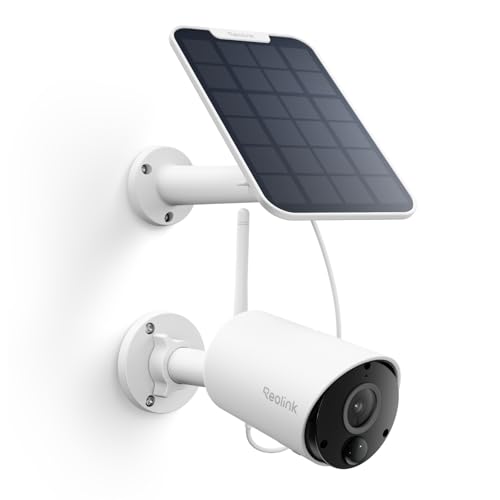
Best for a barn, gate, cabin or far corner of a property
- 2K 5MP with battery and solar panel support
- Up to 512 GB microSD, works with Reolink NVR
- Person and vehicle detection on device
- No subscription required for recording
Why buy it: the most flexible camera here for places with no power and no network cabinet — it records to its own card either way.
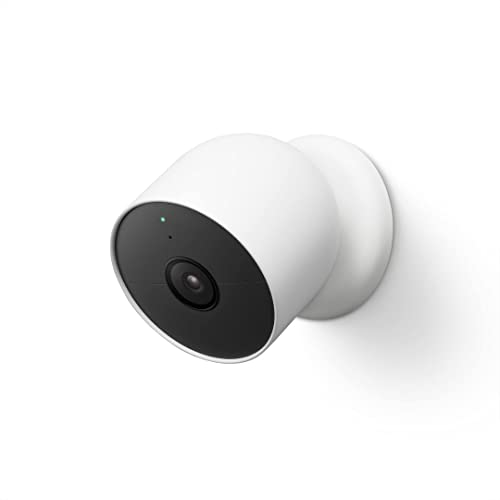
Best for households already living in Google Home
- On-device person, animal, vehicle and package alerts
- 1080p HDR with night vision
- 3 hours of free event history without any plan
- IP54 rated, runs on battery or wired
Why buy it: it separates a person from a passing car more reliably than anything else here, and does it without a subscription.
Quick Comparison
| Product | Best for | Rating | Price | Buy |
|---|---|---|---|---|
| Ring Floodlight Cam Wired Plus Outdoor Security Camera | Best Overall | — | Check (paid link) | |
| eufy Security SoloCam S220 Solar Outdoor Camera | Best No-Fee Solar | — | Check (paid link) | |
| Blink Outdoor 4 Wireless Security Camera | Best Battery Life | — | Check (paid link) | |
| WYZE Floodlight Camera v2 Outdoor Security Camera | Best Value Floodlight | — | Check (paid link) | |
| REOLINK Argus Eco Solar Wireless Outdoor Camera | Best for Remote Spots | — | Check (paid link) | |
| Google Nest Cam (Battery) Outdoor or Indoor Security Camera | Best Smart Detection | — | Check (paid link) |
Spec Comparison
| Camera | Resolution | Power | Local storage | Light |
|---|---|---|---|---|
| Ring Floodlight Cam Wired Plus | 1080p | Hardwired 120 V | No | 2000 lm floodlights |
| eufy SoloCam S220 | 2K | Built-in solar | 8 GB on board | 600 lm spotlight |
| Blink Outdoor 4 | 1080p | 2× AA lithium, ~2 years | USB via Sync Module 2 | Infrared only |
| Wyze Floodlight Camera v2 | 2K | Hardwired 120 V | microSD | 2800 lm floodlights |
| REOLINK Argus Eco | 2K 5MP | Battery or solar panel | microSD to 512 GB | Spotlight |
| Google Nest Cam (Battery) | 1080p HDR | Battery or wired | 3 hrs free cloud events | Infrared only |
How We Rank
We never buy, install or physically handle the products on this site, and we say so on every ranking page. Rankings come from aggregated owner reviews, star ratings, review volume, manufacturer specifications and published expert consensus. For outdoor cameras we weight four things heavily: what the reviews say after the first winter, since cold, condensation and solar shortfall only show up months in; detection quality, because a camera that cries wolf gets muted and then ignored; true cost of storage over three years; and mounting realism — whether an ordinary person can get the thing onto a wall with power. Full method on how we rank.
The Cameras, Reviewed
1. Ring Floodlight Cam Wired Plus — Best Overall
Covered above. What owners like: bright, adjustable lights, no charging ever, the best motion-zone controls in the field, and a siren that is genuinely loud. What they complain about: no local storage and no clips without a plan, 120 V wiring required, 1080p rather than 2K, and a closed Alexa-centric ecosystem. Check price (paid link).
2. eufy SoloCam S220 — Best No-Fee Solar
The S220 is the cleanest answer to a spot with sun and no power. The solar panel is integrated rather than a dangling accessory, roughly two hours of direct sun a day keeps it topped up in season, and 8 GB of on-board storage means no plan and no base station. Human detection runs on the camera itself, so it does not fire on every branch.
Consensus Score ████████░░ 8.4
Recurring complaints: winter is the recurring theme — owners in northern states and shaded mounting positions report having to bring it inside to charge. The 8 GB fills faster than people expect on a busy street. Some owners find the app pushes cloud services harder than the no-fee positioning implies. And the field of view is narrower than the floodlight cameras here.
3. Blink Outdoor 4 — Best Battery Life
Two AA lithium cells and up to two years of standby is a fundamentally different ownership experience from a camera you recharge every few months. It is 1080p with infrared rather than color night vision, so it is a detection and evidence camera rather than an identification one, but for a shed, a fence line or a rental it is very hard to beat on effort.
Consensus Score ████████░░ 8.2
Recurring complaints: the two-year figure assumes light use, and a camera facing a busy sidewalk drains far faster. Night footage is monochrome and less useful for identification. Local storage needs the Sync Module 2 plus a USB drive, an extra purchase. And person detection sits behind a Blink subscription.
4. WYZE Floodlight Camera v2 — Best Value Floodlight
2800 lumens across two adjustable heads, 2K video, color night vision and recording to a microSD card with no plan, at a price that usually buys a plain camera. The value case is strong and the review record is solid.
Consensus Score ████████░░ 8.3
Recurring complaints: it needs hardwiring like any floodlight cam. Wyze’s app and cloud have drawn criticism after past security incidents, which is a fair thing to weigh for a camera pointed at your home. Some smart detection features are subscription-gated even though basic recording is not. And a few owners report the light and camera sensitivities are harder to tune independently than on the Ring.
5. REOLINK Argus Eco — Best for Remote Spots
Reolink’s appeal is independence. The Argus Eco runs on battery, takes an optional solar panel, records to its own microSD card up to 512 GB, and will also feed a Reolink NVR if you later build a proper system. Detection is on-device, and there is no plan attached to any of it.
Consensus Score ███████░░░ 7.9
Recurring complaints: Wi-Fi range at the far end of a property is the most common failure, and a mesh node or extender is often needed — see how far a Wi-Fi camera can be from the router. Battery life reports vary widely with traffic. The app is capable but less polished than the mass-market brands. And 2.4 GHz-only models trip up owners running a single combined network band.
6. Google Nest Cam (Battery) — Best Smart Detection
The Nest Cam does the intelligent part better than anything else here: person, animal, vehicle and package classification runs on the camera, works without a plan, and cuts nuisance alerts sharply. Three hours of free event history is genuinely useful. It runs on battery or wired, so it can move as your needs change.
Consensus Score ████████░░ 8.0
Recurring complaints: it is the most expensive camera here by some margin. IP54 is the weakest weather rating in this field — fine under an eave, marginal on an exposed wall. Meaningful event history requires a Nest Aware subscription. And there is no microSD slot, so local storage is not an option at all.
Placement Beats Specification
A well-placed 1080p camera outperforms a badly placed 4K one, every time. Four rules cover most of it. Mount at eight to ten feet, angled slightly down, so faces fill the frame and the camera stays out of arm’s reach. Cover approaches, not property lines — the front door, the driveway, the side gate and the back slider are where people actually enter. Keep the sun out of the lens, especially low winter sun in the morning and late afternoon, which washes footage out entirely. And never shoot through glass at night, because infrared reflects off the pane straight back into the sensor.
Our full guides go further: where to place security cameras, how to mount outdoor cameras, how many cameras a house needs, and night vision range explained. Bear in mind that recording audio and pointing cameras at a neighbor’s property are governed by state law, and the rules vary considerably — check your state before you aim anything over a fence line.
The Verdict
For most homes, the Ring Floodlight Cam Wired Plus is the outdoor camera to buy: wired, bright, well-tuned and backed by the deepest review record in the category. Choose the eufy SoloCam S220 if there is no power and there is sun, Blink Outdoor 4 if you want to install it and forget it, Wyze Floodlight v2 for floodlight coverage on a budget with local recording, Reolink Argus Eco for a barn or far gate, and the Nest Cam if fewer, smarter alerts are worth the premium. Check price on Amazon → (paid link)
More from this hub: Smart Home & Security · Best security cameras overall · Best home security systems · Do cameras need Wi-Fi? · Compare products side by side · How we rank