 Garden
Affiliate Disclosure
Some links on this page are affiliate links. As an Amazon Associate, we earn from qualifying purchases — at no extra cost to you. We do not buy, test, or physically handle the products we cover; our rankings come from aggregated owner reviews, ratings and expert consensus. Commissions never change our verdicts. How we rank · full disclosure.
The best garage storage ideas all share one principle: get everything off the floor and onto the walls and ceiling. Wall systems (slatwall, pegboard, or track) turn bare walls into dense adjustable storage, overhead racks reclaim the dead space above the garage door, and cabinets corral the rest. Group belongings into activity zones, use sealed bins for anything that attracts dust or pests, and keep the floor clear for cars and work. Most garages waste their two biggest storage surfaces, the walls and the ceiling, so that is where the space is.
We do not physically install the systems we cover; our guidance is built from manufacturer specifications, owner-review consensus, and organizing expert advice, in line with how we rank. Below are the ideas that consistently deliver, organized by where they go.
Start by Clearing and Zoning Your Garage
No storage system fixes a garage full of things you do not use. Before buying anything, empty the space and sort ruthlessly into keep, donate, and trash. Then plan zones so like items live together and stay together.
| Zone | Typical contents | Best location |
|---|---|---|
| Tools and workshop | Hand tools, power tools, hardware | Near a workbench, on pegboard or a cabinet |
| Lawn and garden | Rakes, mower, hoses, fertilizer | Wall hooks near the door to the yard |
| Sports and recreation | Bikes, balls, camping gear | Vertical racks and overhead |
| Seasonal | Holiday decor, patio cushions | Overhead racks in labeled bins |
| Automotive | Oil, cleaners, jack | Low cabinet, away from ignition sources |
Zoning is what keeps a garage organized after the initial effort. For a step-by-step process, see how to organize a garage.
Garage Storage Idea 1: Cover the Walls With a System
Walls are the biggest underused surface in most garages. A dedicated wall system holds more, stays tidier, and adapts as your needs change compared to random hooks. The three main options:
- Slatwall panels cover a whole wall and accept a huge range of hooks, baskets and shelves that reposition instantly. The most flexible and the most finished-looking; see how to install slatwall panels.
- Pegboard is the budget classic, ideal for hand tools where you can see everything at a glance. Steel pegboard holds more than hardboard; see how to install a garage pegboard.
- Track (rail) systems mount a horizontal rail into studs and hang heavy items like ladders, bikes and tools from movable hooks.
Whatever you choose, fasten into studs. Wall anchors in drywall alone are the number-one cause of failures owners report.
Garage Storage Idea 2: Reclaim the Ceiling With Overhead Racks
The space above the garage door and near the ceiling is almost always empty, and it is perfect for things you use a few times a year. Overhead racks put that dead zone to work.
- Locate the ceiling joists with a stud finder and mark them.
- Mount the rack into solid joists with the manufacturer's lag bolts, never into drywall.
- Keep clearance above the garage door track and its opener travel; a few inches minimum.
- Load with bins, not loose items, and stay within the rated capacity, commonly 250 to 600 pounds.
See how to install garage overhead storage and our field in best overhead garage rack. If you would rather build than buy, how to build garage storage shelves covers a sturdy DIY version.
Idea 3: Add heavy-duty shelving
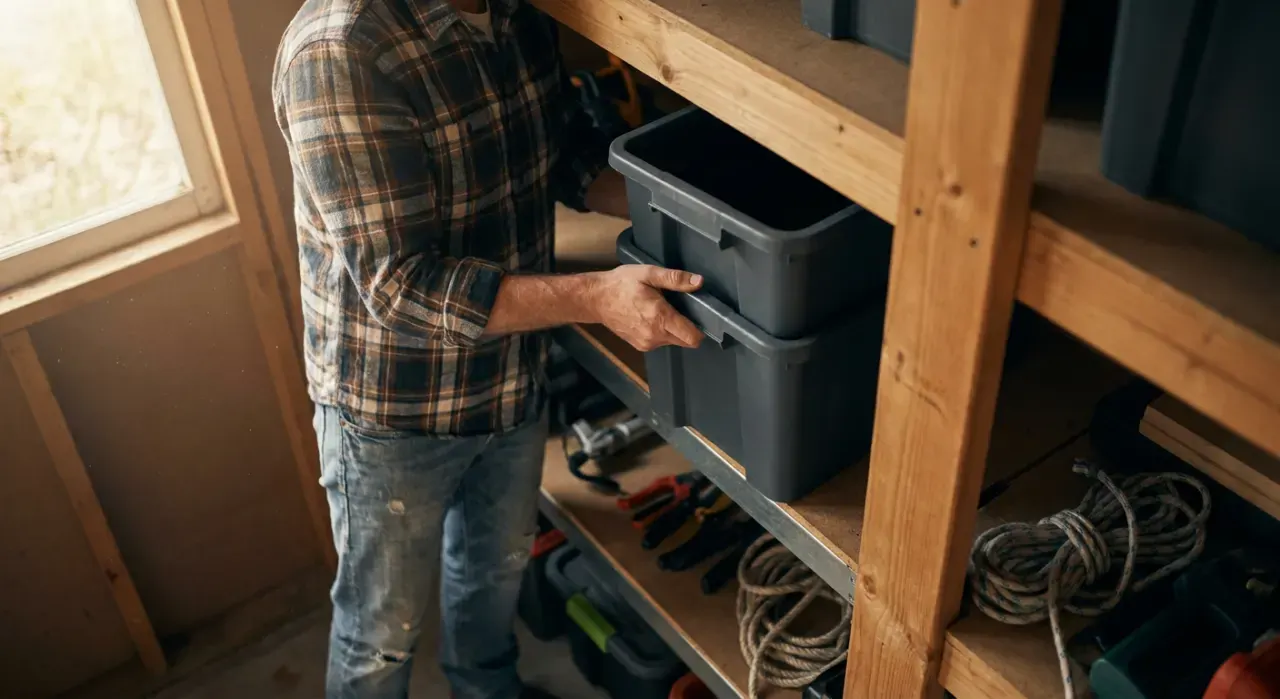
Shelving handles the bulk items that do not hang well: bins of hardware, paint (in a conditioned corner), automotive supplies, and bulk goods. Choose shelving matched to the load and no deeper than you need, around 16 to 24 inches, so it does not crowd the floor.
- Freestanding steel units are quick to assemble and rated 300 to 1,000 pounds per unit; great for a corner.
- Wall-mounted brackets keep the floor completely clear but must be lagged into studs; see how to build garage wall shelving.
- Adjustable shelf depth matters; deep shelves swallow small items at the back where you forget them.
For ratings and picks, see best garage shelving and how deep should garage shelving be. Understand the numbers in shelf weight ratings explained.
Idea 4: Store bulky gear vertically
Bikes, ladders, wheelbarrows, and long-handled tools eat floor space when leaned in a corner and fall over constantly. Vertical storage tames them.
- Bike hooks or a wall/ceiling bike lift get bikes off the floor; see how to hang bikes in the garage.
- Vertical ladder hooks hold a ladder flat against the wall.
- A tool rack or gripper strip lines up rakes, brooms and shovels so they stop toppling.
Getting long and awkward items off the floor is often what finally lets a car back into the garage.
Idea 5: Use sealed, labeled bins
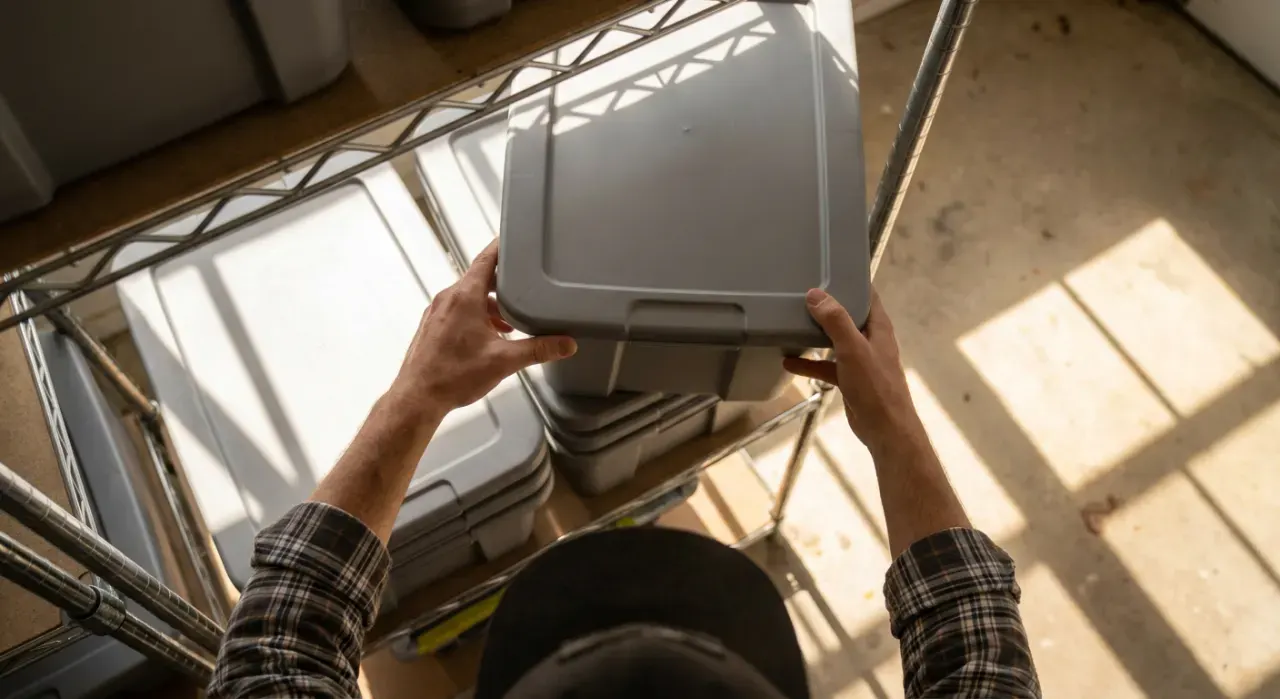
Open boxes collect dust, invite pests, and hide their contents. Clear, sealed bins solve all three and stack cleanly on shelves and overhead racks. A few rules make bins work:
- Use clear bins where you can so you see the contents; use opaque bins only for things sunlight would fade.
- Label every bin on the end that faces out; see how to label storage bins.
- Match bin sizes so they stack and shelve efficiently.
- Keep heavy bins low and light seasonal bins overhead.
Our picks are in best storage bins.
What not to store in a garage
A garage is unconditioned space with temperature swings, humidity, and pest access, so some things simply do not belong there no matter how tempting the space. Keep these elsewhere:
| Item | Why not |
|---|---|
| Paint | Freezing and heat cycles ruin it |
| Propane tanks | Fire and fume risk in an enclosed space |
| Documents and photos | Heat and moisture cause damage |
| Canned and dry food | Heat spoilage and rodents |
| Electronics and batteries | Extreme heat shortens their life |
| A second refrigerator | Runs inefficiently in heat, though many still do it |
Reserve the garage for tools, equipment, sports and garden gear, and durable seasonal items in sealed bins. For the full field of systems and comparisons, see garage storage types compared and browse the storage and organization hub. Our recommendations come from owner-review analysis and published specs, not hands-on testing, as described in how we rank.