 Garden
Affiliate Disclosure
Some links on this page are affiliate links. As an Amazon Associate, we earn from qualifying purchases — at no extra cost to you. We do not buy, test, or physically handle the products we cover; our rankings come from aggregated owner reviews, ratings and expert consensus. Commissions never change our verdicts. How we rank · full disclosure.
Short version: most cleaning products are broadly similar, most cleaning advice online is written to sell something, and the two things that actually change your results are matching the method to the surface and building a routine you will keep. This hub covers both — what steam, detergent and microfiber genuinely do, which surfaces you must not treat with them, and where the gear is worth spending on.
How we work: we do not buy, test or physically handle the products we rank. Every verdict comes from aggregated owner reviews, star ratings weighted by review volume, and expert consensus. That method is explained in full on how we rank. Want a specific machine? Start with the best steam mop rankings.
Where Steam Fits
Steam cleaning earned its popularity honestly. Superheated water sanitizes sealed hard floors without leaving a chemical residue, it loosens stuck-on grime that a damp mop just smears, and it dries in a minute or two instead of the ten minutes a wet mop takes. For households with pets or crawling children, removing the chemical layer from floor cleaning is a genuine benefit rather than a marketing one.
But steam is a specialist, not a universal solvent. It does not dissolve heavy kitchen grease on its own, it will not lift a set stain out of grout without a scrubbing pad, and used on the wrong floor it causes real damage — swelling laminate seams, lifting vinyl adhesive, clouding waxed wood. The honest summary is that a steam mop is the best tool in the house for sealed tile and a poor choice for anything with an open seam. Our steam mop vs regular mop comparison walks through where each one wins.
Cleaning by Floor Type
Sealed ceramic and porcelain tile is the easiest surface in the house and the one steam was made for. Grout needs steam plus mechanical scrubbing; steam alone lifts surface soil but not the embedded staining people actually want gone. Sealed hardwood wants the least water possible — a barely damp microfiber flat mop and a pH-neutral wood cleaner, and steam only if the floor manufacturer explicitly permits it. Laminate is the surface that punishes carelessness fastest, because water wicks into the fiberboard core through the seams and swells it permanently. Luxury vinyl plank is largely waterproof and forgiving, though the adhesive under glue-down installations is not fond of sustained heat.
The full routine for wood, which is the floor people most often ruin with good intentions, is in how to clean hardwood floors.
Why Microfiber Quality Matters More Than Cleaner
The most cost-effective upgrade in domestic cleaning is not a better spray, it is better cloths. Microfiber works by mechanical capture: split fibers grab and hold soil and moisture rather than pushing them around. Cheap microfiber is not split, so it smears; good microfiber has a high GSM (grams per square meter, roughly a density measure) and a weave suited to its job — a plush 300+ GSM cloth for glass and polishing, a flatter waffle weave for general wiping.
They also need looking after. Fabric softener coats the fibers and kills the capture effect permanently, and high dryer heat melts them. Wash them hot, without softener, and air-dry or tumble on low. Done properly a good cloth survives hundreds of washes, which is why the running cost of microfiber cleaning is close to zero. Specific picks are in best microfiber cloths.
Laundry: The Three Variables That Matter
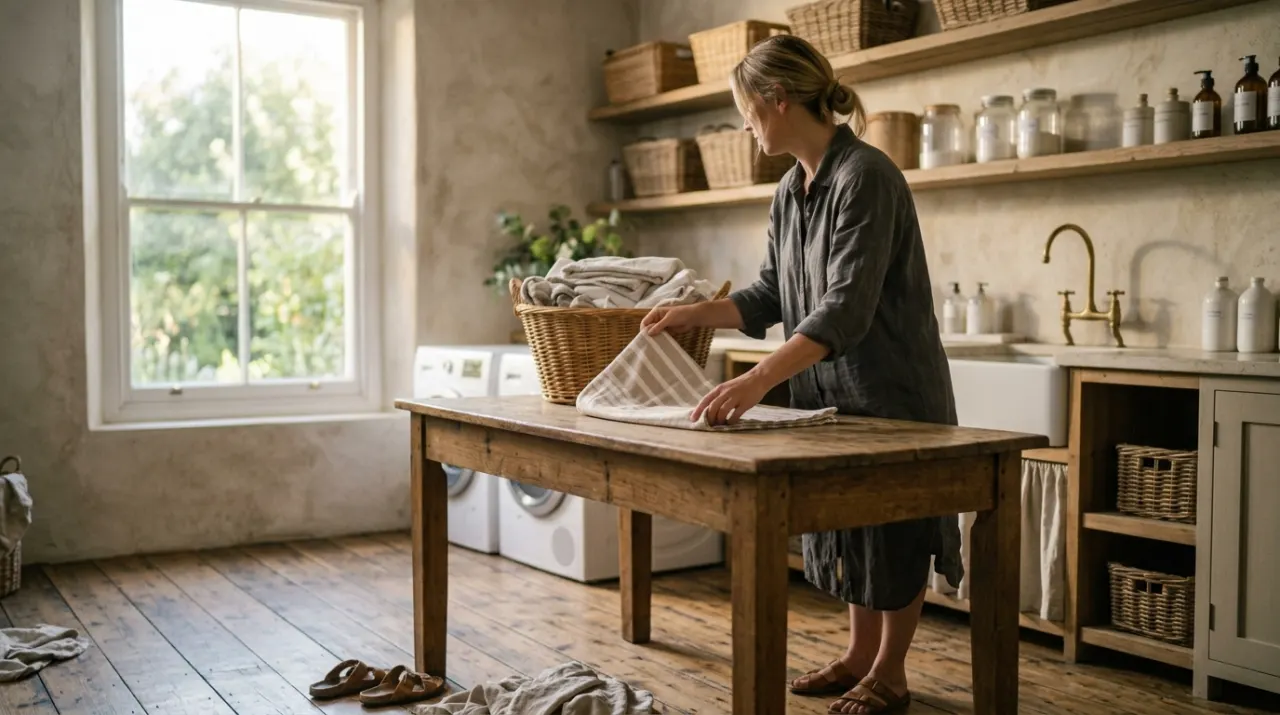
Detergent brand is the variable people obsess over and it is the least important of the three. Water temperature comes first: enzymes in modern detergents work best in warm water, but protein stains — blood, egg, dairy — set permanently in hot, so cold water first is the rule for those. Load size comes second: an overloaded drum cannot tumble, so clothes never move through the detergent solution and come out with dry soil still in the weave. Dose comes third, and almost everyone uses too much; excess detergent does not rinse out, and that residue is what makes towels stiff and gym clothes hold odor.
Hard water changes all of this, because dissolved minerals bind the surfactants before they reach the fabric. If you have hard water and are convinced your detergent is failing, it probably is — but the fix is a builder or softener rather than a more expensive bottle. That is covered in hard water laundry fixes, and stain-by-stain method is in the stain removal guide.
Your Washing Machine Is Probably the Problem
When laundry comes out smelling musty, the cause is nearly always the machine rather than the detergent or the water. Front-loaders in particular trap water in the door gasket and dispenser drawer, where biofilm and mold establish themselves and re-contaminate every subsequent load. High-efficiency machines use so little water that residue accumulates faster than older top-loaders ever allowed.
The maintenance routine is short: run a hot cycle with a washer cleaner or plain white vinegar monthly, wipe the gasket dry after the last load of the day, pull out and rinse the detergent drawer, and leave the door open between uses so the drum dries. Households that do this stop having the smell problem entirely. Full walkthrough in how to clean a washing machine.
Building a Routine That Survives a Busy Week
Every cleaning schedule that fails does so for the same reason: it was designed for an ideal week. A routine that holds up assumes interruptions. The version that works for most households is a short daily reset of the surfaces that get visibly bad — counters, sink, floor crumbs — a single weekly block for floors and bathrooms, a monthly appliance and detail pass, and a seasonal deep-clean two or three times a year. Assigning rooms to days rather than tasks to hours makes it far more likely to stick, because a missed day is a missed room instead of a collapsed system. The checklist version is in weekly cleaning schedule, and bedding intervals are in how often to wash bedding.
What Cleaning Products Actually Do
Almost every household cleaner falls into one of four chemistry families, and matching the family to the soil solves most cleaning problems faster than buying a specialist bottle. Alkaline cleaners — degreasers, most all-purpose sprays, oven cleaner — break down fats, oils and body soil, which is why they belong in the kitchen and on skin-contact surfaces. Acidic cleaners — vinegar, citric acid, most bathroom and toilet products — dissolve mineral scale, soap scum, hard-water spotting and rust. Enzyme cleaners digest organic residue and are the correct and often only real answer to pet urine, vomit and protein stains, because they consume the source of the odor instead of covering it. Disinfectants kill microorganisms but do not clean; used on a dirty surface they mostly react with the soil rather than the bacteria, which is why the label always says to clean first and disinfect second.
Two rules follow from that. Never mix acid with bleach — vinegar or a descaling product combined with chlorine bleach releases chlorine gas, and it is the most common serious accident in domestic cleaning. And never reach for an acid on natural stone: marble, travertine and limestone etch permanently on contact with vinegar or any bathroom cleaner, so sealed stone wants a pH-neutral product and nothing else. Specific picks are in best all-purpose cleaner.
Carpet, Upholstery and the Case for a Machine
Carpet is where the gap between tidy and clean is widest, because the soil people can see is a fraction of what is bound into the pile. Regular vacuuming with a good brushroll removes the grit that abrades fibers, but oils, spills and pet accidents need water and extraction. A carpet cleaner — whether a full upright machine or a small portable spot cleaner — injects solution and pulls it back out, and the visible color of the recovery tank is what convinces most owners it was worth the money.
Two rules make the difference between a good result and a worse-looking carpet. Do not over-wet, because moisture that reaches the backing and pad dries slowly, wicks stains back to the surface and can breed mildew; several dry passes after each wet one is the fix. And rinse out the detergent, since residue left in the pile is sticky and attracts soil faster than before you started, which is exactly why some carpets look dirty again within two weeks of being cleaned. For pet accidents, run an enzyme treatment first and let it work before extracting. Machines and portable spot cleaners are ranked in best carpet cleaner.
Where to Start
If your floors are the problem, go to best steam mop for sealed tile or hardwood floor care for wood. If it is carpet, best carpet cleaner covers both deep-clean machines and portable spot cleaners. If it is laundry, start with the machine before the detergent. The topical map below links every part of the hub as it publishes.