 Garden
Affiliate Disclosure
Some links on this page are affiliate links. As an Amazon Associate, we earn from qualifying purchases — at no extra cost to you. We do not buy, test, or physically handle the products we cover; our rankings come from aggregated owner reviews, ratings and expert consensus. Commissions never change our verdicts. How we rank · full disclosure.
To grow tomatoes: plant transplants outdoors only after nights stay above 50F and the soil has warmed to at least 60F, space them 24 to 36 inches apart in full sun, stake or cage them at planting, water deeply and consistently to about 1 to 2 inches a week, and feed every two to three weeks once fruit sets. Bury two-thirds of the stem at transplant so it roots along the buried section, mulch heavily, and prune suckers on vining types. From a hardened-off transplant you are 60 to 85 days from the first ripe fruit, depending on variety.
Tomatoes are the most-grown backyard vegetable in the United States, and also the one gardeners most often ask us to troubleshoot. Almost every problem — blossom end rot, cracking, poor set, disease — traces back to a handful of decisions made at planting and to inconsistent watering. Get those right and tomatoes are genuinely easy. We do not grow trial plots ourselves; our product picks come from aggregated owner reviews and horticultural consensus, explained in how we rank.
Choose determinate or indeterminate first
Every growing decision downstream depends on which of two growth habits your variety has, so read the tag before you buy.
| Type | Habit | Harvest pattern | Best for |
|---|---|---|---|
| Determinate (bush) | Grows to a set size, 3 to 4 ft, then stops | One concentrated flush over 2 to 3 weeks | Containers, small spaces, canning batches |
| Indeterminate (vining) | Keeps growing and setting until frost, 6 to 10+ ft | Steady trickle all season | Slicing tomatoes, long harvest, staked rows |
Reliable indeterminate slicers include Better Boy, Big Beef and Brandywine; strong determinates include Roma, Celebrity and Bush Early Girl. Cherry types (Sungold, Sweet 100) are indeterminate and extremely productive for beginners. If disease is a recurring problem in your garden, choose varieties with resistance codes on the tag — V, F, N and T indicate resistance to verticillium, fusarium, nematodes and tobacco mosaic virus.
When to plant tomatoes
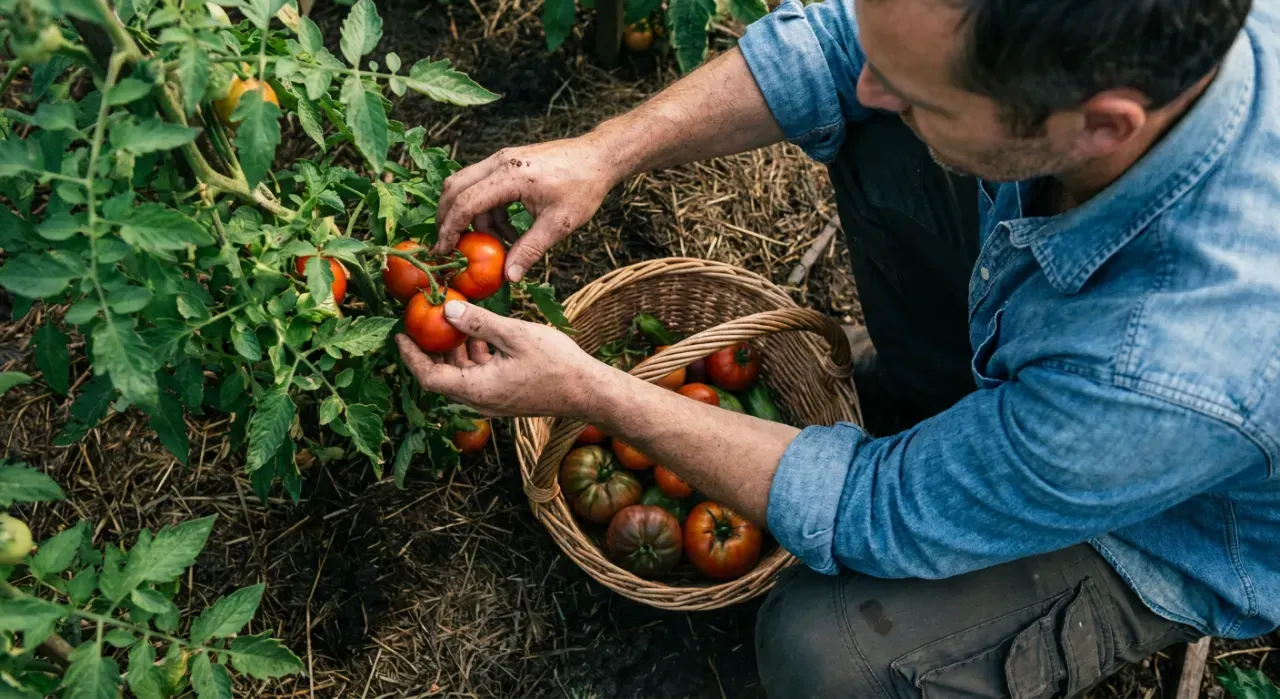
Tomatoes are warm-season plants with zero frost tolerance. Set transplants out one to two weeks after your average last frost date, once night temperatures reliably stay above 50F and soil at planting depth has reached 60F. Planting into cold soil is the single most common early-season mistake: the plant sulks, roots stall, and a later transplant often overtakes it. If you started seeds indoors, that was 6 to 8 weeks before this transplant date. For the region-by-region timing, see when to plant tomatoes, and if you are raising your own from seed, how to start seeds indoors.
How to plant a tomato transplant
Tomatoes have a rare ability to grow roots along any buried stem, and using it builds a stronger plant.
- Harden off first. Over 7 to 10 days, gradually expose indoor-raised or store-bought plants to outdoor sun and wind, or the leaves will scorch. See hardening off seedlings.
- Dig deep and bury the stem. Pinch off the lowest sets of leaves and plant so two-thirds of the stem is underground, either in a deep hole or laid sideways in a trench. Roots will form all along the buried stem.
- Space correctly. 24 inches apart for staked determinates, 30 to 36 inches for caged or sprawling indeterminates. Crowding is the leading cause of fungal disease. See how far apart tomato plants should be spaced.
- Support at planting, not later. Drive the stake or set the cage now, so you never disturb roots mid-season.
- Water in and mulch. Soak the planting hole, then apply 2 to 3 inches of straw or shredded leaf mulch, keeping it an inch off the stem. See best mulch for a vegetable garden.
Watering tomatoes for consistency
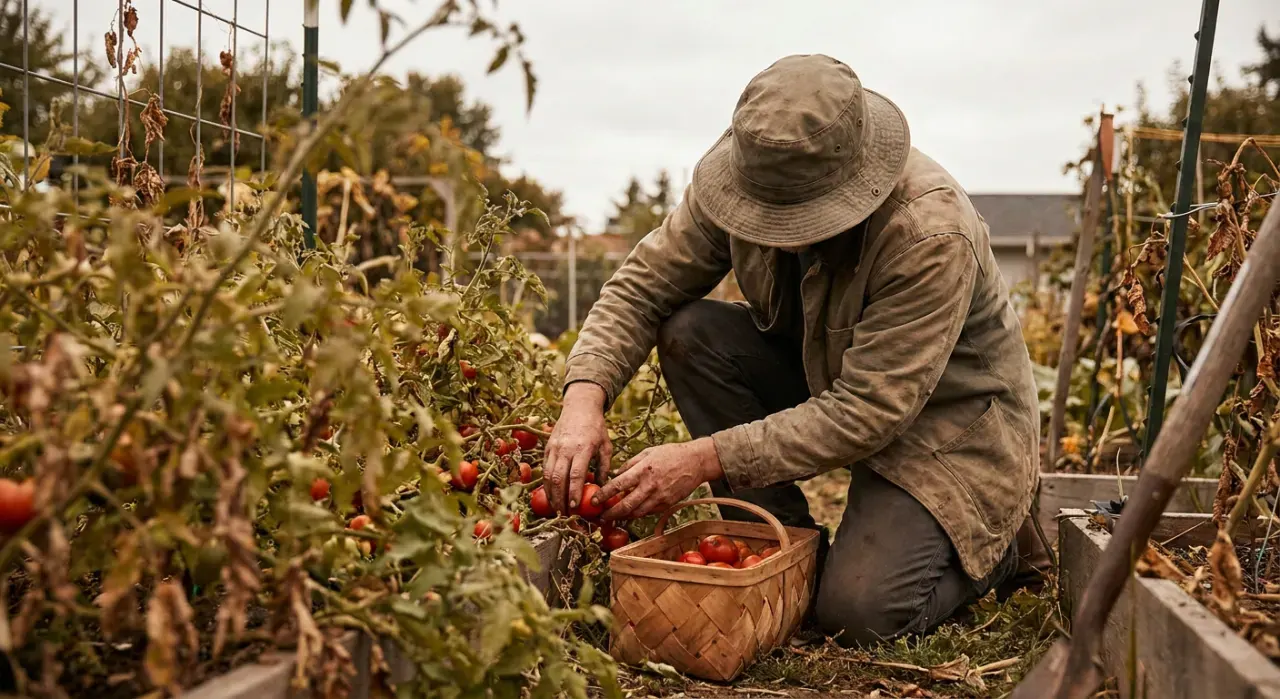
Tomatoes do not so much need a lot of water as they need steady water. Target 1 to 2 inches per week including rain, delivered in deep soakings two or three times a week rather than daily sips. Deep watering drives roots down; shallow daily watering keeps them at the surface where they dry out fast. Always water at the base and keep foliage dry to slow blight. The wild swings between drought-stressed and flooded are what trigger blossom end rot and skin-splitting, so the most useful tool most gardeners can add is a simple consistency habit, backed by mulch. For the detail, see how often to water tomatoes.
Feeding without overdoing nitrogen
Tomatoes are heavy feeders, but too much nitrogen gives you a jungle of leaves and almost no fruit. Work a balanced or slightly phosphorus-forward fertilizer into the bed at planting, then side-dress or feed every two to three weeks once the first fruits set. Look for an analysis where the middle and last numbers (phosphorus and potassium) are at least as high as the first (nitrogen) — something like 4-6-8 or 3-4-6 rather than a lawn-style 20-5-5. Owners consistently report better set and fewer problems switching to a tomato-specific formula mid-season; the ranked field is in best fertilizer for tomatoes, with an organic-only shortlist in best organic fertilizer for tomatoes.
Staking and pruning
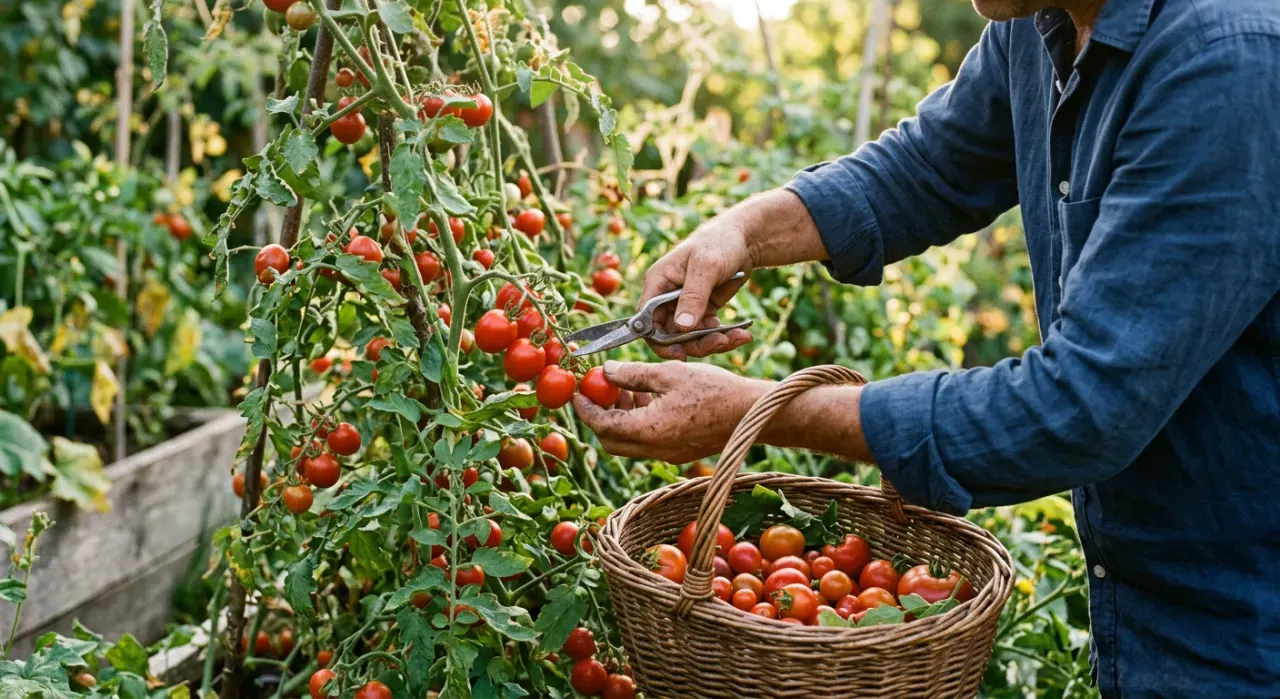
Support keeps fruit off the ground and air moving through the plant. A sturdy cage suits most home growers; the flimsy 3-ring cones sold everywhere collapse under an indeterminate plant by July, which is why owners repeatedly recommend heavier welded-wire cages — see best tomato cages. Prune indeterminate plants to one or two leaders by pinching out the suckers that form in the crotch between the main stem and each branch, which improves airflow and fruit size. Never prune determinate varieties — you would just cut off the crop. Full method: how to prune tomatoes.
Common problems and fixes
| Symptom | Cause | Fix |
|---|---|---|
| Sunken black patch on the fruit bottom | Blossom end rot — a calcium delivery failure from uneven watering, not usually a soil deficiency | Water consistently, mulch, avoid heavy nitrogen. See what causes blossom end rot |
| Cracked or split skins | A sudden surge of water into ripening fruit after a dry spell | Even watering; pick fruit promptly as it ripens |
| Flowers drop without setting fruit | Night temps below 55F or day temps above 90F make pollen unviable | Wait for milder weather; provide afternoon shade in heat |
| Leaves curling upward | Heat and moisture stress, or sometimes herbicide drift | Usually harmless if the plant is otherwise healthy. See why tomato leaves curl |
| Yellowing lower leaves with dark spots | Early blight or septoria, soil-splash fungal diseases | Remove affected leaves, mulch, water at the base, improve spacing |
Harvesting and end of season
Pick tomatoes as they color up but while still firm — fully vine-ripened fruit has the best flavor, but harvesting at the breaker stage (first blush of color) and finishing on the counter protects them from splitting, birds and squirrels with little flavor loss. Ripen picked fruit at 65 to 70F out of direct sun; the refrigerator kills tomato flavor and turns the flesh mealy, so never store them cold. As the first frost approaches, pinch off the growing tips and all new flowers two to three weeks out to funnel energy into existing fruit, and on the frost night pick everything showing color to ripen indoors. Green tomatoes will slowly ripen in a paper bag with an apple, or become the classic fried green tomato.
Once you have the basics, container growing opens up a patio crop — see how to grow tomatoes in pots — and ongoing plant care is covered in how to care for tomatoes. Everything else lives at the seeds and vegetable growing hub.