 Garden

Affiliate Disclosure
Some links on this page are affiliate links. As an Amazon Associate, we earn from qualifying purchases — at no extra cost to you. We do not buy, test, or physically handle the products we cover; our rankings come from aggregated owner reviews, ratings and expert consensus. Commissions never change our verdicts. How we rank · full disclosure.
Short version: the bed is the single piece of furniture you use for a third of your life, and almost every disappointing purchase in this category comes from matching the wrong firmness to the wrong sleeping position. This hub covers mattresses in a box, sheets, pillows, toppers, comforters and protectors, along with the underlying knowledge that makes the choices obvious — firmness scales, foam versus hybrid construction, what a boxed mattress needs underneath it, and how long any of it should last.
We do not sleep on, unbox or physically handle any of this. Every ranking is assembled from aggregated owner reviews, star ratings, review volume and expert consensus, weighted toward reviews written six months or more after delivery — which in the mattress category is the only kind that tells you anything. The method is spelled out on how we rank.
The Mattress Decision, Simplified
Three variables decide whether a mattress works for you, and everything else is marketing. Firmness has to match your sleeping position: side sleepers need enough give at the shoulder and hip to keep the spine level, back sleepers need medium-firm support under the lumbar curve, stomach sleepers need firm so the hips do not sink. Construction decides how it behaves: all-foam contours and isolates motion, hybrids add coil bounce, edge support and airflow. Body weight shifts both — the same mattress reads a full point softer under a heavier sleeper.
Get those three right and brand matters remarkably little in the mid-market. Our best mattress in a box ranking covers the field, the mattress firmness guide converts positions into numbers, and memory foam vs hybrid settles the construction question.

Why Boxed Mattresses Took Over
A compressed, rolled mattress arriving by carrier changed the category permanently, and mostly for the better. It removed the showroom markup, made returns genuinely possible through long home trials, and turned a high-pressure purchase into an ordinary online one. Owner reviews at scale replaced a fifteen-minute lie-down in a store, which is a far better source of information about a product you will use for years.
The compromises are real but manageable. A boxed mattress needs 24 to 72 hours to fully expand, and judging it on night one is the most common mistake in the reviews. It arrives with an odor from the manufacturing process that dissipates over a few days in a ventilated room — the explanation and the safety picture are in mattress off-gassing explained. And it is heavy and awkward to move once expanded, so unbox it on the frame it will live on.

What Goes Underneath Matters More Than People Think
Foam and hybrid mattresses need continuous, rigid support. Slats spaced more than about three inches apart let the mattress sag into the gaps, which produces exactly the body impressions people blame on the mattress itself, and which most manufacturers explicitly exclude from warranty coverage. Traditional coil box springs, designed for innerspring mattresses, are too flexible for modern foam and cause the same problem.
The fix is inexpensive: a platform frame, a bunkie board, or a sheet of plywood laid over wide slats. Check the requirement in the warranty document before you buy a frame, not after. Details and frame types are in bed frames and foundations.
Sheets: Weave Beats Thread Count
Thread count is the most successfully marketed and least useful number in bedding. Beyond roughly 400, manufacturers inflate the figure by counting multi-ply threads, and the result is a denser, hotter, less breathable sheet — not a better one. What actually determines how a sheet feels is fiber and weave. Percale is a crisp, matte plain weave that sleeps cool and gets softer with washing; it is the right choice for hot sleepers. Sateen has more threads on the surface, giving a silky drape and a warmer feel. Jersey is knit, stretchy and warm. Bamboo viscose and Tencel are smooth, cool and drape heavily.
Fiber quality matters more than the number too: long-staple cotton, sold as pima or Supima, produces stronger, smoother yarn that pills far less than generic upland cotton. The full breakdown is in thread count explained, and the ranked field is in best cooling sheets.

Pillows, Toppers and Cheap Fixes
A pillow is a spinal alignment tool, and the right loft depends entirely on how you sleep. Side sleepers need the most loft, because there is a shoulder-width gap between the mattress and the head; back sleepers need medium; stomach sleepers need almost none, and are often better off with a very thin pillow or none at all. Most people buy on softness and end up with a pillow that is too low for their position — see best pillow for side sleepers.
Toppers deserve more attention than they get, because they solve a specific and expensive problem cheaply. A mattress that is structurally sound but too firm can be transformed for a fraction of the cost of replacing it, and a two to three-inch memory foam or latex topper is often the difference between a spare-room bed people avoid and one they like. A topper cannot fix sagging, though — once the support core has failed, the mattress is finished. See best mattress topper and how long does a mattress last.
Protectors and the Warranty Nobody Reads
A mattress protector does two jobs. The obvious one is keeping spills, sweat and allergens out of the foam. The less obvious one is preserving your warranty: nearly every mattress warranty is void the moment the mattress is stained, and manufacturers do check. A protector that costs under $40 protects a purchase of several hundred to several thousand.
The reason people take them off is noise. Cheap protectors use a plastic film layer that crinkles with every movement, and the ones owners keep on their beds use a thin polyurethane membrane bonded to a knit cotton or terry face, which is quiet and breathable. Our best mattress protector ranking sorts them on exactly that.
Care That Actually Extends Life
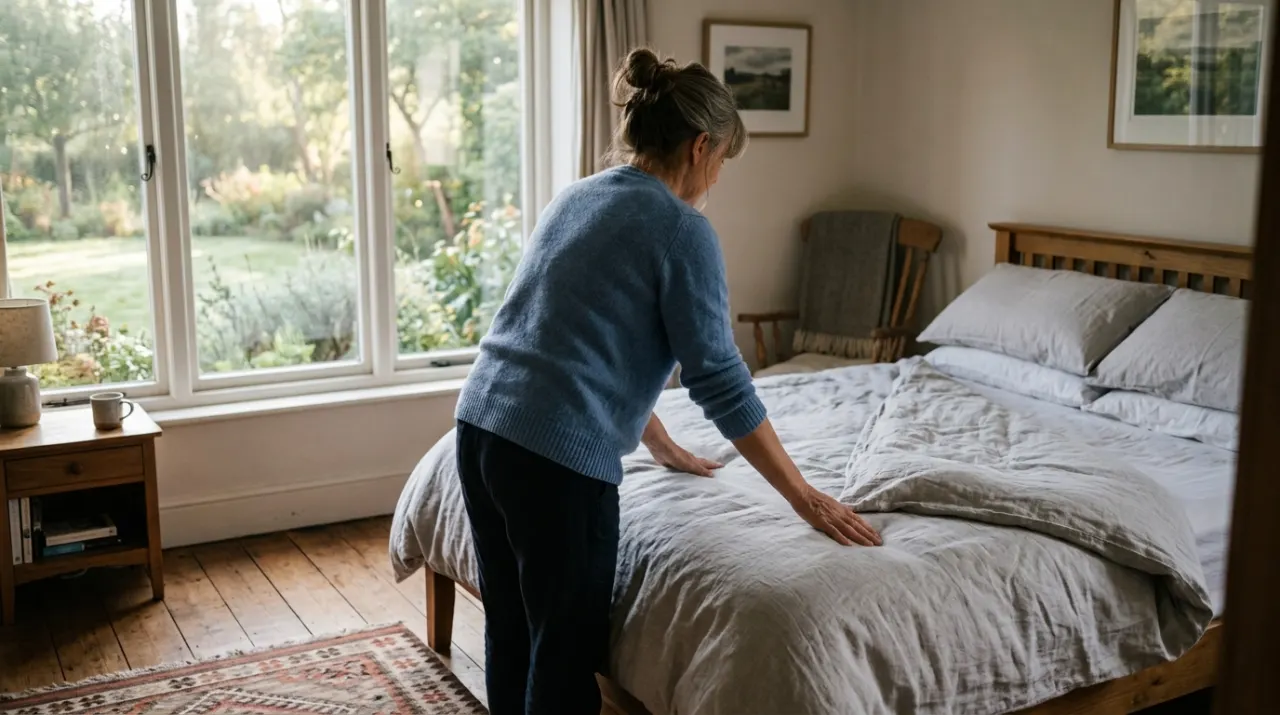
Rotate a mattress head to foot every three to six months so wear spreads evenly. Do not flip a modern one-sided mattress — the comfort layers are built to face up, and flipping puts the support core against your body. Wash sheets every one to two weeks in warm rather than hot water, and skip fabric softener, which coats fibers in a residue that reduces breathability and absorbency over time. Wash pillows themselves twice a year if they are washable, and replace them every one to two years, since fill compresses and stops supporting long before a pillow looks worn out.
Air the bed for twenty minutes before making it. Overnight moisture moves from the body into the mattress and bedding, and giving it a chance to evaporate does more for freshness than any spray. Full laundry specifics, including drying temperatures that preserve elastic, are in how to wash bedding.
Where to Start
If your sleep is poor and your mattress is more than seven years old, start with the best mattress in a box ranking — it is the highest-impact purchase in this hub by a distance. If the mattress is sound but the bed still is not right, work outward in cost order: pillow first, then sheets, then a topper. And whichever direction you go, read the firmness guide before you buy anything, because firmness mismatch is behind more returns in this category than every other complaint combined.