 Garden
Affiliate Disclosure
Some links on this page are affiliate links. As an Amazon Associate, we earn from qualifying purchases — at no extra cost to you. We do not buy, test, or physically handle the products we cover; our rankings come from aggregated owner reviews, ratings and expert consensus. Commissions never change our verdicts. How we rank · full disclosure.
Short version: an above-ground pool is one of the highest-value things you can put in a backyard, and almost every bad experience with one traces back to two decisions made in the first week — a site that was not properly level, and a filter pump that was undersized for the water volume. Get those right and the rest is a twenty-minute weekly routine. This hub covers choosing a pool or spa, setting it up so it survives, keeping the water clear, and closing it down for winter.
We do not test products. Every ranking here is built from aggregated owner ratings, review volume and expert consensus — the method is on how we rank.
The Three Kinds of Above-Ground Pool
Inflatable ring pools — an inflated top ring that rises as the pool fills — are the cheapest and the fastest to set up, typically ready for water in ten minutes. They suit small yards, young kids and households that want a pool for one summer without a commitment. Depth is limited, and the soft wall makes them less stable for adults leaning on the side.
Metal frame pools use steel uprights and horizontal beams to hold a vinyl liner in a rigid cylinder. This is the mainstream family choice: 12 to 18 feet across, 30 to 48 inches deep, an hour or two of assembly with no tools, and a real filter pump. Prices run from around $200 to $700 depending on size and what is bundled.
Premium frame sets — Intex Ultra XTR, Bestway Power Steel and similar — add galvanized steel, better joint systems, thicker three-ply liners, taller 48 to 52-inch walls, and a sand filter instead of a cartridge pump. They are the ones owners still have running in year four. Ranked picks for all three categories are in best above-ground pool.
A fourth option is the inflatable hot tub, which is a different proposition entirely — a four to six person spa that runs year-round in many climates, costs more to heat than to buy, and is covered in best inflatable hot tub.
Site Prep Is the Whole Game
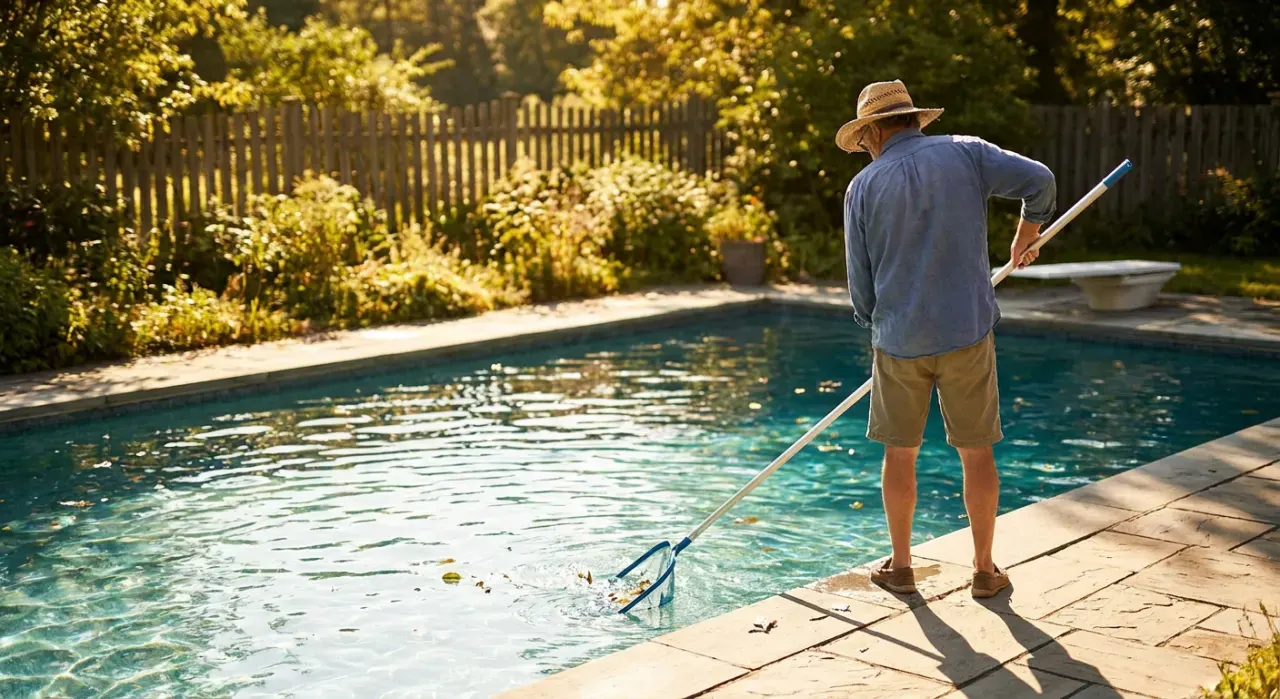
If you read one section here, read this one. The single most common cause of a ruined pool is ground that was not level. Water weighs about 8.3 pounds per gallon, so a 15-foot pool holds roughly 18 tons of it. On ground that slopes even two inches, all of that mass leans on the low wall — the liner stretches, the uprights splay, joints pull, and pools do occasionally fail catastrophically, dumping thousands of gallons in under a minute.
Do it properly: choose the flattest open spot with at least 2 to 3 feet of clearance all around, and no overhanging trees. Strip the sod. Level by cutting down the high side, never by building up the low side with loose fill, and check with a long straightedge and a level rather than by eye — a string line and a line level across the diameter works well. Remove every rock, root and stick, because they will find their way through the liner. Lay a ground cloth, and consider a layer of leveling sand or foam pads for comfort and puncture protection. Then fill slowly and stop at a few inches to check the water line against the wall all the way around — water is the most honest level you will ever use. The full sequence is in how to set up an above-ground pool.
Pumps and Filters
The filter pump is the second decision that determines whether you enjoy the pool. The rule of thumb is that the pump should turn over the entire volume of the pool at least once every 8 hours, and ideally twice a day. A 4,400-gallon 15-foot pool therefore wants a pump moving at least 550 gallons per hour — and the pump bundled with a budget pool is often rated well below that, which is why cloudy water is the most common first-season complaint.
Cartridge filters are cheap, simple and fine for small pools; you rinse the cartridge weekly and replace it every few weeks, which becomes a running cost. Sand filters cost more up front, filter finer, and are maintained by backwashing rather than buying consumables, with the sand replaced every five years or so. For anything over about 5,000 gallons, owner sentiment strongly favors sand. The trade-off is laid out in cartridge vs sand filters, and pump options are ranked in best pool filter pump.
Water Chemistry Without the Jargon
Four numbers matter, and they interact.
Free chlorine is the sanitizer actually available to kill bacteria and algae. Target 1 to 3 parts per million. This is the number to check most often, because it is consumed by sunlight, swimmers and organic debris.
pH measures how acidic or basic the water is; target 7.2 to 7.8. Below that, water corrodes metal parts and irritates eyes. Above it, chlorine becomes dramatically less effective — which is why a pool with plenty of chlorine can still go green. Check pH before you blame the chlorine.
Total alkalinity is pH’s shock absorber; target 80 to 120 ppm. Low alkalinity makes pH bounce around unpredictably, so fix alkalinity first and pH becomes easy to hold.
Cyanuric acid (stabilizer) shields chlorine from UV; target 30 to 50 ppm in an outdoor pool. Too little and the sun destroys your chlorine within hours; too much and the chlorine becomes sluggish. It builds up over a season because most chlorine tablets contain it, and the only way to reduce it is to dilute with fresh water.
Test two or three times a week, add chemicals with the pump running, and never mix chemicals in a bucket. The plain-English walkthrough is in pool water chemistry basics, and if the water has already gone wrong, start at fixing cloudy pool water or algae treatment.
The Weekly Routine
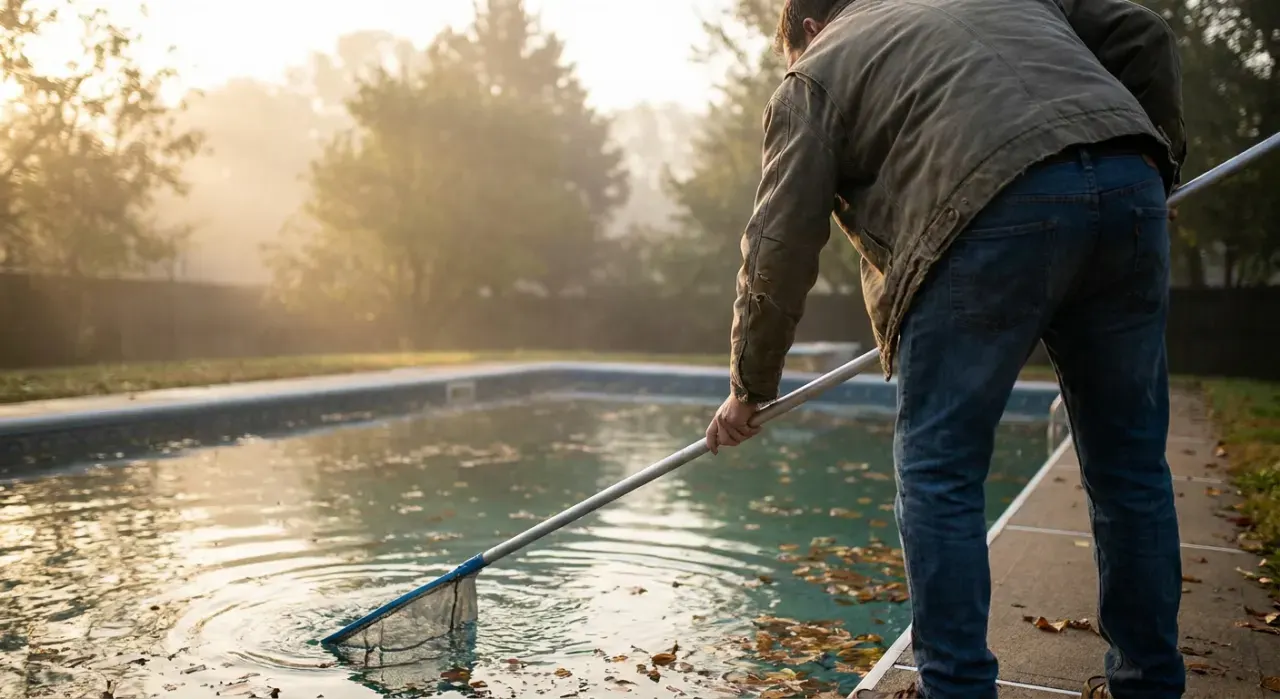
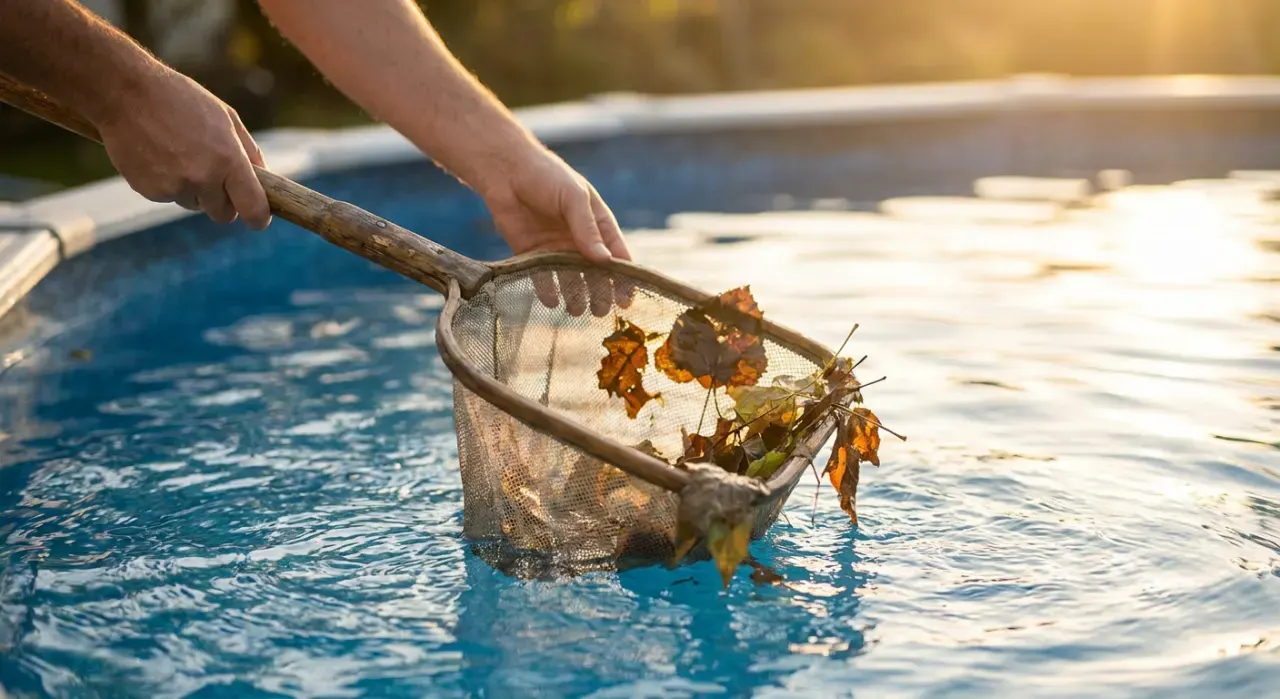
Twenty minutes a week keeps a pool swimmable. Skim the surface and empty the skimmer basket; brush the walls and floor to lift anything settling; vacuum if debris has accumulated; rinse or backwash the filter; test and adjust chlorine and pH; and top up the water level to mid-skimmer. Add a shock treatment after heavy rain, a party or a stretch of hot weather. A solar cover cuts evaporation, holds heat overnight and reduces chemical use — it is the cheapest upgrade with the biggest daily effect. Cleaner options for above-ground pools are ranked in best pool vacuum and cleaner.
Safety, Which Is Not Optional
Drowning is the leading cause of unintentional death for US children ages 1 to 4, and above-ground pools carry a specific risk profile: the wall is the barrier, so anything a child can climb — a ladder left in place, a patio chair, a planter, a deck rail — defeats it. The CPSC guidance for above-ground pools is straightforward. Remove or lock the ladder whenever the pool is not in use. Keep chairs, tables and toys well away from the wall. Use a lockable safety cover if you have one, never a solar cover as a barrier, because a solar blanket will not support a child and can trap them underneath. Add door alarms if the house opens onto the pool area, and check local fencing codes, which frequently apply to above-ground pools over a certain wall height. Supervision by a designated adult who is not on a phone remains the control that matters most. More in above-ground pool safety.
Closing for Winter
In freezing climates, a pool that is closed badly does not open again. Balance the water first, shock it, and run the filter for a full cycle. Lower the water to just below the skimmer and return fittings — not empty, because an empty vinyl pool loses the water pressure that holds the liner in shape and can shift or collapse. Remove, drain and store the pump, hoses and any filter cartridge indoors, because a freeze cracks pump housings routinely. Add winterizing chemicals, fit a cover rated for snow load, and use an air pillow in the center so expanding ice pushes against the pillow rather than the wall. Full checklist in closing a pool for winter.
Where to Start
Shopping? Go to best above-ground pool — it ranks the frame pools, ring pools and premium sets with the complaints owners actually file. Already bought and about to build? Read how to set up an above-ground pool before you break ground. Water gone cloudy or green? Start with water chemistry basics. The topical map below links every guide in this hub.