 Garden
Affiliate Disclosure
Some links on this page are affiliate links. As an Amazon Associate, we earn from qualifying purchases — at no extra cost to you. We do not buy, test, or physically handle the products we cover; our rankings come from aggregated owner reviews, ratings and expert consensus. Commissions never change our verdicts. How we rank · full disclosure.
Short version: a balcony, a patio or a bare wall can produce a real harvest, but small-space gardening rewards different decisions than a yard does. Sun hours set your ceiling, container volume sets your yield, and watering — not soil, not fertilizer — is what most often goes wrong. Get those three right and a 40-square-foot balcony can out-produce a neglected quarter-acre.
We do not buy, test or physically handle any of the products we rank. Rankings come from aggregated owner reviews, star ratings, review volume and horticultural consensus. Our method is on how we rank.
Start With Sun, Not With Plants
The first hour of small-space gardening should be spent counting, not shopping. Go out and note when direct sunlight actually touches the space and when it leaves — not bright ambient light, but sun on the floor. Do it on a clear day and remember that the answer changes through the year as the sun's angle shifts and neighboring buildings and trees move their shadows.
The numbers then set your plant list honestly. Six-plus hours puts fruiting crops on the table: tomatoes, peppers, cucumbers, bush beans, strawberries. Four to five hours means leafy greens, chard, scallions, radishes, bush peas and nearly every herb — a productive garden, just a different one. Under three hours, work with mint, parsley, lettuce and shade-tolerant ornamentals rather than fighting it. Full method in how much sun a balcony really gets.
Wind is the overlooked companion factor. A fourth-floor balcony is a far windier place than ground level, and wind dries containers, shreds large leaves and topples tall plants. Solid railings, a windbreak panel or simply keeping tall crops against the wall makes a bigger difference than most people expect.
Container Volume Is Your Yield
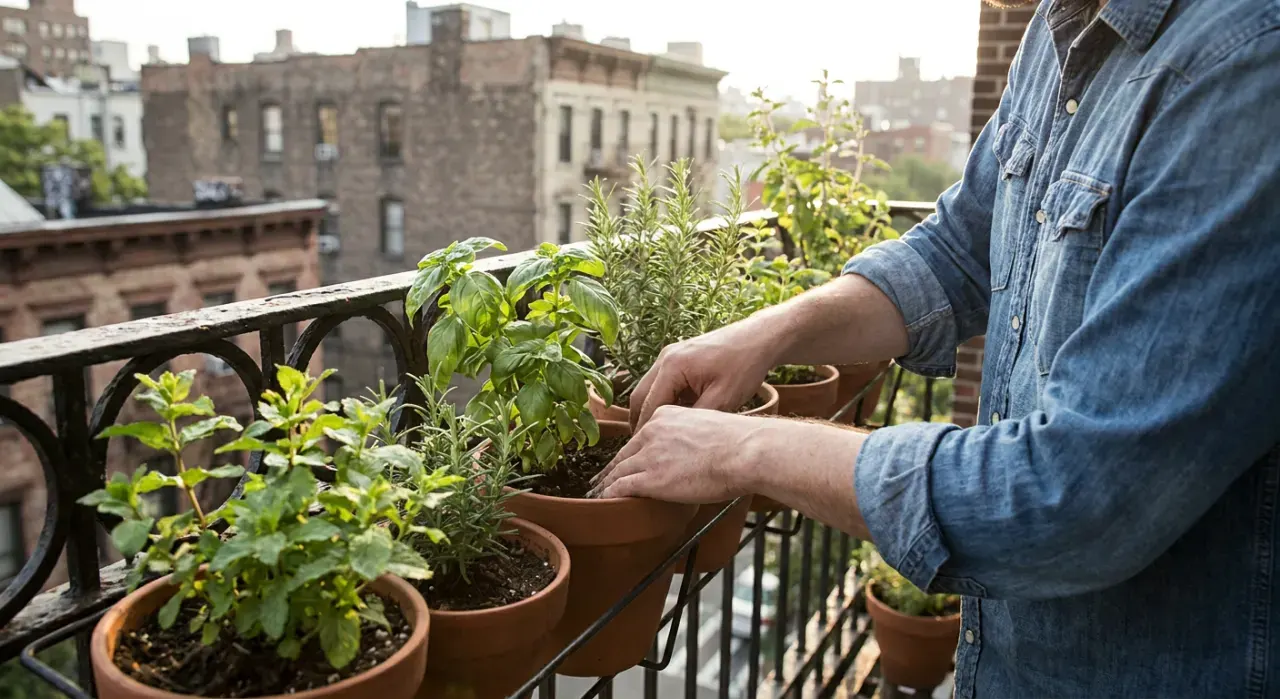
In a small space the temptation is to use small pots, and it is the most reliable way to be disappointed. Root volume determines how much water a plant can access between waterings, how much nutrition it can draw, and ultimately how much it produces. A tomato in a 5-gallon container will always beat a tomato in a 2-gallon one, and neither compares to the same plant in 10 gallons.
Practical minimums worth memorizing: herbs and lettuce are happy in 1 to 2 gallons; bush beans, chard and scallions want 3 to 5; peppers, eggplant and compact cucumbers want 5; a determinate tomato wants 7 to 10 and an indeterminate one really wants 15 or more. Depth matters independently of volume — carrots and other roots need 12 inches or more regardless of how wide the pot is. Crop-by-crop numbers are in container sizes by crop, and the crops that genuinely thrive in pots are listed in vegetables that grow well in containers.
Every container needs drainage holes, and every container should sit on a saucer or feet if it lives on a deck. Bagged potting mix only — garden soil compacts into an airless brick in a pot, and it is the most common reason a container garden underperforms in its first year.
Going Vertical
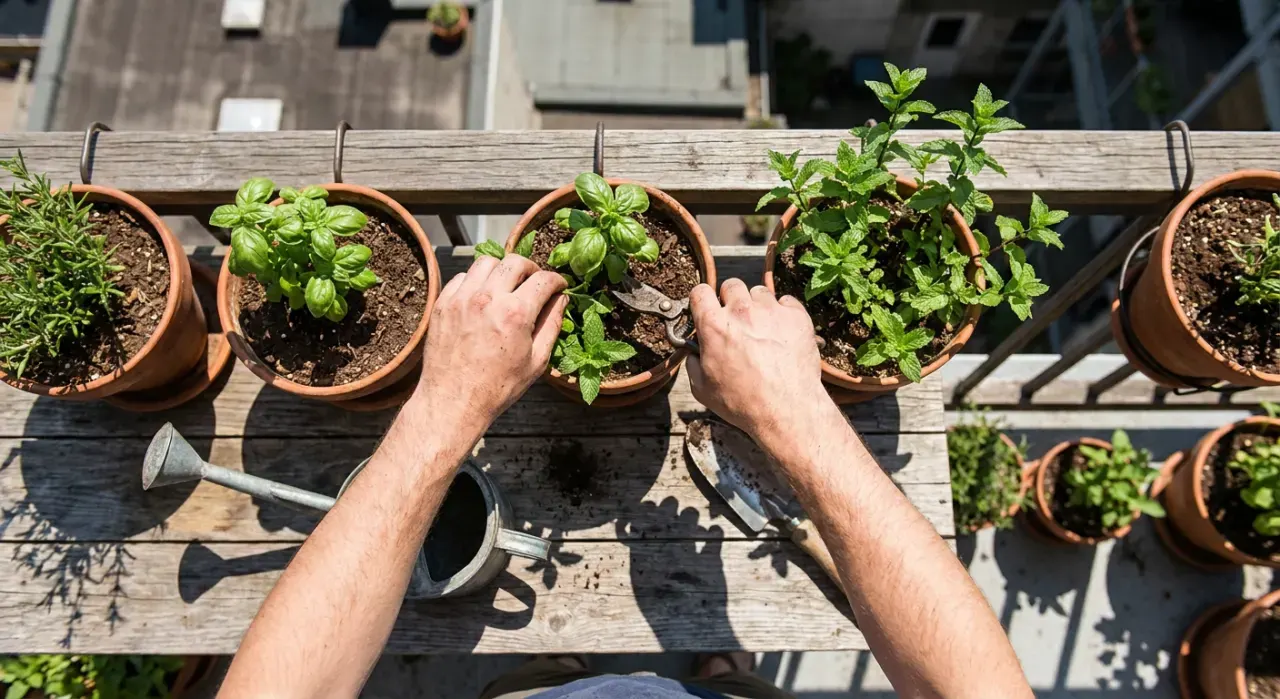
When floor space runs out, the answer is up. Vertical growing takes three main forms and they behave very differently. Stacking towers — tiered pots that sit on top of one another — give you the most planting pockets per square foot of floor, which is why they dominate strawberry and herb growing on patios. Wall-mounted pocket systems put plants on a surface that was otherwise dead space, and are the only real option on a narrow balcony. Trellised climbers — pole beans, cucumbers, small melons — use vertical space with almost no extra hardware.
All of them share one trade-off you should go in knowing: vertical planters dry out fast. More surface area per gallon of soil, more wind exposure, and gravity pulling water down through the stack means the top tiers can be bone dry while the bottom sits wet. Designs with an internal watering column or an integrated drip line handle this far better than plain stacked pots, which is a large part of why the rankings in best vertical garden planters come out the way they do.
Weight is the other consideration, and it is easy to underestimate. Wet potting mix runs roughly 15 to 20 pounds per gallon, so a full five-tier tower can weigh well over 200 pounds. Keep the heaviest containers close to the wall rather than out at the rail, spread the load, and check your building rules before installing anything substantial.
Watering Is the Job
In a yard, watering is a task. In containers, it is the whole discipline. A pot in full July sun can need water twice a day, and a single missed afternoon is enough to abort a pepper's flowers or split a tomato when you overcorrect the next morning. Four things help, in order of effectiveness: bigger containers (more soil, more buffer), self-watering reservoirs that wick moisture upward on demand, mulch on the soil surface even in pots, and grouping containers together so they shade one another and raise local humidity.
Feeding follows from watering. Every time water runs out of the drainage hole it takes nutrients with it, so container plants exhaust their mix far faster than garden soil. A slow-release granular feed at planting plus a diluted liquid feed every two weeks through the growing season keeps things productive. The full summer routine is in watering containers in summer heat, and the reservoir pots that reduce the workload are ranked in best self-watering container pots.
If You Rent
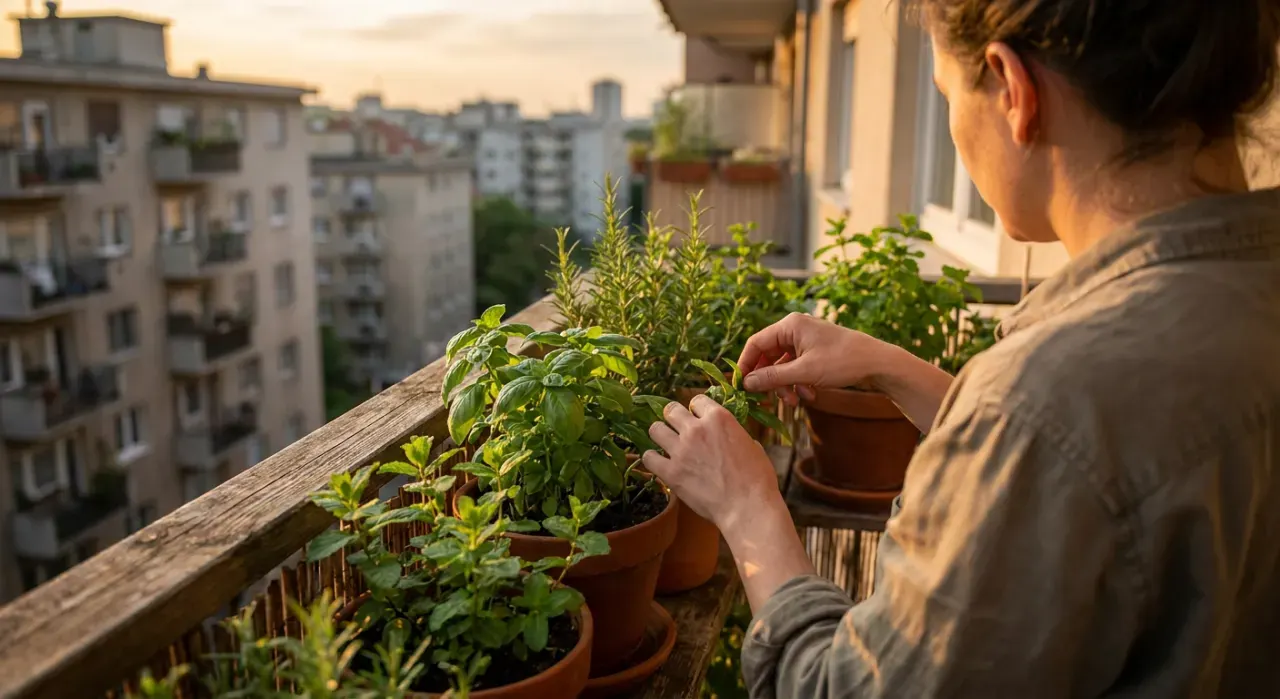
A rented balcony does not have to mean a bare one. Freestanding towers, tiered stands and grow bags need no fixings whatsoever. Railing planters clamp or hook over the rail instead of screwing into it, which is exactly why they are the workhorse of apartment gardening — the field is ranked in best railing planters. Tension rods and freestanding trellis panels support climbers without a single hole. Keep everything on saucers or feet so nothing stains the deck, photograph the space before you start, and choose containers you can actually carry when you move. More ideas in renter-friendly garden setups.
Laying Out a Small Space
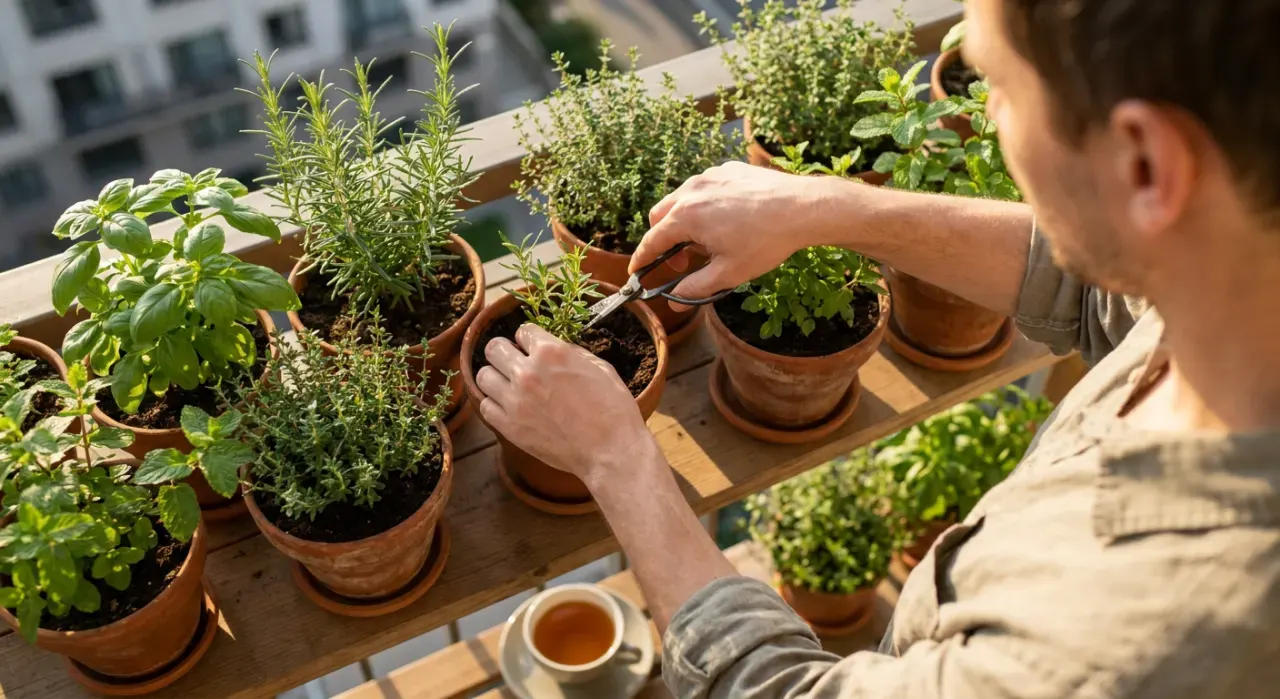
A balcony is a room, and it rewards being planned like one. The most productive small gardens follow a simple layering rule: tallest plants and climbers against the wall or the sunniest edge, mid-height containers in front of them, and low pots or trailing plants at the front where they will not shade anything. Get that wrong and half your garden spends the summer in the shadow of the other half.
Access is the other half of layout. Every container needs to be reachable for watering, harvesting and the inevitable moment you have to pull a plant out — a beautiful arrangement you cannot get behind becomes a chore within a month. Leave a clear path, keep the heaviest pots where you will not need to move them, and put anything you harvest daily (herbs, salad, cherry tomatoes) closest to the door.
Think in surfaces rather than floor area. A small balcony typically has four usable planes: the floor, the railing, the walls and the ceiling or overhead structure. Floor takes the big containers, the railing takes shallow boxes of herbs and flowers, walls take pocket systems and trellised climbers, and hooks overhead take trailing baskets. Used together, a 5 ft × 8 ft balcony holds a genuinely surprising number of plants without ever feeling crowded.
Finally, plan for the parts nobody photographs: where the watering can lives, where you put a bag of potting mix, and where water goes when it drains. A saucer under every pot, a small folding stool, and a corner for storage make the difference between a garden you enjoy and one you avoid.
Where to Start
Count your sun hours first, then read the balcony garden starter guide for weight, wind and drainage. Choose containers by crop rather than by what looks tidy, and if floor space is the constraint, our ranked best vertical garden planters is the place to spend your first real money. Still deciding between formats? Vertical planter vs grow bag vs raised bed compares them on yield, cost and watering demand. The topical map below links everything.