 Garden
Affiliate Disclosure
Some links on this page are affiliate links. As an Amazon Associate, we earn from qualifying purchases — at no extra cost to you. We do not buy, test, or physically handle the products we cover; our rankings come from aggregated owner reviews, ratings and expert consensus. Commissions never change our verdicts. How we rank · full disclosure.
Short version: almost every garden problem people try to solve with fertilizer is actually a soil problem, and compost is the closest thing there is to a universal answer. It improves drainage in clay, water retention in sand, feeds soil biology, and costs nothing but the material you were already throwing away. This hub covers how to make compost that finishes, how to choose between a tumbler and a bin, and how to read what your soil is telling you.
We never buy or physically handle the products we rank. Recommendations come from aggregated owner reviews, star ratings, review volume and expert consensus — see how we rank. Shopping now? Start with best compost tumbler.
How Composting Actually Works
Composting is managed decomposition, and it runs on four variables. Carbon comes from dry browns — leaves, straw, cardboard, wood chips. Nitrogen comes from wet greens — kitchen scraps, grass clippings, coffee grounds. Moisture should sit at the level of a wrung-out sponge: damp everywhere, dripping nowhere. Oxygen comes from turning, from coarse material creating air pockets, or from a tumbler.
Get those four roughly right and thermophilic bacteria do the work, driving the interior to 130–160°F, killing most weed seeds and pathogens, and reducing the volume by half or more. Get them wrong and you get one of two failure modes: a slimy, ammonia-smelling mess (too much nitrogen, too little air) or a pile that just sits there unchanged for a year (too much carbon, too dry). Both are fixable in an afternoon. The mechanics are in how to make compost.
Browns, Greens and the Ratio That Matters
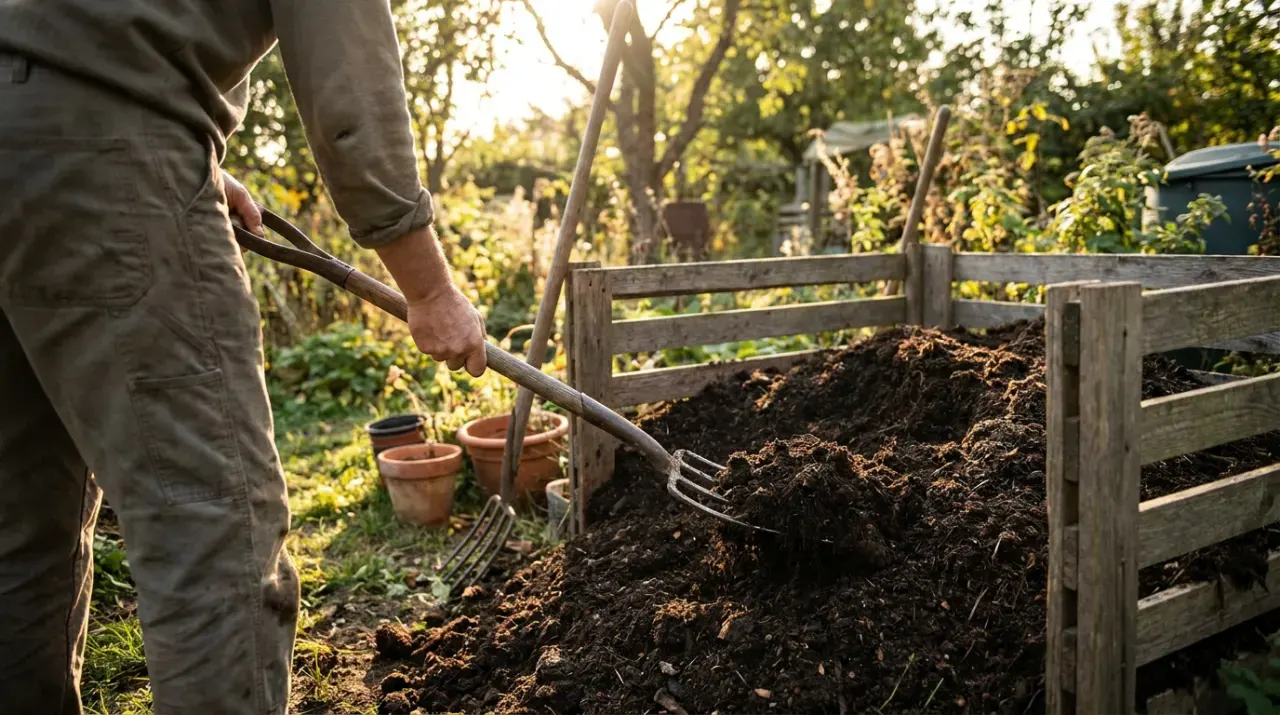
The target is roughly two to three parts browns to one part greens by volume. In practice most home piles fail toward too many greens, because kitchen scraps and grass clippings arrive constantly while leaves arrive once a year. The single most useful habit in composting is stockpiling fall leaves in bags or a wire cage and pulling from them all year as your brown supply.
Diagnosis is simple. Smells like ammonia or rotten eggs? Too wet, too green, not enough air — add shredded browns and turn it. Bone dry with recognizable material after months? Too brown and too dry — add greens and water. Attracting flies? Bury fresh scraps in the center rather than leaving them on top. A full sorted list of what counts as what is in browns and greens explained, and stalled piles are diagnosed in compost not heating up.
Tumblers, Bins, Piles and Worms
Tumblers are sealed rotating drums. They are fast, tidy, rodent-proof and easy on your back, and dual-chamber models let one side finish while you fill the other. The trade-off is capacity — 37 to 60 gallons is small compared with a heap — and the fact that a raised drum is cut off from soil organisms and worms.
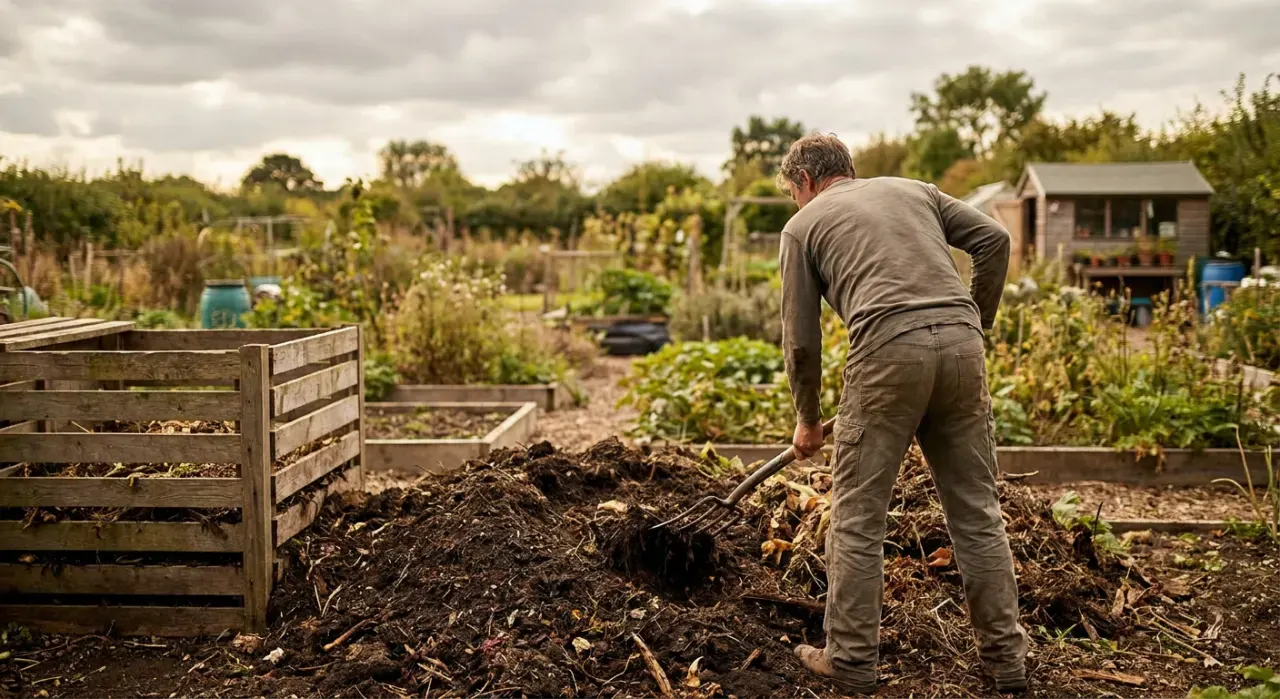
Stationary bins are the low-effort workhorse: cheap, high-capacity, open to the soil so worms move in from below, and requiring only occasional turning if you are patient. Open piles and wire cages cost almost nothing and are unbeatable for volume, which is why leaf composting is nearly always done this way. Worm bins are a different system entirely, running at room temperature on kitchen scraps and producing worm castings, which is the highest-quality soil amendment most home gardeners will ever handle. They suit apartments and garages where an outdoor pile is not an option.
Most gardens end up with two systems: a tumbler or worm bin for kitchen scraps, and a pile or bin for leaves and garden waste. The direct comparison is in tumbler vs compost bin, with picks in best compost tumbler, best compost bin and best worm composting bin.
Getting Scraps From Kitchen to Pile
The system that fails is the one that requires a trip outside after every meal in February. A countertop caddy with a carbon filter holds several days of scraps without odor and makes composting a once-or-twice-a-week walk instead of a daily chore. Stainless and ceramic caddies are easier to clean than plastic, and the filters need replacing every few months to keep working.
Two habits do most of the work: chop scraps small, because surface area drives decomposition speed, and keep a bag of shredded leaves or cardboard next to the composter so every deposit of greens is covered with browns immediately. That one step prevents most odor and fly problems before they start. Picks in best kitchen compost bin.
Reading Your Soil
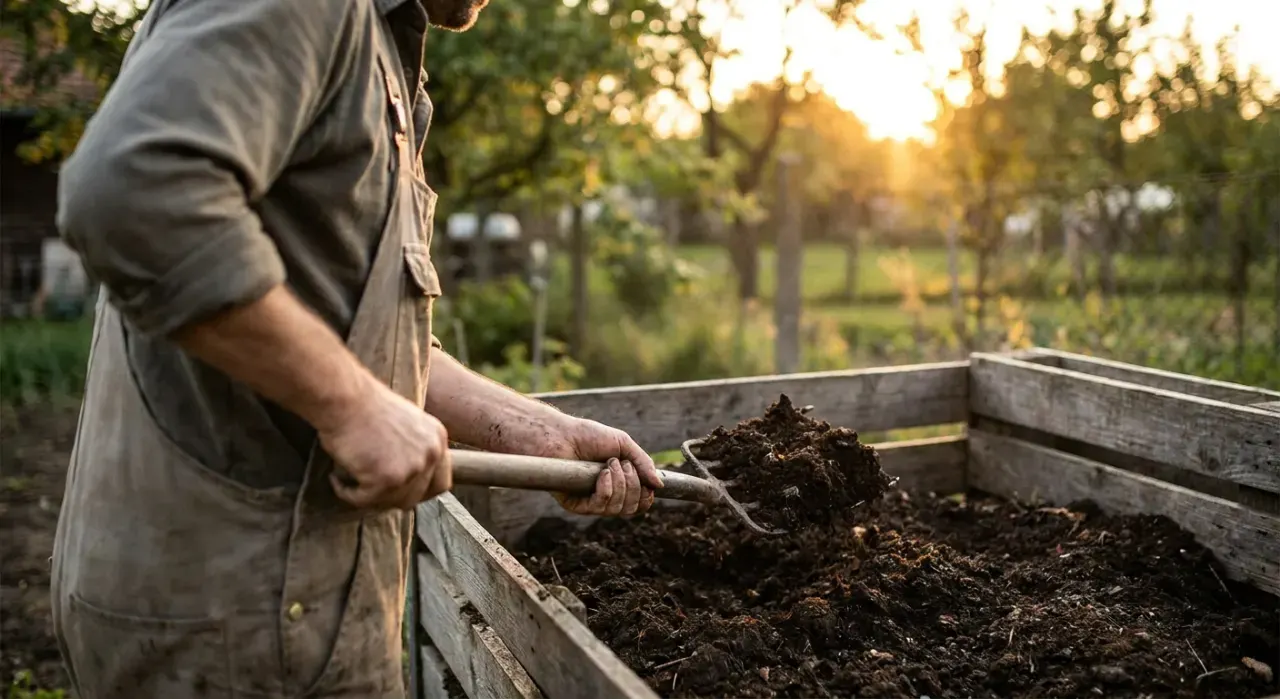
Compost improves almost any soil, but knowing what you are starting with saves years of guessing. A $15 home kit gives you a usable pH reading and rough NPK levels. A lab test through a state extension service costs $15 to $30 and returns far more — organic matter percentage, cation exchange capacity, micronutrients and specific amendment recommendations by crop. For anyone planning a new vegetable garden or fighting a persistent problem, the lab test is the better spend.
pH is the number that quietly controls everything, because it determines whether nutrients already in your soil are available to plants. Most vegetables want 6.0 to 7.0; blueberries want 4.5 to 5.5; lawns are happiest around 6.5. Soil that tests low in everything is often just soil at the wrong pH. Lime raises pH slowly, elemental sulfur lowers it slowly, and neither should be applied without a test first. See best soil test kit and how to read a soil test.
Fixing Clay and Sandy Soil
Heavy clay drains slowly, compacts hard and stays cold late into spring. Sandy soil drains too fast and holds neither water nor nutrients. The remarkable thing is that the fix is the same for both: organic matter, in quantity, repeatedly. Compost opens clay into crumb structure and gives sand something to hold water with. Two to three inches spread over a bed each year, left on the surface or lightly forked in, transforms either soil within a few seasons.
What does not work is adding sand to clay — in the wrong proportions it produces something closer to concrete, and the proportions needed to help are impractically large. Deep tilling is also usually counterproductive, since it destroys the structure and fungal networks you are trying to build. Mulch, compost and time beat machinery. The detail is in how to improve clay soil.
Using Finished Compost
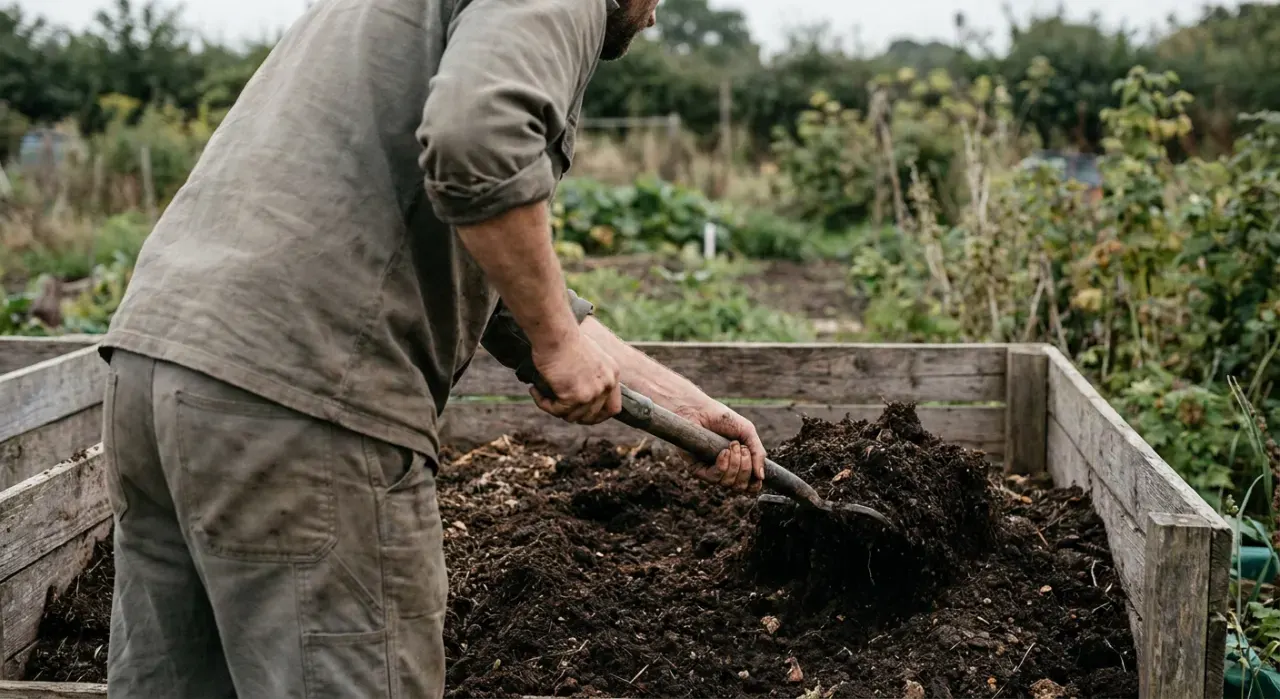
Finished compost is dark, crumbly, smells like a forest floor and no longer reheats after turning. Use it three ways. As a soil amendment, mix two to three inches into new beds before planting. As a top dressing, spread an inch around established plants each spring and let worms take it down. As potting mix, blend it at 20 to 30 percent with topsoil and an aeration material — never use pure compost in containers, as it compacts and holds too much water.
Do not rush it. Unfinished compost still actively decomposing will temporarily tie up soil nitrogen and can stall young plants. If in doubt, give it another month. And if you are building raised beds, compost is a third of the fill recipe — the raised beds and planters hub covers the ratios.
Where to Start
If you are starting this week: get a countertop caddy, a way to hold browns, and one composter. For most yards a dual-chamber tumbler is the easiest system to succeed with, and the best compost tumbler rankings cover the field. Then read how to make compost so the first batch actually finishes. The map below links every other part of soil care.