 Garden
Affiliate Disclosure
Some links on this page are affiliate links. As an Amazon Associate, we earn from qualifying purchases — at no extra cost to you. We do not buy, test, or physically handle the products we cover; our rankings come from aggregated owner reviews, ratings and expert consensus. Commissions never change our verdicts. How we rank · full disclosure.
Short version: the bathroom is the smallest room in the house and the one where a $40 part changes your day. This hub covers the four things that actually matter in an American bathroom — water that feels good coming out of the wall, air that leaves the room, storage that fits a nine-by-seven-foot floor plan, and the handful of repairs worth doing yourself — and points you at the ranked picks behind each one.
We do not buy or physically handle any of the products we rank. Every recommendation on this site comes from reading owner reviews at volume, comparing star ratings against review counts, and cross-checking manufacturer specs and plumbing-code guidance. Our full method is on how we rank.
The Shower Is the Whole Room
Ask people what they would change about their bathroom and the answer is rarely the vanity. It is the shower — specifically, how the water feels. That is genuinely fixable, and cheaply, because the shower head is one of the very few plumbing fixtures in a house that unscrews by hand.
A few things separate a good head from a disappointing one, and none of them are the finish. Jet design matters most: a head that pushes the same 2.5 gallons per minute through fewer, tighter nozzles feels dramatically stronger than one that sprays it through eighty pinholes. Face size is a trade-off, not an upgrade — a big rain head covers more of you but drops pressure, which is why owners in low-pressure homes consistently rate the compact heads higher. Nozzle material decides whether you still like the head in year three; rubber, self-cleaning plungers shed mineral scale when you rub them, while drilled metal faces slowly clog in hard water and never fully recover.
Our ranked picks live in best shower heads, and if your water leaves white crust on the glass, read best shower filters alongside it.
Low Pressure Is Usually Not Your Pipes
Homeowners assume weak showers mean a plumbing problem. Most of the time it is one of three cheap things. The inlet screen washer inside the shower head collects grit and calcium and chokes flow within a couple of years. The nozzles themselves scale over, which you can see if you run a fingernail across the face. Or the head simply has a flow restrictor sized for a house with better incoming pressure than yours.
Diagnose before you buy. Time how long it takes the shower to fill a one-gallon jug: if it takes more than about thirty seconds, the restriction is upstream of the head and a new head will not fix it. Under thirty seconds and the water is arriving fine — the head is what is wasting it. The full order of operations is in fixing low shower pressure, and the numbers behind the labels are in shower head GPM explained.
Hard Water Decides How Long Everything Lasts
Roughly eight in ten American homes have moderately hard water or worse, and the bathroom is where you see it first: white film on the glass door, crusted nozzles, chrome that will not shine, and soap that refuses to lather. Hard water does not just look bad. It is the single biggest reason a shower head that felt great in month one feels weak in year two.
There are three honest responses. Descale on a schedule — a bag of white vinegar rubber-banded over the head overnight, every three months, costs nothing and works. Buy a head with rub-clean silicone nozzles so descaling takes ten seconds instead of ten minutes. Or fit an inline filter, which will not soften water in the technical sense but does capture sediment, iron and chlorine, and owners with well water report the most dramatic difference. Practical detail in removing hard water stains.
Moisture Management: The Unglamorous Half
Everything that goes wrong in a bathroom over time — peeling caulk, spotted grout, soft drywall behind the tile, that musty smell that survives cleaning — traces back to humid air that stayed in the room. An exhaust fan is not a comfort feature. It is the thing protecting the structure.
Two numbers do all the work. CFM is airflow: size at one CFM per square foot of floor, with 50 CFM as the practical floor, so a 45-square-foot half bath needs 50 and a 90-square-foot main bath needs 90 or more. Sones measure loudness, and this is where cheap fans lose people. A 4-sone fan is loud enough that households simply stop turning it on, which defeats the point entirely; 1.0 sone or less is what owners describe as pleasant background noise. Also check where the duct actually goes: venting into an attic rather than through the roof or soffit just relocates the moisture problem into the part of the house you cannot see. Ranked picks in best bathroom exhaust fans.
Making a Small Bathroom Work
The average American full bathroom is around 40 square feet, and most of that is unusable floor. Storage has to go vertical or onto surfaces that already exist. The three placements that survive daily life, according to owners who kept them, are over-toilet shelving anchored to studs rather than drywall, a tension or wall-mounted shower caddy that does not rely on hanging off the shower arm, and behind-the-door hooks for towels. What people regret buying: suction-cup anything in a steamy room, and freestanding corner units in bathrooms with a swinging door.
The other half of small-bathroom sanity is subtraction. Countertop clutter reads as visual noise in a room that small, so anything used less than weekly belongs in a drawer. More in small bathroom storage ideas.
The Repairs Worth Doing Yourself
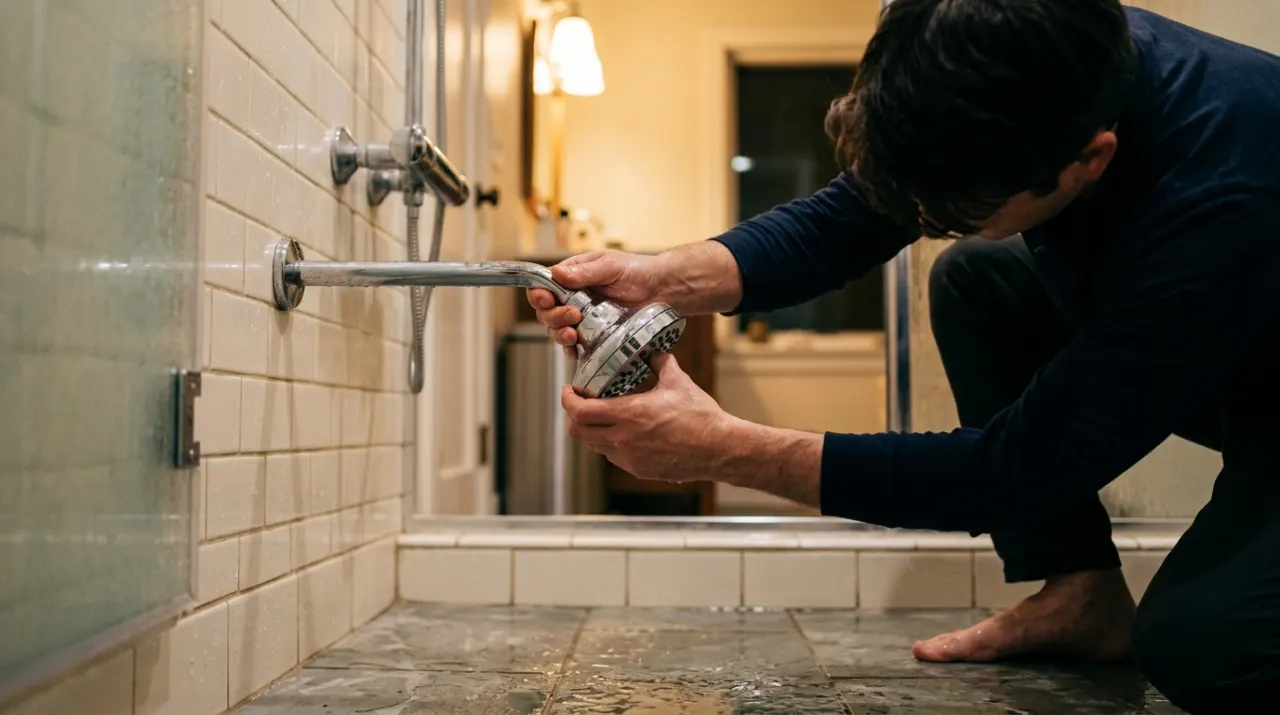
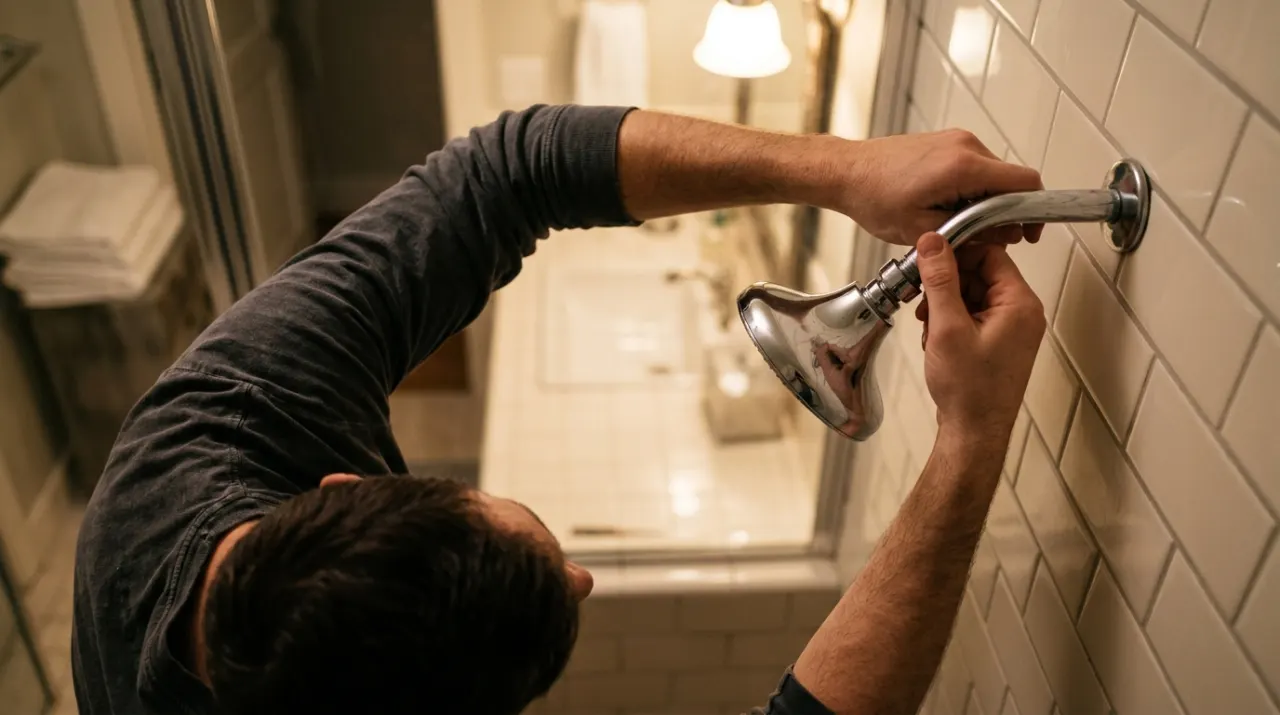
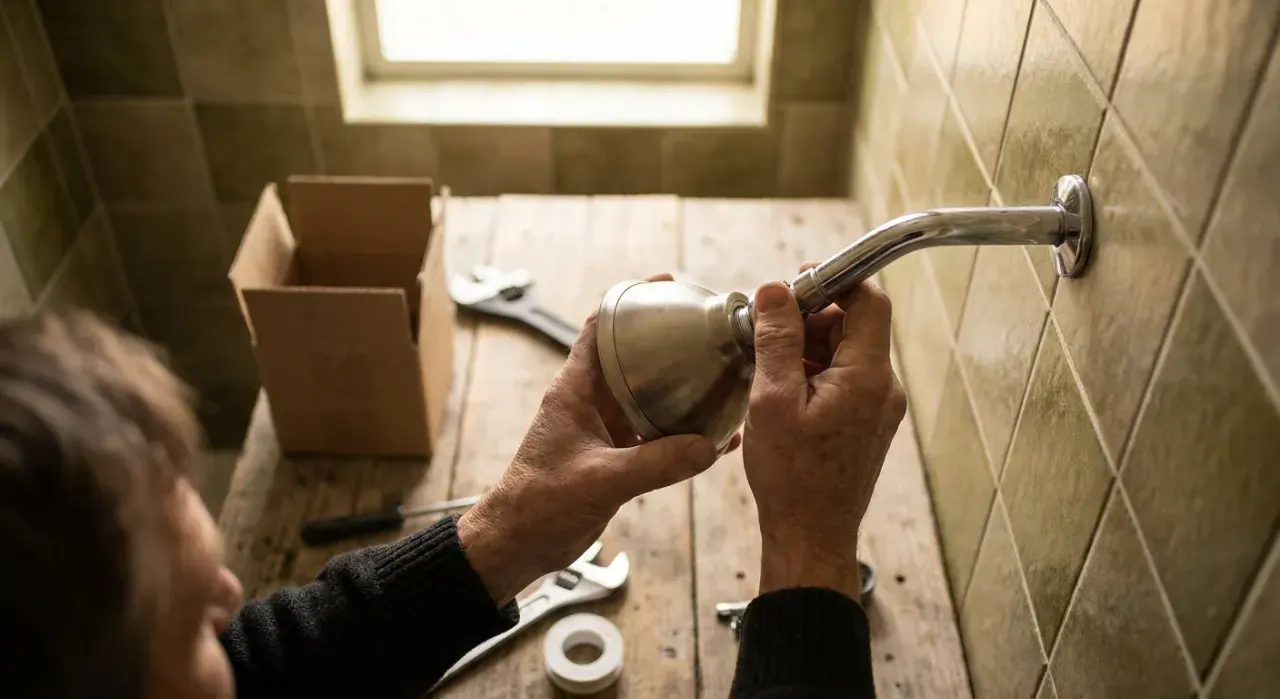
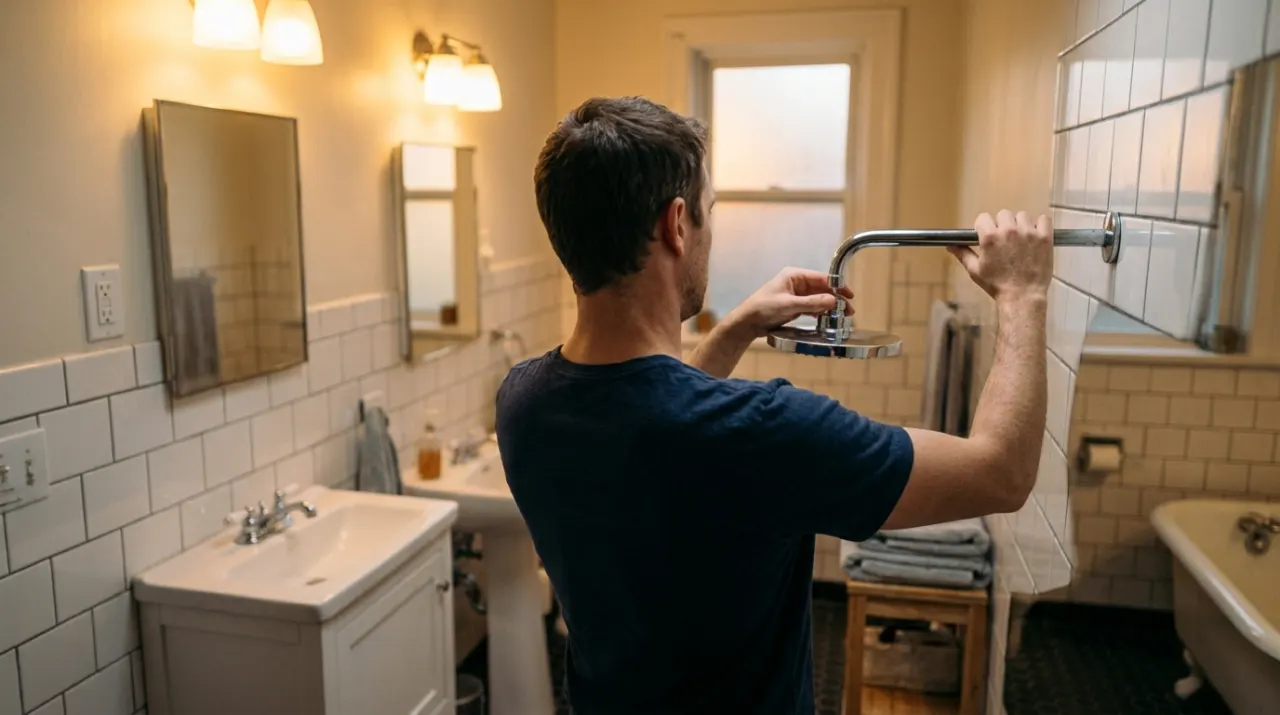
Bathrooms sit at a friendly point on the DIY curve: several genuinely useful jobs need no permit, no soldering and no shutoff beyond the fixture itself. Swapping a shower head is the easiest — unscrew, clean the threads, wrap thread seal tape clockwise three times, hand-tighten, then a quarter turn with a wrench and a rag to protect the finish. Clearing a shower drain is a plastic hair-snake and twenty minutes, and it is worth trying twice before chemical drain cleaners, which are hard on older pipes and on your eyes. Recaulking a tub is a two-hour Saturday job where ninety percent of the outcome is decided in the prep: the old bead has to come out completely and the seam has to be bone dry before the new one goes in.
Know where the line is. Anything that involves opening a wall, moving a drain, or working behind a pressure-balancing valve is a licensed plumber's job in most jurisdictions, and getting it wrong is expensive in a way a shower head never is. Start with replacing a shower head, unclogging a shower drain and caulking a bathtub.

Bidets Went Mainstream, Quietly
Five years ago a bidet attachment was a curiosity in American bathrooms. It is now one of the highest-rated categories in the whole home space, and the reason is boringly practical: a $40 non-electric attachment clamps between your existing toilet bowl and seat, tees into the three-eighths-inch supply line with a wrench, and needs no outlet. The recurring complaint in reviews is not buyer's remorse — it is cold water in a cold house, which the dual-temperature models solve by running a second line to the sink's hot supply. Fit is the thing to check before you order: elongated versus round bowls, and one-piece toilets where the tank sits close to the seat bolts. Our picks are in best bidet attachments.
Where to Start
If you do one thing this month, replace the shower head — biggest daily payoff, lowest cost, lowest risk. If your fan is loud enough that nobody uses it, that is the second job, because it is the one quietly protecting the room. Everything else on this hub is comfort and storage, and can wait for a free weekend. The topical map below links every guide, roundup and repair walkthrough in the bathroom section.