 Garden

Affiliate Disclosure
Some links on this page are affiliate links. As an Amazon Associate, we earn from qualifying purchases — at no extra cost to you. We do not buy, test, or physically handle the products we cover; our rankings come from aggregated owner reviews, ratings and expert consensus. Commissions never change our verdicts. How we rank · full disclosure.
Short version: a small kitchen appliance is only worth owning if it saves you real time on something you cook often. This hub covers the four categories that earn permanent counter space in most American kitchens, the three that are excellent buys for the right household, and the practical stuff nobody puts on the box — wattage and circuit limits, what actually fails first, and how to keep a machine working past its warranty.
We do not buy or physically test these appliances. Every ranking here is built from aggregated owner reviews, star ratings, review volume and published expert consensus — the method is explained in full on how we rank. It is a research desk, not a test kitchen, and we think you should know exactly which one you are reading.
What Counts as a Small Kitchen Appliance
The category covers anything that plugs into a standard 120-volt outlet and lives on your counter or in a cabinet: air fryers, blenders, coffee makers, kettles, toaster ovens, stand mixers, slow cookers, food processors and multi-cookers. What unites them is that they are all optional. Your kitchen already has a stove, an oven and a sink. Every countertop appliance is a bet that a dedicated machine does one job better, faster or more consistently than the equipment you already own — and a bet that you will use it enough to justify the footprint.
That framing matters because it changes the shopping question. It is not which air fryer is best, it is does an air fryer earn 14 inches of my counter. For a household that eats frozen foods, reheats leftovers and roasts vegetables on weeknights, the answer is a clear yes. For someone who cooks on a stovetop every night from scratch, it is often no. Start there and the rest gets easier.
The Appliances That Earn Their Counter Space
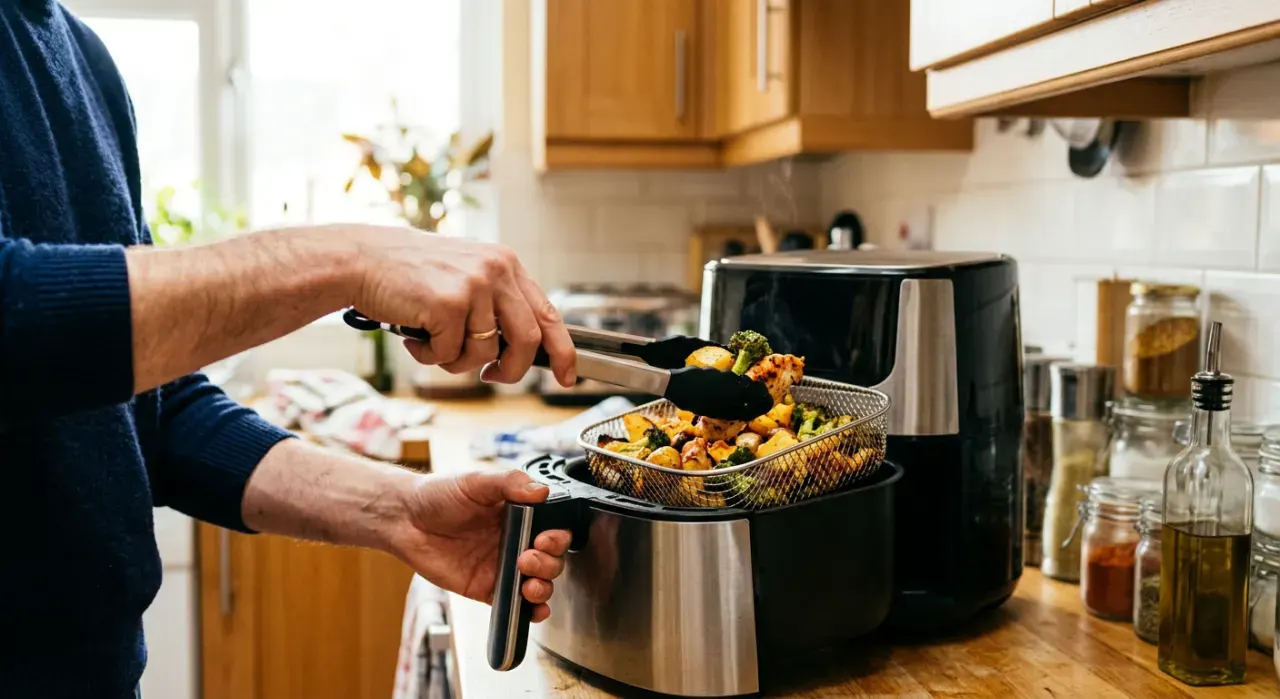
Air fryers are the most-bought countertop appliance of the last five years, and the reviews explain why: they preheat in two to three minutes instead of fifteen, crisp frozen foods better than an oven, and use a fraction of the energy. Our best air fryer ranking is the place to start, and the toaster oven vs air fryer comparison settles the most common question we see.
Blenders divide sharply by use. Daily smoothie drinkers are well served by a mid-priced jar blender; anyone making nut butters, hot soup or frozen drinks runs into the limits of a cheap motor fast. The honest cost breakdown is in are expensive blenders worth it, and the ranked field is in best blender.
Coffee makers and electric kettles are the appliances people use most and think about least. Coffee is a daily ritual, so reliability outweighs features every time — see best coffee maker. A kettle boils water in half the time of a stovetop, and a variable-temperature model matters if you drink green tea or brew pour-over. Rankings are in best electric kettle.
The second tier — stand mixers, toaster ovens and slow cookers — are superb purchases for the households that use them and dead weight for the ones that do not. Buy on your actual cooking pattern from the last month, not the one you plan to adopt.
Wattage, Outlets and the Breaker Nobody Thinks About
A typical American kitchen counter runs on 15-amp or 20-amp circuits, which means roughly 1,800 or 2,400 watts of headroom respectively — and building codes usually put two receptacles on the same circuit. A 1,500-watt air fryer and a 1,500-watt kettle running together will trip that breaker. This is the single most common frustration in appliance reviews that gets blamed on the product rather than the wiring, and it is entirely predictable once you add up the labels.
Practical rule: assume one high-draw appliance per outlet pair at a time. Air fryers, toaster ovens, kettles, coffee makers with hot plates and microwaves are all high-draw. Blenders, mixers and slow cookers are not. The full breakdown, including how to identify which of your outlets share a circuit, is in appliance wattage and kitchen circuits.
What Actually Fails, According to Owners
Read enough one-star and three-star reviews across this category and the same handful of failures dominate. Nonstick coatings flake — on air fryer baskets, toaster oven trays and slow cooker inserts — usually after abrasive cleaning or dishwasher cycles the manual quietly advised against. Plastic drive couplings shear on blenders and food processors, generally when a thick mixture stalls the blade. Touch panels stop responding after steam and grease work their way behind the membrane, which is why mechanical dials keep showing up in long-term-positive reviews. And heating elements weaken gradually rather than dying outright, so owners describe food taking longer over time without realizing why.
None of that is a reason to avoid the category. It is a reason to weight your buying decision toward metal couplings, removable dishwasher-safe parts the manufacturer actually endorses, and simple controls — and to read our nonstick coating safety guide before you scrub anything with steel wool.

Sizing an Appliance to Your Household
Capacity is the specification people get wrong most often, in both directions. A 4-quart air fryer feeds one or two people comfortably and struggles with a family dinner; a 10-quart model swallows a whole counter and takes longer to preheat when you are cooking for one. The same logic applies to blender jars, slow cooker inserts and coffee carafes: buy for the meal you cook most often, not the holiday dinner you host once a year.
Measure before you buy, and measure height as well as width. Overhead cabinets typically sit 18 inches above the counter, and a surprising share of returns in this category come down to an appliance that fits the footprint but not the clearance — particularly toaster ovens and tall blender jars, which need room to open or lift out. Our counter space planning guide walks through a simple method for deciding what stays out and what gets stored.
Getting Ten Years Out of a Countertop Machine
The habits that extend appliance life are unglamorous and consistent across every category. Clean the parts that touch food after each use, and clean the parts that do not — heating elements, vents and fan grilles — every month or so, because trapped grease is what turns a smoking air fryer into a dead one. Never submerge a housing that contains a motor or an element. Let hot components cool before washing, since thermal shock is hard on both nonstick coatings and glass carafes. And treat the manual as a warranty document: manufacturers deny a genuine share of claims because a part went into a dishwasher that the manual listed as hand-wash only.
Registration matters more than people expect too. Several major brands extend coverage or replace failed parts readily for registered owners, and appliance warranties decoded explains which promises are real and which are marketing.
Where to Start
If you are buying one appliance this year, start with the best air fryer ranking — it is the highest-use, lowest-regret purchase in this category based on the sheer weight of owner reviews. If your kitchen already has one, the next best returns come from a blender you will not outgrow and a coffee setup you actually enjoy. The topical map below links every guide in this hub, and every ranking on this site is built the same way: from what thousands of owners report after the honeymoon period, not from a single afternoon with a review sample.