 Garden
Affiliate Disclosure
Some links on this page are affiliate links. As an Amazon Associate, we earn from qualifying purchases — at no extra cost to you. We do not buy, test, or physically handle the products we cover; our rankings come from aggregated owner reviews, ratings and expert consensus. Commissions never change our verdicts. How we rank · full disclosure.
Short version: heating and cooling is the largest line on most American utility bills, and the fastest savings almost never come from buying a bigger appliance. They come from heating and cooling the room you are actually in, sealing the leaks that undo everything else, and running what you own correctly. This hub covers the equipment worth buying, the running costs in real dollars, and the safety rules that matter.
How we work: we do not buy, test or physically handle any of these appliances. Our rankings come from aggregated owner reviews, star ratings weighted by review volume, safety certifications, and expert consensus. The full method is on how we rank. Want specific models? Start with the best space heater rankings.
Zone Heating: The Idea That Saves Real Money
The logic behind a space heater is simple arithmetic. Central heating warms every room in the house, including the ones nobody is in. Zone heating turns the central thermostat down several degrees and puts a small heater in the one room being used. Because a 1,500-watt heater costs roughly 25 cents an hour to run at average US electricity rates, heating one room this way is dramatically cheaper than heating eight.
The trap is using space heaters as the whole heating strategy. Electric resistance heat is the most expensive way to produce a BTU, so running three or four heaters continuously through a cold snap will produce a bill far worse than the furnace would have. Zone heating works when it replaces central heat in a small area, not when it supplements it everywhere. The numbers, at your own utility rate, are in space heater running costs.
The Three Heater Technologies
Ceramic fan heaters push air across a PTC ceramic element. They warm a room fastest, cost the least, and are the right answer for a home office, a bathroom or anywhere you want heat in ninety seconds. They are also the noisiest, because there is a fan.
Infrared quartz heaters radiate heat to objects and people rather than warming the air first, which is why they feel effective in a drafty room, a garage or a space with high ceilings where warm air disappears upward. They are quiet, and the better ones combine an infrared element with a PTC heater to get both effects.
Oil-filled radiators heat a column of oil that then radiates gently for a long time. They take twenty minutes to become useful and they are the least portable, but they are silent, they keep giving heat after the thermostat cycles off, and their surface temperature is lower — which is why they are the standard recommendation for bedrooms and for households with young children. The full comparison is in ceramic vs infrared vs oil-filled.
Safety Is Not Optional Here
Portable heaters remain one of the leading causes of home heating fires in the United States, and the causes are consistent enough that avoiding them is straightforward. Plug a heater directly into a wall outlet — never an extension cord, never a power strip, both of which are rated for far less current than a 12.5-amp heater draws. Keep three feet of clearance from bedding, drapes, furniture and paper on every side. Place it on a hard, level floor, not on carpet, and not on furniture. Buy only units with tip-over and overheat protection and a recognized safety certification such as ETL or UL listing. Do not run one unattended or while sleeping; if a bedroom needs heat overnight, an oil-filled radiator on a thermostat is the least risky option.
The CPSC publishes guidance on all of this, and it is worth five minutes before the first cold night. Our summary is in space heater safety rules.
Cooling: Fans, Portable AC and What Actually Helps
Fans do not lower air temperature at all — they move air across skin so sweat evaporates faster, which makes a room feel several degrees cooler while the thermometer does not move. That distinction matters: a fan in an empty room accomplishes nothing, and above roughly 95°F with high humidity the evaporative effect fades and a fan stops helping meaningfully. Below that line, a good tower or ceiling fan handles a surprising share of American summers for a few cents an hour.
Portable air conditioners genuinely cool, but they come with a caveat buyers rarely hear: a single-hose unit pulls its condenser air from inside the room, creating negative pressure that draws warm outside air back in through every gap. Dual-hose designs avoid this and are meaningfully more efficient. Also check whether the BTU figure quoted is the older ASHRAE rating or the newer DOE/SACC rating — the same machine can be advertised at 14,000 BTU on one scale and 9,500 on the other. Both are covered in best portable air conditioner and fan vs air conditioner.
The Free Fixes Worth Doing First
Before spending anything, three habits change comfort measurably. Reverse your ceiling fans seasonally — counterclockwise in summer to push a cooling column of air down, clockwise and slow in winter to pull air up and roll the warm ceiling layer back down the walls. Shade the windows that take direct sun, because solar gain through glass is the largest single summer heat load in most homes and blocking it outside the glass beats blocking it inside. Flush the house at night in dry climates by opening up once the outdoor temperature drops below indoor, then closing everything at dawn. And in winter, change the furnace filter on schedule: a clogged filter chokes airflow, raises energy use and shortens equipment life. Intervals by filter thickness are in how often to change a furnace filter.
Thermostats and Where the Savings Actually Are
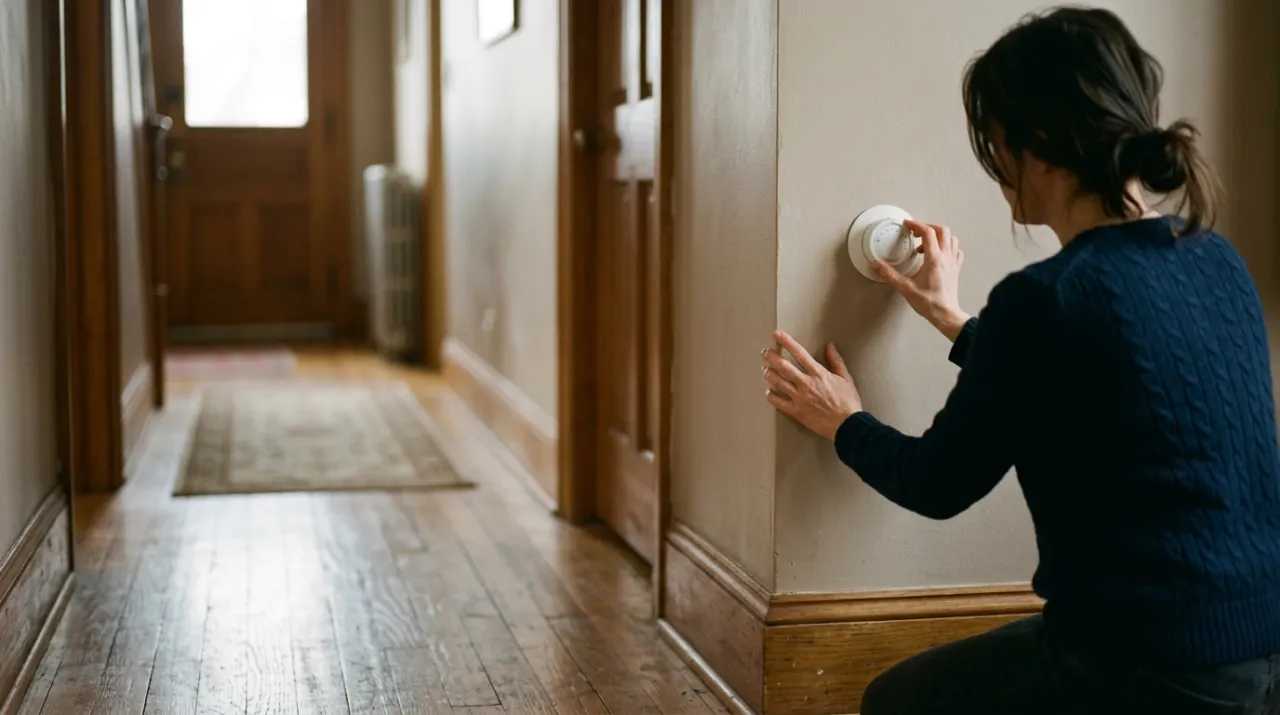
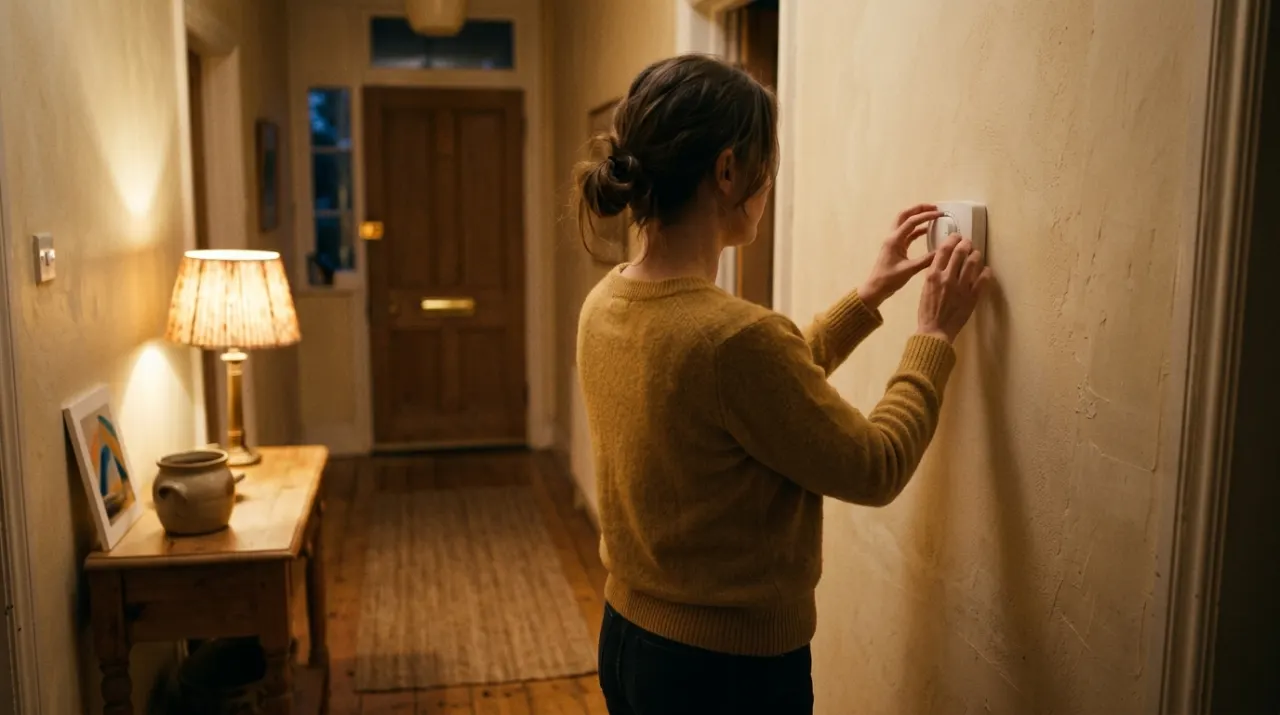
Setback is the entire mechanism. Lowering the heat while you sleep or while the house is empty is what saves money; the thermostat is just the tool that makes it happen without you remembering. A cheap programmable model captures most of the benefit if you set it and leave it alone. Smart thermostats earn their premium in households whose occupancy is irregular, where geofencing and learned schedules capture setbacks nobody would set manually.
Check compatibility before you buy. Most smart thermostats need a C wire for continuous power, and older two-wire systems require an adapter or a workaround. Heat pumps with auxiliary heat, and boiler systems, both have their own requirements. The details are in best smart thermostat.
The Envelope Beats the Equipment
Before upgrading any appliance, it is worth understanding that most American homes lose comfort through the building rather than the equipment. Air leakage around windows, doors, attic hatches, recessed lights and the rim joist in the basement moves a startling volume of conditioned air out of the house every hour, and it is the reason a room can feel drafty at a thermostat setting that should be perfectly comfortable.
The fixes are unglamorous and cheap. Weatherstrip exterior doors and check that the sweep actually touches the threshold. Caulk around window trim where the frame meets the wall, and use rope caulk or a film kit on old single-pane windows in winter. Insulate and seal the attic hatch, which is often the single biggest hole in the ceiling plane. Close the fireplace damper when there is no fire, because an open chimney is a permanently running exhaust fan. Doing these before buying a heater or an air conditioner means the appliance you buy can be smaller, quieter and cheaper to run — and the comfort improvement is usually more noticeable than the equipment upgrade would have been.
Room-by-Room: Matching the Fix to the Problem
Different rooms fail in different ways, and the right appliance depends on the failure. The cold home office is the classic zone-heating case — a small ceramic heater with a thermostat, the central system turned down, and the door shut. The bedroom that is too cold at night wants an oil-filled radiator on a timer rather than a fan heater, both for silence and for the lower surface temperature. The room over the garage is almost always an insulation problem in the floor rather than a heating problem, and no portable appliance will fully solve it.
The bedroom that is too hot in summer usually responds better to a good fan plus blackout shading than to a portable AC, because most of the load is solar gain through glass. The upstairs that runs hot while downstairs runs cold is a stratification and duct-balancing issue — running the HVAC fan continuously on low often helps more than any new appliance. And the basement that feels clammy rather than cold needs a dehumidifier, not heat; at 70°F and 65 percent humidity a room feels unpleasant no matter what the thermostat says. Getting this diagnosis right saves more money than any purchase on this page.
Where to Start
If winter is the problem, go to the best space heater rankings and read the safety rules alongside them. If summer is the problem, start with tower fans and how to cool a room without AC before committing to a portable AC. And whatever the season, reverse your ceiling fans and change the furnace filter — both are free and both work. The topical map below links every part of the hub as it publishes.